


If Yosemite National Park’s first big holiday weekend without entry reservations was supposed to prove the system could handle summer crowds, many visitors left unconvinced.
Long entrance lines, overflowing parking lots and traffic jams greeted thousands of Memorial Day weekend visitors as Yosemite’s new reservation-free approach faced its first major test. Some visitors reported waits of up to 90 minutes just to get through the entrance gates. Others found themselves circling packed parking lots or sitting in stop-and-go traffic after finally making it into the park.
At the same time, park officials note that visitation is running nearly 100,000 visitors ahead of the same point last year. That raises an obvious question for RVers planning a summer trip: Is easier access coming at the cost of a more crowded experience?
More visitors, same roads
Yosemite’s reservation system was never particularly popular with travelers who prefer flexibility. RVers know the challenge. Weather changes, campground plans shift, mechanical problems happen, and sometimes the best trips are the ones decided on short notice.
For the past several years, however, Yosemite used various reservation systems to limit the number of vehicles entering the park during busy periods. Supporters said reservations reduced traffic congestion and helped visitors spend more time enjoying the park and less time sitting in their vehicles.
Critics argued that obtaining reservations could be frustrating and sometimes shut out travelers who simply wanted to visit one of America’s most famous national parks.
This year, Yosemite largely removed those vehicle reservation requirements.
The roads, parking lots and visitor facilities, however, didn’t get any larger.
Memorial Day offered an early preview
The first major holiday weekend of the summer travel season provided a glimpse of what that reality might look like.
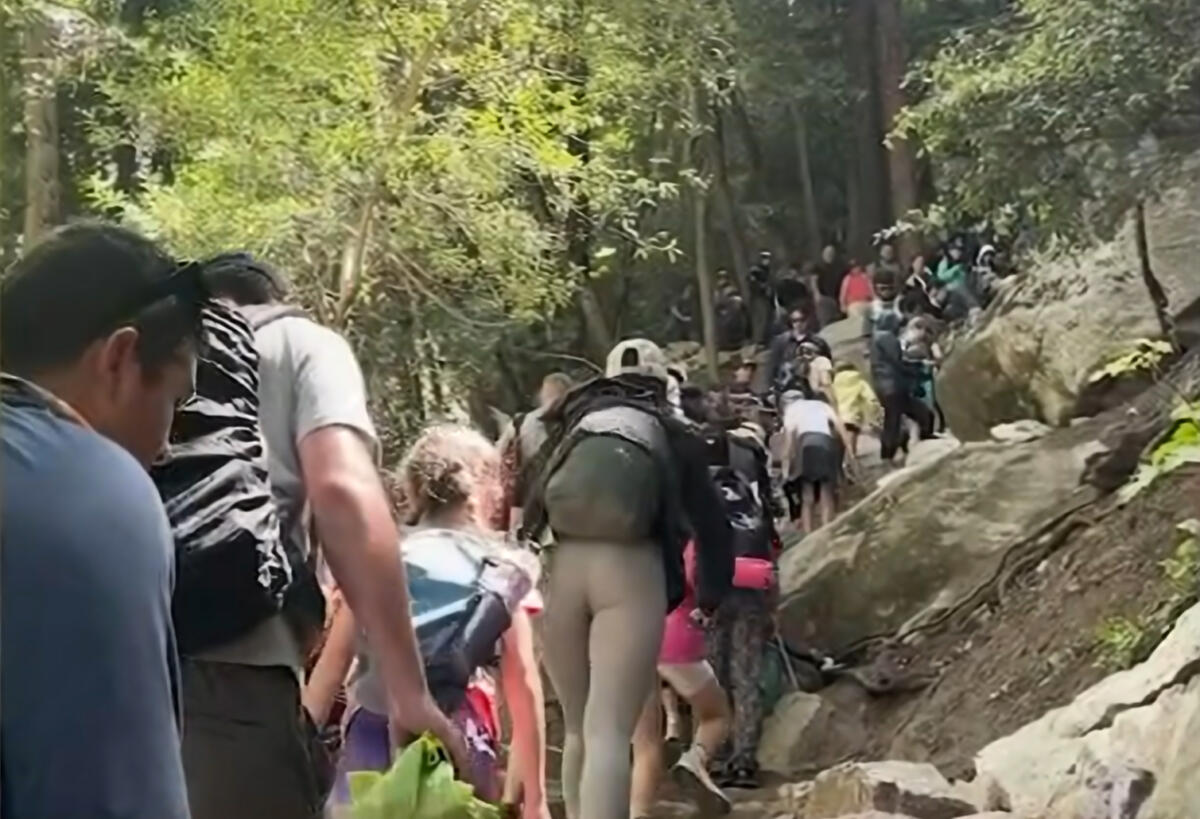
According to media reports, entrance stations experienced lengthy backups. Popular parking areas filled early. Traffic slowed throughout heavily visited sections of the park. Some visitors described spending much of their day navigating congestion rather than enjoying waterfalls, trails and scenic overlooks.
For RVers, the challenge can be even greater. A passenger car can often squeeze into spaces unavailable to larger rigs. Even RVers staying in campgrounds frequently use a tow vehicle or toad to explore the valley floor, making parking availability an important part of the day’s plans.
The situation wasn’t entirely unexpected. Yosemite has battled congestion issues for years. The park remains one of the most visited destinations in the National Park System, attracting millions of visitors annually while operating within a landscape where expanding roads and parking lots is neither simple nor necessarily desirable.
Still, Memorial Day was the first major opportunity to see how Yosemite’s new approach would perform under real-world holiday traffic.
Park officials urge caution
Park officials have pushed back against descriptions of the weekend as evidence that the reservation-free system is failing.
Memorial Day has long been one of Yosemite’s busiest weekends. Heavy traffic, crowded facilities and parking shortages are hardly new phenomena inside the park. Officials argue that one holiday weekend does not provide enough information to judge the success or failure of the current approach.
That’s a fair point.
Then again, many visitors would argue that spending an hour or more waiting to enter a national park isn’t exactly the experience they hoped for, either.
The debate highlights a reality Yosemite has struggled with for decades. People want easier access to the park. They also want shorter lines, less traffic and readily available parking. Accommodating all of those goals at the same time can be difficult when millions of visitors are competing for the same limited space.
What RVers should expect this summer
One busy holiday weekend doesn’t settle the argument over reservations.
What it does provide is a useful reminder for RVers heading to Yosemite this summer.
Arriving early remains one of the best strategies for avoiding headaches. Building extra time into travel plans is probably wise. Visitors who assume they’ll roll into the park late in the morning and easily find parking near popular attractions may be disappointed during peak periods.
Whether Yosemite eventually restores reservations, modifies the current system or stays the course remains to be seen.
But if Memorial Day weekend was any indication, RVers may want to pack a little extra patience along with the hiking boots. Yosemite’s waterfalls, granite cliffs and spectacular scenery are still there. The available parking spaces, however, seem to disappear pretty quickly.
Sources include
ABC7 News
RELATED
- Yosemite warns about irresponsible RV parking
- Yosemite opens campgrounds and Tioga Pass for summer
- The reality of visiting Yosemite National Park with a dog
- Iconic Yosemite National Park hotel to close indefinitely
- Mystery stowaway! Yosemite critter takes joyride in tourist’s car, discovered days later
RVT1263b







 Vera Lynn was beloved by British and American troops during World War II, mostly in Europe, where she had widespread radio exposure. Her signature tracks, “We’ll Meet Again” and “The White Cliffs of Dover,” became anthems of resilience for the Allied war effort in Europe. If your father or grandfather fought in World War II in Europe, they almost certainly loved this woman and her inspirational songs. Here she is singing “We’ll Meet Again.”










 The steaks start on the cooler side for a smoke bath. Rollins flips them once and keeps them there until they hit about 105 to 110 degrees. After that, they move to the hot side to finish over flame.