Home Blog Page 14

RV review: ThAirCamper for pickup trucks—inflatable everything!

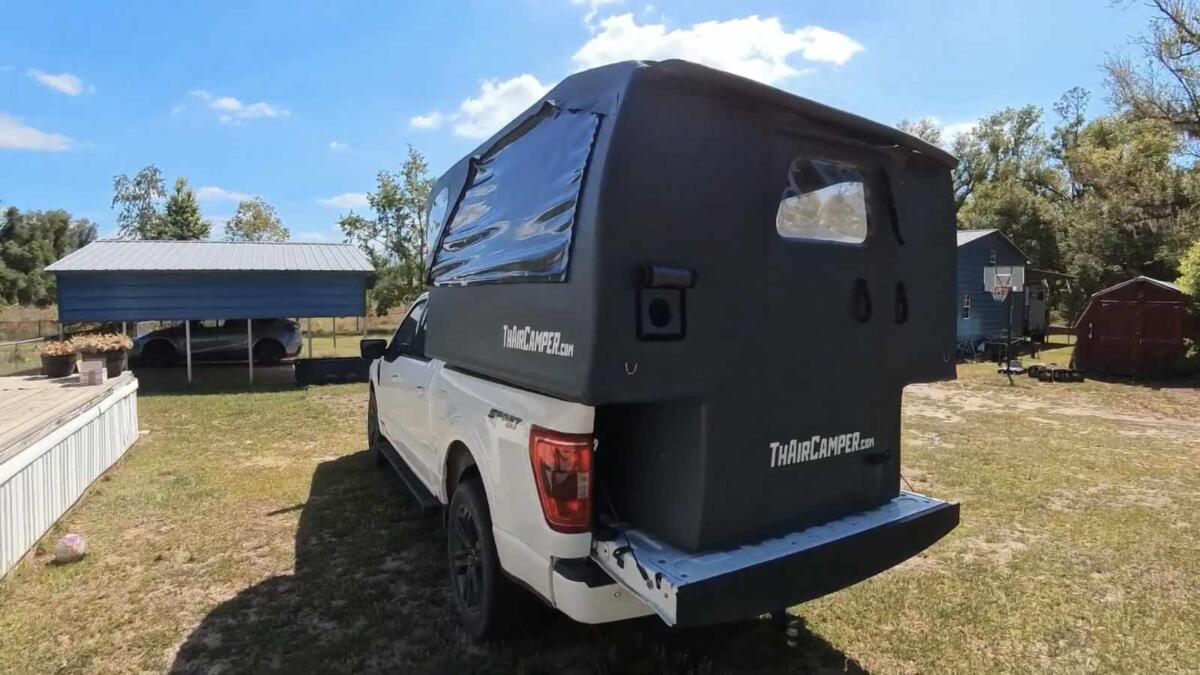
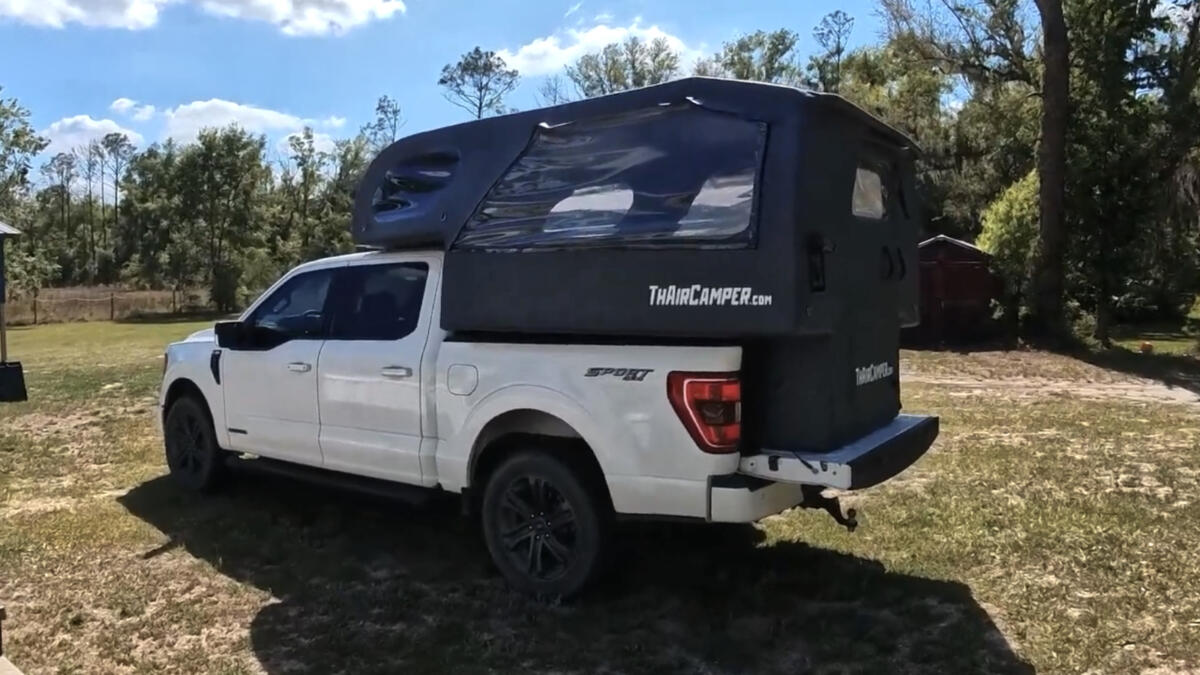
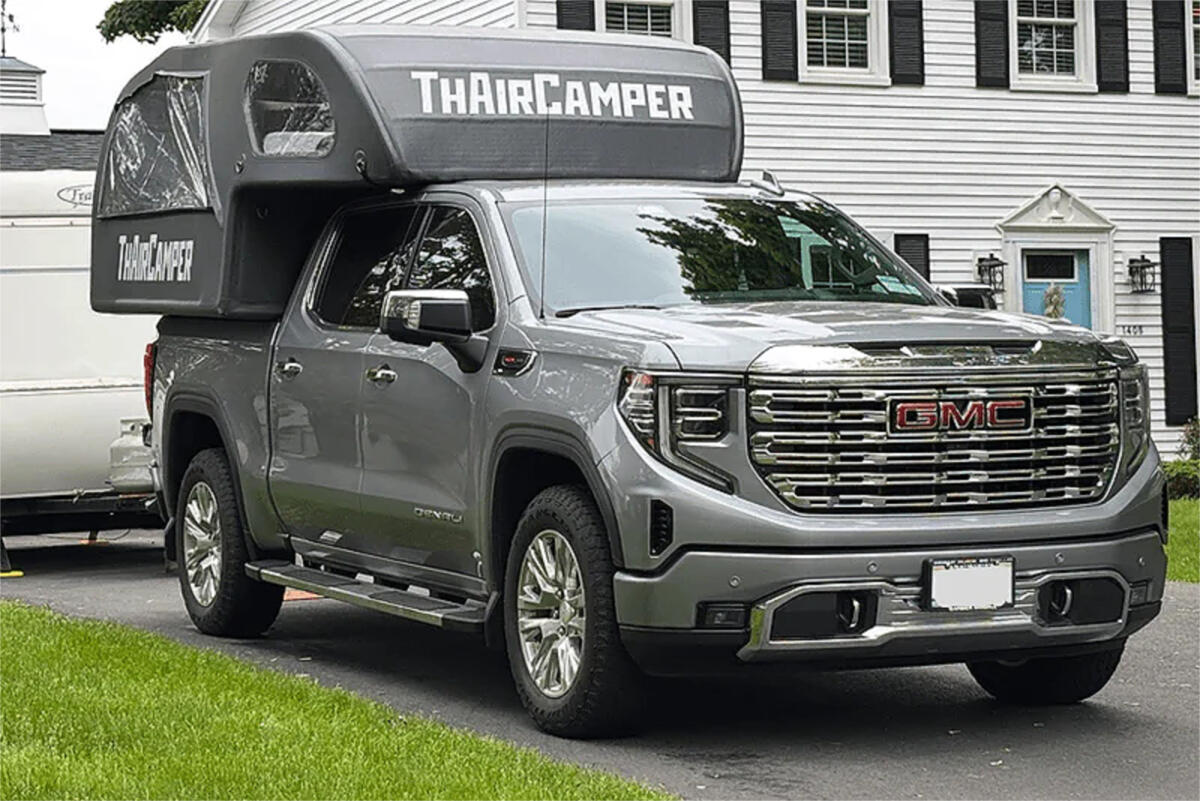
Today’s RV review looks at the ThAirCamper for pickup trucks. What you have here is a very simple inflatable pickup camper that fits, and is appropriate for, a variety of trucks, including some mid-sized pickups. It’s a very simple solution, but it may not be for everybody. 

What is the ThAirCamper? 

The ThAirCamper is an inflatable cabover pickup camper that’s more of a foundation for your camping adventures than a finished product. In many ways, this is the kind of thing that appeals to me. 

There are a lot of reasons why this can be a great idea for some RVers, er, campers, but also might not be enough of a finished product for others. 

What this camper offers is a number of choices of sleeping surfaces for campers, and pretty much that’s it. Everything in this camper is made of a similar material to an inflatable kayak or some of the other inflatable things like that. 

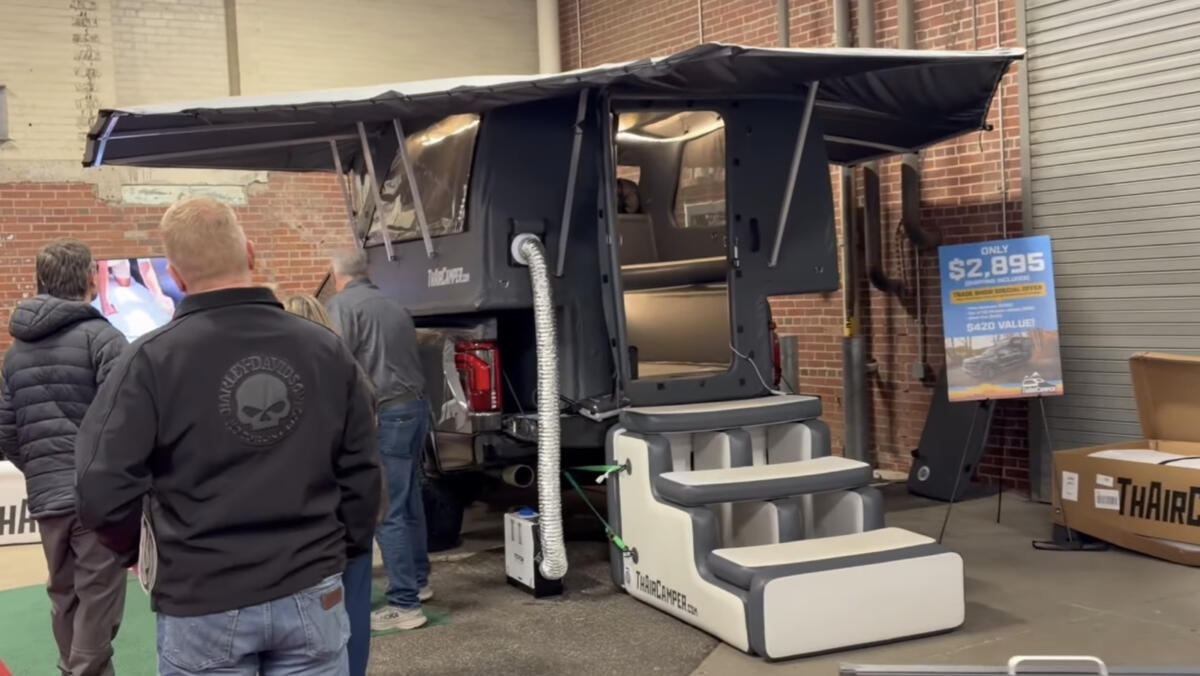
Yes, I’ve seen inflatable couches, and ThAirCamper even offers inflatable steps as an option. 

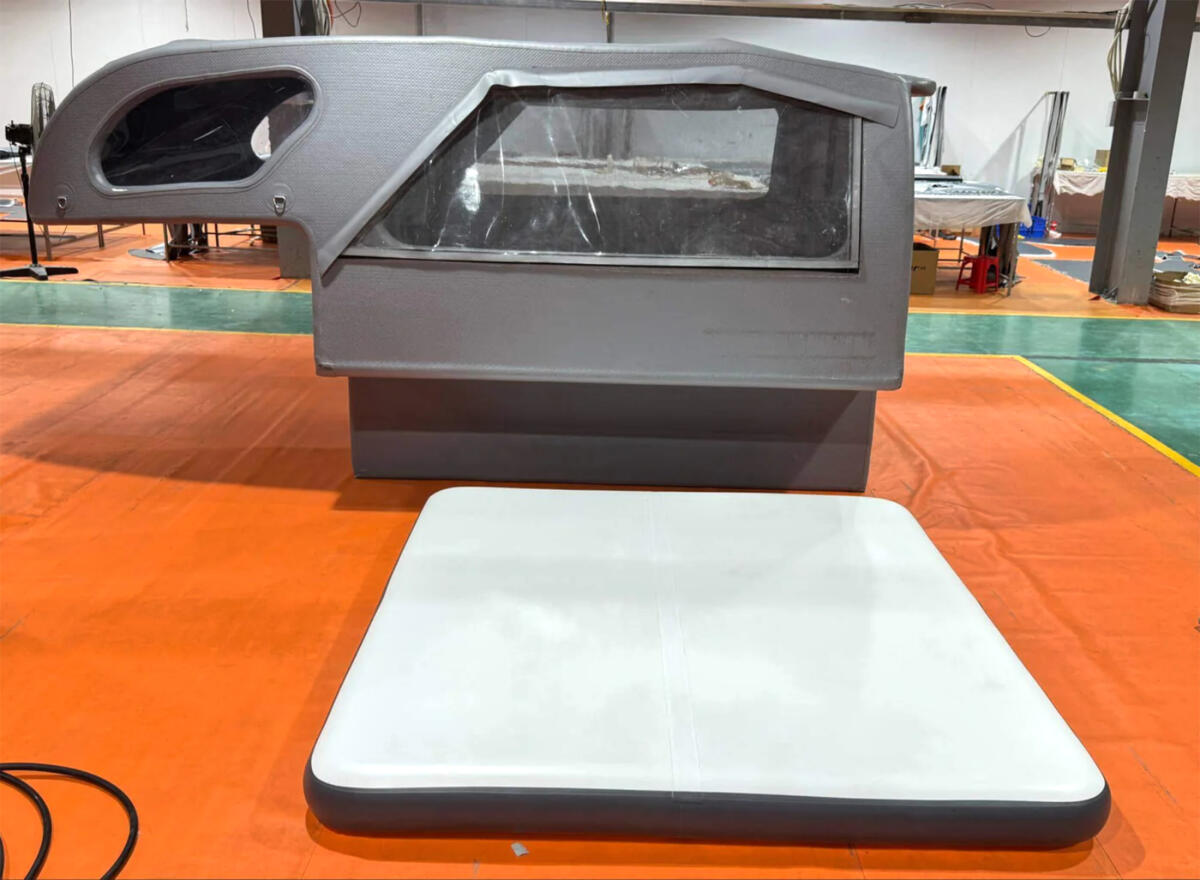
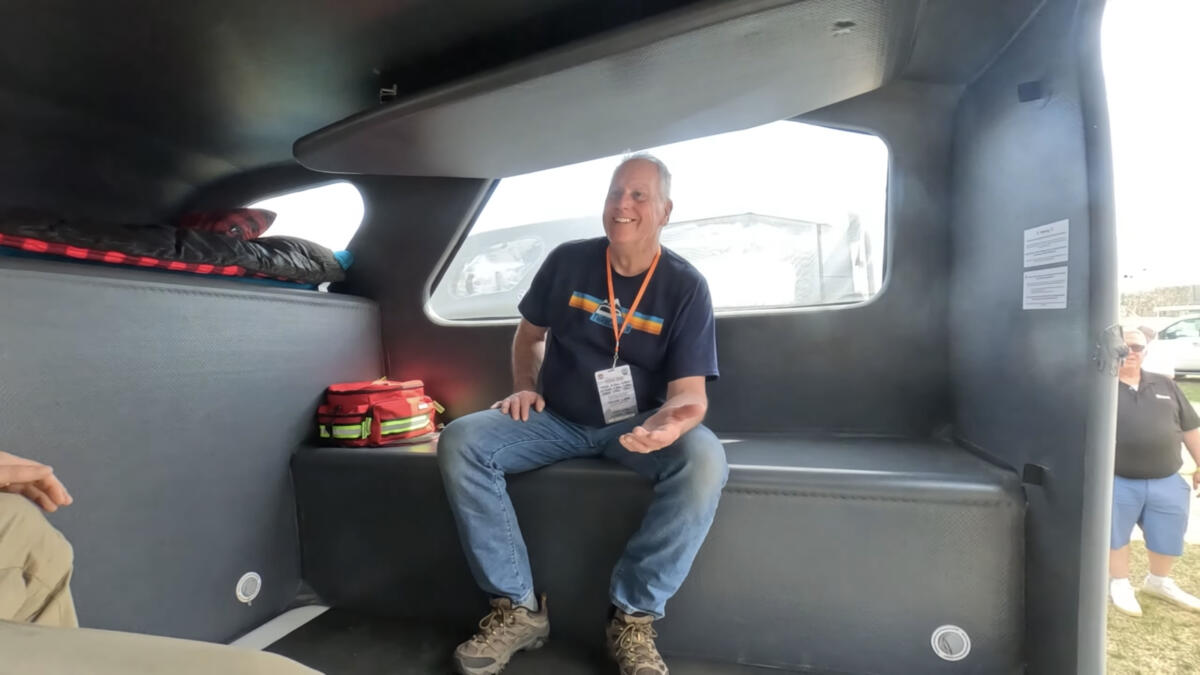
When you step into the camper from the rear, you’re faced with a bench on either side of the space. The benches are made of inflatable material, as is the floor, with that floor being white, the rest being a gray color. 

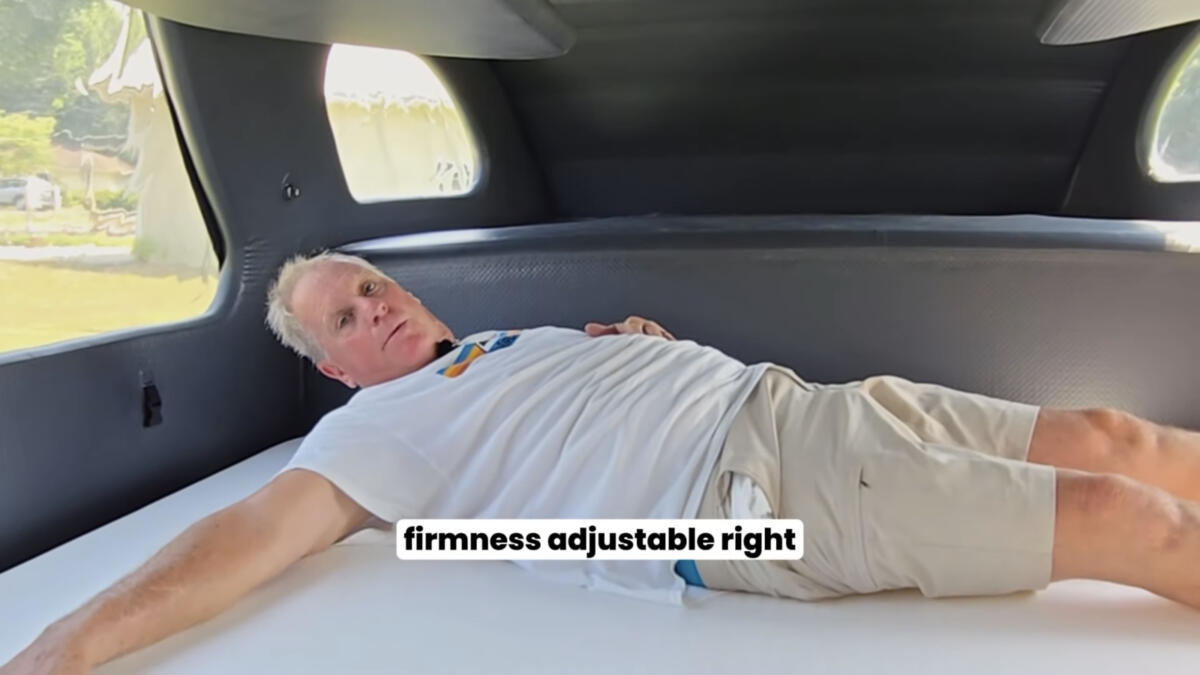
The floor of this is actually intended to be an air mattress, and the air is intended to provide a thermal barrier of sorts. You can also vary the amount of air in this space, making the floor harder or softer. 

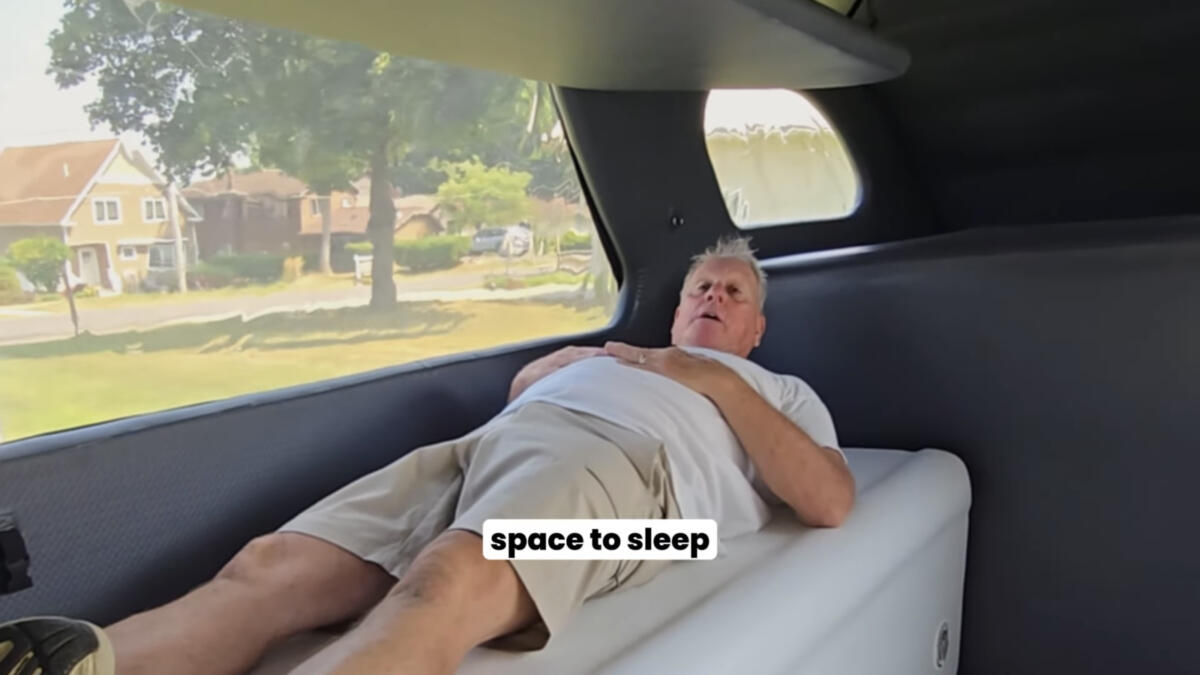
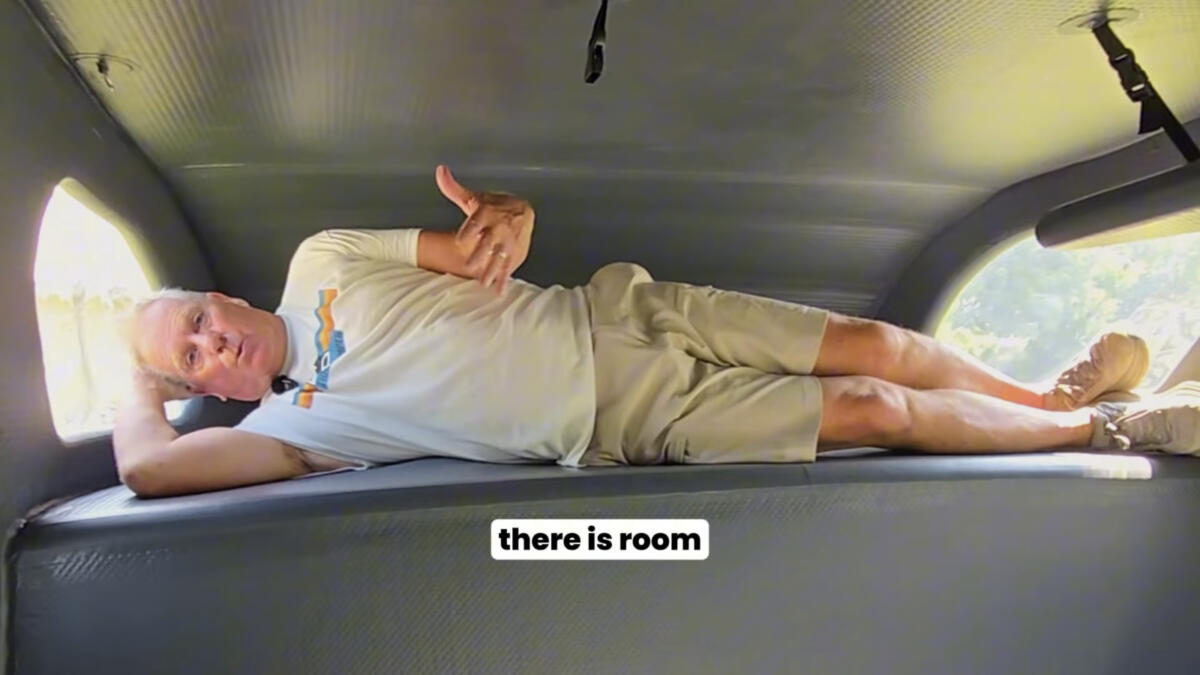
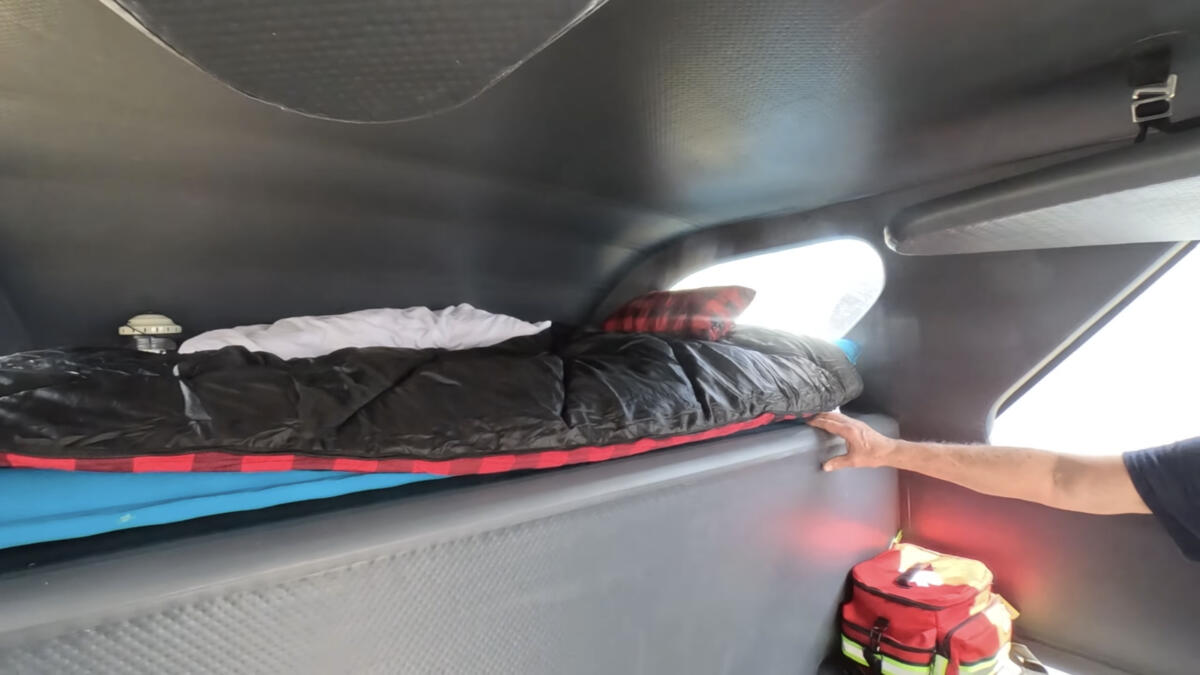
Of course, you can also use the cabover area as a bed. The founder of the company, Parr Wiegel, has demonstrated using that space on video. Wiegel brags about being over 6’ tall and weighing in at 240 pounds, and claims the space works well for him. 

Optional inflatable mattress/awning

But there’s another option. You can also get an inflatable mattress that bridges itself between the two side bolsters and offers a raised sleeping position that also offers the ability to inflate to your comfort level. In my mind, this would sag in the space in the middle, but Wiegel can be seen bouncing around between different positions on this mattress without any noticeable sag. 

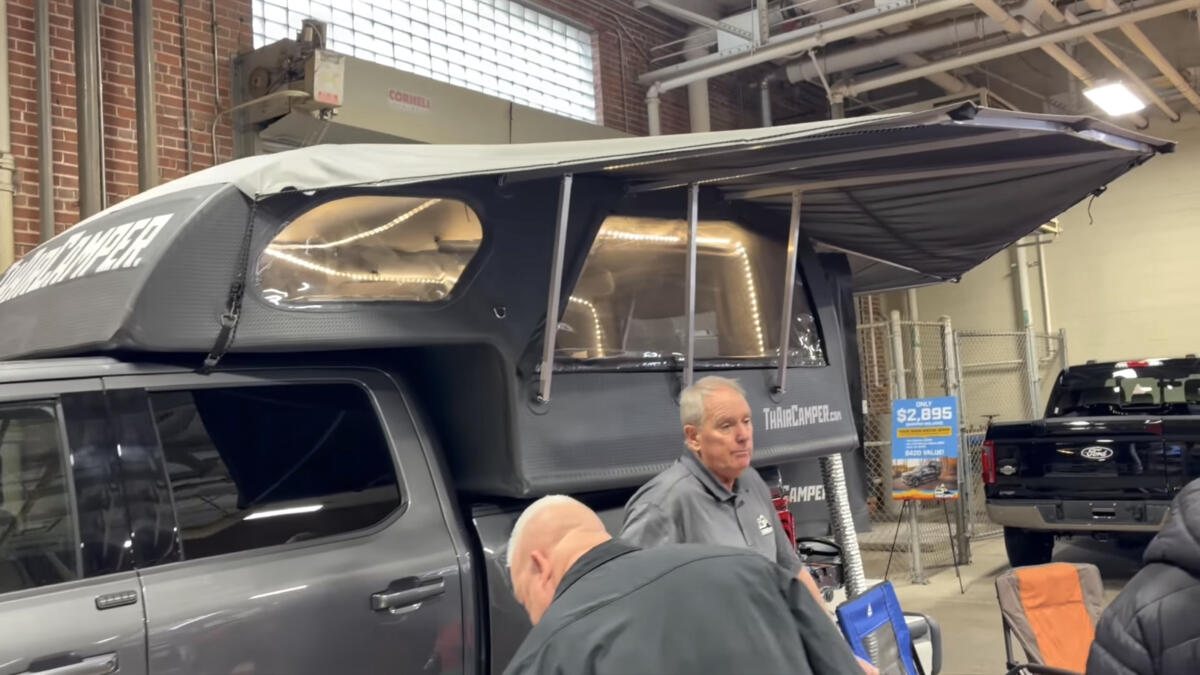
Interestingly, you could also use this optional inflatable mattress as an awning, as Wiegel showed at Overland Expo, where he attached the mattress to the outside of the ThAirCamper and used a couple of supports to keep it raised. 

The window curtains in this are also inflatable, sort of. Essentially, there are pads that zip onto the window openings on the side. These can be ratchet-strapped down while driving or ratchet-strapped vertically to open the windows. Again, the inflatable nature of this means that these pads serve as a pretty decent source of insulation. There are screens that stay in place over the window all the time and clear panels that can zip open or closed to block the breeze without blocking the view. The side windows are pretty large. 

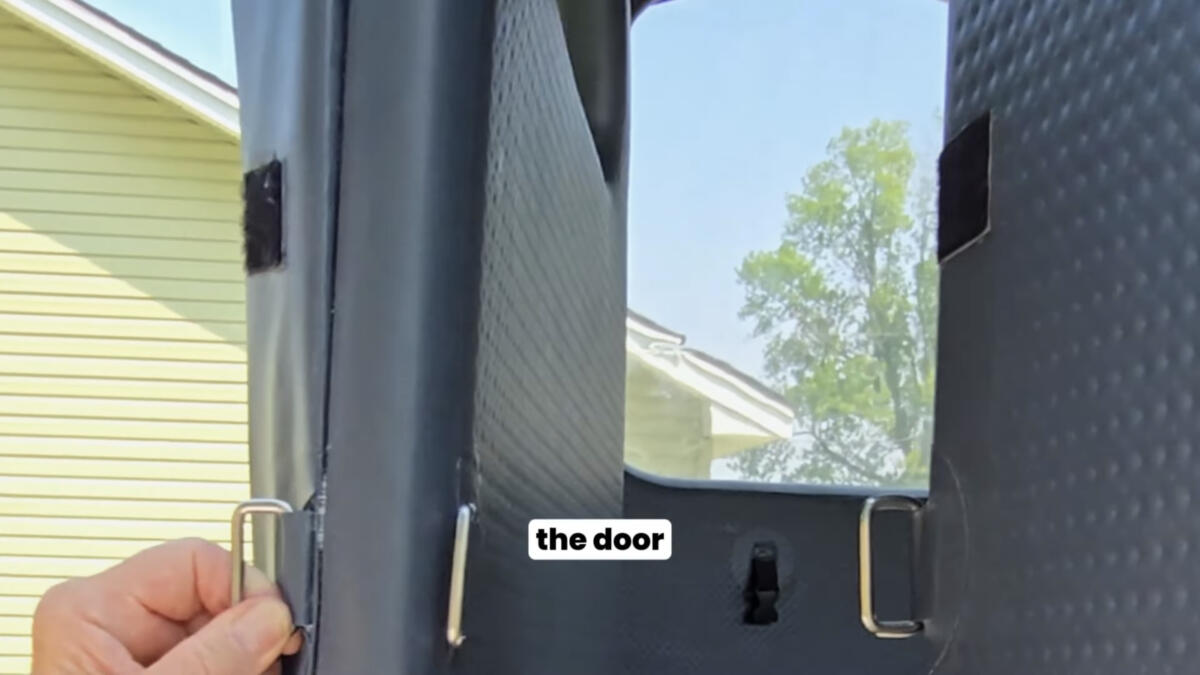
I had mentioned accessing this through the rear door, and this has a provision to lock the door in place. There’s a set of metal rings and you can push them through the exterior or the interior. With that, you can lock these from the outside or inside, depending on where you are. There are also straps that can hold the upper and lower portions of the door in place that you can secure, again, from outside or inside. 

Installing the ThAirCamper

Installing this topper, or camper, is quite simple. It comes with a battery-powered pump as well as a manual pump, sort of like an old bicycle pump. You simply inflate the various sections and then rock the camper back onto the back edge and push it up onto your truck. 

There are straps that tie into the cargo tie-downs on the back of the truck. Then you also tie the overhanging front into the metal under the door insulation for the back door of the truck. 

It’s funny, to me, that almost no mention is made of anything other than a four-door truck. But nowadays, it’s almost unusual to see anything but a four-door truck. 

The one challenge I can imagine comes from having to pull back the rubber door insulation on the back door of your truck and hooking the topper onto the metal beneath that, although it’s done with a hook. 

I saw one video on the internet where they simply used a ratchet strap to span the ceiling of the cab of their truck. I guess this would give you a hanging provision inside the cab as well. Okay. 
Some interesting options for ThAirCamper

The company has come up with some interesting choices for buyers. I’ve already mentioned the additional mattress pad and the inflatable steps. You can also get a bat wing awning, of sorts, that wraps around the top of the ThAirCamper. This would have to be installed and removed after each outing.

Another provision in the camper is a 4” hole in the back. Wiegel has intended that to be able to route a hose into the space for either a diesel-powered heater or one of those small, portable air conditioners. The company also offers a 4” fan that can utilize this hole. When you’re not using the hole, there’s a flap that drops down and is held in place with Velcro. 

You can also get a bolstered piece for either or both of the side bench areas. These have a lip on the outside edge, so it transforms the bolstered side into more of a bed, but still leaves the middle open if you want to use that for a bed too. 

How durable is an inflatable topper?

I have shared with you that I have owned a Flated Air-Topper for my truck for about two years. That thing has been all over the place and from elevations as high as 7,000 feet (Flagstaff) to sea level. I figure it’s got at least 30,000-40,000 miles on it. 

Thus far, aside from being dirty, it’s as solid as the day I first put it on the truck. 

Like this ThAirCamper, one of the things I really like about the Flated Air-Topper is that I can deflate it and put it in my garage if I just need a regular old-fashioned pick ‘em up truck. 

The main reason I bought the Flated originally is that it was far, far less expensive than a fiberglass topper. My expectations were that it wouldn’t last as long as it has, and I don’t see that changing any time soon. Whatever magic material this inflatable topper is made out of, it’s pretty darned durable. 

So, let’s talk about camping

Okay, so you have beds. In fact, you can sleep four people in here in a pinch. That’s one on the cabover section, two on the inflatable sides or on the optional mattress, and one on the floor. 

I have used my truck with the Flated Air-Topper as a camper, too. Here’s how I did that. 

I’ve written about a bunch of camping gear here, including the Camco Travel Toilet. When we bring this gadget, we enclose it in that SylvanSport Privy Bivy. In fact, we did just this last weekend in Seligman for the kickoff of the Route 66 Centennial. 

For cooking, we bring the Duxtop portable induction cooktop and power it with our Ugreen Power Roam 1200. That’s still my favorite portable power station of the ridiculous number of those that I own. The other gadget I power with the Ugreen is our Bodega TWW45 12-volt cooler. 

As for water, we use our Dometic GO Hydration water jug and brew coffee with the Aeropress. 

Whenever we go camping in the truck, I also bring our Lippert Picnic Popup Gazebo, and we have slept in that on cots rather than in the truck. Oh, it’s not because it’s full of all the stuff that I had already mentioned. All that fits in the back seat, so I can charge the power station with the truck. However, I can and do sometimes just bring portable solar panels. 

The thing that is absolutely overwhelming about camping with that gear is how stress-free it is. I’m not thinking about plumbing leaks or slide seals or roof maintenance or any of the other things that whir in my brain while we’re towing our trailer. Our trailer has been very good. Still, this off-grid camping is really relaxing for me. 

I also like that it all fits into our four-wheel-drive truck, and I can go where nobody else is. That, too, is pretty great. 

But would this camper work in your traveling style? If I didn’t already have the Flated Air-Topper, I would likely buy the ThAirCamper. At $2,895, it’s still cheaper, by far, than fiberglass or other toppers, and you get the benefit of this being a camper.

Let me know what you think about it. 

RELATED

RVT1262

Tire inspection: How to get it done properly

Almost every thread on “tire life in RV usage” has said something about “tire inspection.” What hasn’t been properly or completely covered is the “how to” and “who can” do a competent job of inspecting tires. Well, in this post, I am going to try.

What is a tire inspection

When we talk about tire inspection, most of the time we are referring to inspecting a tire after a few years of use. The owner wants to know if it is OK to use the tire for a few more years.

This post is not about the “inspection” every owner should do before leaving on the next trip. That inspection just covers the basics of looking at the tread and sidewall and checking tire inflation. This post is about an inspection done to determine if it is OK to use your tires for another year or two.

How to find a competent tire inspector

I have read some posts where people point out the difficulty of finding someone they can trust to do a competent job. Yes, answering the question of “Who do you trust?” is difficult.

Here is what I would consider:

A “complete” inspection would include, at a minimum, a visual inspection of the internal and external surfaces of the tire with bright lighting and running hands across and touching every inch of the interior and external surfaces. This would require each tire to be removed from the RV and dismounted. This presents other problems as dismounting and remounting a 5+-year-old tire must be done with extra care, as the old rubber is more susceptible to tearing.

Ideally, on steel-body tires, an “X-ray” or “holographic” inspection is desirable. This type of inspection is many times done before a steel-body tire is retreaded. But because of the potential for tire damage, not many dealers are willing to risk damaging a customer’s tire, so they are not willing to do the dismount and remount.

Also, I doubt that you will find any regular tire dealer has the necessary equipment to do X-ray or holographic inspection. Even if you found a retread shop willing to do the inspection, you would probably discover the cost of such an inspection to be very high, maybe more than the cost of a new tire. So what are your options?

  • Don’t do a complete inspection and hope you have no problems.
  • Or do an inspection without dismounting the tire from the wheel yourself.

If you do the tire inspection yourself

If you decide to do the inspection yourself, I would strongly urge you to educate yourself on what to look for. You need to be aware that a thorough inspection of a tire on your RV should take at least 10 minutes for each tire.

BEFORE you start, review and be sure you understand all the points in these 7 blog posts:

OK, so what should you be looking for?

  • Signs of the tire being “out-of-round”. You can learn this by doing a “free-spin-inspection” (see link in the “How do I inspect my tires” post).
  • Bumps or depressions in the tread or sidewall.
  • Cuts or snags in the sidewall or tread.
  • Punctures, rocks, nails or screws in the tread.
  • Ask yourself, “Has the tire ALWAYS been fully inflated?” This means you NEVER had a Low Pressure Warning from your TPMS (tire pressure monitoring system).
  • Did you do a test of your TPMS and the TPMS warning system within the last 12 months?

If you see anything suspicious or “different” in one of your tires, you should probably take that tire to a dealer that sells that brand of tires. Have the store manager inspect the tire to determine if it needs to be replaced.

If you ever had a TPMS warning, that might be an indication of potential internal structural damage and that tire needs extra examination.

Roger Marble

*****

If you have tire questions, check out Roger’s posts on RVtravel.com. There are hundreds of posts covering everything to do with tires.

If you still have a question for Roger after searching the above posts, send your inquiries to him using the form below.

Name
Drag & Drop Files, Choose Files to Upload

RVT1262

Why I write for RVtravel.com

This article was originally published in 2022, but we can’t help sharing it again. We love you, Nanci! 

By Nanci Dixon
Recently, at one of our RVtravel.com staff and writers’ meetings (yes, we are real RV people, not artificial intelligence [AI] “androids”!), someone asked why we write for RVtravel.com and not other publications. They were referencing publications where the pay might be better, but the articles don’t need to be as accurate or truthful. I only had to reflect for a moment.

Passion

I had been reading, devouring, really, RVtravel.com for years as an ardent RVer long before I ever submitted an article to the newsletter. I am passionate about RVing. From the time I was 15 and saw my first Winnebago Brave, I knew that camping in an RV was what I wanted, no, had to do. From a van converted in the backyard to a truck camper to building a Class C, then two Class A’s, I was hooked. I dragged my family with me!

The day I retired, we sold our house and all our stuff except for a few mementos and took off in ten-degrees-below-zero weather. These last eight years of full-time RVing have been a gift and an adventure. Recently, we have become 3/4-timers, but I can still write from some of the most beautiful spots in the country.

Expertise

RVtravel.com taught me a lot over those years. The writers are experts. I continue to learn from them. They are real RVers and have extensive backgrounds in operation, maintenance, and repair.

Building the van and Class C from the ground up taught me a lot, too. Decades of RVing and seminars have honed my skills, both through mistakes and triumphs. I want to continue to share my learning and expertise with others, particularly those just starting out.

The RVtravel.com community

The readers of RVtravel.com have become my community. You have become familiar through emails and comments. You have sent condolences when my dad died and sympathy when our RV had its big “oops” accident.

Your comments keep me on my toes. When I put a photo of the wrong snake in an article, you let me know immediately! You have sent me suggestions with the best RVing apps, and you even sent me info about getting the rinser out of the hot water tank. (Sigh. I tried, but it’s still in there.)

You don’t always agree with some of my thoughts or writing (and yes, you are sometimes very vocal about it), but that is part of the community of RVers. We are all different and yet so much alike in our love of camping and RVing.

When I address you as “Dear readers,” I mean it. You have become very dear to me. You, dear readers, along with the staff of RVtravel.com, have become family. This is why I write for RVtravel.com.

Read all of Nanci’s stories here.

RVT1262

The big mistake I made that ended with an RV rat infestation!

10

I was all ready to write an article about getting ready for a long trip—things like sanitizing water lines, checking that everything works, cleaning and clearing out things no longer needed.

But life lessons got in the way of that article. Last year, we bought a project house in the Southern Arizona mountains. We were living in the RV for about ten months while traveling, camp hosting, and discovering that our project house was really a fixer-upper.

After those ten months of angst, rising costs, and four contractors, we finally moved into the house, unpacked the RV, cleaned it up, turned off the water and the fridge. Every couple of days, I would go in and check the RV’s mouse traps.

Every day brought new challenges with the house: something new to fix, a leak to stop, paint, stain, or patch. We were busy and fell into bed exhausted every night.

Fence down, rats in

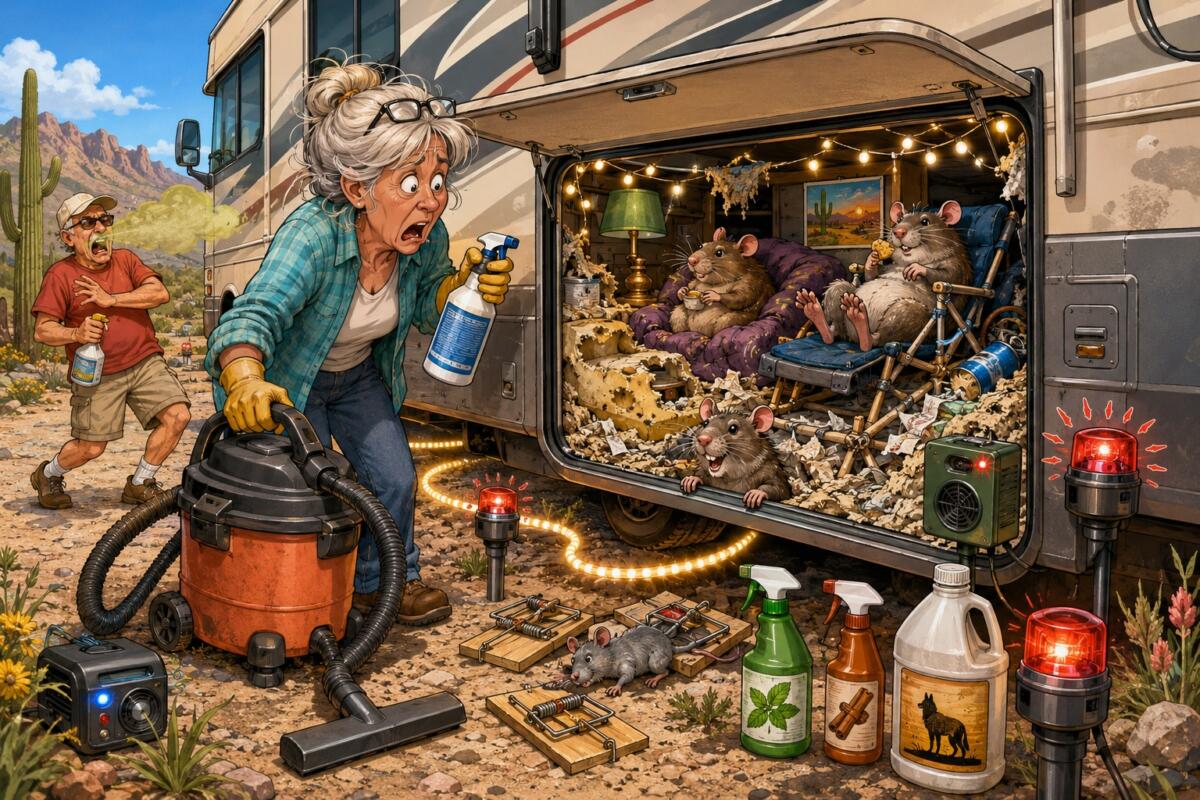
When 40 feet of the solid block snake fence needed to be taken down and rebuilt, we started an epic battle against pack rats. Beady black-eyed, fat, so-and-so pack rats. I had traps everywhere, little snap traps, big snap traps, ones that would have taken my finger off if a stick hadn’t set it off first. Electronically flashing lights with sirens. Everything!

Glue traps

Glue traps, too. A word of advice about using glue traps outside: Don’t. On the first day, we got two rats in one trap. On day two we had to peel off both a large lizard and a small bird. Both survived, although a bit traumatized with sticky feet and a few less feathers. That was the end of glue traps outside.

My big mistake

With the rats semi-under control, it was time to get the RV ready for our northern trek: vacuum the bays, and clear out stuff we won’t need and haven’t used. That clearing out is where I found out my big mistake, big time. I opened a bay door and terrified both a live rat and myself.

First, I rolled out the tray in the bay, found lots of little paper shreds and… ughhhhhh… rat droppings. More droppings, more shreds of everything chewable. Three large nests under the pull-out trays. Even though I diligently checked all the mouse traps in the RV, I did not think of the bays; I ignored them. I actually ignored the whole RV for the last several months.

Three arduous days later, it was finally done. I took everything out of the bays, disinfected and washed everything that could be cleaned, and threw out what couldn’t. I had to buy a $99 shop vac. No way was I going to get rat droppings in my house vacuum! I went through two bottles of 409, two economy-size cans of disinfectant, and a full dose of regret. Because, as a decades-long RVer, I knew better.

No sympathy

I found a place for the glue traps, though. Inside the RV bays, weighted down so they couldn’t be dragged off. They worked. One of the rats was the size of a small cat. Ugh, ugh, ugh! Rats on glue traps are not for the faint of heart! They are stuck but not dead. They require what the package directions advise: “Humanely euthanize before disposing.”

I don’t actually do the kill; that is my husband’s lot in life. When he suggests that I should kill the rats, I just mention that he grew up on a farm. I thought I would feel sorry for them—they are kinda cute. But, no. One look into their black soulless eyes and another glance at my favorite now-chewed-up camping rocker ended any sympathy I might have had.

Prevention is worth a pound of cure!

So we went into our old tried and true methods of mouse and rat prevention, but on steroids. We checked for entrance points and sealed them with foam spray. We put rope lights under the RV, peppermint spray in the bays, ultrasonic mouse repellers, snap traps, glue traps, solar flashing lights with sirens around the RV, and coyote pee. So far, so good.

The moral…

So, the moral? You can’t ignore an RV, no matter the circumstances. You just cannot ignore an RV.

And when spraying coyote pee around the RV, don’t spray into the wind…

What we used (and has worked)

Being 20 miles from the closest Home Depot and any hardware store, Amazon has become our go-to, and a lot of those items can be found there.

What works and what doesn’t? Mice and rats can get used to anything if food and shelter are available. Best to seal everything and make sure no food source is available.

RELATED

RVT1262

RVing news from around the world

3

Here are some of the latest developments affecting RVers and caravanners outside of North America — from new travel fees and campground changes to tourism crackdowns and road-trip trends. We have only included a limited number of countries this time. We’ll include more in posts to come.

ITALY — Venice has expanded its controversial day-visitor fee system for 2026, charging tourists between about $5 and $11 on peak days. Rome is also considering small admission fees at some previously free attractions. RVers touring Europe this summer may want to budget for added local tourism charges in several Italian cities.

SPAIN — Popular tourist areas are tightening rules aimed at reducing over-tourism. Some coastal regions are increasing tourist taxes and imposing stiffer fines for behavior such as overnight beach camping, public intoxication and littering. Travelers report that crowded destinations are becoming stricter about parking larger campervans in urban areas.

RVing in Norway
RVing in Norway

NORWAY — Norway plans to allow heavily visited communities to add a tourism surcharge to overnight stays. Tent campers and caravanners are expected to be exempt in many cases, which could make RV travel more economical than hotel stays in high-demand destinations.

FRANCE — More French cities are increasing overnight tourism taxes as officials attempt to deal with overcrowding and infrastructure costs. Some popular areas are also limiting overnight parking for self-contained motorhomes outside designated camping areas.

EUROPEAN UNION — A long-delayed electronic entry system for non-European visitors is still expected to launch in stages beginning in 2026. Travelers from the United States and Canada will eventually need advance electronic authorization before entering many European countries. RVers planning extended European caravanning trips should monitor the rollout closely.

SOUTH AFRICA — Caravanning continues to grow in popularity in South Africa as more travelers seek affordable road-trip vacations and outdoor experiences. Industry observers cite expanding rental options, improved camping infrastructure and growing interest in nature-based tourism. Fuel prices and limited infrastructure in remote regions remain challenges for long-distance caravan travelers.

AUSTRALIA — Caravan and camping travel remains extremely popular, with industry officials reporting continued strong demand for caravan parks and camping reservations. Rising fuel prices and campground costs, however, are becoming bigger concerns for retirees traveling long distances around the continent.

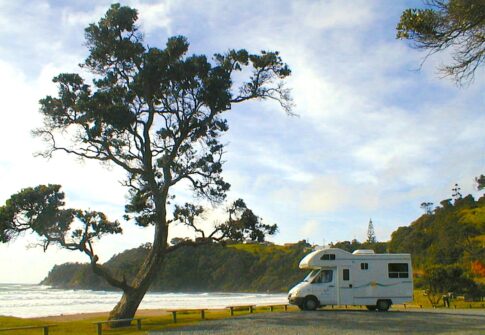
Campervan in New Zealand
Campervan in New Zealand. Photo by Chuck Woodbury

NEW ZEALAND — Several local councils continue tightening restrictions on “freedom camping,” the New Zealand term for overnight camping outside formal campgrounds. Travelers using self-contained RVs generally face fewer restrictions than tent campers or vans without onboard toilets. Some towns are adding designated RV-only parking areas to reduce conflicts with residents.

CHINA — China is promoting more self-drive tourism as part of a broader effort to boost domestic travel and leisure spending. Government officials recently announced support for road-trip travel, expanded vehicle-modification industries and improved tourism infrastructure. Analysts say the changes could encourage more RV and campervan travel among China’s growing middle class, especially younger travelers seeking flexible vacations.

JAPAN — Tourism officials in some heavily visited areas are considering new measures to limit overcrowding as international tourism surges. RV travel is growing slowly in popularity there, with more campgrounds adding hookups and services for small motorhomes and campervans.

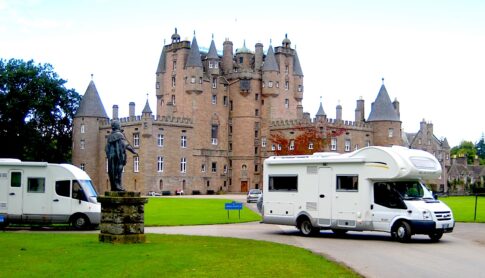
Scotland RVing
Scotland castle: Photo by Chuck Woodbury

UNITED KINGDOM — Several caravan parks and holiday parks are adding luxury glamping units and upgraded amenities as demand for domestic travel remains high. At the same time, some coastal communities are debating tighter restrictions on overnight roadside parking by campervans.

GERMANY — Germany continues to be one of Europe’s strongest caravanning markets, with growing interest in RV rentals and campground travel. Industry analysts say many younger travelers are embracing RV vacations as a lower-cost alternative to hotels and air travel.

GREECE — Greece has introduced new visitor fees on many cruise passengers visiting its islands, part of a broader effort to reduce overcrowding. Independent RV travelers may benefit as some tourists shift away from cruise vacations toward slower-paced overland travel.

Overall, RV and caravanning travel continues to grow worldwide, but travelers are increasingly encountering higher tourism fees, tighter parking regulations, and efforts to control overcrowding in popular destinations. For RVers willing to travel more slowly and stay flexible, the road remains wide open.

RVT1262b

Beyond the headlines with Tony Barthel: GM’s surprise exit (not good), industry insights, and RV tech careers

31

This week, we look at how the decision by GM to dump the Silverado medium-duty trucks will affect the RV industry. Then we also sit in on the RV Industry Power Breakfast and review the conversation. 

More bad news for poor Coachmen

Coachmen, one of the many divisions of Forest River, does some pretty cool stuff, and one of the cool things they did was work with GM to create the first-ever legitimate EV motorhome—the RVEX. In fact, they were justifiably proud of the rig at last year’s Open House and had plans to move forward. 

But GM pulled the rug out from under them and dropped the BrightDrop van that it was based on, so all that effort Coachmen put into the RVEX got sent to the black tank. 

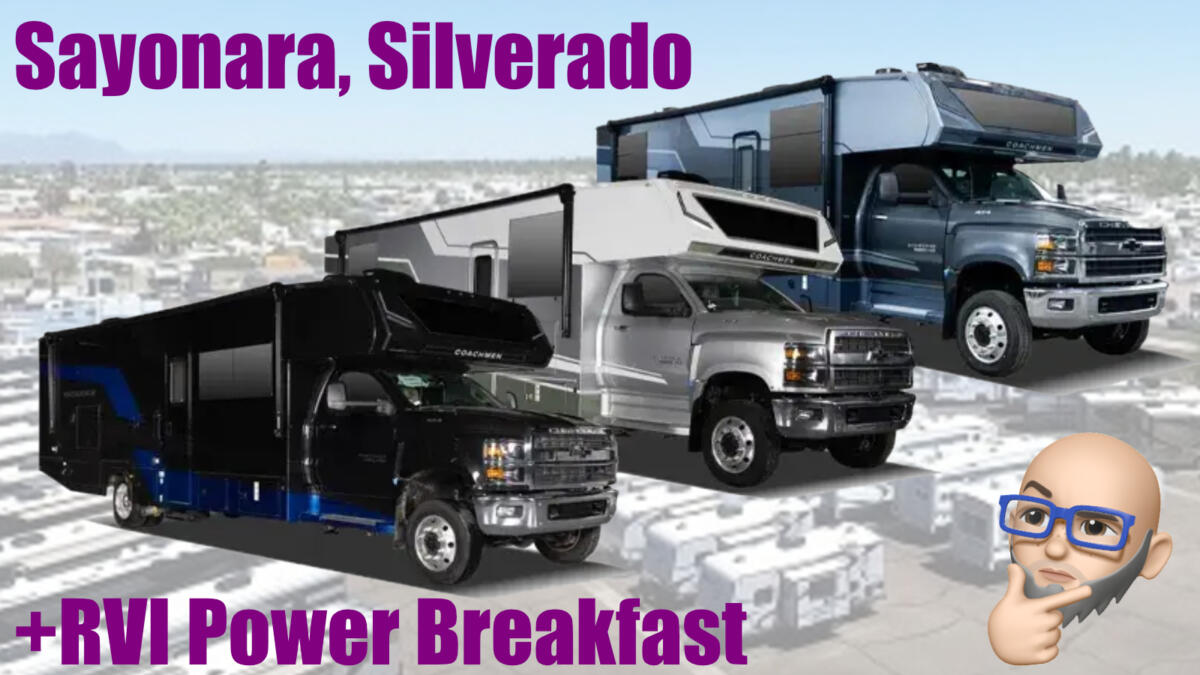
Well, it seems that we’re about to see a repeat of that offense as GM has announced the discontinuation of their medium-duty platform on which the Coachmen Entourage Super C is based. Of course, Coachmen isn’t the only brand facing this, but GM claims sales of the model have been very disappointing, with the numbers dropping 37% over the same period last year. Yikes. 

These things wear the Silverado badge, but are actually produced in a joint venture with Navistar (you know, International) and are dubbed Silverado 4500HD, 5500HD, and 6500HD. Production is scheduled to end when the agreement with International comes to a close on September 30. 

Motorhome sales, in general, are tanking, so don’t expect this to be the last you hear of this kind of thing. However, GM likely planned to sell these things more to construction and other industries. In the grander scheme of things, RVs aren’t a big part of most chassis builders’ pictures. 

What’s for breakfast? 

The RV industry has a big event every year called the Power Breakfast, where everybody who’s anybody in the RV space gathers to compare how shiny their shoes are and hear speakers. This year, Toby O’Rourke, president and CEO of KOA, was one of those speakers.

KOA sign and motorhomeIf you haven’t read it yet, KOA does a remarkable job surveying us camping types in their Hospitality Report, and it’s a fun look into the general state of camping and campers. 

O’Rourke stated that we’re getting out there even more with 52 million people camping, a 24% increase over 2019. But we’re not doing it as much, with frequency down. 

In 2019, 12% of camping households camped just once a year; this rose to 34% in 2025.

“Two-thirds of all people who are camping are doing so just once or twice a year compared to 55% in 2019,” she said. “That’s a significant loss in camper nights at campgrounds.”

So, the whole idea is that if people camp more infrequently, they’re not going to buy RVs (again, this was the RV industry’s breakfast gathering), and campgrounds are going to feel it, as well. The core of the issue: affordability. 

Campgrounds are getting expensive

Let’s be honest, shall we? Campgrounds are getting expensive, and while Russ and Tiña shared in this article that many continue to add amenities, do we really want that? 

According to what I could find, more than 250,000 of us are part of Harvest Hosts, which is a matchmaker that puts us in touch with almost 10,000 locations that allow overnight camping. 

While you could argue that these overnight experiences aren’t free, they’re usually very experiential. A campground might have a pool, but some Harvest Hosts have alpacas or are farms or even drive-in theaters now. 

Newer RV batteries and efficiency technology have made camping without hookups less and less of a compromise. Maybe we are still camping, we’re just not going to campgrounds. But this is pure speculation on my part. 

Bob Parish of Wells Fargo, right, moderated a dealer panel featuring, from, left, Ben Hirsch, COO of Campers Inn RV; Nathan Hart, partner, Walnut Ridge RV; Jon Ferrando, CEO and president of Blue Compass RV; Loren Baidas, CEO of General RV Centers; and Jarrod McGhee, president of Fun Town RV. Photo by RV Business

What’s happening in the RV industry

Funny thing: At that same Power Breakfast, five RV dealership execs took to the stage to discuss things happening in the industry. 

Moderator Bob Parish of Wells Fargo was joined onstage for the panel discussion by Ben Hirsch, COO of Campers Inn RV; Nathan Hart, partner, Walnut Ridge RV; Loren Baidas, CEO of General RV Centers; Jon Ferrando, CEO and president of Blue Compass RV; and Jarrod McGhee, president of Fun Town RV.

One of the most telling things shared was from Ben Hirsch of Campers Inn RV: “The reality is that we’re facing a very real structural change. Artificial intelligence is leveling the playing field for information. It costs almost nothing for a consumer at the flip of their phone to find out what real information is, what real quality is…

“That’s going to drive a difference in our industry. Our industry right now is very sales-focused; it’s going to have to become very service-focused and ownership-focused. If we as an industry don’t actually look at what’s happening under our feet right now and start adapting to the ownership experience economy, some of us won’t be in this room in a few years.”

So, in other words, they’re finally realizing that mistreating customers and building RVs that constantly need repairs isn’t such a great idea for the industry long term? Shocker. 

Poor quality RVs

Quite honestly, the drumbeat of frustration is palpable on social media. So many new owners step into the ring only to feel like it’s a TKO by all the things that don’t function as expected and all the repairs necessary. 

That used to be the case with cars, too. In fact, when you go back a century, it wasn’t unusual to have to be very mechanically inclined to drive a car; today, they’re very reliable. Well, until they get recalled because the technology isn’t working as hoped. 

But affordability, too, was cited, with Ferrando stating, “I looked at our invoices on our most popular RVs in each segment from 2020 and today, and they’ve gone up.” He continued, “The lowest was by 24%. The next one was 36% and then 60%. So, for a customer walking into our showrooms today, it’s 24% to 60% more expensive for the product that they’re coming in to trade in for. How do we figure out a way to stop the product inflation or find a way to bring it down?”

The group repeated things I’ve heard within the industry—demand is there, with used units accounting for sales increases. 

Manufacturers listen to dealerships

But the other thing that kinda bugs me about the industry is that manufacturers mostly listen to dealerships. Do you remember the telephone game? You sit in a circle and tell your neighbor you want a bologna sandwich, and by the time it gets back around to you from one telling the next, it’s a ham and Swiss on rye. With Miracle Whip. Disgusting. 

That’s part of what I see as the problem within the RV industry. If you’ve ever asked, “Who thought this would be a good idea?” it’s that telephone game. You mention something to a salesperson, who tells their sales manager, who ultimately tells the dealer, and then they tell the RV industry. 

Except the dealership owners are rich white guys, for the most part, and generally also aren’t RVers or campers. I guess this is why Overland Expo is so refreshing to me. It’s more the real deal, at least to me, and not the polish of corporate America. Although you’d better have your savings in place to buy a lot of what’s at the Overland Expo. (More on that tomorrow.)

RV technician crisis
Photo: RV Technical Institute

One last thing

If you’re not aware, there is a shortage of RV techs out there. There are also a lot of younger folks looking for a great career. If you know of someone who’s looking for a job, perhaps direct them to the RV Technical Institute. There are some great programs to help people learn to be certified RV techs. 

That will help them, help the industry, and also might help you with your next RV repair. 

Catch up on all the latest news for RVers here

RVT1262b

Would you ever stay at a campground specifically because it has a bar or brewery?

36

Have you ever picked a campground because it had a swimming pool? A hot tub? Maybe a dog park for your furry travel companion?

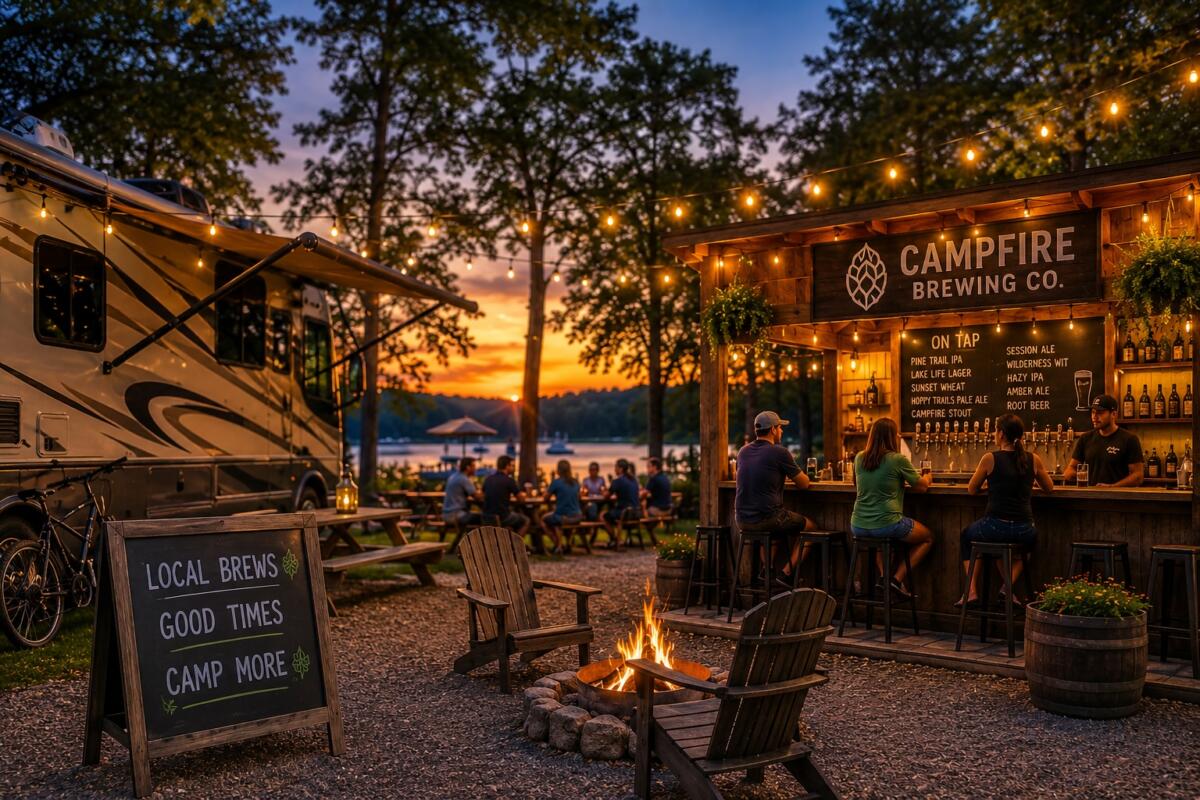
Campgrounds have been adding amenities for years in an effort to attract more guests and stand out from the competition. But, as Russ and Tiña reported, some campgrounds are taking things in a different direction: They’re adding on-site bars and breweries.

For some RVers, that might sound like a fun way to relax after a day of exploring. Imagine pulling into camp, setting up your rig, and then walking a few hundred feet to enjoy a local craft beer or glass of wine while watching the sunset. No driving required.

Others may be less enthusiastic. They might wonder if campgrounds are starting to focus more on becoming entertainment destinations than peaceful places to enjoy the outdoors. And, of course, somebody has to pay for those new amenities. As campground rates continue to climb, some RVers may question whether additions like bars and breweries are really improving the camping experience or simply contributing to higher nightly fees.

The reality is that campgrounds serve all kinds of travelers. Some people are looking for a resort experience with lots of activities and conveniences. Others would happily trade every amenity for a quiet campsite, a picnic table, and a beautiful view.

That got us wondering: Would you ever stay at a campground specifically because it has a bar or brewery?

After you vote, leave a comment and tell us why. Would an on-site bar or brewery make a campground more appealing to you? Have you ever stayed at one that offered this amenity? Or would you rather campground owners focus on keeping rates lower instead? Maybe, if you’re not a drinker or a fan of potentially loud environments, this would actually make you avoid a campground or RV park.

Thanks for voting! We’re curious to see what fellow RVers think about this growing campground trend.

MORE POLLS YOU MIGHT ENJOY:

RVT1262b

The ‘apocalypse’ camper is here, and it has bear-spray cannons

Some RVs come with solar panels. Some come with outdoor kitchens.

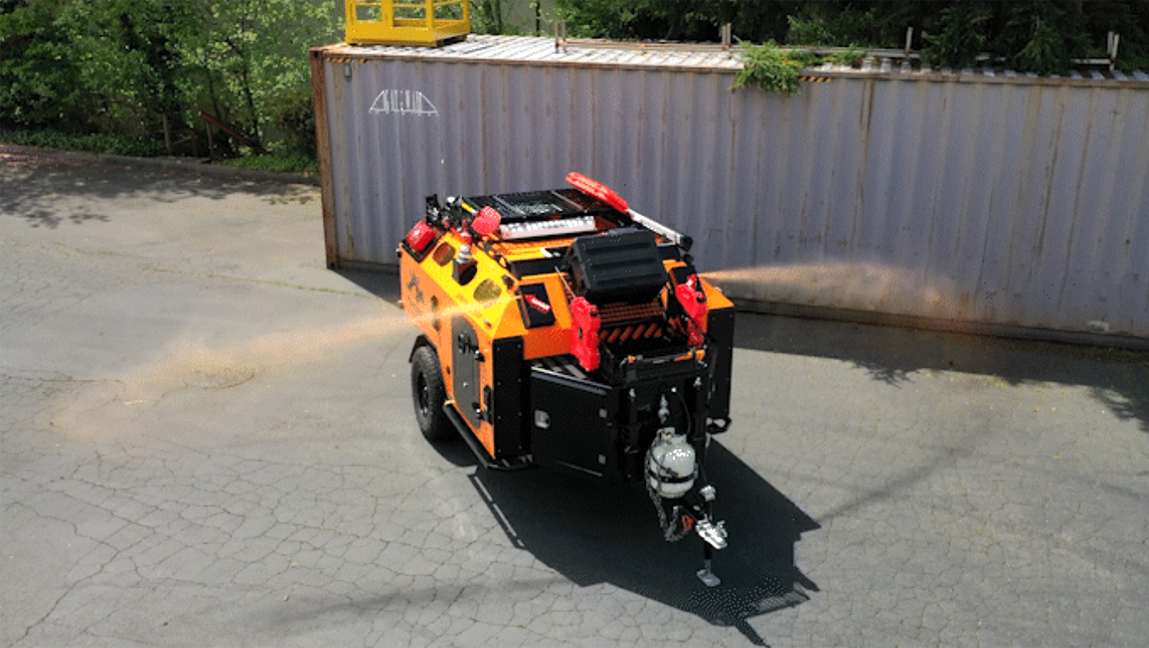
This one comes with bullet-resistant windows, blast shields, night-vision cameras, a Geiger counter, a gun safe, a flare launcher, and four remotely activated bear-spray cannons.

Yep. It’s real.

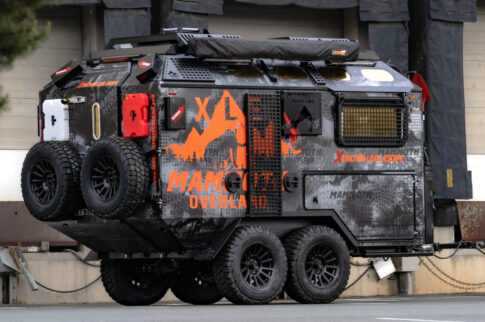
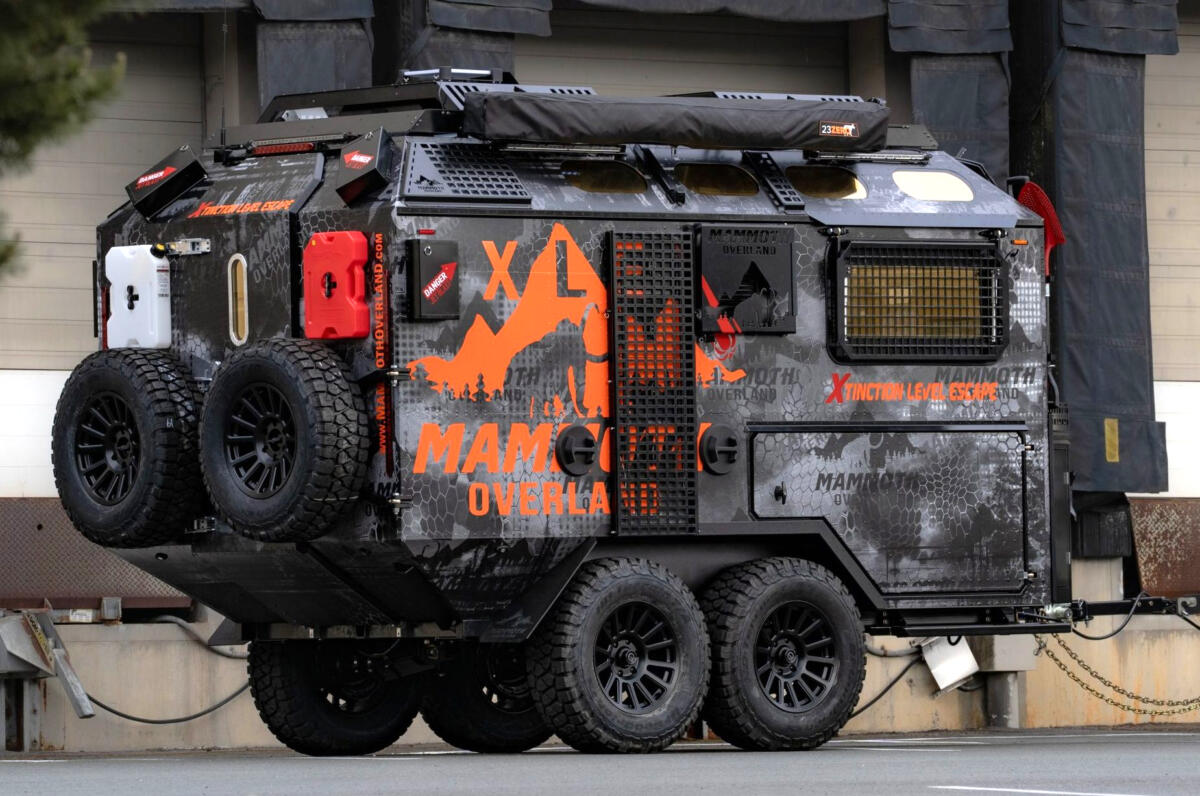
The new Mammoth Overland XLE—short for “Xtinction-Level Escape”—looks like somebody combined an off-road trailer, a survival bunker, and an overlanding trailer, then decided it still needed a few more gadgets. Mammoth Overland Trailer, in Woodinville, Washington, says the XLE is designed as a self-sufficient mobile shelter capable of operating in extreme environments, while also serving as a comfortable off-grid camping trailer. [Interestingly, Mammoth Overland Trailer is the “child company” of Vashon Aircraft, a U.S.-based aircraft manufacturer with a deep love for the outdoors.]

For RVers accustomed to debating sewer hoses, leveling blocks, and whether a second air conditioner is worth the expense, the XLE operates in an entirely different universe.

When bear spray becomes standard equipment

The feature that immediately grabs attention is Mammoth’s “Bear Barricade” system.

The trailer carries four electronically activated bear-spray launchers mounted around its perimeter. According to the company, they can be triggered remotely to create a defensive barrier around the camper.

Most RVers who travel in bear country already know the routine: Store food properly, keep campsites clean, and carry bear spray when hiking. Installing enough bear spray to defend an entire trailer is a considerably more ambitious approach.

The company says concerns about wildlife encounters helped inspire some of the system’s defensive features. Whether the average campground visitor needs a remotely deployed bear-spray perimeter is another question entirely.

A rolling bunker on 33-inch tires

The bear deterrents are only the beginning.

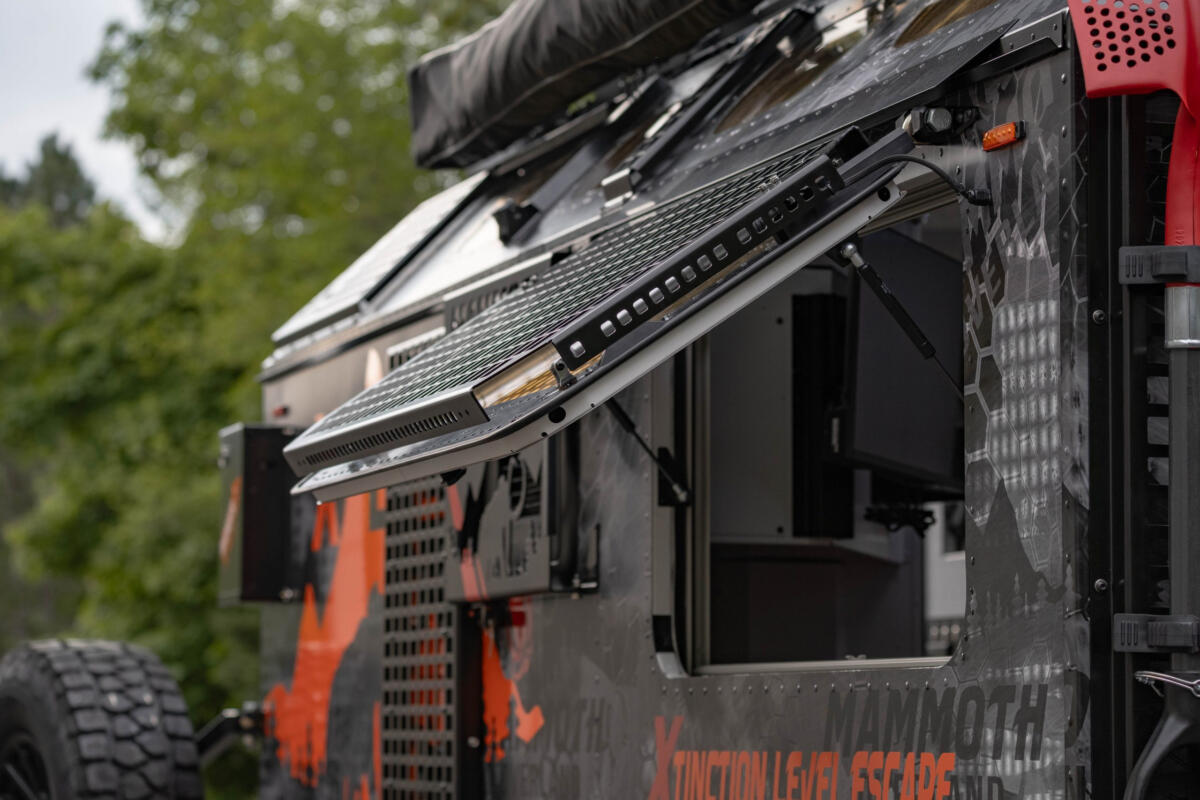
The XLE features bullet-resistant windows, exterior blast shields, a vault-style security door, night-vision cameras, positive-pressure cabin filtration with HEPA filtering, and a Geiger counter for monitoring radiation levels.

If that sounds to you less like an RV brochure and more like something from a disaster-preparedness convention, you’re not alone.

apocalypse camper
Built like a brick outhouse? Climb aboard and you, too, can say, “Armageddon outta here!” Mammoth Overland photo.

The trailer rides on 33-inch all-terrain tires with substantial ground clearance and heavy-duty suspension designed for remote travel. It also includes a lithium battery system, solar charging capability, onboard water storage, communications equipment, and enough off-grid capability to keep occupants self-sufficient for extended periods.

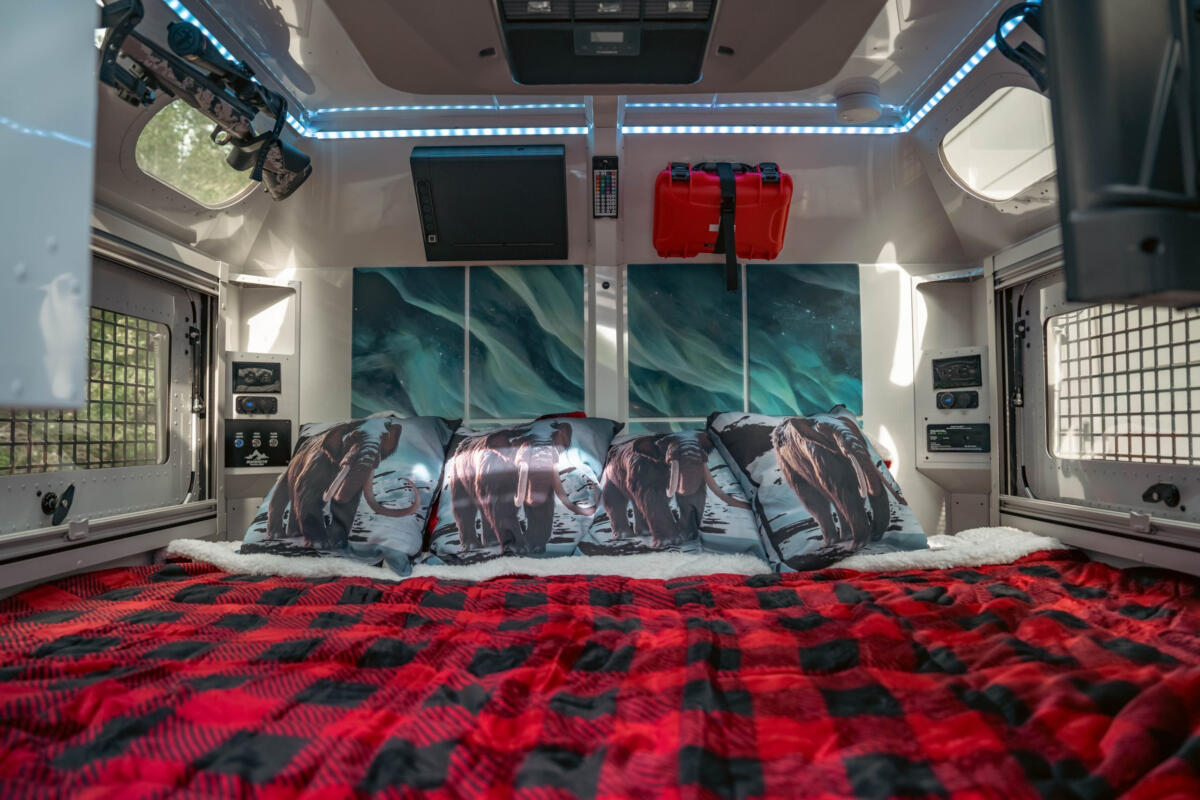
Inside, however, it looks surprisingly normal.

apocalypse camper
The rig may be built like a tank, but at least sleeping is more comfortable than that of the average military vehicle. Mammoth Overland photo.

One of the biggest upgrades over earlier Mammoth models is standing headroom. Previous versions required occupants to crouch. The XLE allows most adults to stand upright, making it considerably more practical for extended trips. The interior includes a bed, galley, storage, climate-control systems, and the amenities most campers would expect in a modern off-grid trailer.

The rise of the “preparedness” camper

The XLE may represent an extreme example, but it reflects a broader trend that has been growing in both the RV and overlanding worlds.

In recent years, manufacturers have increasingly emphasized self-sufficiency. Larger battery banks, solar power systems, water filtration equipment, satellite internet, backup communications gear, and extended off-grid capability have become common selling points.

Many buyers simply want the freedom to camp farther from crowded campgrounds. Others appreciate the ability to remain comfortable during power outages, wildfires, severe weather events, or other emergencies.

The difference is that most manufacturers stop well short of offering blast shields and bear-spray cannons.

The company seems in on the joke

apocalypse camper
For some, this apocalypse camper may be a breath of fresh air. For others?… Mammoth Overland photo.

Part of what makes the XLE interesting is that Mammoth does not appear to be presenting it as a grim survival machine.

Interviews with company representatives suggest they recognize the trailer’s over-the-top image. While many of the features have legitimate practical applications, the “apocalypse camper” branding clearly leans into a sense of humor, as well.

That’s probably wise.

After all, most RVers are far more likely to encounter a dead campground Wi-Fi signal than a civilization-ending catastrophe.

Still, there is something undeniably entertaining about a trailer that appears equally prepared for a dispersed camping trip, a grizzly bear encounter, and the opening scenes of a science-fiction movie.

Is this the future—or just a conversation starter?

At roughly $124,000 before options, the Mammoth Overland XLE occupies a niche that most RV buyers will never seriously consider.

Yet the trailer raises an interesting question.

How much preparedness is enough?

Many RVers already carry emergency supplies, extra water, first-aid kits, satellite communicators, portable generators, and backup power systems. Twenty years ago, some of those items might have seemed excessive. Today, they’re common.

Bear-spray cannons and bullet-resistant windows may never become mainstream RV features. Then again, neither did rooftop satellite internet terminals—until they did.

For now, the Mammoth Overland XLE may be best viewed as what it undoubtedly is: one of the most unusual camping trailers ever built, and proof that there is apparently no limit to the number of gadgets that can be attached to an RV.

Would you buy one?

RELATED

RVT1262

Yosemite warns about irresponsible RV parking

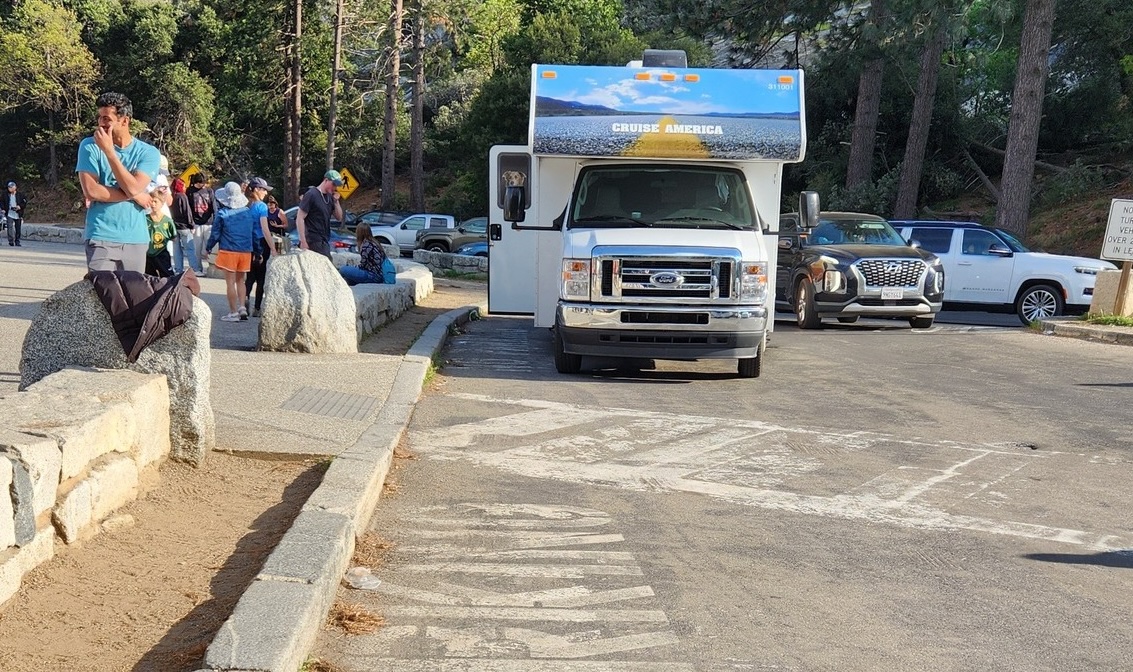
Yosemite National Park is a beautiful place and often packed with visitors. It can be tempting to park for just a few minutes (or longer) at an overlook to get the perfect picture or a choice location for a hike.

But irresponsible parking can create a danger to everyone on the road, damage the environment, and lead to a potential citation or even a tow. And, really, it’s just plain rude.

Park officials posted the photo above as an example of how not to park when sightseeing. As you may notice, the RV in the photo is a rental, which may help explain a newbie’s bad behavior. Of course, it’s not just RVers who cause problems.

“We understand that parking can be tough and stressful in Yosemite,” the park noted in its social media posting. “To relieve that stress a bit, here are a few ways to safely and responsibly secure a spot.”

  • Most parking lots in Yosemite fill by mid-morning. Arrive as early as possible (before 8 a.m.). When the park is extremely busy, get parking updates by texting ynptraffic to 333111.
  • If you are visiting Yosemite Valley, park once and stay parked for the day. You can get to most trails in the Valley by walking, biking, or using the free Yosemite Valley shuttle system.
  • If parking lots are full, stay flexible, have a backup plan, and come back at a later time. Many popular parts of the park are better seen at less busy times, like early morning or sunset.
  • Navigating through Yosemite can be confusing. Get familiar with highway names, park road names, locations, and parking areas before arriving. While in the park, pay attention to signage and pull over to reference a map if you are lost. Emergency lights do not mean automatic protection against accidents.

RELATED


RVT1262

California expands digital driver’s license options

3

California is expanding its mobile driver’s license program by allowing residents to store digital driver’s licenses and state IDs in Samsung Wallet, giving Samsung smartphone users another option alongside the CA DMV Wallet, Apple Wallet and Google Wallet.

California launched its mobile driver’s license pilot program in 2023 as part of a broader effort to modernize DMV services. State officials say about 1.7 million Californians now actively use mobile IDs, including roughly 900,000 people using the DMV’s own digital wallet.

The digital IDs can be used for identity verification at participating businesses and government locations, and they are accepted at select TSA airport security checkpoints nationwide. The state says additional uses are expected to be added as adoption grows.

The mobile license program remains voluntary and does not replace a traditional driver’s license or state ID card. State officials emphasize that many law enforcement agencies, businesses and public agencies still do not accept digital identification, so drivers should continue carrying their physical license or ID.

Samsung Wallet users who want to add a mobile ID can scan the front and back of their license or ID card and complete identity verification steps that include facial recognition and device authentication through a fingerprint or PIN.

California officials say digital IDs are designed with privacy protections that allow users to share only specific information needed for verification rather than displaying all information on a physical card.

Currently, 14 states and Puerto Rico offer official digital driver’s licenses (mDLs). Depending on your location, you can add your ID to your smartphone’s digital wallet or a state-specific app to use for identity verification.

RELATED

RVT1262b

Feds warn of scammers demanding payments for traffic violations

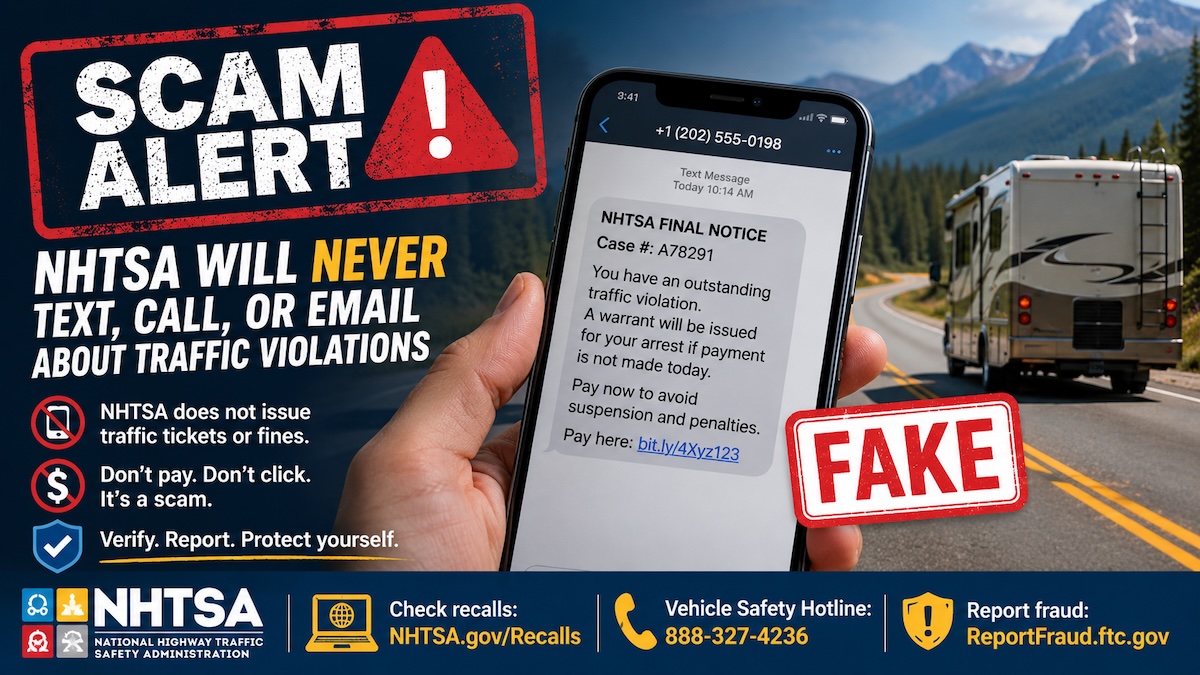
The National Highway Traffic Safety Administration is warning Americans of scammers claiming to be from NHTSA and demanding payment for traffic violations. These messages often refer to fake judges, case numbers, and serious consequences to appear more official and scare recipients into clicking a link and paying.

NHTSA does not issue traffic tickets and will never text, call, or email any member of the public regarding any traffic violation. Traffic violations are issued by state and local governments and law enforcement agencies. NHTSA is the federal vehicle safety regulator and does not issue any traffic fines to drivers.

How to spot the scam

Government imposter scams often use fear and pressure to force consumers to act quickly. Remember these red flags:

They demand specific, non-traditional payment methods: Governments will not demand that you pay via gift cards, cryptocurrency, wire transfers or digital payment apps.

They use threats: Scammers may threaten you with arrest, the immediate suspension of your driver’s license, hefty fines, or referring a case to debt collectors.

They ask for personal info: NHTSA does not call or text anyone to ask for Social Security numbers, bank account details, or credit card numbers.

Protect yourself

Hang up or delete: If you receive a suspicious call or text, do not engage. Hang up immediately or delete the message. Do not click on any links provided in a text or email.

Verify the source: If you are concerned about a vehicle issue, check for official information yourself. Visit NHTSA.gov/Recalls to check for safety recalls using your VIN or license plate, or call the NHTSA Vehicle Safety Hotline at 888-327-4236.

Report the fraud: If you have been contacted by someone pretending to be from NHTSA, report it your local police, your state’s consumer protection office, and the Federal Trade Commission at ReportFraud.ftc.gov.

RELATED

RVT1262b