Home Blog Page 20

How likely is it that you will buy an electric car/truck in the next year?

13

A few years ago, this question may have felt easy to answer. For many RVers—and Americans in general—the idea of buying an electric vehicle probably seemed far off, impractical, or simply unnecessary.

But things change fast.

Gas prices continue to sting, especially if you drive long distances, tow a trailer, commute regularly, or travel often. Raise your hand if you’ve recently looked at the pump total and just stood there blinking for a second. In some parts of the country, paying more than $6 a gallon no longer sounds shocking.

At the same time, electric vehicles are becoming harder to ignore. Charging stations are popping up in more places than ever before, including many parks, campgrounds, hotels, and travel stops. Automakers keep rolling out new electric trucks and SUVs, and even longtime skeptics are starting to wonder if an EV might actually fit their lifestyle someday.

Of course, there are still plenty of concerns. Towing range. Charging times. Battery life. Cost. Availability. And for RVers especially, the idea of towing long distances with an electric truck still raises a lot of questions.

So we’re curious…

How likely do you think it is that you’ll buy an electric car or truck within the next year?

And if your answer is “unlikely,” would rising gas prices eventually change your mind? If not gas prices, what would? Better technology? Longer range? Lower prices? Faster charging? Or are you perfectly happy sticking with gas or diesel for the foreseeable future?

Vote in the poll below and tell us more in the comments. We’d especially love to hear from readers who’ve changed their minds—either for or against EVs—in recent years.

One quick favor: Please leave politics out of the discussion and keep comments focused on real-world experience, costs, practicality, and travel. Thank you.

MORE POLLS FROM THIS WEEK:

RVT1261b

Beyond the headlines with Tony Barthel: The problem with luan; bears, coyotes, orangutans; and a really cool new A/C

14

This week’s news recap looks at a few interesting animal stories, how the RV industry’s use of a wood product may affect animals (and people), and a cool new RV A/C.

The bear necessities

A bear near Yellowstone’s Mystic Falls attacked two brothers on May 4. Also in Glacier National Park, a 33-year-old hiker was killed near Lake MacDonald. While bear attacks remain extremely rare, they obviously do still happen. According to some park officials, bear attacks tend to happen when the mothers are surprised by humans, so the recommendation is to be noisy on hikes so you don’t surprise them. You should also carry bear spray. 

In the case of the brothers, they are expected to make a full recovery.

A while back, I had the chance to speak with Steve Searles, who is considered to be the “Bear Whisperer”. He had some pretty great tips for being in spaces where bears call home.

The original source for this story is from RV Miles, where you can learn more about these bear encounters.

CoyotecartoonA coyote on Alcatraz

Apparently, a coyote was spotted on Alcatraz. No, seriously. So, that got park officials curious as to where the coyote came from (perhaps a failed Acme device) and how it got there. While us normal people would just live our lives in a state of curiosity, when you have government money, things are different. 

Coyote poop was sent to UC Davis Mammalian and Ecology Unit of the Veterinary Genetics Laboratory, where it was analyzed. It was determined that the critter simply swam over from Angel Island. Now, this is no short jaunt.

In another story from RV Miles, Bill Merkle, Park Service Wildlife Ecologist, is credited with saying that the assumption was that the coyote made the swim from San Francisco just because it’s closer to the former prison island. 

As quickly as the coyote was discovered, it has now also disappeared. 

The concern by Alcatraz folks was for the welfare of the larger population of nesting sea birds, which is probably also what prompted the coyote to take to the water. 

The original source for this story is from RV Miles.

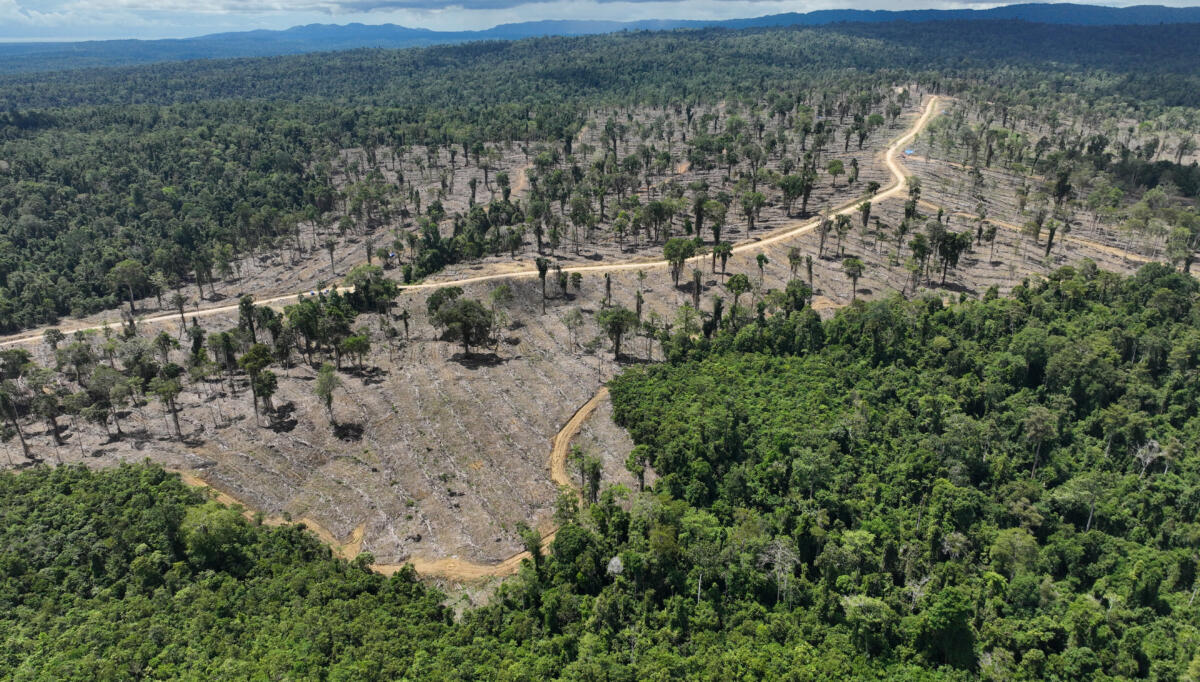
Rainforest deforestation in Borneo. © Auriga Earthsight

We hate your wood, bro

If you’ve ever read my RV reviews, you know that I’m no fan of luan (aka lauan) in the build of RV walls, but, apparently, neither is Mighty Earth, an activist group. The organization states that the luan sourced from Patrick Industries comes from the rainforests of Borneo and is a significant contributor to the deforestation of that area. (Russ and Tiña De Maris covered this earlier this year.)

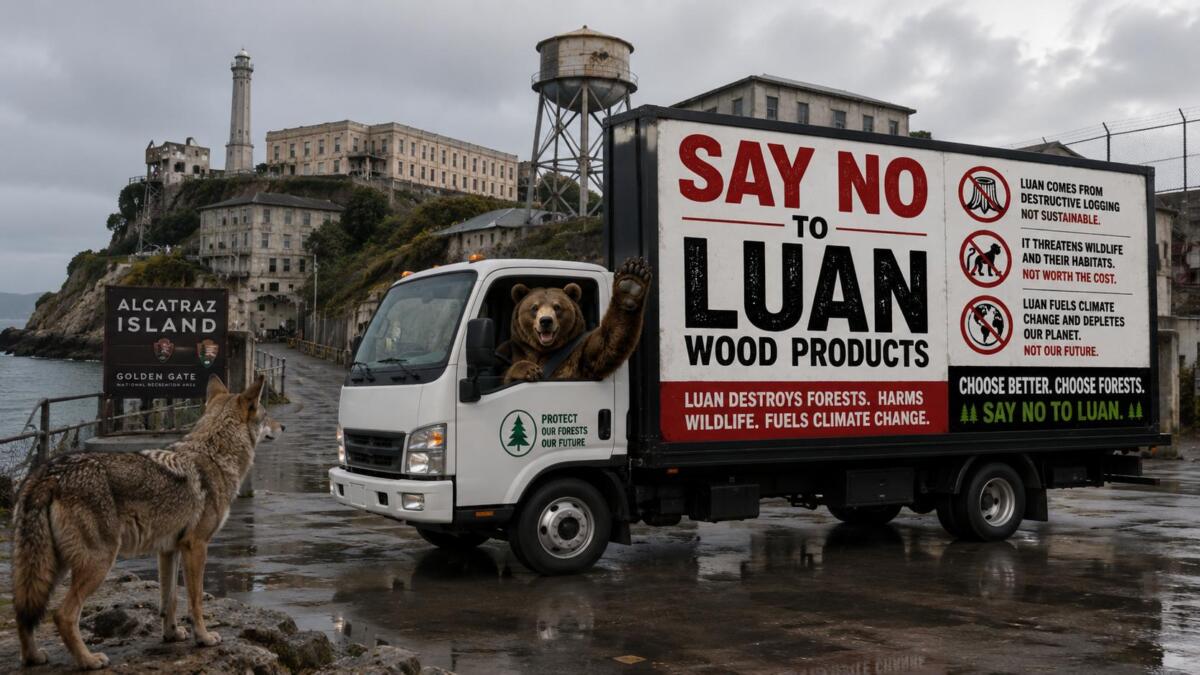
The group hired one of those trucks with a big digital billboard to drive around Elkhart and display messages criticizing Thor, Winnebago and Forest River for helping with the deforestation. 

One screen read, “Your RVs are deforestation on wheels!” Activists following the truck carried signs displaying messages like, “RVs shouldn’t kill orangutans.”

“As it turns out, the RV industry is the largest consumer of tropical wood in the U.S.,” said Amanda Hurowitz, a senior director for Mighty Earth on its forest commodities team. “They’re a major consumer of this wood, but they don’t have any sustainability standards.”

Hurowitz said one RV can have as much as 700 square feet of tropical wood, called meranti or luan, in it.

RV manufacturers should adopt sustainability standards

The activists want the companies to adopt the same sustainability standards as Lowe’s or Home Depot, meaning any wood they source must come from an area certified by the Forest Stewardship Council (FSC).

Apparently, Mighty Earth is also dropping off signed petitions at the three RV companies, but you wonder why they didn’t also hit Patrick Industries, which is the wood supplier. 

Quite honestly, the RV industry can do better. But they’re motivated by numbers more than almost anything. So we, as consumers, have to be aware of this and make demands in our purchases. 

To me, the fact that RVs, which are enormous fuel suckers, have stickers on them about protecting forests and other malarkey has always been a complete joke anyway. The stickers about saving the planet are such a complete farce that even a first-year marketing student who’s failing their classes would know better than to make such a ludicrous statement. 

Original source for this story is at ABC 57 in Indiana.

Coleman-Mach Everest VS-18
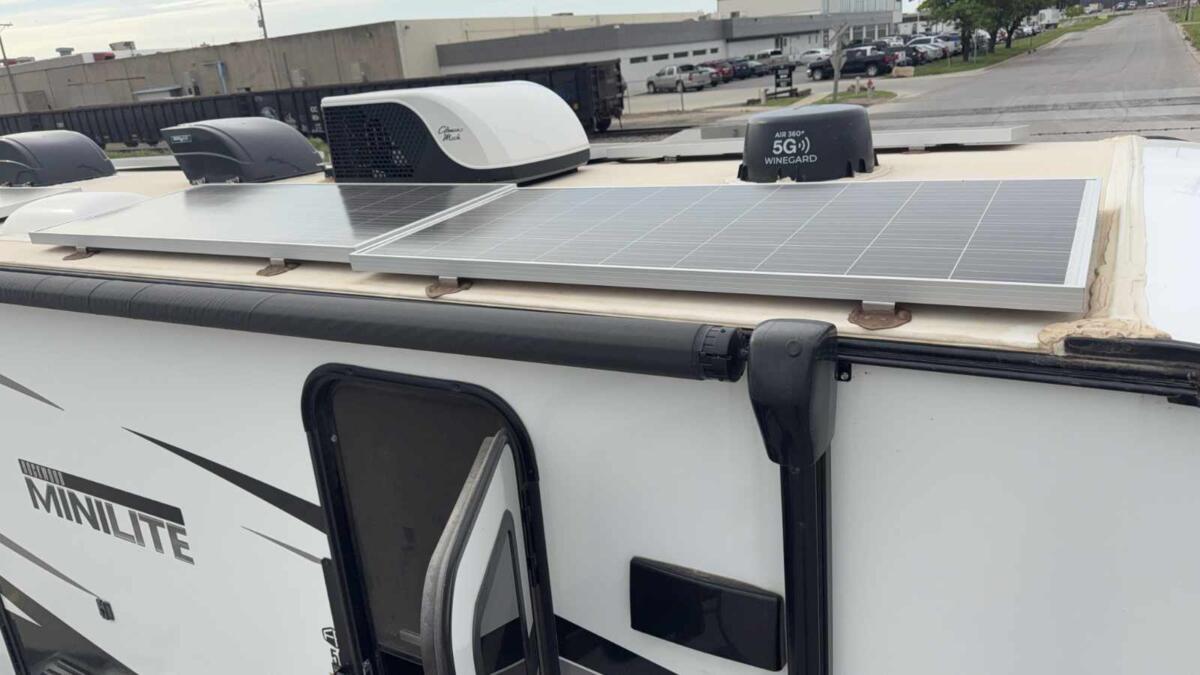
The Coleman-Mach Everest VS-18 on the roof of my RV

Do you hate your RV’s air conditioner?

A while back, I shared that I had installed a Furrion Chill Cube RV air conditioner in my RV for a variety of reasons. It’s pretty great. 

Well, it turns out, Coleman Mach isn’t sitting on their hands in this area either, and it was announced recently that they, too, have an inverter A/C unit in the Coleman Mach Everest VS-18. 

Part of how I know this is because I was at Airxcel in Wichita, Kansas, last week. I had one of these put on my own RV so I can help get the performance and power consumption numbers. Of course, I will share this with you all once I get more information. 

There are more details in the story linked below, but I can tell you that I was running the A/C on battery power alone and actually bringing in more energy through the 1,200 watts of solar on the roof of my RV than I was consuming with the A/C. To be fair, the conditions were pretty ideal, but this shows how efficiently these new A/Cs can run. 

This unit, and the Chill Cube, are significantly quieter than the A/C units of yore (probably that yore is on your roof) and remarkably more efficient, but also run differently. 

The bottom line: If you’re thinking of a new A/C for summer, the Coleman Mach Everest VS-18 or the Furrion Chill Cube are examples of real progress in the RV industry, which is encouraging. 

Original source for this story is RV Pro.

Catch up on all the latest news for RVers here

RVT1261b

The best 2026 travel trailers under 5,000 lbs.

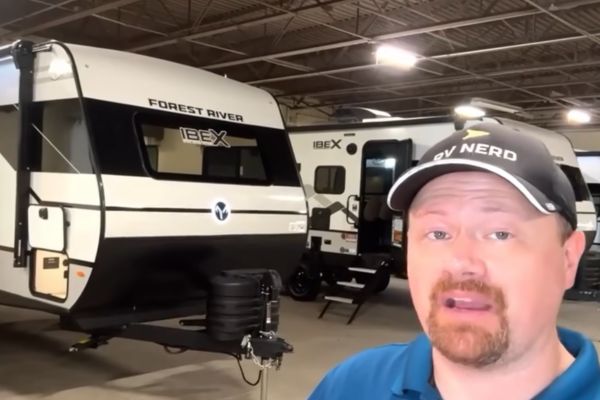
Finding a small camper that still feels useful is harder than it should be. In the video at the end of this post, Josh the RV Nerd at Bish’s RV pulled together a long list of 2026 single-axle trailers that stay under 5,000 pounds dry, and the mix is broader than most shoppers expect. Some are simple weekend sleepers. Others add slides, bunks, solar, heated underbellies, off-road gear, or smarter storage. If you are just starting your search for a small, lightweight RV, this list gives lots of options to consider.

The most important takeaway comes before any floor plan choice: Dry weight helps sort the list, GVWR makes the safe match!

Dry weight is a shortcut. GVWR (gross vehicle weight rating) is the number that should match the tow vehicle.

Josh’s main advice is clear: Shoppers should compare a trailer’s maximum loaded weight to the vehicle’s tow rating. That matters most in this class, because these models target tow-package SUVs, midsize trucks, vans, and buyers who want easier towing, parking, and storage.

The small travel trailers that stand out most

Alliance made an early impression with the Delta ML166, which keeps Goodyear tires, an 8-foot body, a heated enclosed belly, and a roomy slide in a lighter trailer. The no-slide Delta RB152 shrinks that same feel into about 20 feet with a Murphy bed and 200-watt solar.

Grand Design comes at the same size from two angles, the cost-cut Imagine 16MLA and the more polished Serenova 160LG, which adds big windows, independent suspension, and a true queen bed.

For campers who want something different, the Ibex 16MBJ and Ibex 16MRJ add off-pavement flavor with suspension upgrades and heated tanks.

Ember goes tiny with the 12FK, a micro hauler with a front slide kitchen, and the 12RK, a bed-in-a-box trailer with optional big solar.

Forest River fills out the middle with the Murphy-bed Rockwood 19FD, the teardrop-style Geo Pro G19RL, and the compact R-Pod 171.

Then there are the all-composite Modern Buggy 12LRK, BB14, and BB16.

Family layouts and budget-friendly picks

Jayco has one of the deepest benches here. The 15TBSL keeps GVWR at 3,500 pounds and turns its rear seating into twin beds or one huge bed. The Jay Flight 175BH gives families a better fridge, a bath sink, and a full-height interior; while the 178DBS adds a small slide.

The updated Jay Feather 16FBS, 16RB, and 19MBS show how much room an 8-foot body can create without getting too heavy. For bunkhouse buyers, the Wildwood 174DBLE, Wolf Pup 17JW, and Wolf Pup 16CM cover double bunks, cargo-friendly space, and a rare private front bedroom. The Transcend 131DL is the solo-travel wild card, only 16 feet long and sized for tight storage spots.

Final thoughts

This group proves that small trailers are no longer boxed into one formula. Some are stripped-down sleepers, some are smart family bunkhouses, and some feel far more finished than their size suggests.

The strongest takeaway stays the same: Dry weight gets a trailer onto the shortlist, but GVWR decides whether it belongs behind the tow vehicle!

MORE LIKE THIS:

RVT1261b

After short dip, gas prices on the rise again

2

After five straight days of declines earlier this week, the national average price of a gallon of gasoline was once again on its way back up as of Thursday, a couple cents lower than last week. With crude oil prices hovering in the $100/barrel range, pump prices remain elevated.

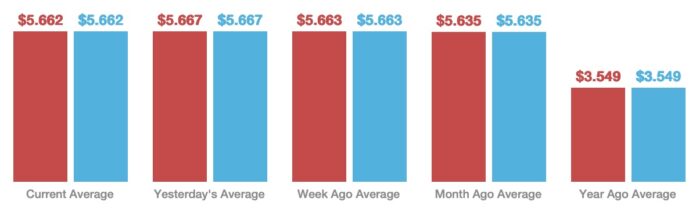
The graph below shows the national average at the same range as it was in 2022, the year gas prices hit record highs. Travelers are preparing to hit the road in record numbers next week, and drivers will be facing the highest Memorial Day gas prices in four years.

Gas price chart
SOURCE: AAA

• Thursday’s national average: $4.534
• One week before: $4.558
• One month before: $4.118
• One year ago: $3.180

According to new data from the Energy Information Administration (EIA), gasoline demand decreased last week from 8.81 million b/d to 8.75 million. Total domestic gasoline supply decreased from 219.8 million barrels to 215.7 million. Gasoline production increased last week, averaging 9.8 million barrels per day.

Diesel price
Diesel prices 5-14-26Oil market dynamics

At the close of Wednesday’s formal trading session, WTI (West Texas Intermediate) fell $1.16 to settle at $101.02 a barrel. The EIA reports crude oil inventories decreased by 4.3 million barrels from the previous week. At 452.9 million barrels, U.S. crude oil inventories are about 0.3% below the five-year average for this time of year.

EV charging

The national average per kilowatt hour of electricity at a public EV charging station remained the same this past week at 41 cents.

State stats

Gasoline
The nation’s top 10 most expensive gasoline markets are California ($6.14), Washington ($5.77), Hawaii ($5.64), Oregon ($5.34), Alaska ($5.26), Nevada ($5.23), Illinois ($5.08), Michigan ($4.89), Arizona ($4.84), and Pennsylvania ($4.65).

The nation’s top 10 least expensive gasoline markets are Mississippi ($3.99), Louisiana ($4.00), Texas ($4.00), Georgia ($4.01), Oklahoma ($4.02), Arkansas ($4.06), Alabama ($4.07), Kansas ($4.09), Tennessee ($4.13), and Nebraska ($4.13).

Electric
The nation’s top 10 most expensive states for public charging per kilowatt hour are West Virginia (53 cents), Hawaii (51 cents), Alaska (50 cents), Louisiana (46 cents), New Hampshire (46 cents), California (46 cents), New Jersey (45 cents), Arkansas (44 cents), Illinois (44 cents), and South Carolina (44 cents).

The nation’s top 10 least expensive states for public charging per kilowatt hour are Kansas (29 cents), Missouri (32 cents), Utah (33 cents), Maryland (33 cents), Iowa (34 cents), Nebraska (34 cents), South Dakota (34 cents), Vermont (35 cents), Delaware (37 cents), and New Mexico (37 cents).

RELATED

RVT1261b

Top 10 things to know about visiting Yellowstone this summer

This summer, visitors to Yellowstone National Park are being urged to plan ahead—both to stay safe and to help protect one of America’s most iconic wild landscapes. Across 2.2 million acres, Yellowstone offers unparalleled opportunities to observe wildlife in an intact ecosystem, explore geothermal wonders that include half the world’s active geysers, and view geologic landmarks like the Grand Canyon of the Yellowstone River.

By following these top 10 things to know before you go, you can make the most of your visit while helping ensure Yellowstone remains healthy, wild, and awe-inspiring for generations to come.

  1. Reservations are not required to enter Yellowstone
    Reservations are not required to enter the park – just a park entrance pass. Keep in mind that summer is busy, so pack your patience and be prepared for crowds at popular areas and lines at entrance stations, construction areas, and roadside wildlife sightings.
  2. Check the status of park roads
    Most park roads open to personal vehicles in mid-April and close in early November. Weather may cause temporary closures at any time, so check the status of park roads for more information, including potential traffic delays due to road improvement projects.
  3. Plan ahead
    All campgrounds and lodging require reservations and are often booked well in advance. Operating hours and service levels may change with little notice. Check the latest information before going to the park:
    Operating Dates of Facilities and Services
    Current Conditions
    Eating and Sleeping
    Places to Go
    Things to Do
    Fishing Permits
    Boat Inspections and Permits
  4. Give wildlife room
    Wild animals are dangerous if you get too close! It’s your responsibility to respect safety regulations and view wildlife from a safe distance. Always maintain a minimum of 100 yards from bears, wolves, and cougars, and 25 yards from all other animals, including bison and elk. All of Yellowstone is bear country, so be sure to carry bear spray and know how to use it. Learn how to watch wildlife safely and travel safely in bear country.
  5. Drive and park responsibly
    Observe posted speed limits and use pullouts to watch wildlife, take pictures, and let other cars pass. Do not stop your vehicle in the road. When pulling over, park with all four tires fully to the right of the white line.
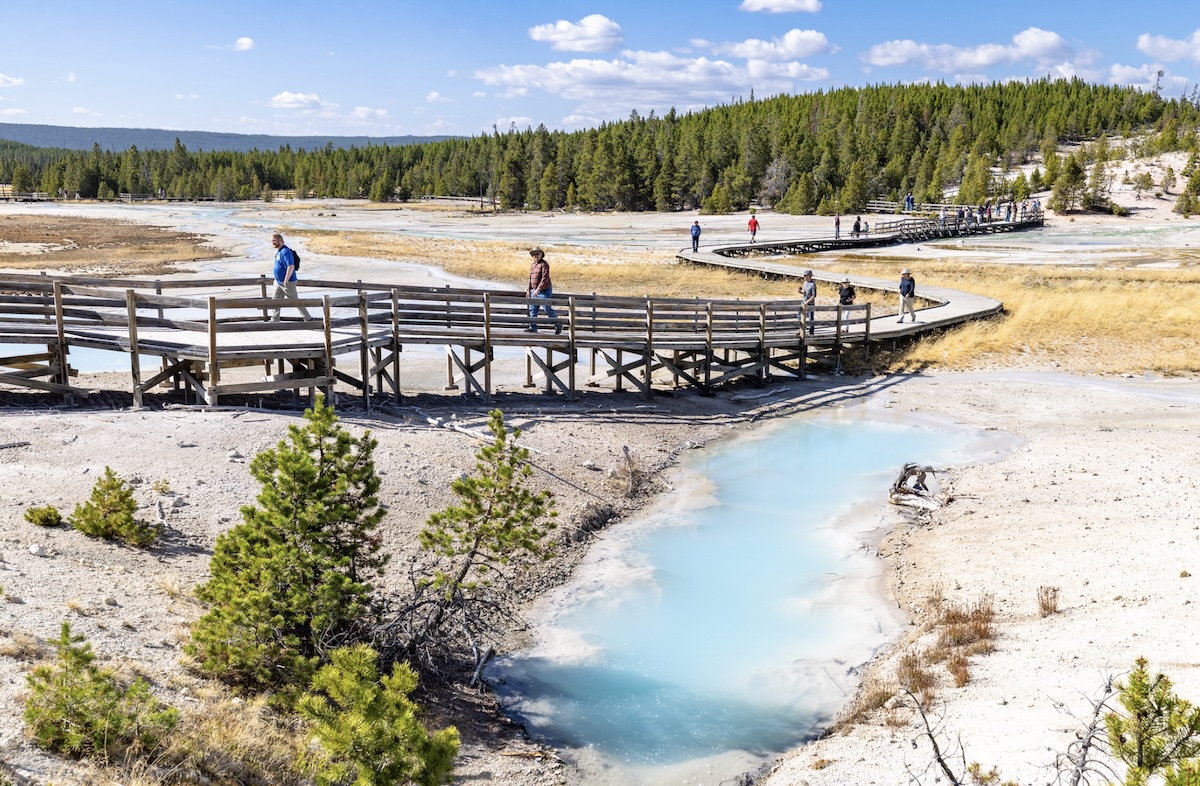
  6. Stay on boardwalks
    People have been severely injured or even killed after stepping off boardwalks in thermal areas, where the thin, fragile ground can suddenly give way, causing them to break through or fall directly into scalding hot springs.
  7. Enhance your experience
    Download the free National Park Service app (and offline content) before you arrive in the park for interactive maps, tours of park places, on-the-ground accessibility information, and more.
  8. Expect limited connectivity
    Don’t be surprised if you can’t receive calls or texts, even in the few areas where you might have cell reception.
  9. Prepare for weather changes
    Unpredictability characterizes Yellowstone’s weather. Expect big temperature swings, rain, or snow during every month of the year. No matter when you visit, bring a warm jacket, rain gear, and lots of layers. Check current weather conditions before you arrive.
  10. Make the most of your trip
    Make it the trip of a lifetime by attending a ranger program and exploring the Yellowstone Tribal Heritage Center Junior program.

RELATED

RVT1261b

RV Daily Tips. Friday, May 15, 2026

America’s Original RV Newsletter. Since 2001
Issue 2905 • New issue every weekday
This free edition is made possible by 6% of our readers who support RV Travel with a voluntary subscription. Advertising helps, but that alone is not sufficient.


Today’s thought

“What you do speaks so loudly that I cannot hear what you say.” ―Ralph Waldo Emerson


Need an excuse to celebrate? Today is National Bring Flowers To Someone Day!

On this day in history: 1905 – The city of Las Vegas is founded in Nevada, United States.


Tip of the day
Easy and inexpensive RV tank sensors upgrade

By Cheri Sicard
Jared Gillis, of All About RVs, is not a big fan of RV tank sensors. However, since he gets so many questions about them and sees internet threads constantly with questions, he thought he would address the topic. Like many of us, Jared is not a fan because tank sensors are often wildly inaccurate. I know that mine are, to the degree of rendering them useless. In this article and video, Jared shares an easier solution that he says will provide far more accurate results.


No Boundaries - NoBo 18.1 travel trailerRV review
The 2026 Forest River No Boundaries NB18.1—A small beast of a travel trailer

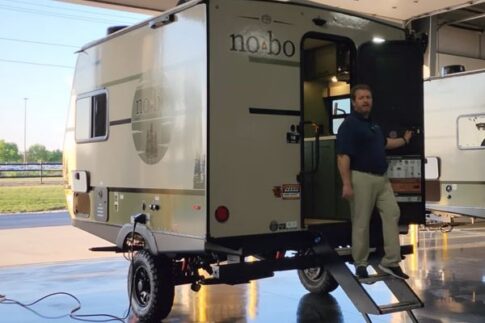
Looking for a full-featured SMALL RV? The 2026 Forest River No Boundaries NB18.1 keeps the body short, but it still brings a full bath, a convertible front dinette, and solid off-grid gear. This travel trailer is aimed at buyers who want a compact trailer with a rugged look and useful camping features. The featured unit shown here also had the optional Beast Mode package, which changes the feel of the trailer both inside and out. Check it out.


In the RV shop with Dustin
Best toilet brush for RV bathroom

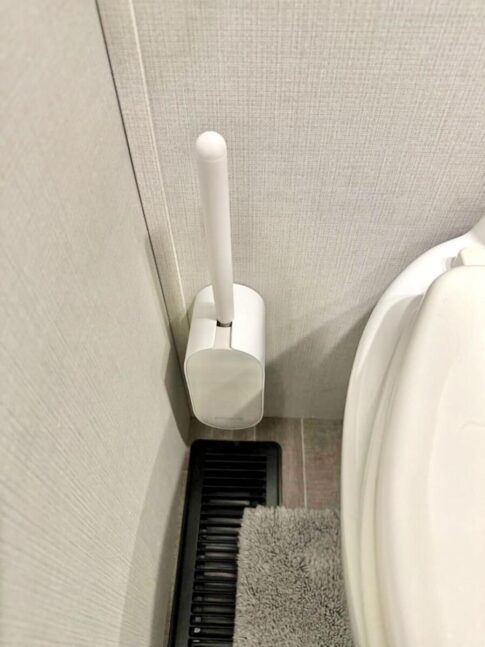
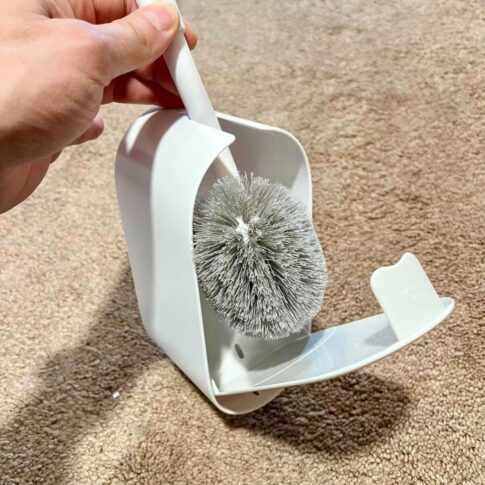
I see a lot of RVs in our shop with bulky toilet brushes in their bathrooms. And not only that, if the toilet brush isn’t mounted it can easily fall over and make a mess during travel. You don’t want those germs getting everywhere! This compact RV toilet brush and wall holder set is a must-have for your RV.


WHAT’S THE ONE THING… you always need on your first day of RVing? You leave the driveway, get out on the open road, and ah… that’s the best feeling in the world. You need this!


Article and video
How to silence an RV vent fan

By Cheri Sicard
A noisy RV vent fan can turn a good night into a long one. When a Maxxfan starts to squeak, especially on low speed, that steady chirp can make the fan hard to live with. The good news is that the noise may come from dust buildup inside the motor, not a failed fan. Here, Jared Gillis of All About RVs shows us how to silence an RV vent fan. (Remember: I break it all down for you in the article, too, if you don’t like watching videos.)


NOW YOU KNOW… The American Academy of Sleep Medicine and the Sleep Research Society recommend that adults sleep seven or more hours per night on a regular basis to promote optimal health. 35 percent of adults report getting insufficient sleep, under seven hours, each night.


Featured article
Take action or get stuck with big repair bills and a lemon RV

By Ron Burdge, RV lemon law attorney
We have seen a spate of recent lemon RV inquiries where the owners kept believing the factory and their dealer could get their RV’s defects fixed and give them more time to get the repairs done. The problem is, if your RV doesn’t get fixed in time, or defects just come back later, you can find yourself stuck with a defective RV. Waiting too long to file a lawsuit can leave you stuck with no legal recourse at all! When that happens, you’re at the mercy of the factory, which built it wrong in the first place! Learn how to protect yourself here.


Ask Dave
How can I keep my RV cool in Death Valley this summer?

Read Dave’s many tips for a cool RV here.


You may have missed these recent popular stories…


Our best-selling Amazon products in 2025:

  1. Thetford RV Drain Valve Lubricant, as recommended by Dustin here.
  2. Disposable shower drain cover.
  3. Mr. Grip screw hole repair kit, as recommended by Nanci here.
  4. Frienda RV underbelly repair tape, as recommended by Dustin here.
  5. WORKPRO 12″ adjustable oil filter pliers

VERY INTERESTING… If you’d like to get a real sense of the type of people who build RVs in factories, this public Facebook group will provide many insights, as the workers talk (and often complain) among themselves.


Reader poll
How many bumper stickers are on your RV or tow vehicle?

Respond here.


Quick tip
Dealing with trailer tire blowout

If a tire on your trailer suffers a blowout, are there any differences to changing a trailer tire from a vehicle tire? Not really. Any safety precautions you use to change a tire on a car apply to the trailer, too. Chock the opposite side wheel, use a heavy enough jack to support the trailer’s weight and loosen the lug nuts some first before raising the wheel off the ground so the wheel won’t spin while it’s in the air when you’re trying to loosen the lug nuts.


On this day last year…


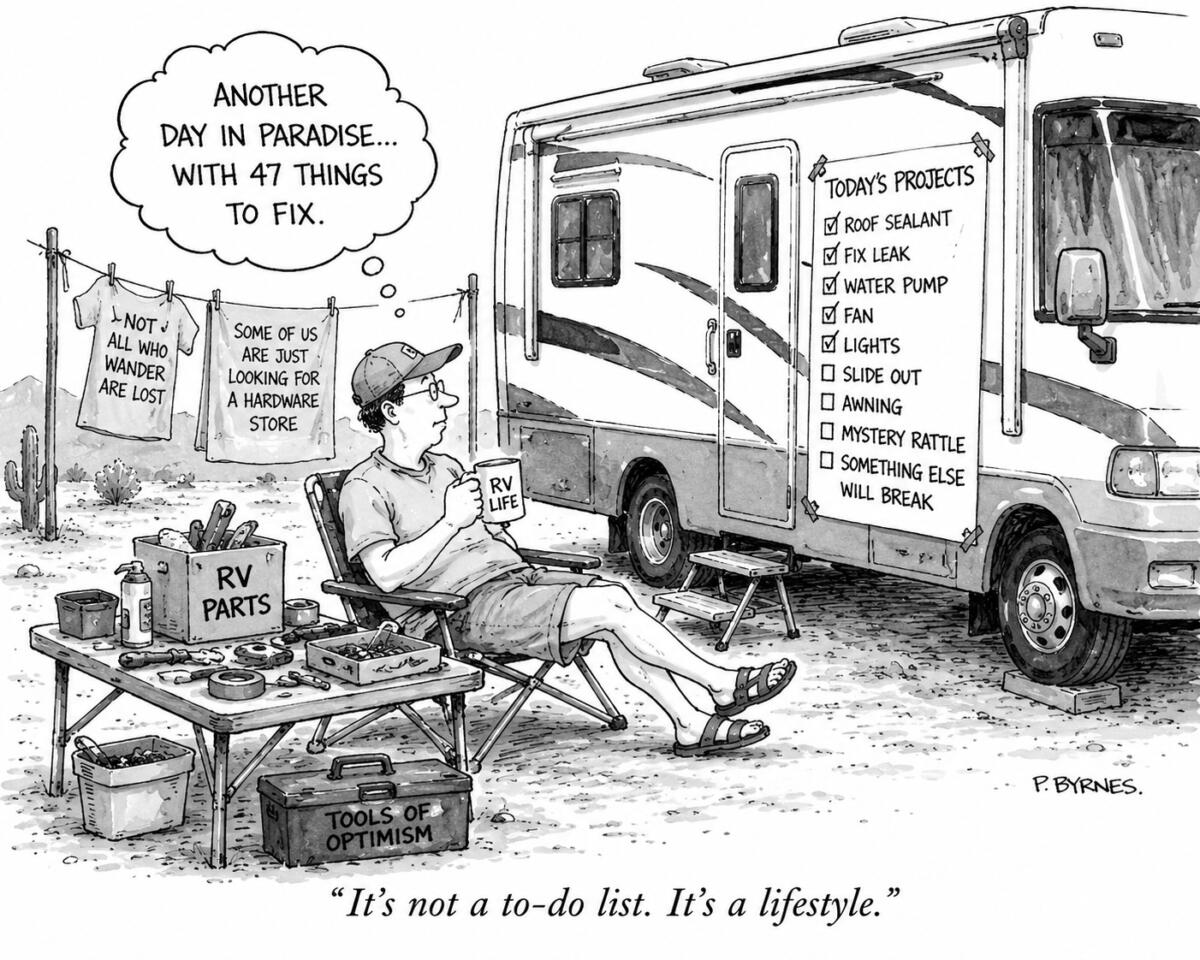
Thingstofix
(Click to enlarge.)

Website of the day

The Creepiest, Coolest Ghost Town in Every State
These are both creepy and cool, that’s for sure! As the weather gets sunnier and warmer, it’s the perfect time to explore these old historic ghost towns. How many have you been to?


? MYSTERY PRODUCT OF THE DAY ?
It wouldn’t be a campsite without one of these on your plate or in your hand, would it? But once you use this to help with it, you’ll never go back!


Trivia

Ever wonder what’s actually in Spam? Spam is a canned precooked meat product made by the Hormel Foods Corporation, first introduced in 1937. The labeled ingredients in the classic variety of Spam are chopped pork shoulder meat, with ham meat added, salt, water, modified potato starch as a binder, sugar, and sodium nitrite as a preservative.


Readers’ pets of the day

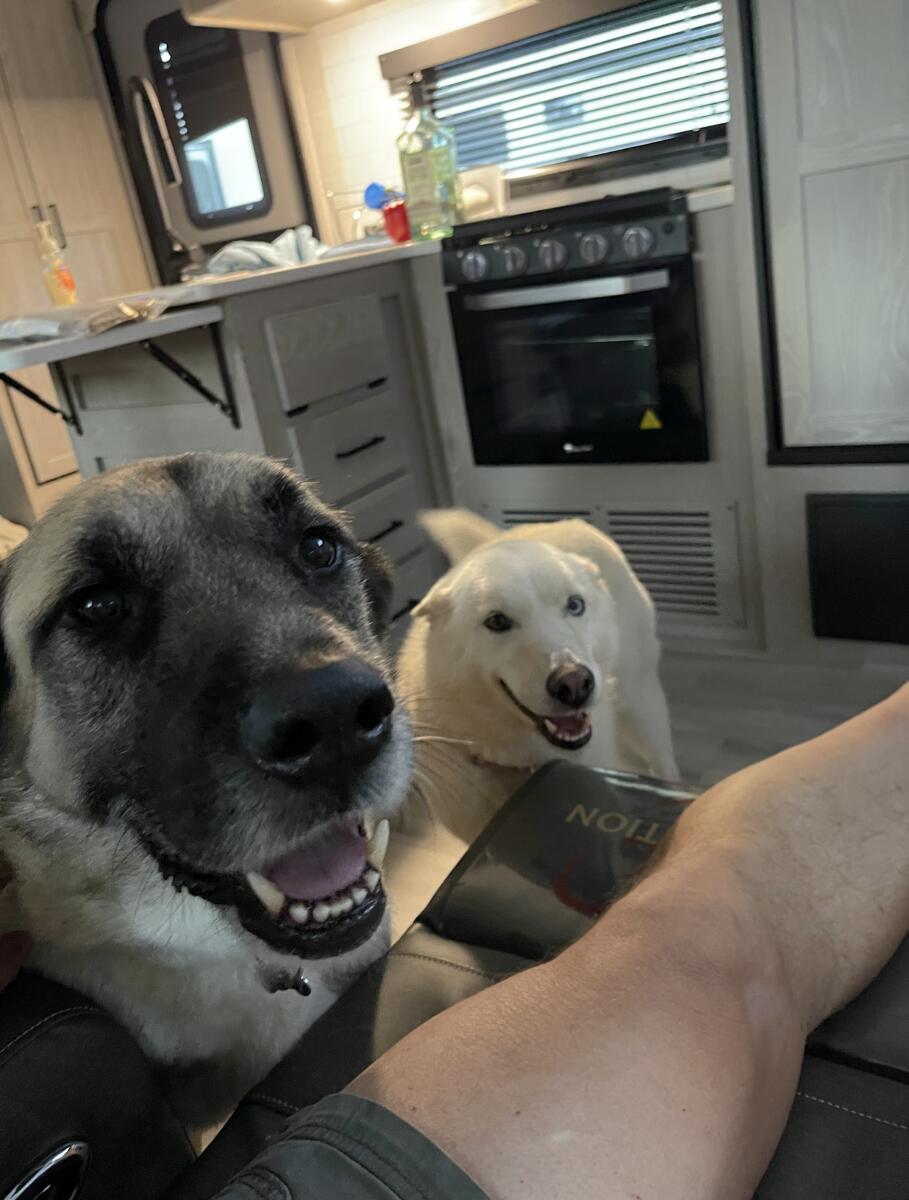
Img 1573 72599ac6808514159597df6c22d0ea83“Both Cya and Tubbs (Husky mix and Anatolian Shepherd, ages 11 and 8) LOVE truck rides with their heads out both sides of my (screenless) canopy windows, and camping/exploring. They especially love their hometown off-leash dog park(s) and those we seek out on the road. Both are rescues that we can’t imagine life without!” —Doug Stephens

Send us a photo of your pet with a short description. No blurry photos and please do not submit your photo more than once. Thanks!

RVing with Dogs group on Facebook. You’ll love it.

TODAY IS THE FINAL DAY OF AMAZON PET DAYS! Stock up while you can, today is the last day of the big sale! Don’t miss out! See what’s on sale here.


Leave here with a laugh


Today’s weather forecast across the nation
THIS MAP UPDATES TWICE A DAY
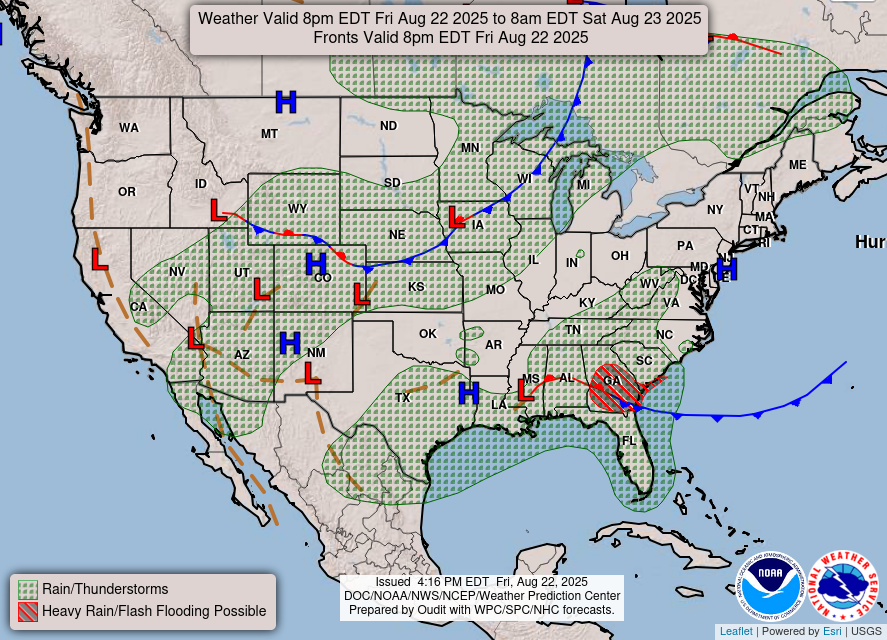
Visit Current National Radar Weather Map


Did you miss the latest RV Travel Newsletter? If so, read it here.
Oh, and if you missed the Latest News for RVers, make sure to catch up here.


If you shop at Amazon.com we’d appreciate you using this link. We get an itty bitty commission if you buy something, but they add up and help us pay our bills (most importantly our hard-working writers!). 


RVtravel.com All-Star Staff

Click here for information about our staff and how to contact us.
WHY WE ASK FOR DONATIONS INSTEAD OF SELLING SUBSCRIPTIONS.

Our policy on using artificial intelligence.

How can I keep my RV cool in Death Valley this summer?

Dear Dave,
We are planning a trip to Death Valley this summer and want to be prepared for the heat. Any suggestions for insulation and keeping the rig cool? —James, 2019 Jayco MBH

Dear James,
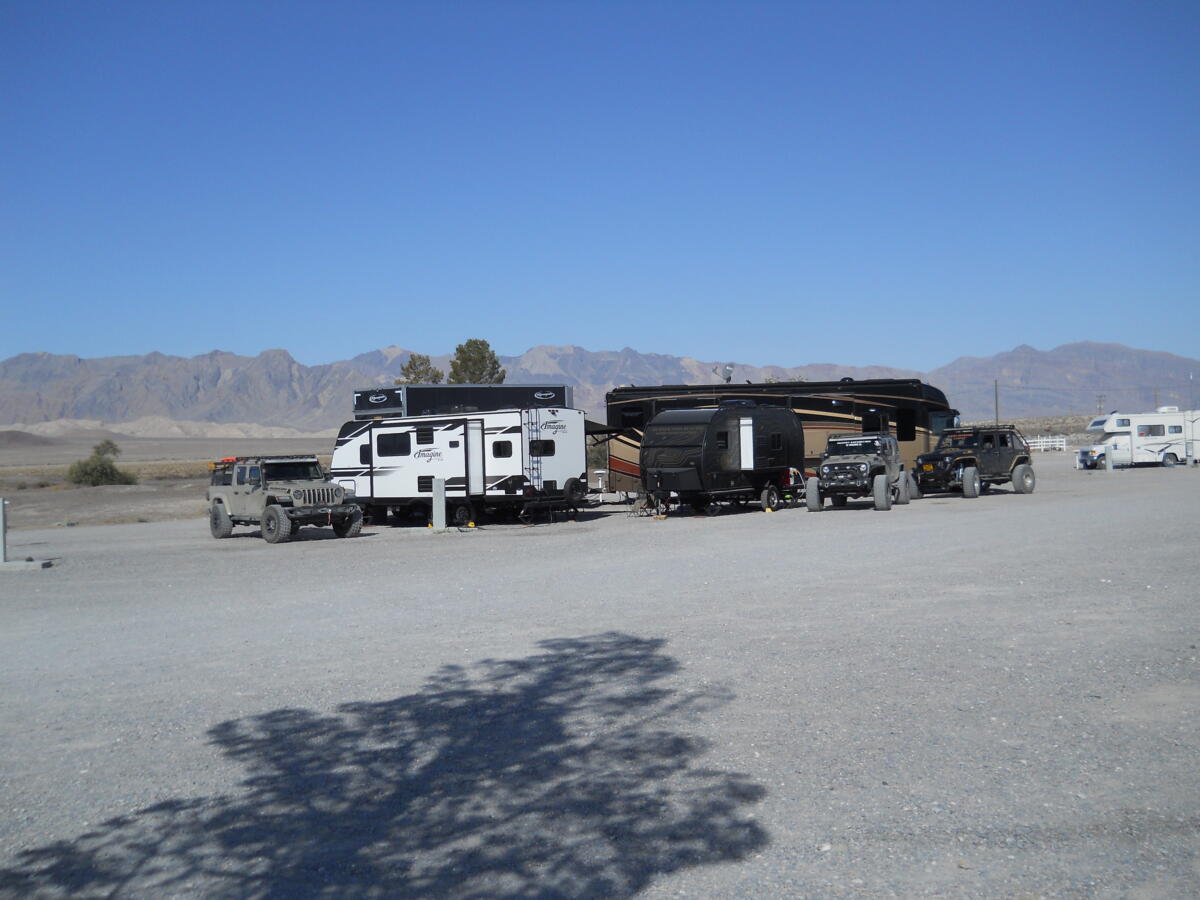
They don’t call it Death Valley for nothing. I have camped there when the temps were over 100 degrees. We went out there to shoot footage for an Outdoor Channel series called “Rubber Foot Buffalo” for a friend of mine. We stayed at the Longstreet Inn, Casino & RV Resort in Amargosa Valley. It did have full hookups with 50-amp shoreline power, so we were able to use the roof air conditioners.

Longstreet Casino Campground
Longstreet Casino campground

We had a luxury Renegade Ikon Super C that was my friend’s. Talk about roughing it! We slept in the Winnebago travel trailer and others slept in a Grand Design Imagine. Even though it was the 1st of May, it was HOT!

Cover the windows

Looking at pictures of your rig on the internet, it looks like there are several windows not only on the side but also on the front of the rig. The first thing I would do is to get some reflective window insulation and cover the inside of the windows.

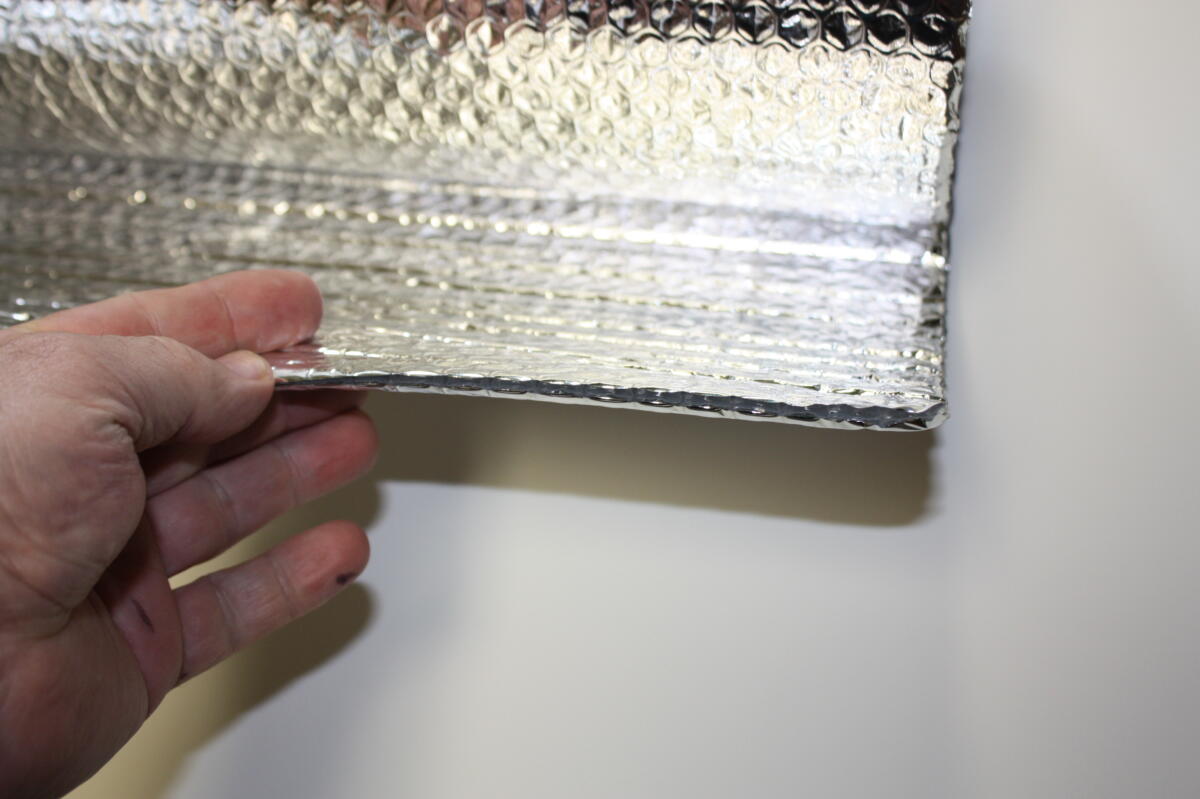
Reflectix is the brand that we used and it is found on Amazon here. It is easy to cut to customize the size. We used hook and loop tabs (like Velcro) to attach it.

Reflectix
Reflectix

You could also use exterior window coverings, awnings, or inside thermal curtains. Even with dual-pane windows, the inside is not gas, but rather air, so the insulation value can be enhanced with additional material. I know of some hard-core RV owners that actually have installed block foam insulation cut to the window size.

Check your roof

Heat can transfer through several areas, especially a thin roof material, and even skylights and roof vents. I would suggest coating the entire roof with RV Roof Magic. It not only seals the entire roof, but the reflective nature helps in keeping the inside cooler. We had some samples sent to Cheri Sicard, from RV Travel. You can read about not only the application process here, but also a two-year update here.

You can get the product on Amazon here.

RV Roof Magic Application
RV Roof Magic application

Keep in mind that most roof vents are wide open cutouts in the roof with a very thin plastic cover which let’s in a lot of heat. They are good for exhausting warm air at the ceiling level occasionally. However, many RVers that camp in extreme heat also use the Reflectix to either cover the top of the vent or cover the hole from the inside using hook-and-loop tape to keep the heat from coming inside. This way they can remove the cover when needing to use the fan.

Identify poorly insulated areas

Since your rig has a one-piece fiberglass outer sidewall skin, I believe you have a 2” thick sidewall with block foam insulation. That would be an R value of approximately R9, which is fair. However, since you have windows and a slide room, these would have very poor insulation value and allow substantial heat transfer. Identify these areas and try to place them in a direction that they are not facing the sun on the hottest part of the day.

The roof has ducted air conditioning, vents so it most likely is an R19 which is better than the sidewall.

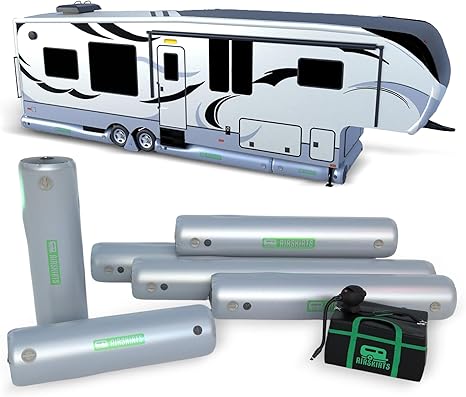
The floor could also be poorly insulated, especially where there are compartments or openings for drain valves. Under-skirting can help control heat penetration, as well. RV AirSkirts is one of the best products I have found for both summer and winter. You can get a customized kit on Amazon here.

Air Skirt
RV AirSkirt

Find shade or make your own

It sounds pretty simple to find shade to park in to help cool the rig down. However, you need to determine where the shade will be during the hottest part of the day and make sure you are parked in that area. The morning will be cooler and being in the shade in the heat of the afternoon will be the best option.

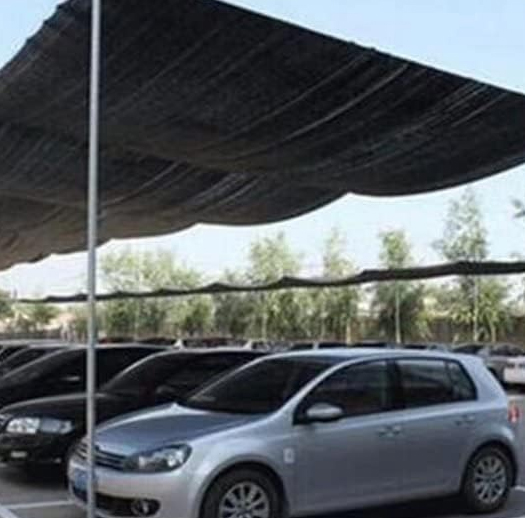
Another option is to create your own shade. We did at the campground in Death Valley as there were no trees and just direct sunlight all day. We had two large blackout shades that we stretched out over the open space between the RVs to block sun for video production. The edges were hemmed and had grommets all around, so we just tied them to the roof ladders of two rigs and the awning rail on the Super C. For example, you can find a 24’x24’ shade that is hemmed and has grommets on Amazon for about $75 here.

I have seen RVers use these at rallies and campgrounds connected to telescoping flag poles that have the base weighted down under a tire. There are a lot of creative options for using these things.

Sun Block
Sun block

Make sure your roof air conditioner is running efficiently

You roof air conditioner draws in warm, moist interior air and can only cool it down about 16-18 degrees IF everything is running as designed. Make sure your filters are clean, the evaporator coil is clean, and the airflow is good. You can improve airflow efficiency with a product called RV Airflow Systems™, which provides a smooth path rather than sharp corners or “pockets” inside the chamber. Ducted roof air conditioners typically have a diverter directing airflow to the ductwork, which can be blown out of place or incorrectly installed. Check out the article I wrote earlier on air conditioner efficiency here.

Final suggestions to stay cool

Finally, bring lots of sunscreen, a long-sleeved shirt, and a good hat. The heat and sunburn will sneak up on you quickly.

RFB Dave Camera
RFB Dave camera
RFB Overlook
RFB overlook

 More posts on RVing in the heat 

DAVE HAS ANSWERED MORE THAN 1,000 readers’ maintenance and repair questions. Read a directory here. There is so much to learn!


Dave Solberg is a leading expert in the RV industry and the author of the “RV Handbook.”

HAVE A QUESTION FOR DAVE?

Send your inquiries to him using the form below.

Name
Drag & Drop Files, Choose Files to Upload

RVDT2905

Easy and inexpensive RV tank sensors upgrade

By Cheri Sicard
Jared Gillis, of All About RVs, is not a big fan of RV tank sensors. However, since he gets so many questions about them and sees internet threads constantly with questions, he thought he would address the topic.

Like many of us, Jared is not a fan of tank sensors because they are often wildly inaccurate. I know that mine are, to the degree of rendering them useless.

Even when they are working, the RV tank sensor lights that come standard in most RVs don’t give you precise information. Jared shows an example where the tank level could be anywhere from one-third to one-half full.

Easier solution with more accurate results

There’s an easier solution that Jared says will provide far more accurate results: a wireless tank sensor called the Mopeka Pro.

Jared is using the Mopeka Pro for water tanks, which works for fresh or gray water tanks. However, know that you can also get one for your propane tanks. Judging from the consumer comments on Amazon, most people who bought these are as enthusiastic about the product as Jared is.

While the product is not recommended for black tanks, Jared does know of people who have used it for this purpose with success.

How it works

So, how does it work? The small, round Mopeka Pro disc is magnetized and simply attaches to the bottom of your propane tank. For gray or fresh water tanks, the Mopeka comes with easy mounting accessories that stick the sensor to the bottom of the tank. It uses sonar to detect the amount of material in the tank, and you read it via an app on your phone.

Watch the video as Jared shows just how easy it is to install and use the Mopeka Pro. No more guessing how much fresh water or propane you have, or how full your gray tank is getting!

Here’s a link to the Mopeka Pro.

RELATED

RVDT2905

How to silence an RV vent fan

By Cheri Sicard
A noisy RV vent fan can turn a good night into a long one. When a Maxxfan starts to squeak, especially on low speed, that steady chirp can make the fan hard to live with.

In the video at the end of this post, Jared Gillis of All About RVs shows us how to silence an RV vent fan.

The good news is that the noise may come from dust buildup inside the motor, not a failed fan. That means the fix can be cleaning, not replacing the whole unit.

The Maxxair fan is still a favorite because it’s efficient, moves air well, and is usually quiet. In this case, it had replaced the original vent fan in Jared’s RV for exactly that reason.

Over time, though, the motor picked up enough internal buildup to start squeaking. The worst part showed up at night. On the lowest setting, the sound turned into a repeated chirp that made it close to impossible to sleep. That kind of noise doesn’t seem awful at first, but after a few minutes in a quiet RV, it gets old fast.

Before opening anything, it helps to have a few basics ready:

• A 5/32″ Allen wrench
• Compressed air or an air compressor
• A place to set small nuts and washers

Be sure to watch the video for a demonstration of all these steps.

The screen drops down first, and the fan blades come off after loosening the set screw. Since the blades collect dust, this is also a good time to wash or vacuum them before reassembly.

Removing the cover, blades, and motor

The first part is simple. Lower the screen, use the 5/32″ Allen wrench on the set screw, and slide the blades off.

Next, loosen the two nuts at the bottom of the motor mount. There are washers behind them, so those need to stay together. After that, the motor can come down. For easier access, the wires were cut so the motor could be moved to a table, then reconnected later.

Opening the motor without losing parts

Two long screws run through the top of the motor housing. Once those come out, the snap ring can be removed from the shaft, and then the end cap can come off.

Hold the motor together while opening it, because small parts can shift or spring loose.

Inside, the source of the squeak in the example becomes obvious. Dust and grime had built up in the motor.

Cleaning the buildup that causes the squeak

Before pulling the rest apart, the brushes need to be secured with their small tabs. That keeps the springs from pushing them out and makes reassembly possible.

Once apart, each piece can be cleaned with compressed air. The goal is to remove the buildup on the center section, end cap, and other internal parts.

The key point is that the bearings were not the problem here. The noise came from dirt inside the motor, so a good cleaning solved it.

Putting it back together and testing it

Reassembly is the hard part. The brushes need to stay clipped in place, and the center section can take a few tries because the magnet wants to pull things out of alignment. Once it fits, the brushes can be released, the end cap reinstalled, and the snap ring and long screws put back in.

Then the motor goes back into the fan housing, the wires get reconnected, and the mounting nuts are tightened. After that, the blades slide back on, the set screw is tightened, and the screen goes back up.

The final test was on the lowest speed, where the squeak used to be the worst. After cleaning, the fan ran without the chirping noise.

Two easier fixes if full disassembly feels like too much

Some owners may prefer a simpler path. One option is replacing the motor instead of opening it up. A replacement vent fan motor costs more, but it’s much easier to swap. If the fan is still under warranty, Maxxfan may replace the motor at no charge.

The other option is a break-in run on a new fan. The advice mentioned here was to run it on high for 10 to 24 hours. That may help the fan settle in and reduce the chance of a squeak later.

Final thoughts

A squeaky RV vent fan doesn’t always need a new motor. In this case, a careful teardown and a thorough cleaning fixed the noise and brought the fan back to normal.

That matters because a fan that’s quiet enough to sleep with is worth keeping. When the sound comes from the buildup instead of the worn parts, cleaning can be the fix that makes the RV feel calm again.

RELATED

RVDT2905

How many bumper stickers are on your RV or tow vehicle?

17

Bumper stickers usually go one of two ways. Either you have a large collection and enjoy looking at them, noting all the places you’ve been, admiring all the things you believe in or want to promote, etc.; or you plop a sticker or two on, thinking it looks good at the time, then regret it a few months later.

On top of that, you’ve got people out there where the sticker must be perfectly placed and perfectly straight, and other people who smack a sticker on, not caring at all whether it’s aligned with the one next to it or parallel to the back bumper. What kind of bumper sticker person are you?

This one is our favorite RV bumper stickers.

Some folks treat bumper stickers like merit badges—each one hard-earned and carefully chosen. Others just like to have a laugh and pick out something silly or sarcastic to get a smile from fellow travelers on the road.

Of course, there are also those who slap one on in a moment of passion—maybe after a great hike, a big political moment, or a funny roadside souvenir stand—only to realize later that their taste has changed.

And let’s not forget the “sticker remover” crowd—the ones who bought a used RV or tow vehicle and are still trying to scrape off that last bit of someone else’s personality with a razor blade and a bottle of Goo Gone. Sometimes, the story isn’t about what you put on—it’s what you’re trying to take off.

If your RV or tow vehicle has a bumper sticker (or more than one) on it, what are they about? Travel stickers? Politics? Funny quotes? A combination? Tell us in the comments below after you’ve voted. Thanks!

MORE POLLS YOU MIGHT ENJOY:

RVDT2905

Best toilet brush for the RV bathroom

By Dustin Simpson
I see a lot of RVs in our shop with bulky toilet brushes in their bathrooms. And not only that, if the toilet brush isn’t mounted it can easily fall over and make a mess during travel. You don’t want those germs getting everywhere!

This compact RV toilet brush and wall holder set is a must-have for your RV.

Its sleek design fits seamlessly into your RV’s limited bathroom space, ensuring that your bathroom stays clean and organized without sacrificing style. The wall-mounted holder keeps the brush securely in place, making it easy to access when needed while keeping it out of sight when not in use.

It’s a practical and stylish solution that you’ll love, helping you maintain a tidy and well-kept bathroom on the road.

Designed for convenience and efficiency, it helps you maintain a spotless bathroom even in the tight quarters of your RV. With this brush, you’ll ensure that your RV’s toilet stays fresh and hygienic, making your travels more comfortable and stress-free.

You can find it on Amazon for a great price here.

More from Dustin

Make sure you check out my website, California RV Specialists, and our YouTube channel for more helpful information, and see our published articles on RVtravel.com and other social media pages.

RELATED

RVDT2905