Home Blog Page 4

RV Daily Tips. Friday, June 5, 2026

America’s Original RV Newsletter. Since 2001
Issue 2920 • New issue every weekday


Today’s thought

“You can’t depend on your eyes when your imagination is out of focus.” ―Mark Twain


Need an excuse to celebrate? Today is National Doughnut Day! We love doughnuts, and we love the sound of this! [Get a free doughnut at Krispy Kreme today only. No purchase necessary. Some types excluded.]

On this day in history: 1956 – Elvis Presley introduces his new single, “Hound Dog”, on The Milton Berle Show, scandalizing the audience with his suggestive hip movements.


Tip of the day
RV tanks dumping tips and helpful accessories

By Gail Marsh
It’s a job that many RVers dread—especially as newbies. I’m here to tell you that you need not dread this necessary job. You just might need a few tips and tricks to make dumping your RV tanks easier!

To start, let’s look at using a Y-valve water connector on the campground’s water supply. This allows us to use separate hoses, one for drinking, cooking, etc., and the other for flushing the black tank or washing the RV or truck. Continue reading.

ALINER Switchback folding truck camperRV review
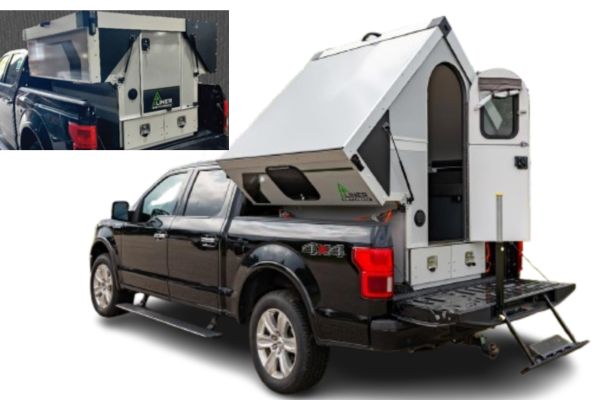
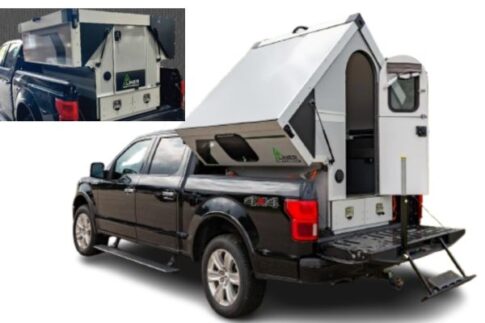
2026 Aliner Switchback—an attention-grabbing, folding truck camper

A hard-sided truck camper that weighs about 400 pounds is rare. The 2026 Aliner Switchback goes further because it is built for smaller pickups and still folds low enough to stay practical day to day. That mix of low weight, quick setup, and hard-wall security is why the early reaction has been so strong. This is pretty cool. Check it out.


IT’S TRUE! SORT OF… Coffee somehow tastes 37% better when you’re holding the mug outside your RV. (This statistic was not reviewed by scientists, but most RVers would probably agree.)


Trusted by Full-Time RVers
Americas Mailbox offers secure mail forwarding, scanning, and residency services tailored to life on the road, plus tax savings. Learn more.


In the RV shop with Dustin
Are the most common RV issues covered under warranty?

Join me as I delve into some of the most common RV issues plaguing the industry today. In an interview with Wholesale Warranties, I chatted with Staci and discussed these top issues and whether they are covered claims under warranty.


Small blind spot mirror good for all vehicles
If you don’t have one of these on your RV or tow vehicle, you need one! These small 2″ round glass blind spot mirrors easily stick onto your current mirror; no hard work is needed! They’re waterproof and rust-resistant and can rotate and sway to be adjusted for the best visibility. They could save you from an accident. Learn more or order.


Article and video
The pros and cons of volunteer camp hosting

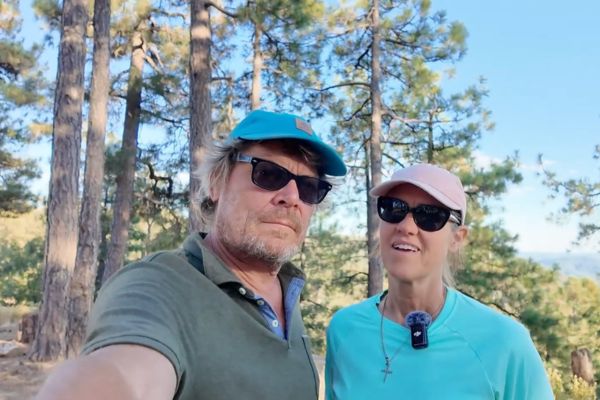
After four months as volunteer camp hosts on Arizona’s Mogollon Rim, Kim and Pete of RV Life with Kim Hanna came away with a clear answer: Camp hosting can be great, but it is not an easy free campsite. Most campers were kind, respectful, and fun to meet. The hard part came from the small number who left messes, ignored rules, or created safety problems. Here’s a full look at both sides of the job.


CAMP HOSTS WANTED in Louisiana State Park. Get the scoop.


IN TOMORROW’S ISSUE

New World Screwworm
Oh, what beautiful eyes you have! But please, do not invade the USA.

Featured article
OMG! This RV is for camping? Really?

That RV you see right above these words (well, in the article), guess what is it — motorhome, trailer, fifth wheel? Nope. None of those. It’s a truck camper! Do you believe it? You won’t…


Our readers favorite products at Amazon
For 25 years, RVtravel.com has recommended products at Amazon that we believe RVers would love. Here are those that are consistently reader favorites. Just reading through this list is fun! So many good things!


Ask Dave
Do I need a trickle charger for engine battery when connected to shoreline power?

Read Dave’s answer.


You may have missed these recent popular stories…


SUMMER ESSENTIALS? Say no more! As usual, Amazon has a whole category for that, and soooo many items are on sale.


Reader poll
How many nights in a row do you wear the same pajamas (or sleepwear)?

Respond here.


Quick tip
Dinette cushions sliding around? Here are some solutions

Here are some possible solutions if your dinette cushions are sliding around: Apply “lines” of silicone caulk in a pattern across the “back” of the sliding cushy. Let the caulk dry before setting back into place – the dry caulk acts as a snubber. Or attach sticky-back hook-and-loop tape to both the cushion and the surface it should “stick” to. Bob added this tip: “Instead of putting the caulk on the cushion, apply it to the wood under the cushion. Has the same effect and can be removed and reapplied when needed.” Thanks, Bob! And Ran added this: “Quick Tip – Add on. I use the rubber shelf liner open weave mat under my cushions to keep them from sliding around.” Thanks, Ran!


Website of the day

7 of the Quirkiest Road Stops in the U.S.
This list from dailypassport will have you planning a trip to one of these quirky roadside stops in no time. We love stuff like this! How many of these have you visited?


Trivia

Reno is farther west than Los Angeles. It may seem hard to believe, but it’s true. Reno is located at 119°49’ West and Los Angeles is located at 118°14’ West.


? MYSTERY PRODUCT OF THE DAY ?
You and your sweetheart (or even your dog!) need this for a “snug-as-a-bug” camping season! Or maybe you just want to keep it all to yourself… Or maybe your dog wants it all to themself…


Readers’ pets of the day
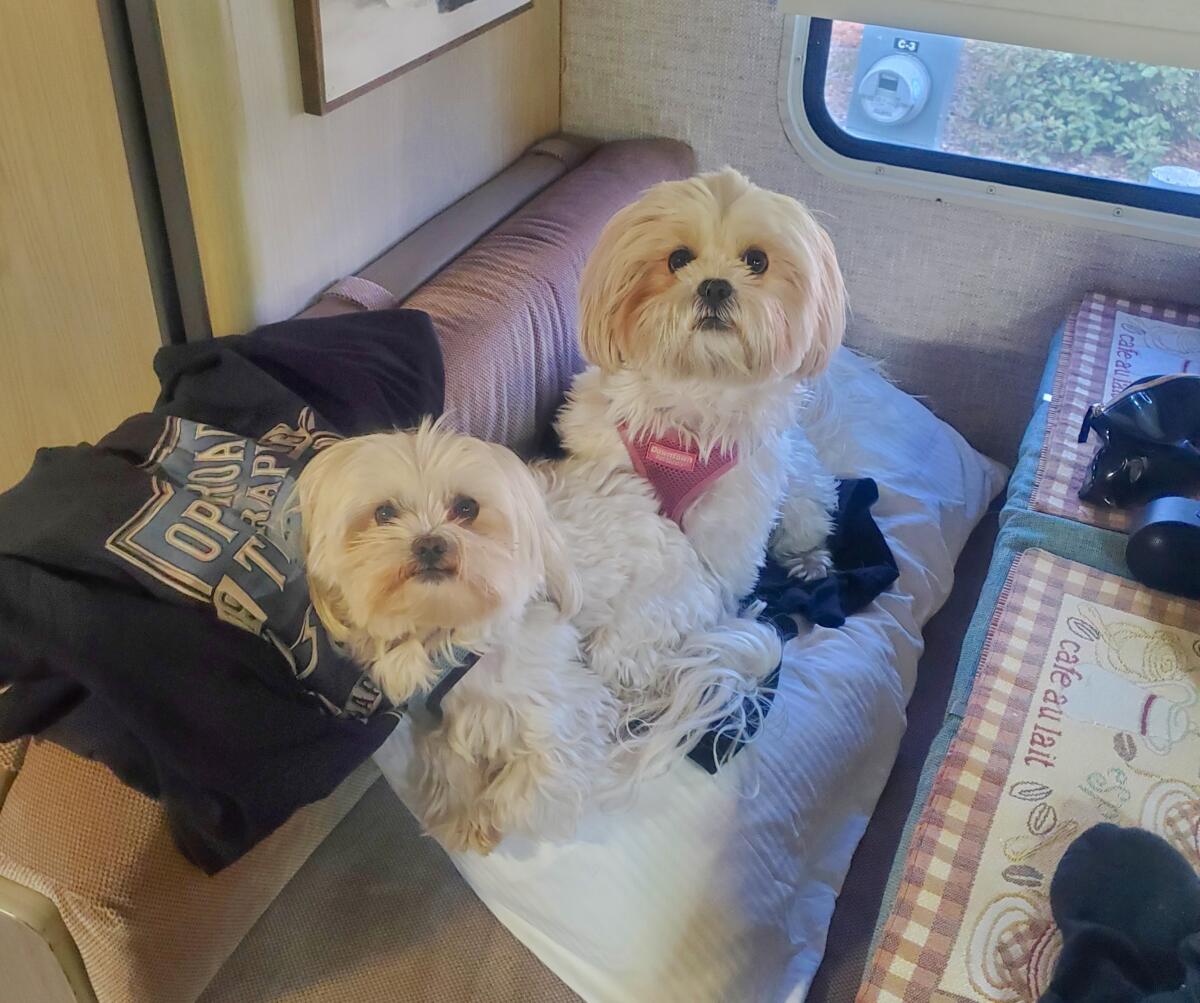
20260419 081105 1fe67dc1751d0ef2534ee372cb5d2130“Gracie & Buddy (Maltese/Shih Tzu, ages 4 and 9) go with us everywhere. They especially love traveling with us when we take our RV camping. We have a smaller Class C so seating is limited. They usually get first dibs!” —Steve Mitchell

HELP! WE’RE RUNNING LOW ON PET PHOTOS! Send us a photo of your pet with a short description. No blurry photos, and please do not submit your photo more than once. Thanks!

RVing with Dogs group on Facebook. You’ll love it.


FINISHED READING THIS NEWSLETTER? Great job! Now you can move over to yesterday’s brand-new Great RV Accessories newsletter. It’s fun to read!


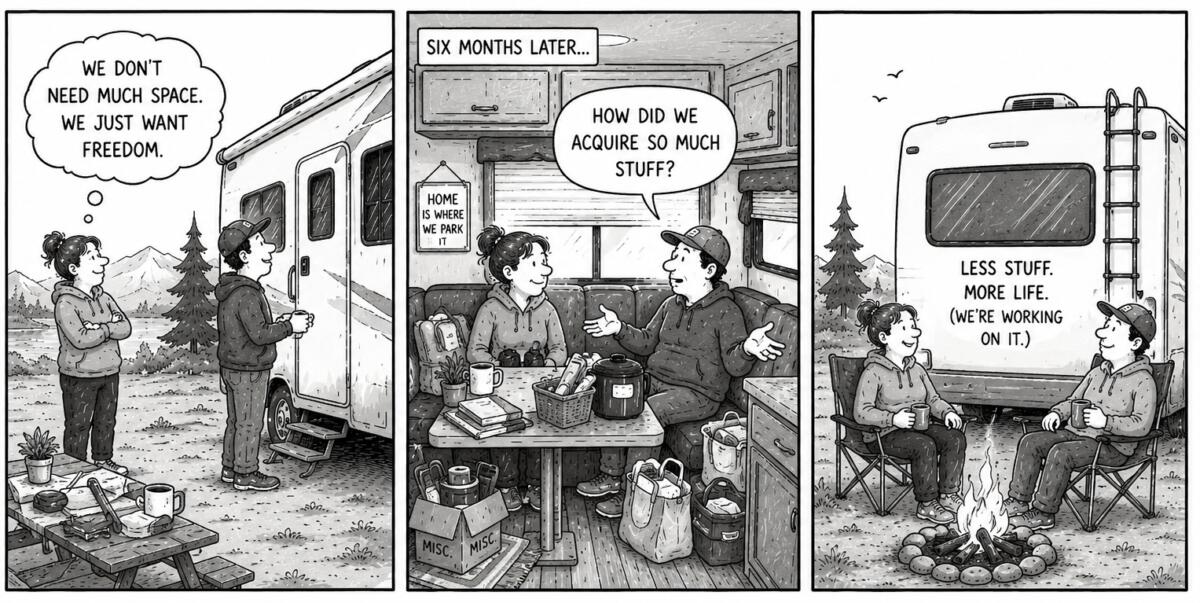
Leave here with a laugh


Lessstuff


Today’s weather forecast across the nation
THIS MAP UPDATES TWICE A DAY
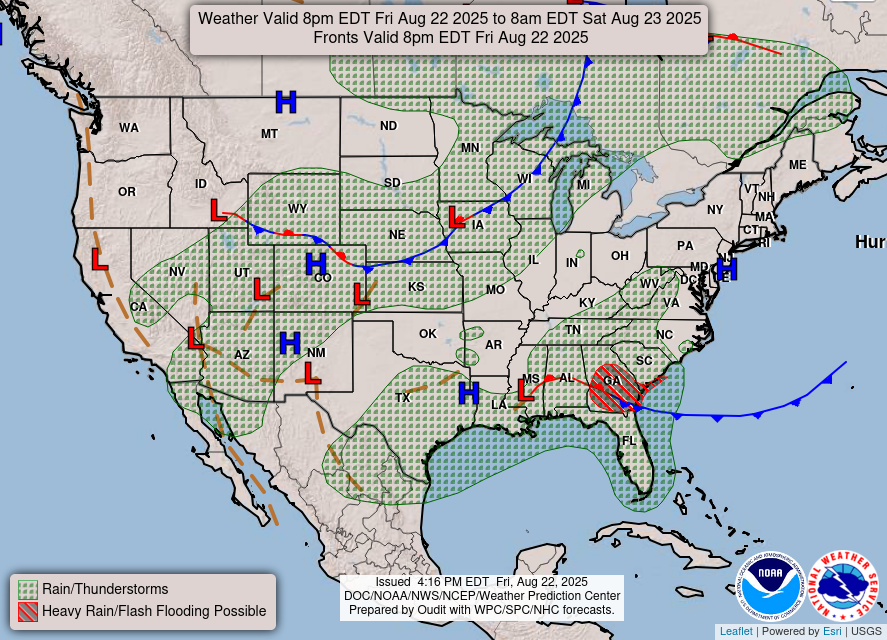
Visit Current National Radar Weather Map


Did you miss the latest RV Travel Newsletter? If so, read it here.
Oh, and if you missed the Latest News for RVers, make sure to catch up here.


If you shop at Amazon.com we’d appreciate you using this link. We get an itty bitty commission if you buy something, but they add up and help us pay our bills (most importantly our hard-working writers!). 


RVtravel.com All-Star Staff

Click here for information about our staff and how to contact us.

WHY WE ASK FOR DONATIONS INSTEAD OF SELLING SUBSCRIPTIONS.

Our policy on using artificial intelligence.

Do I need a trickle charger for my engine battery when I have shoreline power?

Dear Dave,
We are full-time RVers. I’m wondering if I need to use a trickle charger on my 12v starter batteries to maintain them. If so, how do I do it? We are usually plugged into shore power at parks. —David, 2000 Fleetwood Bounder 39Z

Dear David,
The engine battery will have a slight drain from some of the automotive components such as the engine computer and radio with preset stations. However, this typically takes several weeks to drain an engine battery if it is in good condition, as the draw is very small.

You can actually test the draw with a multimeter by removing the negative cable on the engine battery, set the multimeter to DC amps, place the red probe on the empty battery post and the black probe on the cable end. Any draw or drain that is coming through will show there, and it is common to see a 1- to 2-amp draw. Anything more than that would indicate something else drawing power.

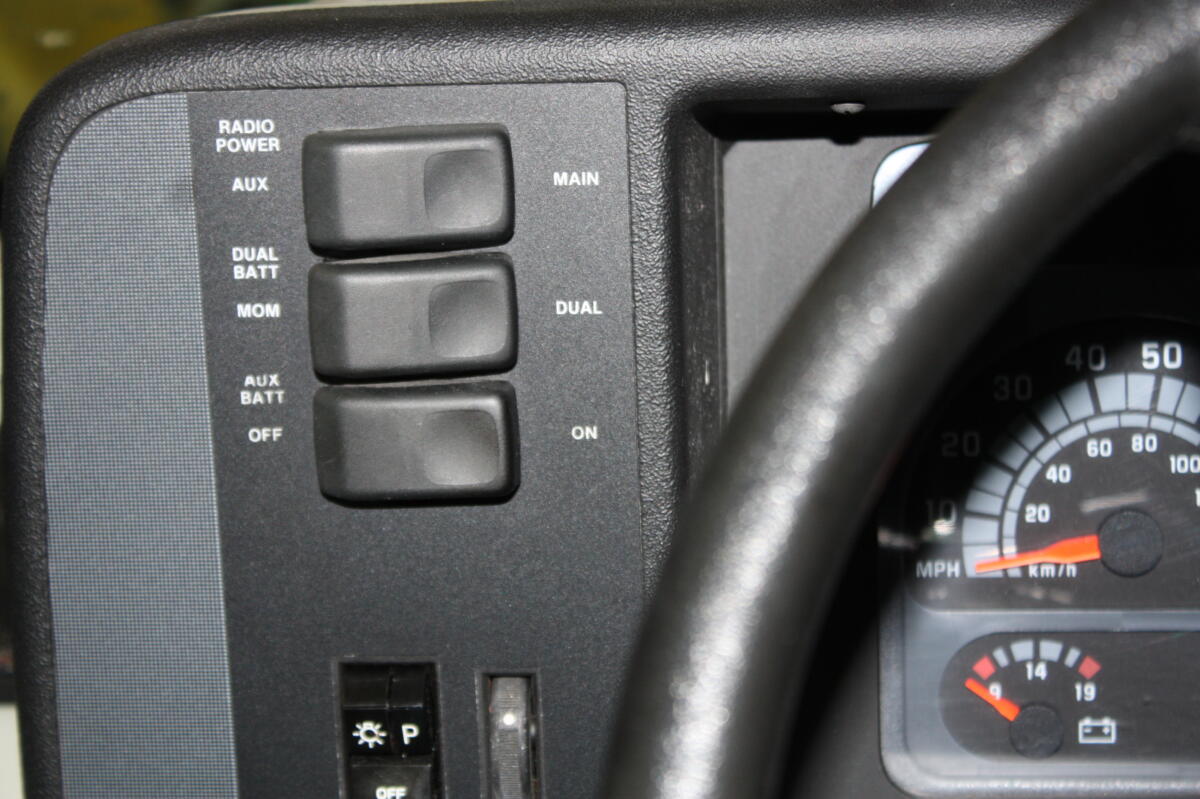
Newer motorhomes have a battery isolation management (BIM) system. It is a solenoid installed between the engine battery and the house battery bank. When the engine is running, the alternator provides a charge to the engine battery and the house batteries through the BIM. It also allows a jump from the house batteries if the engine battery is dead by using the spring loaded switch typically on the dash.

Momentary Switch
Momentary switch (click to enlarge)

Newer models have an engine battery charging feature through the BIM. When you are connected to a campground source, 120-volt power is supplied to the distribution center, which supplies power to the converter/battery charger. If your Bounder has a large inverter such as the Freedom 2000 version, it will have the battery charger as part of the inverter.

Either way, whatever charger you have will provide a charge to the house batteries and also the engine battery through the BIM. Depending on your battery’s charge profile and the converter, it will be at least 13.2-volts.

You can verify if your engine battery is receiving a charge from the converter/inverter with a multimeter, as well. With the rig unplugged from shoreline power, set the multimeter to DC volts and place the red probe on the positive terminal and the black probe on the negative terminal. It should read 12.6 volts without a charge coming from the charger. Plug the shoreline cord in and retest for voltage and you should see at least 13.2 volts. This will verify the BIM is allowing a charge to the engine battery while you are plugged into shoreline power.

BIM
Battery isolation manager

 You might also enjoy these posts from Dave 

DAVE HAS ANSWERED MORE THAN 1,000 readers’ maintenance and repair questions. Read a directory here. There is so much to learn!


Dave Solberg is a leading expert in the RV industry and the author of the “RV Handbook.”

HAVE A QUESTION FOR DAVE?

Send your inquiries to him using the form below.

Name
Drag & Drop Files, Choose Files to Upload

RVDT2920

RV tanks dumping tips and helpful accessories

By Gail Marsh
It’s a job that many RVers dread—especially as newbies. I’m here to tell you that you need not dread this necessary job. You just might need a few tips and tricks to make dumping your RV tanks easier!

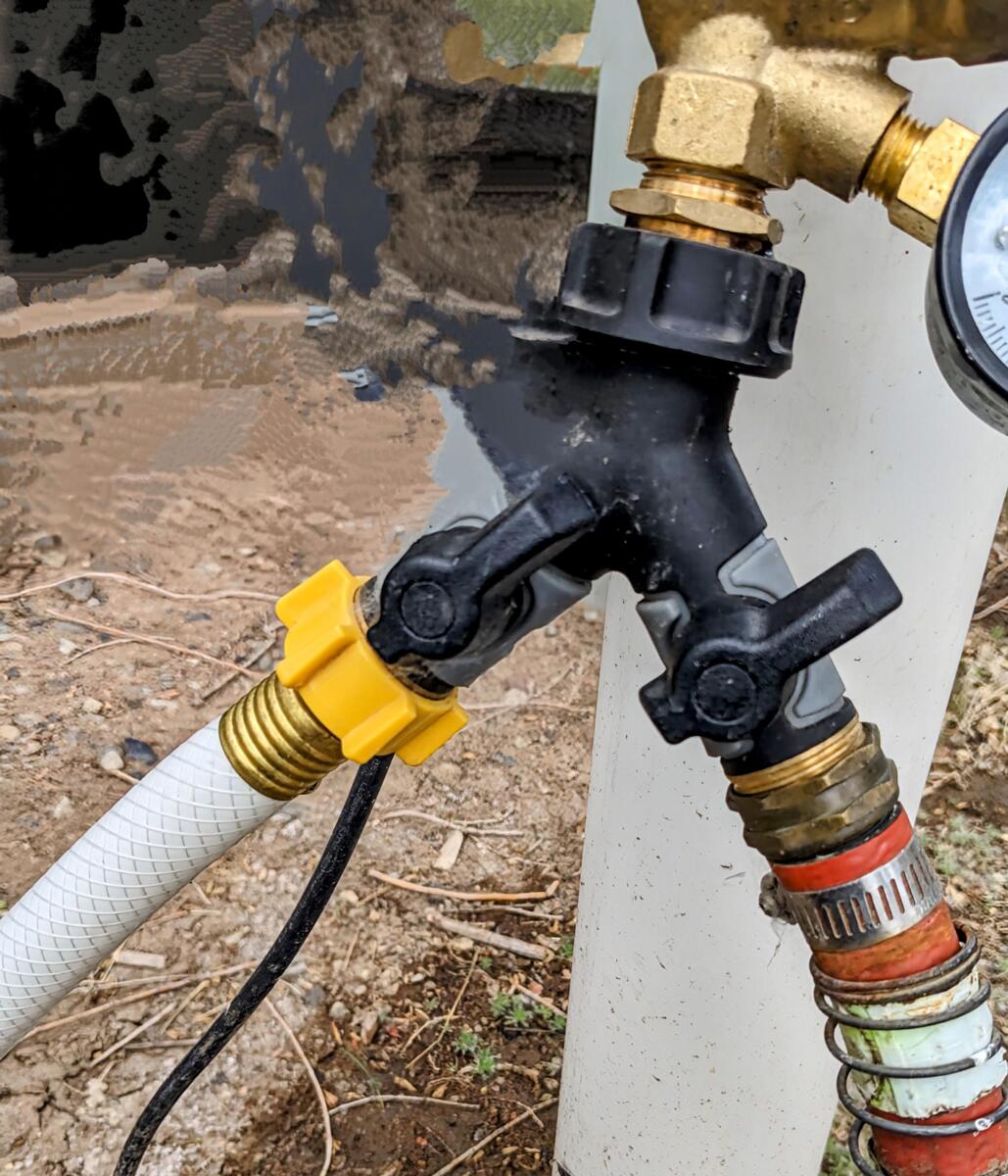
Y-connector

Water spigot y-connector photo by Gail Marsh

We use a Y-valve water connector on the campground’s water supply. This allows us to use separate hoses, one for drinking, cooking, etc., and the other for flushing the black tank or washing the RV or truck.

This Y-connector makes it easy to switch from one hose to the other, using the toggle to close off one hose before opening the other.

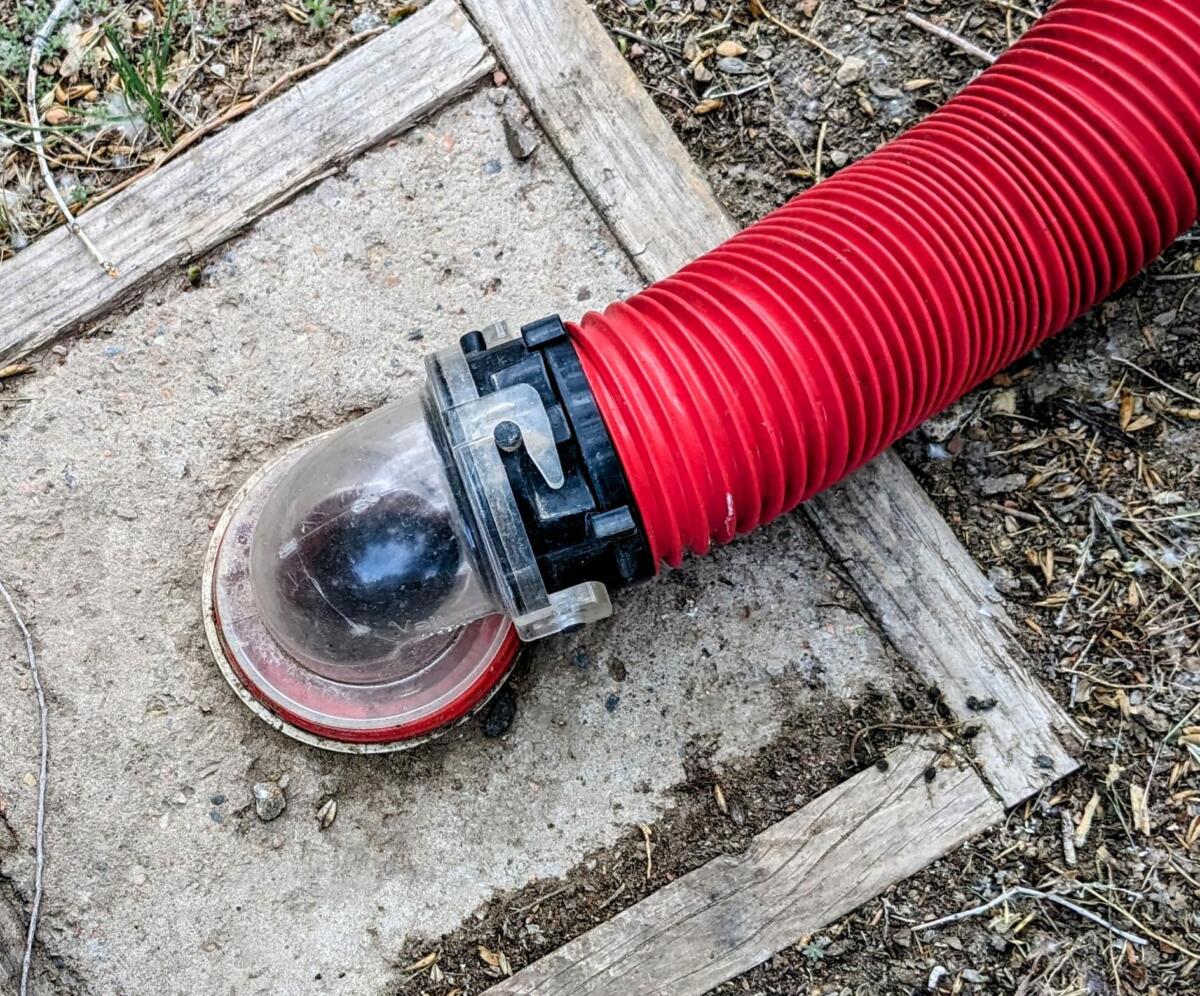
Clear connectors

clear sewer connector photo by G. Marsh

Use a clear connector at each end of the sewer hose. That way you can see what’s happening as the tanks are flushed.

A clear, elbow connector at the end of the sewer tank allows you to securely attach your sewer hose to the campground’s sewer with no mess or odors.

Open the gray tank

Before opening the black tank valve, open the gray tank for just a few seconds. The gray water will lubricate the sewer hose, helping the contents in the black tank to flow smoothly. Close the gray tank valve.

Plenty of water

Open the black tank valve to empty the black tank. Depending on the size of your black holding tank, this could take several minutes.

If you observe (by watching the clear connectors) that the black tank is not completely flushed, close the black tank. Add water to fill the tank, then open the valve and watch the clear connectors to see that the sewage has been completely washed out.

Repeat the black tank refill/empty process until you’re satisfied that the black tank is empty and clean.

Gray tank

Make sure your gray tank is full or nearly full, then empty. This will allow the most water to flush out the sewer hose.

Lubricate tank handles

If your RV has manual tank levers rather than electronic ones, you’ll want to keep the tank levers in tip-top operating condition by lubricating the tank valves regularly.

With the holding tanks empty, pull out the black tank lever. Apply a dry lubricant to the lever mechanism and open and close the valve a few times to work the lube into the mechanism. Repeat the process for the gray tank lever.

Your tips

You may have additional tips to offer. Please share your tips and tricks for dumping your RV tanks using the comments section below.

RELATED

RVDT2920

The pros and cons of volunteer camp hosting

By Cheri Sicard
After four months as volunteer camp hosts on Arizona’s Mogollon Rim, Kim and Pete of RV Life with Kim Hanna came away with a clear answer: Camp hosting can be great, but it is not an easy free campsite. Most campers were kind, respectful, and fun to meet. The hard part came from the small number who left messes, ignored rules, or created safety problems.

Their season in the Apache-Sitgreaves National Forests gave them a full look at both sides of the job.

In the video at the end of this post, Kim and Pete share their honest assessment.

The parts of camp hosting they loved most

The best part was the people, at least most of them. Kim and Pete said about 95% of campers were great. They cleaned up, followed the rules, and often shared stories, travel tips, and favorite destinations. A few even became friends they planned to see again in Quartzsite.

Wildlife added a lot of fun, too. Campers loved hearing about Bradley, the resident elk, then stepping out of a tent one morning and finding him sleeping nearby. Those moments gave the campground some personality.

Volunteer hosting also gave them a major perk: They could stay in a favorite boondocking site all summer instead of leaving after the usual 14-day limit.

The hard truth about dogs, trash, and waste

Camping was dog-friendly, which sounds great until owners ignored leash rules. Loose dogs chased wildlife, stirred up other dogs, got into fights, and often got lost. Kim and Pete spent part of the summer helping people find missing pets that should never have been off leash in the first place.

The biggest downside was worse than that. It was trash and human waste.

People left food scraps, dirty diapers, bags of poop, and even buckets of waste behind. In free camping areas, the rule is simple: Pack it in, pack it out. When people refuse to do that, volunteers end up handling it, and some public lands end up closed because staff can’t keep up.

What a camp host can do, and what they can’t

Kim and Pete saw their role as the welcoming committee. They checked campers in, explained stay limits, and reminded people about rules such as no speeding, no shooting, and no fires during restrictions. If campers ignored those rules, the hosts could report it, but they had no authority to enforce anything.

That limit mattered. Poor leadership made some situations more frustrating, especially when obvious safety issues were brushed off. Their takeaway was simple: Anyone taking a hosting job should know the duties, perks, and support ahead of time, and paid positions should be spelled out in writing.

Why the volunteer setup worked for them

Their location checked a lot of boxes. It had cooler summer weather, enough solar, room for their Grand Design fifth wheel, and access to Phoenix when family medical issues came up.

They also had weekly water delivery, paid to have their tanks pumped without moving the trailer, and worked a flexible volunteer schedule of about 32 hours a month.

Still, the job did cost them in other ways. They used their own truck on rough roads, got no mileage reimbursement, and stayed tied to one place for the season.

Final thoughts

Camp hosting worked for Kim and Pete because the good outweighed the bad. They got a beautiful site, met solid people, caught plenty of fish, and enjoyed a summer that fit their life at that moment.

They would do it again, but not every year. It can be rewarding, as long as expectations are realistic and it is understood that the messy parts are part of the deal from day one.

RELATED

RVDT2920

How many nights in a row do you wear the same pajamas (or sleepwear)?

3

You can tell a lot of our poll questions come to us when we’re doing everyday things. Like this one, which came to us as we pulled a clean pair of pajamas out of our drawer. (See, we’re real humans!)

How many nights in a row do you wear the same pair of pajamas? (If you wear a nightgown, or sweatpants, or anything, just change “that” for “pajamas” here and in the poll.)

Do you wear a new pair every night? Every other night? Do you wear the same pair for three nights before changing? Do you wear the same pair for a week? More than a week?

Now, we know your answer to this may change depending on whether you’re in your RV versus your sticks-and-bricks house, but try and answer the best you can, even if it’s your average between the two.

And if you’re suddenly thinking you may need another pair of pajamas, click here for tons of camping and RVing-themed PJs. They are so fun!

Oh, and remember, we can’t see how you vote. So if you say you don’t change your pajamas for a month at a time, well, we can’t judge you! Same goes for if you don’t sleep in pajamas at all. You do you!

MORE POLLS YOU MIGHT ENJOY:

RVDT2920

Are the most common RV issues covered under warranty?

By Dustin Simpson
Join me in the video below as I delve into some of the most common RV issues plaguing the industry today. In an interview with Wholesale Warranties, I chatted with Staci and discussed these top issues and whether they are covered claims under warranty.

Are the most common RV issues covered under warranty?

Throughout the video, we shed light on the challenges faced by RV owners and how warranty coverage can help mitigate the financial burden associated with repairs. From mechanical failures to electrical issues and beyond, we explore the wide range of problems that RVers may encounter on the road.

By identifying these common issues and understanding whether they fall under warranty coverage, RV owners can make informed decisions to protect their investments and ensure peace of mind during their travels.

EDITOR’S NOTE: This article is from Dustin Simpson of California RV Specialists. While Wholesale Warranties is an advertiser with RVtravel.com, Dustin submitted this article without any direction from us.

More from Dustin

Make sure you check out my website, California RV Specialists, and our YouTube channel for more helpful information, and see our published articles on RVtravel.com and other social media pages.

RELATED

RVDT2920

2026 Aliner Switchback—an attention-grabbing, folding truck camper

A hard-sided truck camper that weighs about 400 pounds is rare. The 2026 Aliner Switchback goes further because it is built for smaller pickups and still folds low enough to stay practical day to day.

That mix of low weight, quick setup, and hard-wall security is why the early reaction has been so strong. The video at the end of this post from Where RV Going? shows why this little camper is getting so much attention.

A compact fit for small and mid-size trucks

The Switchback was designed for small and mid-size trucks. Its bottom dimension is 41 3/4 inches, which puts it in range for trucks such as:
• Ford Ranger
• Toyota Tacoma
• Jeep Gladiator
• Ford Maverick, in theory, because the Maverick has 42 inches between the wheel wells. That Maverick fit has not been tested in the video, but the measurements suggest it could work.

The presenter also noted that, on a half-ton truck with a 5 1/2-foot bed, the prototype traveled with the tailgate closed. Closed height is listed at 65.5 inches, and on that half-ton it stayed under 7 feet tall, so many owners should be able to park it in a garage.

Low weight is the whole point

Aliner lists the Switchback at 375 pounds dry, while the walkthrough rounds it to 400 pounds. Either way, it is far lighter than a traditional slide-in and easier on payload, fuel use, and trail manners.

The company also describes it as a lightweight aluminum camper. That matters because the truck keeps most of its normal size while traveling. For hunters, backwoods campers, and solo travelers who want a small basecamp without a tall, heavy box in the bed, that is a big part of the appeal.

The fast setup and hard walls stand out

Setup follows the familiar Aliner pattern. Gas struts help lift the roof panels, the first wall flips up, a few latches lock everything in place, and the door swings forward. The whole process is said to take about 30 seconds.

That speed helps explain the price. The Switchback is expected to come in under $10,000, while the presenter says some comparable products reach the mid–$20,000 range and still rely on fabric sleeping space. The hard sidewalls also add peace of mind, which stood out in the early response from campers who had been sleeping under truck caps.

A simple interior, plus an unexpected towable option

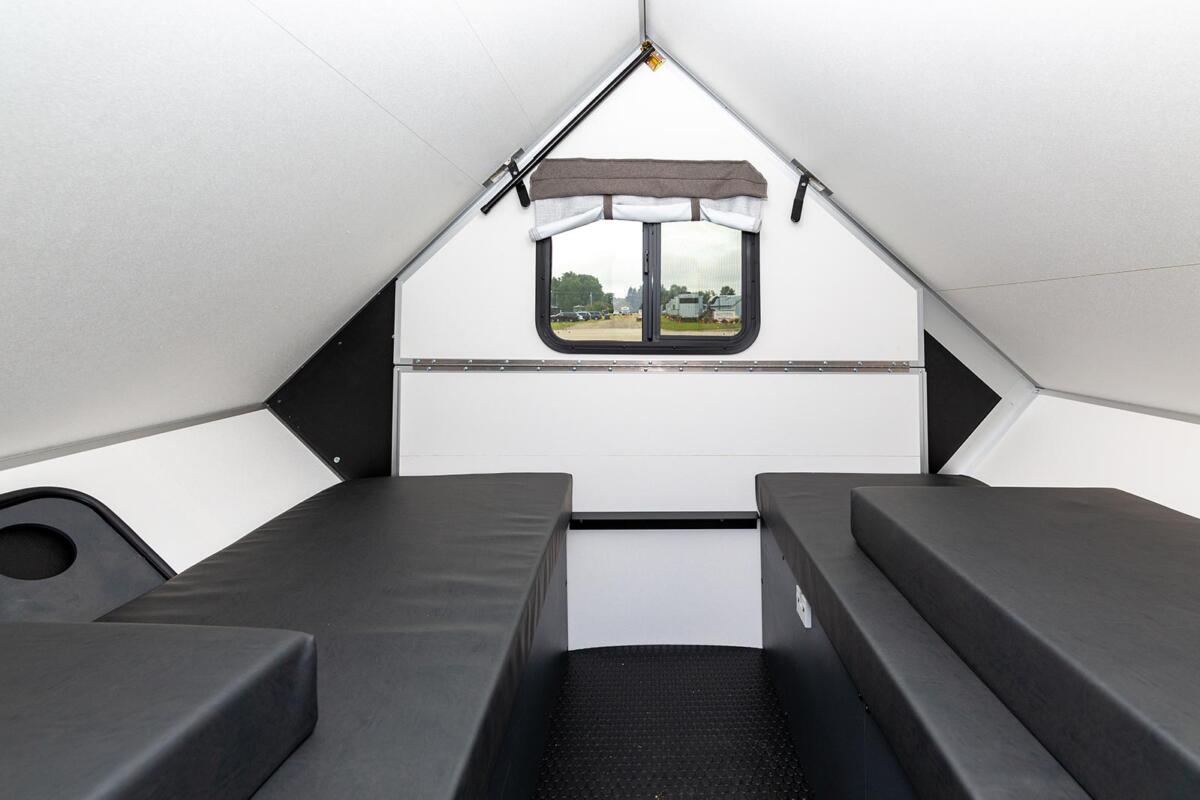
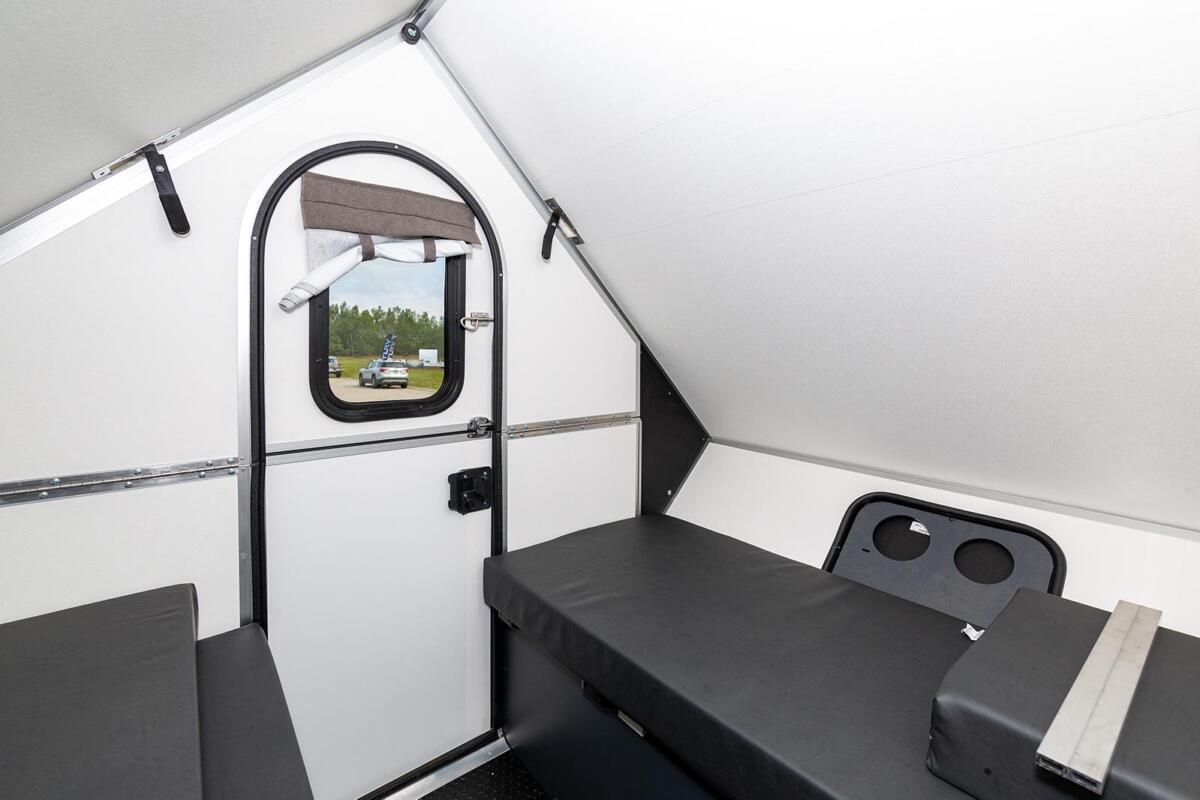
Inside, the bed measures 60 by 72 inches, so it is a queen-size sleeping area. Aluminum slats support the bed, and the cushions can come off during the day to create bench seating on both sides. Interior peak height is listed at 69 inches, which should help the space feel more open than the footprint suggests.

The standard equipment is simple but useful: one set of LED lights, a double fan, two USB ports, two 110-volt outlets, and two 12-volt plugs, with one used for the fan, plus a 25-foot detachable power cord. There are also two solar ports, one on each side, and handles to help slide the camper in and out of the truck.

One of the more interesting ideas in the video is using it on a small utility trailer. The display trailer reportedly costs less than $1,000 and weighs about 300 pounds. Paired with the camper, total tow weight lands around 700 pounds, well below Aliner’s 1,250-pound Scout Lite.

Aliner1 Aliner2

Final thoughts

The Switchback looks small, but its pitch is bigger than it first seems. It gives truck owners hard walls, a queen bed, fast setup, and garage-ready height without the bulk of a standard slide-in. That is why this camper stands out. It keeps the truck usable and keeps the camping setup simple.

Learn more about the Aliner Switchback truck camper here.

RELATED

RVDT2920

Safety for roadside workers and stranded motorists in spotlight this month

The recent Interstate 95 bus crash in Virginia that killed five people and injured dozens more has once again focused national attention on the dangers that exist when vehicles traveling at highway speeds fail to react to changing traffic conditions. Those of us who travel in or with our RVs are particularly at risk for a bad outcome, due in part to the size of our vehicles and longer stopping distances.

While investigators examine what caused the Virginia crash, roadway safety experts say the incident highlights a broader problem occurring every day across America: Thousands of roadside workers, tow operators, emergency responders, construction crews, and stranded motorists are forced to work just feet from moving traffic, often in darkness or low-visibility conditions where a single missed warning can become fatal.

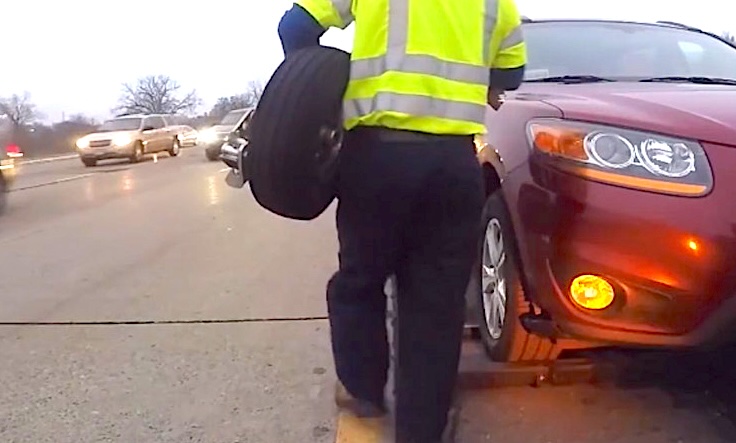
Have you ever blown a tire and had to change it on the shoulder of a busy interstate highway? If so, you know first-hand how vulnerable you feel.

Roadside workers face hazardous visibility challenges

According to the International Safety Equipment Association (ISEA), roadside workers face many of the same visibility challenges that contribute to thousands of pedestrian deaths each year, particularly after dark when drivers have less time to identify hazards and react.

According to the AAA Foundation for Traffic Safety, roadside assistance providers — tow operators, mobile mechanics, and emergency roadside technicians — are struck and killed nearly four times more often than national crash data captures, because state police forms routinely record them simply as “pedestrians.” Bureau of Labor Statistics data show that fatal pedestrian incidents involving motorized vehicles rose 19% in 2024 alone.

High visibility vests, reflective gear, and warning systems are standard in controlled highway work zones, but roadside recovery and emergency response environments are often less predictable, with shifting traffic patterns and limited physical separation between workers and vehicles. That gap becomes especially critical during summer travel season, when highway traffic increases and roadside incidents are more frequent on high speed roads.

Visibility gear is an important safety tool

The ISEA says visibility gear remains one of the most practical and underused safety tools for protecting workers and stranded motorists in live traffic environments, and is a critical focus now in June during National Safety Month.

For RVtravel.com readers, nearly all of whom are RVers, we suggest two easy ways to help be safer on the road and help keep ourselves and those roadside workers safe. First, watch this Michelin video of what to do in a front tire failure (following your instincts could get you killed!), and carry a safety vest with you at all times. They are available at Home Depot, Lowe’s and Amazon.

RELATED

RVT1264b

What kills most people in national parks? Often the mistakes RVers see every summer

Ask someone what the biggest danger in a national park is and they’ll probably mention bears, mountain lions or some other dramatic wilderness threat.

But the numbers tell a different story.

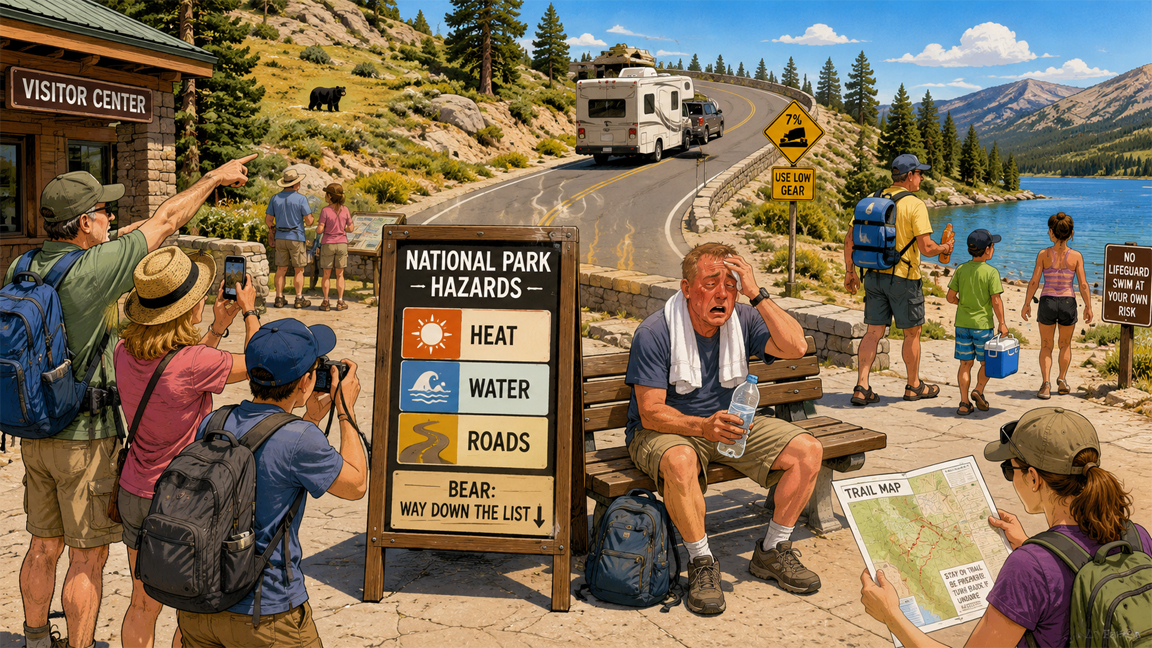
A recent analysis highlighted by Outside looked at fatalities across America’s national parks and recreation areas. It found that the biggest killers are often much more ordinary. They are the same hazards that experienced RVers see every summer. Water, roads, heat and overconfidence cause far more deaths than wildlife encounters.

None of this means national parks are unusually dangerous. In fact, the National Park Service says the mortality rate in parks remains very low compared with the U.S. population as a whole. Millions of people visit national parks every year without incident.

But when tragedies do occur, they often stem from everyday decisions rather than extraordinary circumstances.

What the data shows

According to National Park Service mortality data, motor vehicle crashes, drownings and falls rank among the leading causes of unintentional deaths in national parks. Medical emergencies also account for a significant share of fatalities.

In other words, the greatest danger in many parks may be the drive to the trailhead, a swim in a lake or river, or a moment of poor judgment near an overlook.

That finding may surprise visitors who worry most about wildlife encounters. But National Park Service data shows that driving, water hazards and falls consistently account for more unintentional deaths than the dangers that typically make headlines.

Those conclusions line up with what many RVers have witnessed firsthand.

Every summer, campgrounds fill with visitors who underestimate desert heat, ignore warning signs near water, drive unfamiliar roads while tired, or venture onto trails that exceed their physical abilities.

Water remains one of the most underestimated hazards

Several of the parks and recreation areas with the highest fatality counts have one thing in common: water.

Lake Mead National Recreation Area has long ranked among the park system units with the highest number of fatalities. Drownings, boating incidents, and heat-related emergencies have all contributed to that record.

Many visitors assume calm-looking lakes and rivers are no different from a neighborhood swimming pool. In reality, cold water, currents, submerged hazards and sudden weather changes can turn a recreational outing into an emergency.

That’s one reason park officials routinely encourage visitors to wear life jackets, even when they consider themselves strong swimmers.

“The biggest dangers in national parks usually aren’t bears or mountain lions. They’re water, roads, heat and simple overconfidence.”

Heat can overwhelm people faster than they realize

RVers who travel through the Southwest already know that summer heat deserves respect.

Yet every year visitors continue to underestimate it.

Recent incidents in desert parks have involved hikers and motorists who became stranded or incapacitated in extreme temperatures. Even healthy adults can quickly get into trouble when dehydration, exertion and triple-digit temperatures combine.

Trouble often starts when visitors decide to push on, anyway.

A trail doesn’t become safer because you’re almost to the viewpoint. A hike doesn’t get easier because you’ve already invested two hours in it. Heat illness doesn’t care how badly you want the photo at the end.

Familiar roads can create a false sense of security

Many visitors think of national parks as hiking destinations. In reality, millions experience them primarily through their vehicles.

That’s one reason driving consistently appears near the top of fatality statistics. Scenic roads may look relaxed and leisurely, but they often include sharp curves, steep grades, wildlife crossings, distracted drivers and unfamiliar conditions.

For RVers towing trailers or driving large motorhomes, mistakes can carry bigger consequences.

RVers may have an advantage here. Most already know that mountain grades, unfamiliar roads and long travel days demand patience. The challenge is remembering that the family in the SUV ahead may not have the same experience.

What RVers can learn from the data

The common thread running through many national park fatalities isn’t wildlife. It’s ordinary activities that become dangerous when people stop respecting the risks.

The good news is that many of those risks are manageable.

Experienced RVers already know the basics: Slow down on unfamiliar roads, carry plenty of water, respect weather warnings, wear a life jacket when appropriate, and don’t let a vacation schedule push you beyond your limits.

Those habits aren’t exciting. They won’t make the evening news, either.

But according to the Park Service, they’re far more likely to keep you safe than worrying about bears.

Sources include:
Outside Online

MORE RECENT NATIONAL PARKS NEWS

RVT1264b

Persian Gulf oil disruptions could keep fuel prices high

15

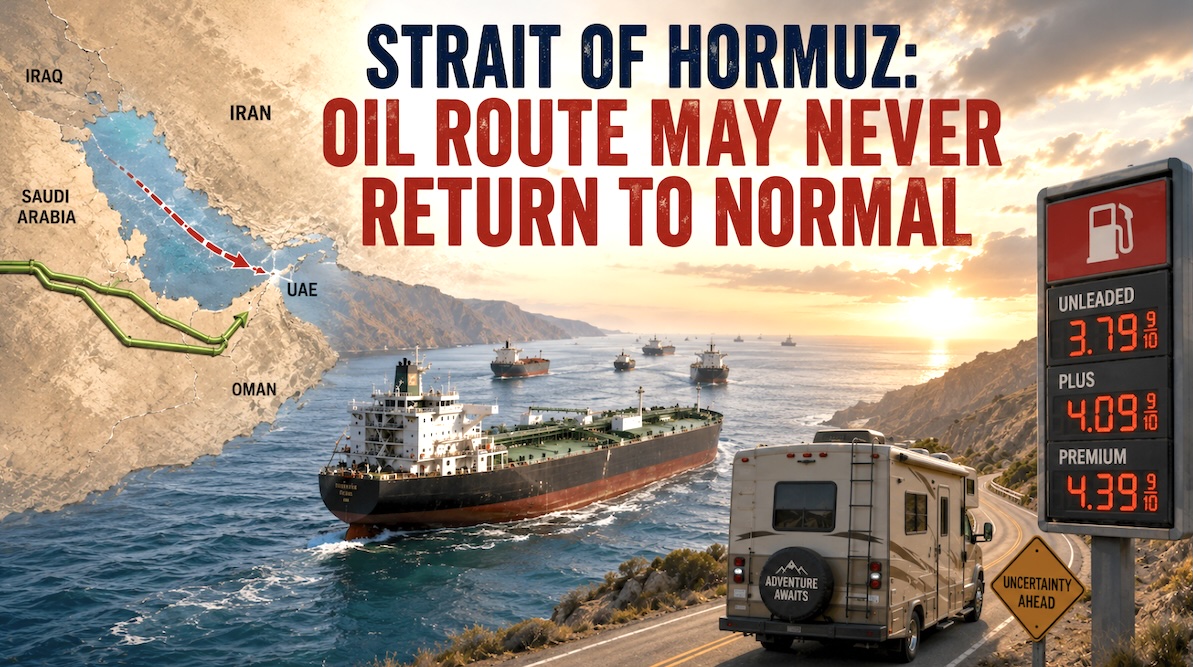
A major shipping route that carries much of the world’s oil may never return to normal, a development that could affect fuel prices after the current Middle East conflict ends.

Analysts say oil tanker traffic through the Strait of Hormuz, the narrow waterway connecting the Persian Gulf to the open ocean, may recover only partially even if hostilities ease. Before the conflict, roughly one-fifth of the world’s oil moved through the strait. Today, tanker traffic remains far below normal levels.

According to Irina Slav, writing in Oilprice.com, experts believe many shipping companies may continue avoiding the region because of security concerns, high insurance costs and the risk of future disruptions. Some estimates suggest oil shipments could stabilize at only 60% to 70% of pre-conflict levels.

The slowdown has already forced oil producers and shipping companies to look for alternative routes. Saudi Arabia and other Gulf nations are expanding the use of pipelines that bypass the strait, while oil buyers are increasingly turning to suppliers outside the region.

Even if the waterway fully reopens, analysts warn that restoring normal shipping patterns could take months or longer. Tanker fleets have been redeployed, supply chains disrupted and insurance costs remain elevated.

For RVers and other motorists, the biggest concern is the potential impact on fuel prices. Any long-term reduction in oil shipments from the Persian Gulf could keep crude oil prices higher than they otherwise would be, especially during peak travel seasons.

While gasoline prices depend on many factors, energy analysts say the lingering uncertainty in the region could continue to influence fuel costs well into the future.

RELATED

RVT1264b

Festival next week celebrates wonders of the night sky

One of the most unfortunate developments on new model RVs in recent years has been built-in outside lighting. Sometimes it’s functional, but often it’s just for show—another “gadget” to help sell an RV.

Because some RVers feel compelled to turn on these lights at all hours, for whatever reason, the result is that at night, the Milky Way and all its stars and planets above are drowned out. What a shame, because a dark night sky could likely qualify as the eighth wonder of the world.

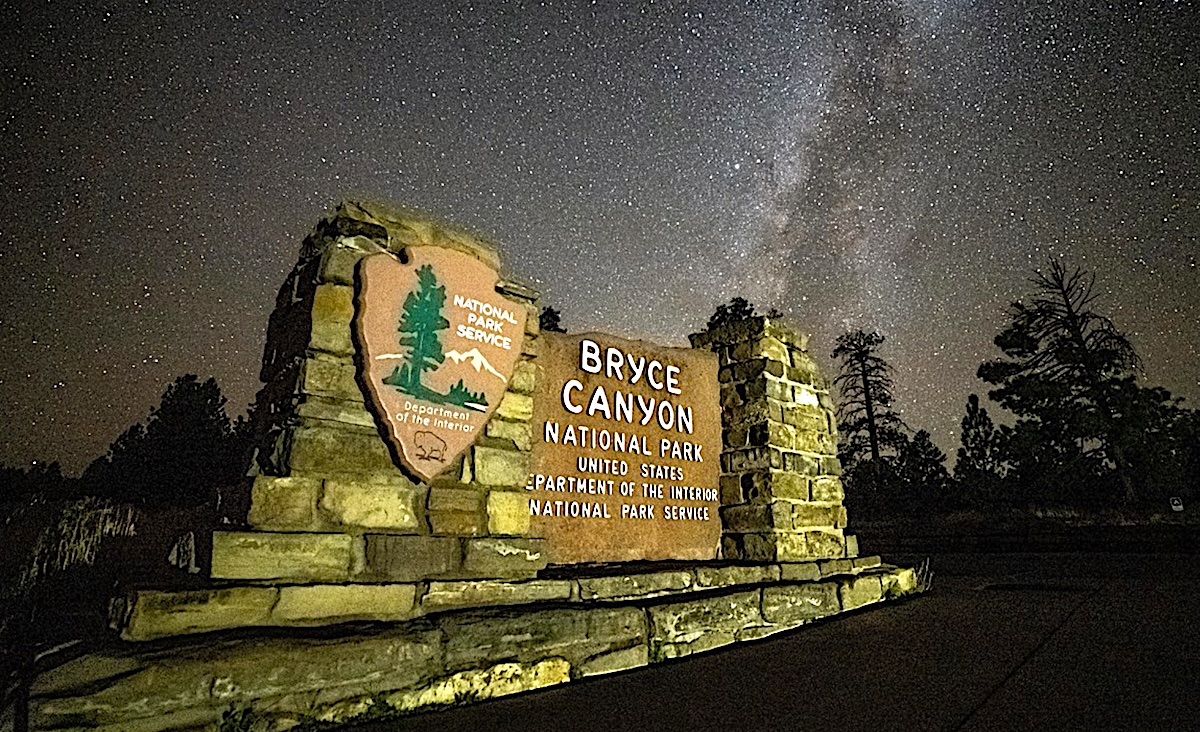
Lucky for us, dark sky areas are regularly being designated in national parks and other rural areas. But few places can match the beauty of the night skies above Bryce Canyon National Park.

And one of the year’s best stargazing events returns to the Utah park on June 11 to 13, when the annual Bryce Canyon Astronomy Festival transforms the park into a giant outdoor classroom focused on the wonders of the night sky.

Bryce Canyon stars
NPS photo

If your plans are not set in stone and you can scoot over to this magnificent park in time for the festival, you’re in for a treat. The free event combines astronomy presentations, hands-on exhibits and nighttime telescope viewing in one of the darkest places in North America.

Daytime activities

During the day, visitors can safely observe the sun through specialized solar telescopes, explore astronomy exhibits and educational displays, and attend presentations by astronomers, researchers and other space-science experts. NASA and university exhibits are typically among the festival’s attractions, along with family-friendly activities designed to introduce visitors to astronomy.

After sunset, the festival shifts its focus to the night sky. Ranger-led programs explain the constellations, planets and deep-space objects visible overhead, along with recent discoveries in astronomy and space exploration.

Evening highlights

The evening’s highlight comes when volunteer astronomers and astronomy clubs set up dozens of telescopes for public viewing. Visitors may get a close look at Saturn’s rings, Jupiter and its moons, colorful nebulae, star clusters and even distant galaxies located millions of light years from Earth.

Designated an International Dark Sky Park, Bryce Canyon has exceptionally low levels of light pollution. On a clear, moonless night, visitors can see about 7,500 stars with the naked eye, while the Milky Way often stretches across the sky above the park’s famous red-rock hoodoos.

Festival organizers say the event is designed for everyone, not just experienced astronomers. Most attendees are families, photographers, RVers and other campers looking to experience a truly dark night sky.

For many RVers, the festival offers a rare opportunity to view a universe that has largely disappeared from much of modern America.

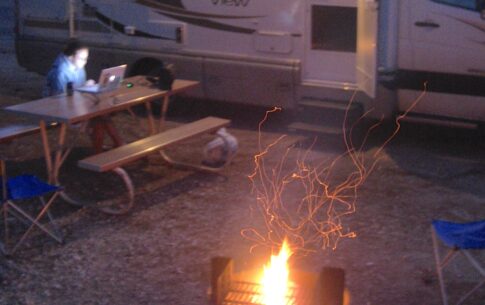
Bruce Canyon campsite
RVtravel.com’ editor Emily Woodbury checks up on correspondence at North Campground after a day of hiking in the park.

Camping opportunities

We doubt you’ll be able to land a last minute campsite in the parks’ two campgrounds, but you can try. There are others in the nearby national forests. Ruby’s Inn RV Park and Campground is the most convenient, at a mile outside the park’s entrance.

Another excellent option, where the star gazing should also be magnificent, is about 30 minutes away in spectacular Kodachrome Basin State Park, where reservations are easier to come by than at Bryce Canyon itself.

If you camp in the national park, turn off your outdoor lights!

RELATED

RVT1264b

Great RV Accessories Newsletter #91

Greetings, fellow RVers!

Today, in addition to other great stuff we are liking, we turn a spotlight on portable power stations. How did we ever RV without these great gadgets that allow us to run our appliances and devices while boondocking, run silently, and can be recharged via AC connection, solar panels, or via a vehicle’s alternator while driving? Read on!


Portable power stations

No matter how you RV or how much or how little power you need, there is a portable power station to meet your needs. Check out some of our favorite options below.

Bluetti—a trusted industry leader!

Bluetti Elite 200 V2

This industry leader is well known for quality. They have power stations of all sizes of the spectrum. Here are some of our favorites:

  • Bluetti Elite 300: My new favorite power station! What makes the 300 so much better than the 200? In three words: even more power. But beyond that, it’s the ability to plug a 30-amp RV cord directly into it and use it to recharge your RV’s batteries.
  • Bluetti Elite 200 V2: My favorite prior to the release of the 300, this power station is still plenty powerful, just not quite enough to charge with a 30-amp plug.
  • Bluetti Elite 30 V2: Small, lightweight, and cute! This lightweight power station isn’t designed for serious, long-term boondocking or running large appliances. Instead, it’s ideal for charging phones, tablets, laptops, and other everyday electronics. It also makes an excellent small backup power source at home.

Oupes Mega 2 portable power station and solar panel

More great power station options


Our highest-trending products on Amazon in May:

  1. This funny garden flag for your campsite was our #1 best-seller. Go figure!
  2. Never tie your shoes again with these elastic, no-tie shoelaces. Nice!
  3. Yes, this really is the best insect-catcher/trap for your home and RV. Absolutely!
  4. Turn fresh or frozen fruit into delicious soft serve, no hard work required! This is the perfect summer gadget.
  5. We showed you this vintage-looking plug-in lantern lamp, and you have loved it!

Other stuff we’re liking:

trunk mate turns any SUV into a bed

Turn any SUV into a bed in minutes

The Blitz Bed is a folding platform that turns an SUV into a bed in under a minute, actually. It fits most SUVs, crossovers, and hatchbacks, while TrunkMate also offers versions for minivans and trucks. The appeal is easy to see: A vehicle can be camp-ready on the weekend and back to normal by Monday. Check out the Blitz Bed system.

outlet covers amazon image

Electrical outlet add-ons make RV life easier

When you live in a small space, the little stuff matters. RV outlet add-ons can make RV life easier. The smartest picks are the ones that plug into an existing outlet, stay low-profile, and solve a real problem without taking up extra floor space. Discover handy electrical outlet add-ons here. 

Jared gillis talking about new RV gadgets

Are these 5 new RV gadgets genius or gimmick?

Jared Gillis from All About RVs put five new RV gadgets to the test. Find out which ones made the cut and which ones not to bother with.


Gadget quick takes

ShowerorgHanging shower organizers

Seven pockets keep your shower needs organized and within reach; perfect for storing body wash, shampoo, conditioner, and other personal care products. But beyond that, use this handy organizer anywhere you can hang something to keep clothing, kitchenware, and all kinds of other things organized.

motion sensor trash can

Slim motion sensor trash can

The lid opens when your hand or any object is detected in the sensing area, eliminating the need for direct contact, particularly beneficial for RVers who like to avoid putting toilet paper in the black tanks. The slim design makes it ideal for small spaces. If your hand stays in the sensing area, the green light is always on, and the lid remains open. When the hand is removed, the green light starts flashing, and the lid closes automatically after five seconds.

MinisawTietoc mini chainsaw

Mini chainsaw is equipped with an 880-watt high-power motor, manganese steel chain and auto oiler system. Cut 6-inch branches with no effort, like a hot knife through butter. Smoothly cutting thicker pieces of wood that other chainsaws struggle with makes easy work of tree trimming and firewood cutting. Slim and lightweight (only 3.3 lb., 25% the weight of a bulky larger gas chainsaw), easy to handle, and works like a champ!


Must have: Affordable, simple solution for low voltage protection
Klein Tool’s RT250 is an electrical receptacle tester that tests the wiring conditions at an electrical outlet. Its LCD displays the voltage and identifies wiring faults. You could use an adapter to “step down” from the 30-amp outlet (or maybe two to come down from 50-amp outlets), testing the circuit before you plug in your shore power cord. Continue reading and make sure you have one of these!


Botany in a day bookThe book nook
Botany in a Day: The Patterns Method of Plant Identification

Looking for a faster, easier, and engaging way to identify plants? Related plants have similar characteristics, and they often have similar uses. Rather than learning new plants one at a time, it is possible to learn them by the hundreds, based on plant family patterns with Botany in a Day: The Patterns Method of Plant Identification. Learn more or order.


More recent gadget articles and reviews:


Gadget giggles

windshield umbrellaWindshield blackout shade umbrella with personality!

Keep out the sun while giving your vehicle some personality! 100% Blackout sun shade: The innovative 240T reflective double-textured fabric can block out 100% sunlight and harmful UV rays, keeping the vehicle cooler and preventing fabrics, leathers, and other materials from heat or sun damage. Order here.


AmazonfindsrvtOur all-time favorite products at Amazon
This is the first time EVER that we’re sharing this list with you. Yep, that’s right, this is our personal list that we use every day to recommend products to YOU. These are the products we actually use, talk about, recommend, and keep in our own rigs. And no, none of them are sponsored or paid for or anything like that. We’ve been compiling this list for years! Not to toot our own horn, but this is impressive!


FINISHED READING THIS ISSUE? Great! Now you can move on over to today’s brand-new RV Daily Tips newsletter.


RVtravel.com All-Star Staff

Click here for information about our staff and how to contact us.