Home Blog Page 2180

Portable generator is perfect for RVing

Quiet, compact, and lightweight, the Powerhouse 2000Wi inverter generator provides clean, portable power that’s perfect for campground, tailgate party or any outdoor activity where you need your own electrical supply. With a maximum output of 2000 watts, the 2000Wi produces enough power to run several appliances at once.

The 2000Wi’s high-efficiency combustion system produces exceptionally low emissions. A recoil start makes it easy to power up and a convenient fuel primer bulb and manual choke ensures a fast start. Choose the variable speed setting to reduce engine noise and save on fuel costs or set it to constant speed when 100 percent full power is needed. Other features include an internal circuit breaker, emergency stop control, spark arrester and a convenient carry handle.

This inverter generator has one 5-20R 20-amp duplex receptacle. It’s backed by a one-year consumer warranty and a 6-month commercial warranty, and it’s EPA, CARB, and CSA compliant for use across North America.

Inverter Generator Technology
Where conventional generators produce a single square wave of AC power for every engine rotation, an inverter generator produces a clean sine wave just like that power from your home outlets with hundreds of overlapping AC sine waves per engine rotation that results in more electrical power produced from each rotation. The electronic processor in the inverter module “converts” three-phase, high-frequency AC power from the alternator into DC power, which is then changed by the inverter module to a clean and stable 120-volt, 60-hertz AC power signal. The technology programmed into the inverter allows it to control all functions of the generator for stable, consistent, clean power.

This clean sine wave power allows the generator to be used with any and all computer and electronic based appliances in today’s homes, businesses, construction sites, and outdoor recreation. An added benefit is the ability of these generators to produce 120-volt, 60-hertz current at various engine speeds, thus saving fuel running at slower speeds and low load conditions but with the power for full speed and output when needed. The generator is available at Amazon.com.

SOURCE: Powerhouse news release.

How to care for an RV awning

By Chris Dougherty

An RV awning is a great addition to any RV and with a little care it will provide many years of service.There are many different kinds of awnings. They range from the “bag” style manual awning, which is popular for pop-up campers, all the way up to fully automated types. The ope

ration of all the various types vary, and careful attention to the manufacturers instructions will help ensure problem free enjoyment of your awning.

Most awning fabrics fall into one of two categories: Vinyl and Acrylic (i.e. Sunbrella). Some awnings have material all the way up to the awning rail on the side of the RV, and some have a metal weather guard, which wraps around the awning when stowed for travel.

Especially in the spring when the awning is opened for the first time, be sure to inspect and clean the awning thoroughly. The hardware can be cleaned using mild soap and water, or whatever “RV Wash” detergent you normally use on your RV. If the fabric is pretty clean, this may suffice for cleaning it. If, however, the fabric is more heavily soiled, there are commercially available awning fabric cleaning solutions available to help. In any case, be sure to carefully follow the awning and cleaner manufacturers’ directions for care and cleaning.

The awning hardware generally consists of the roller tube which the awning rolls up on, the springs and lock assembly contained within the awning tube, and the arms, which generally extend for adjustment and hold the awning taught. Again, there are numerous types of awnings, so your hardware may differ from what I discuss here. . .check you manual!

CARING FOR THE HARDWARE is pretty simple. Basically keeping it clean, and inspecting it for wear is the most you’ll ever have to do. Some issues I have seen include rusted adjustment knobs, broken springs and/or lock assemblies, and difficulty opening or closing due to dirt. The upper arm adjustment knobs should be worked and lubricated regularly to ensure proper operation. Once they seize with rust, they can be difficult to replace. Use an anti-rust lube like PB Blaster or WD-40. The springs and locking assemblies can occasionally fail, but there’s not much that can be done to prevent this other than cleaning, and a shot of lubricant.

One of the biggest issues is pooling of water and/or wind damage. When using your awning, THINK! It’s common sense, really, but watch the weather, and set the awning up appropriately. Make sure the awning is tilted enough for rain and/or air conditioner condensate water to run off, and not pool on the awning. Water weighs 8.33 pounds per gallon. . . that a lot of stress on the awning assembly. Also, if there is going to be a breeze, make sure the awning is secured, or stow it until the weather passes.

Just a few minutes of attention will ensure your RV awning works great when you want it.

Chris Dougherty is a certified RV technician who lives in Springfield, Mass., when he isn’t traveling with his wife Karen in their travel trailer.

Tips for women about self-protection

0

By Adrienne Kristine

Women sometimes talk about using their intuition and trusting their instincts to protect themselves when they travel alone. One of the reasons I drive a motorhome is to avoid having to go out to go in. When I stop, I leave the keys in the ignition and check the surrounding area before I leave the RV. If I see or feel the slightest threat, I can drive away.

Everyone is familiar with the phrase, “If it sounds too good to be true, it probably is.” Women sometimes forget their gift of intuition and let themselves fall into the trap of ignoring a potential problem until it’s too late.

Here are my basic rules of self-protection based on 25 years of teaching classes on the subject to women from 8 years old to 66.

The primary factor in self-protection (not self-defense) is awareness.

Preparation is key.
The first preparation is mental: WHAT IF?
The second is emotional: WHY ME?
The third is psychological: WILL I?
The fourth is physical: CAN I?

If you choose to turn and walk away, be aware of your surroundings and means of escape.

If there is no escape and you are forced to defend yourself, remember as much as you can about the environment. Place your back against a wall if you can.

Maintain eye contact (you may be required to identify the perpetrator). The first person to look away usually loses.

The first assertion is verbal: distraction, diversion, humor, confusion, explanation, etc.

If assertion is unsuccessful, use aggression.
First, escalate the verbal aggression by raising the voice.
Second, invade the social space of the other(s).

At no time should the other person(s) be touched in any way — yet. Physical aggression on your part will be met by reciprocal action.

If you have tried all the above, you must be prepared to defend yourself. You will probably injure the other person or persons and may injure yourself in order to avoid possible life-threatening damage.

If the other person(s) are prepared to injure you, they have little to lose.

NEVER underestimate your opponent(s).

After any traumatic encounter such as that described above, seek a competent therapist or support group. This is also part of self-protection.

RV tires: How old is too old?

2

By Russ and Tiña De Maris

Screen Shot 2016-04-07 at 11.04.00 AMA man goes into an RV dealership, interested in a seven year-old motorhome with 10,000 miles on the odometer. The tires on the rig have plenty of tread left on them, but on learning that they’re the original tires, he wonders about them being too old to be safe. The salesman tells the customer that worrying about the age of the tire is nothing more than buying into a myth. Should the customer walk away?

Tires on your RV are a critical issue: Blow a tire, lose control, maybe lose your life. Being concerned with tire safety is only right. So what about it? Does the age of a tire have any bearing on tire safety?

Absolutely, say tire and highway safety experts. Here’s why: Over time, a tire’s structural integrity really can degrade. When it happens, the tire can fail, leaving you in a bad situation. While government experts estimate that “only” about 400 fatalities per year can be attributed to tire failure, tell that to the loved ones of someone who died because of a catastrophic tire failure. Not withstanding, when a tire blows, the damage caused to the RV can cost plenty – ask us, we’ve been there.

Time is not the only factor in tire “aging.” The ambient temperature also plays a role. The warmer the climate, the faster the tire will age. Expose the tires to UV radiation, common in sunlight, and they’ll age faster. RV tires can be especially susceptible to rapid aging because they’re more prone to sitting still for longer periods of time. When a tire rolls down the highway, chemicals in the tire that help to preserve it are distributed. Parked and not used, those chemicals don’t get a chance to help with tire longevity.

Still tread left, but UV killed this tire It’s the latter issue that can really come to the fore with RV tires. A seven-year old RV with 10,000 miles on the clock translates to what? Driving an average of a little over 1,400 miles per year. Lots of tread left, yes, but is the tire safe? The dealer in the true-to-life scenario above says, ‘Quit worrying!’ Not so, says the National Highway Transportation Safety Administration (NHTSA). Speaking of tires on RVs or collector cars as an example, the agency notes, “In those instances, the structural integrity of the tire may be weakened – and potentially hazardous – even though the tire still has a great deal of remaining tread.”

Screen Shot 2016-04-07 at 6.35.31 PMIs there any way to tell if an older tire is still safe for use? There aren’t any industry-accepted standardized tests to tell. For the average consumer, looking at a tire won’t really tell you – even tire experts can’t really tell. While the NHTSA suggests having tires inspected once at they five-year mark, and every year thereafter, if even the experts aren’t sure, how can you be safe? And how do you know how old your tires are anyway?
Your tires’ “birthdates” can be determined by looking for the “DOT code.” Printed on a tire sidewall, the code begins with the letters DOT. The last four digits in that string of numbers are significant. The first two of the four digits are the week the tire was made, the last two digits represent the year. So a code ending in 2509 means the tire was made in the 25th week of 2009. You may have to look on the ‘axle side’ of the tire to find the DOT code – they don’t make it easy.

How old is too old? That’s the big – and controversial – question. Nobody really wants to stick their neck out and say what’s safe, and what’s not. Some tire manufacturers will tell you their tires should be good for ten years. But ten years under what conditions? Cold weather? Hot weather? Driven 50 miles a week? Standing still under your motorhome or travel trailer for months at a time?

A ‘rule of thumb’ adopted by some in the RV world says replace your tires when they hit six or seven years old. In parts of Europe and Asia, tire manufacturers recommend replacement of tires every five years. Why not in the U.S.? It’s a mystery – at least to the consumer.

#nrv

Extend your stay with these battery saving tips

Whether you’re stopping for the night at a Wal-Mart or dry camping for a week in the outback, you will at some time need to rely on your RV’s 12-volt batteries for lights and some electrical needs. Even if you have a generator, it’s just not practical to run it all of the time you are camping.

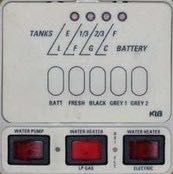
Screen Shot 2016-04-15 at 11.14.41 AMOur purpose in this article is to suggest some ways to help you get the most out of your batteries. Deep cycle batteries used in RVs are designed to cycle hundreds of times, but their lifetime will be considerably shortened if they are allowed to discharge much beyond half of their rated capacity. So it pays to conserve.
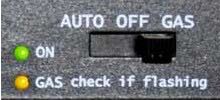
Rule number one: avoid using your battery power to produce heat, whether that heat is for hot water, coffee or other 12-volt appliances. It takes a lot of watts to make a little heat. So make sure that you use the LP switch for your water heater; turn off the electrical switch if you have one. And while your furnace uses propane for heat, its blower draws a substantial amount of current.

Screen Shot 2016-04-15 at 11.15.06 AMSo if you’re going to need heat, consider a catalytic heater instead. These units burn propane very efficiently and use no power at all. You will need to crack a window though, to provide some fresh air. And never use your oven or stove top for the purpose of heating your RV. Finally, don’t forget to set your refrigerator to run on LP.
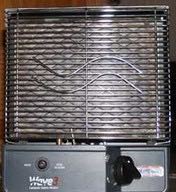
Screen Shot 2016-04-15 at 11.15.17 AMSet refrigerator to run on gas
Your 12-volt lighting doesn’t draw a lot of power, but it makes sense to turn on only the lights you will need. For reading it might be better to use a small portable reading lamp.

If your RV is equipped with an inverter for producing 120 volt AC from battery power, here are a few more pointers. Inverters are only about 80% efficient, so try to minimize your use of AC and turn off the inverter when you are not using any AC appliances. The first rule still applies, so instead of using a regular coffee maker, use a tea kettle on the stove to heat water for coffee or tea. A French press makes great coffee or just use a cone filter. Although convenient, microwave ovens need quite a bit of current, so use very sparingly. Hair dryers are another heat producing appliance whose use should be minimized.

Don’t even think about running your air conditioner on inverted power. It will drain a large bank of batteries in a very short time. A generator is the only option if you need air conditioning.

#nrv

Think differently when buying a new RV

1

By Ron Jones

Whether you plan to spend $5,000, $50,000 or $350,000 for that first or fifth RV, you need to look at it “differently” before plopping down your cash.

Screen Shot 2016-04-07 at 6.39.50 PMWalk into any new RV and you will likely see various decorative accessories — i.e., vases, scarves, flowers — tastefully placed to enhance the “look.” My RV doesn’t look like that and yours won’t either. Ignore this sales tactic and try to mentally put your own “stuff” there. Once you seriously narrow your choice to one or two RVs, try this: Politely ask the sales rep to leave. You need to take some time to look at the RV alone.

•Spend some time alone with the rig — allow four to six hours or more.

•Sit down. With the slides out, sit and talk. Every chair is comfortable for a few minutes, so relax for an hour or so-like you would if you are watching TV or visiting. Then trade seats with your spouse or with whoever is along with you. If the RV is a Class A, swivel the driver and passenger seats. Do they work?

•Lie down. Spend 30 minutes on the bed. If you are “elbows-out” sleepers, then do this. Do you have room? Does an elbow hit the light switch? You can change your sleep style for a few nights but not for a few months!

Screen Shot 2016-04-07 at 6.39.33 PM•Slides in and out. Sit. Spend time sitting and moving around with each slide in each position. What is not accessible when a slide is in? Some RVs cannot be used with the slides in. Can you use the bed and bathroom? There are campsites where you cannot put out certain slides due to trees, boulders, etc. Can you watch TV, cook, and bathe with the slides in?

•Coffee pot. Where will you store it with the slides in (traveling) and out (parked)? Can you get to it with the slides in? How about your toaster oven, trash can, computer, shoes, etc.

•Outside stuff. All compartments look big when empty. Stick your head in all of them-what’s hanging down from the roof of the storage compartments? Will your garage-full-of-tools fit? What about that new nine-burner grill? Will you have to move the tools to get to the grill?

•Utilities. Pull the electric cord all the way out, screw on the water hose, and attach the sewer hose-just as if you were really hooking up. Is it easy, difficult, awkward? Did you have to get on your knees or stand on your head? Now put them away. How easy would it be in the dark, kneeling on gravel, and during a cold downpour?

•Leveling. Really do it. Level it. Now move it and level it again.

Looking at an RV is serious work. Spending lots of money for something you really can’t use or are uncomfortable with is not good. Look carefully, choose carefully, and take your time. It’s a big investment.

(This suggestion is one of the more than 500 in All the Stuff You Need to Know About RVing by Ronald Jones and Robert Lowe.)

#nrv

Needed: a new kind of campground

By Chuck Woodbury, editor
RVtravel.com

I wrote this a couple of years ago after returning from a cross country trip in my motorhome. For whatever reason, it did not get published. Until now.

cabellas-738
Free “camping” at Cabella’s.

My trip around the country has been an eye opener. I know far better now why so many RVers choose to stay the night in a Wal-Mart parking lot — or one at Cabellas, Camping World, a Cracker Barrel restaurant or a highway rest area. The price is right — free. Equally important, these places are easy to find.

I have written before how parking overnight like this is not “camping.” And, no doubt about it, that’s true. But, frankly, when night is upon you and you need a place to stay only to sleep, an experience with nature is not a priority. Sleep is the priority. A safe place is important. Most RVers feel comfortable in the parking lots of the above mentioned places.

I carry along the Good Sam Campground Directory to help me find RV parks, but I find it almost useless. It lists many parks — but it largely ignores those operated by local, state and the national government — and according to most everybody, it favors the parks that advertise.

I use my GPS, laptop computer and iPhone to find places to stay. The other day, my iPhone led me to an RV park a few miles off the highway. It looked nice on its website. But at the entrance, there was a junky mobile home office, a junked car and weeds a foot high. I moved on — a few miles and 15 minutes wasted. This happens far too often. So how do you find a decent RV park without driving all over the countryside looking for one? It’s a helluva lot easier to find a Wal-Mart.

free-camp-738
Level sites, water, electric and a dump station for $5 a night along I-90 west of Wall, South Dakota.

To me, when it comes to non-membership camping, KOA is the only game in town for an overnight stop. With rare exception the parks are clean, safe and easy to find. But they are not cheap. I pulled into one earlier this trip. It was not in a destination tourist area but along a busy interstate. “All I need is electricity” I said. “Oh, all our sites are full hookups,” the friendly clerk said. The cost was $54 or $47 with a KOA discount card, which costs $24 a year. She then explained to me about the bathrooms, showers, laundry and swimming pool — all of which I did not want or need. In my case, I needed electricity to run my air conditioner on the hot, steamy day, and a quiet place to write. I paid, but the price was way too high for my modest needs. You know, “one-size fits all” is not a customer-friendly policy.

Someone with some money to invest needs to call me so we can talk about setting up a chain of hundreds of cheap, barebones, no-frills campsites along the highways of America. RVers pay for a level piece of land that’s off the road. It cost extra for electricity (you pay at your site with a parking meter type device for as much power as you need), and water (an extra dollar). If you want to to use a restroom, drop 50 cents in the door each time you enter. A shower is a buck or two. A small office would include vending machines for snacks and beverages. When people check in, they get a bag of goodies — each item paid for by a business for the exposure (and earning the park operator a profit). But these parks could be set up as “self-service,” with someone on call for questions and emergencies. A security service would drive though several times a day and night.

The property for these sites would be cheap. Not prime land. Away from cities. No dump station or anything to do with sewage other than toilets, so no expensive environmental red-tape to deal with to get the business going.

Again, campground owners and operators will say this can’t be done, that it’s a crazy idea. Yeah, and the guys who started Motel 6 were told they were crazy. And Fred Smith was told his idea for Federal Express would not work (imagine if our own post office had been smart enough to create such a service first — it wouldn’t be in such a stink hole of financial trouble today).

Even Sam Walton, founder of Wal-Mart was considered “bush league” by Kmart and other major retailers when he began building his empire in small towns (instead of going head to head with competitors in big cities). Well, Sam buried ’em.

So call me, rich investor. Let’s talk. You’ll make a lot of money and do the RV community a huge service. I’ll settle for a tiny cut for my idea.

Free RV camping at Wal-Mart. How to do it.

0

RVtravel.com editor Chuck Woodbury explains the “unofficial rules” for spending the night in an RV in a Wal-Mart parking lot.

An amazing two-story trailer and the girl who called it home

0

Shirley Wallace’ lived in this two-story Spartan Manor trailer from age three until she went off to college 16 years

Dump your RV’s wastes with a portable waste tank tote

0

Portable waste tanks aren’t required for RVing but they can come in handy. They make emptying your tanks extremely convenient,

Tire problems? It could be your tire’s valves!

0

Tire expert Roger Marble of https://RVtireSafety.com explains why a tire’s valves are so important. Bad valves can

How to level a travel trailer

0

In this RV DIY® Project video Mark Polk of RV Education 101 demonstrates how to level and stabilize a travel