


Dear Dave,
We always start with a full water tank while boondocking. We get a little air in the lines and the water will spurt some, but not much. As the water level in the tank gets lower, we get more and more air in the lines. I believe this suggests that the air is coming in the suction side of the water line in the tank somewhere. I am trying to figure out how to chase down the source of the air in the water line. Any help is greatly appreciated. Thanks. —Chuck, 2012 Heartland Cyclone HD 3612
Dear Chuck,
Typically air in the water lines creates a cycling of the water pump which sounds like “parhump!” Since you are getting a sputtering at the faucet, I do believe you are correct in assuming it is in the suction side prior to the pump. A leak past the pump or at the pump would create a drop in pressure, which would signal the pump to start due to a demand downstream.
Where to start looking
Start by inspecting the water screen on the inlet side of the pump. This is typically a clear plastic bowl with a screen filter inside. It could be cracked or not tight. If the screen is clogged, it could resist enough to pull in air. Here is one that has been winterized with pink antifreeze on the top side of the pump.
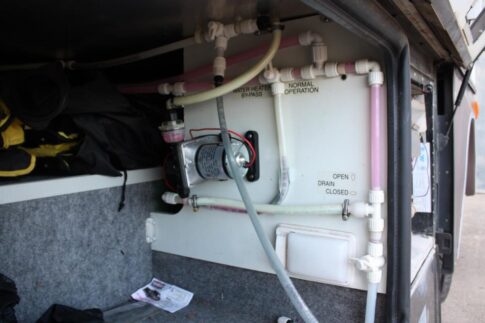
Your water pump could also have a hole in the diaphragm that is sucking in air. This would require removing the pump and bench-testing it.
It could also be pulling air from a defective city water diverter valve. If you can fill your fresh water tank using the city water fill by flipping a valve, it might not be closing all the way and sucking air. We had this on a 2003 Winnebago Brave that took a long time to track down. This was also causing the cycling issue and spurting.
Check connections going to pump
Next, check all the connections going to the pump. The vibration and temperature changes can cause “gremlins” in the plumbing system. I have found using silicone tape on the fittings ensures a good seal. You can find it on Amazon here.

Why does it sputter more when the fresh water tank gets lower? It might have something to do with the reduced pressure at a lower capacity and the pump has to work harder.
You might also enjoy these posts from Dave
- My RV’s water is scalding hot. Can water heater be adjusted?
- Replaced RV’s on-demand water heater; why no hot water in sink?
- Is there a 120-volt-only water heater that will replace my LP-only Suburban?
- Water leaks under kitchen sink when using water heater on LP. Dealer can’t fix it!
- My RV water heater will run on LP most of the day then stops. Any ideas why?
Dave Solberg is a leading expert in the RV industry and the author of the “RV Handbook.”
Read more from Dave here.
HAVE A QUESTION FOR DAVE?
Send your inquiries to him using the form below.
RVDT2645

Had a cracked pump screen housing once…finally found it after removing screen housing and crack was on backside where it couldn’t be seen. I had no water leaks on housing…figure that one out.
Thank you for the discussion, Dave! As always, it is informative and helpful! Have a great week and safe travels!