


There’s a fight in Congress shaping up. It has nothing to do with funding the government, or preventing a government slowdown. But there could be a slowdown of sorts involved. One federal agency wants to put limited brakes on big trucks by mandating speed limiters. Some members of Congress, at the behest of part of the trucking community, want to bury the mandate altogether. Will the outcome of the fight have an effect on you?
What’s a speed limiter?
 Speed limiters are control devices on commercial trucks, designed to restrict the rig’s maximum speed. They use electronic controls to limit the amount of fuel and air that the engine can take in. In so doing they “cap” the top speed of the truck. The truck computer reads the current speed, and if the speed is above a preset limit, it sends a signal to reduce the amount of fuel and air entering the engine. Down goes the engine’s power output, and the truck slows to a speed below the preset limit.
Some months back, the FMCSA (Federal Motor Carrier Safety Administration) announced it would mandate the use of speed limiters on rigs with a 26,001 pound or more gross vehicle weight. It’s thought the FMCSA will make the mandate formal in June, and also announce the top speed for big rigs. At this point, it appears that the speed limit would top out at 68 miles per hour.
Speed limiters—Polarized reaction in trucking community
 Reaction in the trucking industry has been split. You can imagine that there are plenty of vocal opponents. There are, indeed, and they make their reasons clear. Here’s a sample of some comments lifted from cdllife.com, a website for truck drivers.
Carla Williams writes, “As an over-the-road driver, limiting our speed under the posted limit is not a good idea. First, you’re going to have more traffic jams. More frustrated drivers in all vehicles and major accidents. The general public has a hate for truckers/trucks. They don’t let us merge, they ride our tandems and don’t allow lane change. I see being governed at the same speed to be a huge disaster.”
“I believe this will only make the accident rate go up and also cause more congestion on the roads! You see it already with the company trucks with speed limiters! They try to pass which can take miles to complete and in the meanwhile, traffic backs up for miles and tempers start flaring which leads to road rage and aggressive driving!” — Matt Smith
Summing up the view of some of the commercial driver community, a story in landline.media observed, “FMCSA received about 15,000 comments in response to its 2022 notice on speed limiters. A majority of those came from truck drivers who oppose a speed limiter mandate. Truckers cited dangerous speed differentials, the inability to accelerate to avoid a crash and becoming the recipients of road rage among the reasons requiring speed limiters would be a bad idea.”
And on the other hand—Some trucking associations support speed limiters
But do all in the trucking industry think that speed limiters are bad news? Here’s the official policy of the American Trucking Association (ATA).
 “With respect to speed limiters, official ATA policy supports 70 MPH in trucks equipped with Automatic Emergency Braking and Adaptive Cruise Control. In trucks without these safety technologies, our policy supports a maximum set speed of 65 MPH.” The ATA is the largest national trade association for the trucking industry, with more than 37,000 members. The Association adds, “To be clear: a USDOT rule on speed limiters is coming. ATA will again be at the table, steering an outcome with a data-driven policy, not baseless rhetoric.”
Another trucking trade group, Truckload Carriers Association (TCA), represents dry van, refrigerated, flatbed, tanker, and intermodal container carriers. The group says it represents operators who have over 220,000 trucks on the road. Quoted by industry e-publication, thetrucker.com, TCA’s Chairman Dave Williams had this to say about speed limiter rules:
“At the end of the day, the rule needs to be simple, and it needs to be soundly based on data and science,” Williams said. “As an industry, we have done a great job over the years improving safety. I do believe, as unpopular in some circles as this may be, that speed limiters will help us get to the next level of safe operations.”
Not everyone in Congress believes in speed limiters
The FMCSA wants to mandate speed limiters on big trucks. Not everyone in Congress is happy with the idea. HR3039 was introduced last May, with this purpose: “This bill prohibits the Federal Motor Carrier Safety Administration (FMCSA) from issuing any rule or regulation to require vehicles that have a gross vehicle weight of more than 26,000 pounds and are operating in interstate commerce to be equipped with a speed limiting device set to a maximum speed.” As of this week, 40 representatives have signed on to co-sponsor the legislation. A similar bill has been introduced in the Senate.
Would speed limiters help—or harm?
It’s a polarizing issue. The question is this: Would speed limiters decrease the number and intensity of accidents? Or would they, as their detractors argue, actually cause an increase in accidents because of speed differences between smaller vehicles and big trucks?
The Canadian province of Ontario mandated speed limiters on big tracks back in 2009. What happened there? A study by the Ontario Ministry of Transportation is revealing. Comparing the accident rate for trucks after the speed limiter law went into place—a 73% drop in truck collisions. Yes, collisions for all vehicles went down over the same time period. But other vehicle accident rates dropped only 30% compared to that huge 73% for trucks.
What about the argument that speed limiters will create accidents because of “speed differential”? “There is absolutely no evidence speed limiters have contributed to an increase in truck drivers involved in other types of collisions post-2009, including rear-end crashes.”
The study conducted used data from pre- (2006-2008) and post- (2010-2012) speed limiter legislation. It examined the issue by using fatal, injury and police-reported property damage collisions on high-speed highways. It also looked at Ministry of Transportation enforcement officers’ large vehicle driver speed data, and other real-world data.
Does the U.S. really need speed limiters?
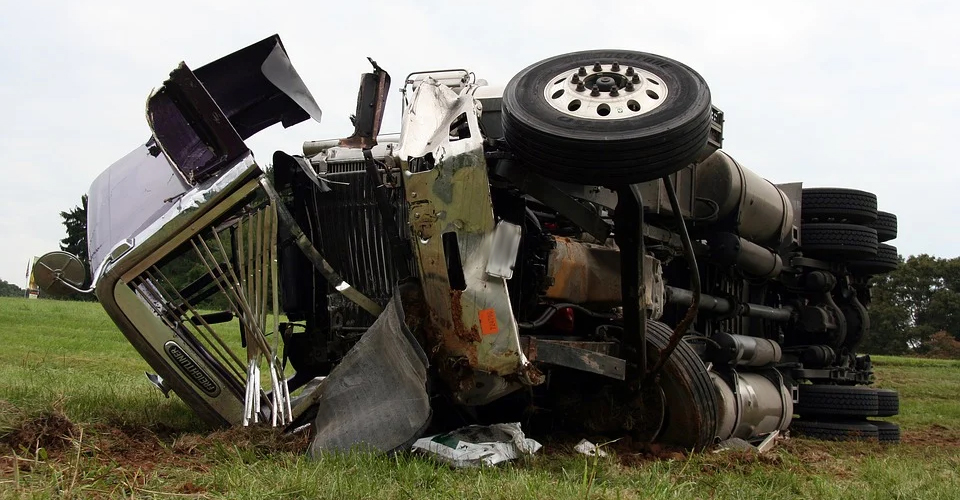 But what about the U.S.? Is speeding and big trucks an issue? Texas A&M Transportation Institute (TTI) looked at approximately 2,800 commercial motor vehicle (CMV) crashes in 20 counties across the state of Texas. Here’s what it found:
- “Speeding” was one of the driving behaviors that had the most impact on CMV at-fault crashes.
- When speeding was a contributing factor, estimated crash costs were 20 percent higher than crashes where speeding was not a contributing factor.
- Crashes with speed citations had a 170 percent greater injury/fatality risk per crash.
Finally, The National Highway Traffic Safety Administration and FMCSA calculated that limiting the speed of heavy vehicles to 65-68 mph would save 27-214 lives annually.
Just what will become of the proposed legislation to torpedo the speed limiter mandate remains to be seen, including if it will include speed limiters on big Class A RVs, for example. How you view the safety of America’s roadways may depend much on how you read the numbers. We’ll keep you posted as we learn more.
##RVT1149b

Truckers seem to drive too fast or too slow. Many don’t care if the roads are covered with ice or snow and don’t slow down. In Pa they keep building warehouses which increase the number of trucks on our roads that aren’t big enough to support present day traffic. Last year my pickup got totaled by a dump truck. I looked and never saw it. but when I pulled out I saw a flash of red that hit my truck. The dump-truck ended up in my lane after the accident.
The turnpike speed in Pa. is typically 70 mph which is ignored by 80% of drivers- trucks and cars. When driving our 40′ DP I drive at 65mph. We get to where we are going in about the same amount of time as if doing 70mph. But safely. Truckers are under a time/cost constraint but not 80-85 mph is not a safe speed and the idiots in their cars weaving in and out are a menace to everyone.
Totally agree. No reason to speed.
As far as the trucks, a lot of big trucking companies are installing GPS trackers on the trucks. They record max speed. Whether they actually check them is another matter.
The Canadian study would seem to support the argument that speed limiters reduce accidents. I would support them. As a retired LEO, I can attest that I took hundreds of vehicle accidents in my career. I can also truthfully say that if a truck was involved, 99% of the time, they were at fault.
I don’t think your 99% number is supported by facts.
They are considering speed limiters due to the amount of truckers which constantly break the speed limits and the number of accidents which result.
Fleet trucks rarely “break the speed limits” as most of them have so called “speed limiters” incorporated into the vehicle computers.
What we need is a modernization of our rail system to take pressure off of our highways.
Dream on. Nobody wants to take a train in place of the freedom of driving their own vehicle and doing what they want. Nice idea but . . .
I love riding a train, Tommy, but they don’t go where I want. 🙁 Still your point remains. I never carpooled in DC because of the degree it would have restricted my work schedule. Safe travels! 🙂
Excellent point. Trains don’t go where I want either.
I think the comment was about freight trains, however: The other problem is Amtrak trains do not run on time! Frequently 4-12 hours late…. Not like the old days when you could set your watch by rail service. Reliable, comfortable and affordable too! In their defense tho, they are at the mercy of the freight railroads, who own the tracks – in spite of federal laws or regs. requiring Amtrak priority!
I reread the post. It was about taking pressure off our highways. Freight trains was not mentioned. It mean getting some of the trucks and personal car drivers off the road.
The point was not about passenger trains, but freight trains.
Ah ha! I missed that. Sorry.
No apology needed. Nowhere is FREIGHT stated, or indicated.
It was about taking pressure off our roads which means both freight and passenger trains. Freight was not mentioned.
Light rail here in the Puget Sound WA area is building out, but hope you enjoy the second-hand meth smoke and the succulent smell of vomit. I’m sure it’s better in other cities.
Can’t wait for lower speed requirements for trucks?
Already, trying to navigate the trucks that are speed limited by their companies can be a frustrating. Trying to pass trucks that can barely outpace each other, and take miles to complete a passing maneuver, is not a joy. Then you have the truckers that decide that it’s convenient for them to drive at a speed that requires other drivers to try to work around them, as they mosey along in the center lane. I understand that truckers don’t always have it easy, but courtesy is a two-way street.
The point of this is that politicians typically make things, not easier, but even more frustrating.
I would staunchly disagree with Carla’s comments that auto drivers ” … hate truckers.” In my experience that is absolutely not true. I willingly try to help truckers change lanes, merge, etc., but this new generation of truckers has gotten so aggressive and feel so entitled like I’m the biggest so I can do what I want. These days, they drive those 50+ foot rigs like they’re in mini vans. I resent the irresponsible way they act on the roads. You act right and I’ll treat you right. You drive like an idiot and I won’t allow you one inch to merge so you figure out which category you fit in. Unbelievable.
So in States with higher posted speed limits, we can now have large trucks driving slowly in the left lane.
If you really want to “Big Brother” the trucking industry, install automatic speed recording devices that are downloaded at the many truck inspection stations in every State.
Irresponsible drivers are the fault, not the truck.
I believe the world has this backwards. Cars should have the speed limiters. Most of the car drivers have no clue the capabilities or lack of, these big trucks truly have. I see most people in cars driving with no respect toward trucks…. More cars are in accidents than trucks…
I agree. There is no reason for any vehicle to go well over the speed limit. We have an interstate near us that has speed limit posted at 65mph. Most drivers exceed that by at least 15 mph.
I’ve even seen LEO’s racing down the left hand lane for no apparent reason. If there is an emergency, they should have their blue and red lights on.
I’ve been tempted to follow one, but the outcome would probably end up with me being cited.
In my neck of the woods LEOs don’t use turn signals, when NOT under lights and sirens.
I had an incident with a local LEO, I made a right hand turn and the next thing I knew there were flashing lights behind me. The cop told me I didn’t signal my turn. OK, he was right. But I let him know he didn’t either and his lights did not come for about 200 feet after he completed the turn.
No response except “Have a Nice Day and drive carefully”.
Re lights and sirens not activated- It’s called silent running and is done to catch lawbreakers by surprise
Totally agree.
I worked on semi trucks for years and when computers came along on big rigs it did not take long for fleets to set parameters on speed limits for them. Of course parameters can be changed by any authorized diesel repair business…with the absolute permission of the fleet owners of course. The same thing can be done to cars and pickups if the manufacturers would just do it. But then Joe and Josephine public would never stand for that since they all have to go 80 mph.
I really dislike percentages without actual number of incidents.
Having said that I would like to see a “Miles Driven Per Accident” comparison between Trucks and Cars.
Have tremendous respect for Truck Drivers handling those Big Rigs, especially “Independents”! Looks like a very tough Life to me.
While driving I give them every courtesy I can.
@Ken; you have it exactly right. Give me a big enough pile of data and I can conclude anything you ask me for.
The worst offenders are “staticians” who will hide behind an “X% increase in Y” because it’s essentially meaningless. Unless you are trying to match the data you have to the conclusion you desire.
Example: “The data shows a 100% increase in the number of _____ in the past ten years.” Yeah, OK, sure. If there was ONE ten years ago and now there’s TWO… That’s a 100% increase, but is it significant? It is if you’re trying to make the data match the conclusion you want!
Thank you, Russ and Tina! 🙂 If this rule goes into effect AND is applied to similarly sized RVs, then RV #2 would be included. While I typically drive 62-65 mph, I have had occasion to go to 70, or even 75 mph to get past something quickly and not be the source of a bottleneck. I probably would begin driving 60-63 mph to have the capability of accelerating the 5 mph to reach 68 to avoid being a bottleneck when passing. There would be an improvement in fuel economy to reduce my average speed by a couple of mph. I look forward to seeing how this goes. Meanwhile, thanks again and safe travels! 🙂
Preventing any vehicle from staying in pace with traffic has consistently proven to be a bad idea. Doing so to the largest vehicles on the road goes beyond senseless.
Think about the reasons you move into the passing lane and then multiply the frequency of occurrence ten fold.
Think about why laws exist stating “the left lane is for passing only” and the frustration you experience when courtesies are ignored.
When everyone is moving at the same safe speed, there’s zero reason to throw in limiters that do their job with indifference to the safety and efficiency of traffic flow .
I wonder what the before and after statistics for Illinois are? Illinois used to have semis and vehicles towing at a lower speed than other vehicles. They changed that quite some time ago to all at the same limit.
Overall, I’m not in favor of mandated speed limiters. Have a posted speed limit for all and ENFORCE IT! I’ve been locked behind passing speed limited semis going under the posted speed limit for miles on end…not fun. If they want to use technology, install more automated speed cameras and start sending out the tickets.
Also, perhaps trucking firms that give drivers unachievable delivery times based on speed limits, traffic, needed rest, etc. should be fined.
“Also, perhaps trucking firms that give drivers unachievable delivery times based on speed limits, traffic, needed rest, etc. should be fined.” You got that right!
We pull horse trailers, construction trailers, and our travel trailer. So many times when having our turn signal to change lanes and begin such, cars will speed up to disallow the change. Truckers will allow us to change. I believe many wrecks involving larger trucks/trailers occur as a result of this type of inconsiderate behavior. We end up having to make a quick move that may cause us to fishtail or even appear to run the speeder off the road when that wasn’t the case at all. I’m not saying all cars are like this, because many aren’t, but there are many more who are discourteous. Maybe drivers ed should include pulling a trailer on a crowded highway.
There was a time my wife was driving her car and a trucker just decided he wanted to be in the lane, no blinker, no emergency and ran her off the road. She neither sped up nor slowed down. It’s not always the civilians that are rude, often it’s the truckers, too. (Probably fed up from that day from all the rude car drivers, though…, but still.)
Not just for trucks. I stopped signaling lane changes a few years back in my SUV for the same reason- cars immediately speed up to cut you off. Gone back to it since, but that kind of karen attitude from drivers really frosts my but
You stopped signaling lane changes. You are the problem.
Personally, I’d like to see speed limiters on ALL vehicles…. 80 MPH. I’d like to hear sound and logical reasons why drivers should be able to exceed that! And 70 MPH for all vehicles over, say, 25,000#. Nothing that large that is not on rails should go faster than that, IMO.
While I can agree with the logic, my fear is once they set it at 80 and 70, next year they say 70 and 60…. then they say non-electric is 50 and 40….. you know, to save the environment and all. Using that hammer to drive EV policy and try to get everyone into vehicles they neither want, nor can afford.
Yes, where will it end, or will it ever end ?
Well, in the ’70s Big Brother did bring the limit down to 55 mph. All they need is some other reason.
The signs, yes, but not physical limiters on the vehicles.
I do not support speed limiters.
I haven’t read anything about the opinion of insurance companies on this issue, I’m curious to know. Are they for the limiters?
Of course they would be. Lower speed always means fewer accidents. But they don’t have the study data to show that it will also cause more road-rage incidents than exist now. And I watch that stuff daily while scrolling the YouTube shorts and Facebook videos. Everyone’s getting pissed at rigs and brake-checking (usually to their immediate dismay, because people are absolutely stupid).
I can see it now, all the truckers trying to make a living, lined up on the passes at 5 mph…Instead of getting paid per mile it will be per minute.
Enjoy your food-gas-etc at the increased costs.
So glad that I am a retired Teamster!
Indi cars have a switch that gives the car a boost. Only so many times though. That way they could have extra power duing a critical time. When they abuse it they lose it.
Sounds like a good idea but how much of a boost and how many times? I assume Indi is East Indian which is small and light, if you’ve ever looked at a tuk tuk Gonna take a large spurt of power to overcome a tractor trailers inertia There would have to be some way of recording the date and time of the spurt to protect the driver in court plus more than just a dash cam to record traffic conditions which caused said spurt I think Canadian stats show that speed controllers will definitely save lives+fuel
The creeping arm of government control continues unabated…🤡
Just got done with a 600 mile trip in a Buick. Truck limiters would be a disaster. The interstate I80 is so busy everyday that there would be a solid line of trucks for 100 miles that would lead to only 1 of the 2 lanes for 75 to 80 MPH. Can anyone see the road rage if those cars could not pass. The interstate system is sadly small today of only 2 lanes of one way traffic. My opinion the need is for an adjacent 2 lane highway for ONLY automobiles maybe RVs to.
In a few more years robots will be driving these trucks and cars then everything will move in sync.
Fewer trucks
At some point everything is shipped by truck. Slow down trucks and everything is going to cost more!
Highways have a posted speed limit.
Why not drive it?
Why not enforce it?