

By Gail Marsh
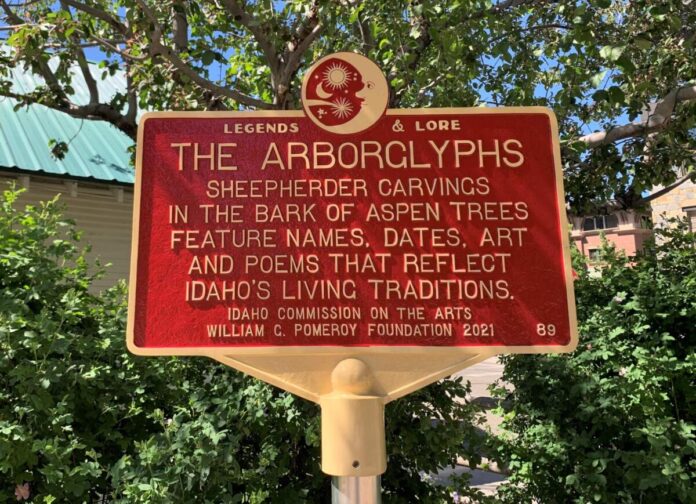
In the vast, rugged landscapes of the Western United States, you can hear the winds whisper through ancient pines and aspens. It’s there where you’ll find a unique form of storytelling: arborglyphs. These tree carvings, made primarily by Basque shepherds in the late 19th and early 20th centuries, offer visitors a peek into the lives, hopes, and artistry of these solitary shepherds.
Origins
The practice of carving arborglyphs into the smooth, white bark of aspen trees began with Basque immigrants who came to the Western U.S., particularly in Nevada, Idaho, California, and Oregon. Drawn by the promise of work and a new life, many Basque men took on the difficult and lonely job of shepherding. The days were long and isolated for these men, who often spent time in remote mountain meadows, with only their livestock for company.
To pass the time and record their existence, these shepherds began carving their names, dates, and symbols into the aspens. Over time, this practice evolved into a unique form of folk art, blending personal expression with cultural identity.
Artistic and cultural significance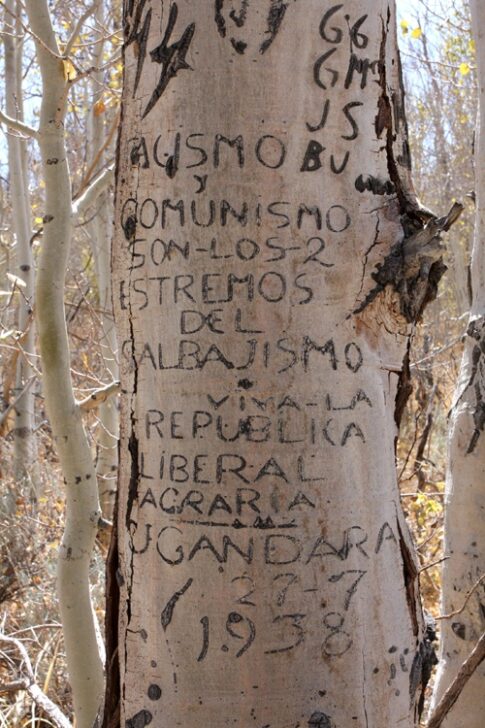

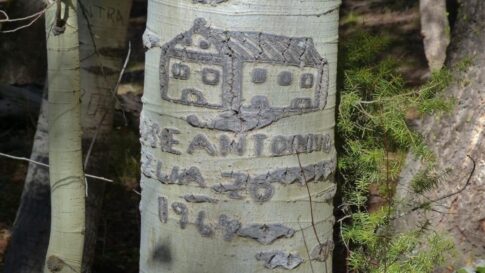
Arborglyphs range from simple initials and dates to elaborate scenes depicting everyday life, animals, religious symbols, and even mythical creatures. Some carvings are simple and straightforward. Others exhibit intricate detail and remarkable artistry. Common themes include:
- Identity and legacy. Carvings often include names and dates, serving as a permanent record of the shepherd’s presence in a particular location.
- Cultural symbols. Many arborglyphs feature traditional Basque themes, like the Basque cross and other cultural symbols. These highlight the shepherds’ close ties to their homeland.
- Personal expression. Beyond names and symbols, some arborglyphs depict human figures, animals, and scenes from daily life. These images provide a glimpse into the shepherds’ experiences, emotions, and imaginations.
- Romantic themes. Given the shepherds’ isolation, it’s common to find carvings of women. These carvings speak to the loneliness that characterized the shepherds’ lives.
Preservation and modern importance
As living artifacts, arborglyphs are vulnerable to the passage of time and the elements. Many of the original carvings have faded or been forever lost to tree decay and logging. However, efforts are underway to document and preserve these unique historical records. Researchers and historians are photographing and cataloging arborglyphs, to create digital archives that will ensure the shepherds’ stories will be enjoyed by generations to come.
Arborglyphs are gaining recognition as an important part of the cultural and historical fabric of the American West. They offer insight into the immigrant experience and the resilience of cultural identity in the new world.
Exploring arborglyph sites
If you’d like to see the arborglyphs for yourself, several locations in the Western U.S. are known for their concentrations of these unique tree carvings:
Sheepherders National Historic District (Nevada)
This area, located in the Humboldt-Toiyabe National Forest, boasts numerous arborglyphs created by Basque shepherds.
Stanley Basin (Idaho)
The aspen groves around Stanley are home to many well-preserved arborglyphs, which offer visitors a glimpse into the region’s proud history. The town of Ketchum, Idaho, observes a Trailing of the Sheep Festival each year to honor the rich history of sheep herding in the region.
Eastern Sierra Nevada (California)
Inyo National Forest and other nearby areas feature arborglyphs etched by Basque and other immigrant shepherds.
Have you seen arborglyphs for yourself? Tell me about your experience in the comments below.
##RVT1173
Love this article! I grew up (& still live) in Nevada. I had no idea the Basque shepherds carved on trees! What a cool historic record of these men & their lives. I’m going to see if I can’t find the concentration in Northern Nevada next time I’m up there. Thanks!
Fascinating!
It’s interesting to note that hundred year old carvings (and stone scratchings) are considered art and history. Do that now and it’s an arrestable offense! We won’t have any history!
Agreed. When the internet disappears, all recent history will be lost forever. That is why all my history is on paper and in hard artifacts, for my daughter.
We have millions of aspen and once had 100s of Basque (now Peruvian) sheepherders in Colorado. But I had never heard of these tree carvings until this article. Now I’ll be looking for them in USFS areas that are still used as summer sheep range. Thanks, Gail!
Thank you, Gail! 🙂 How fascinating! 🙂 Thanks again, have a great week, safe travels, and safe stays! 🙂
I never heard of this before! How fascinating. Now if you do it, we call it “graffiti”!
This looks like the origin of “tagging” to me. Interesting!