


The RoVing Naturalist
By Dennis Prichard
 Imagine a nighttime invasion of the RV park lawn by strange, ten-legged creatures with external skeletons, globular eyes rotating on the ends of flexible stalks, and long antennae. These creatures come out in the cool, moist night air of summer to scavenge in lawns only to disappear in their subterranean haunts before daylight. It would make a good sci-fi movie, except it is real. Crayfish have already invaded and are well-established.
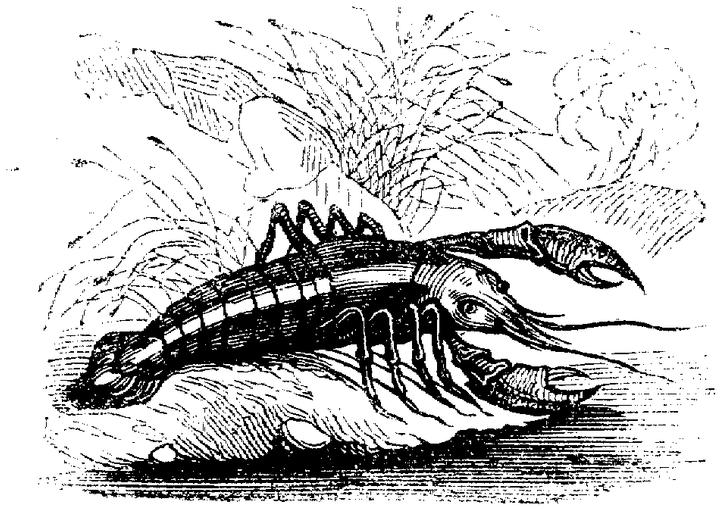 Crayfish, crawdads, mudbugs – call them what you will – are usually found in freshwater ponds, lakes or streams. They are definitely aquatic creatures that breathe through gills as fish do. But certain kinds can tolerate our gaseous atmosphere for short periods of time. That is when they are capable of invading the RV park and residential lawns across most of our continent.
More than 100 species of crayfish inhabit North America, 300 worldwide, and all have their own type of habitat best suited to them. Some only live in shallow ponds while others must have running streams. Still others live in deep lakes feeding on tadpoles, insect larvae or the remains of those unfortunate animals that eventually sink to the bottom. Our invader has adapted to crawl out on land to set up housekeeping, but it still needs some sort of reservoir in which to breathe. That is why it builds a chimney.
 Burrowing into the earth, the mudbug excavates a vertical tunnel one mudball at a time. Each ball is brought to the surface and piled in a circle around the entrance, about the diameter of a golf ball. As the tunnel gets deeper, the chimney gets higher as the mudballs are cemented into a tubular wall extending above ground.
The crayfish digs deep enough, sometimes down to three feet, to fill its basement with water. Here it waits out the hot summer days before once again invading the yard at night. Earthworms come to the surface then also and are picked off by the creatures’ massive pinchers.
Its soft, vital organs are protected inside a hard external skeleton. A human’s organs are attached around the bones and are exposed to the harsh environment. On the other hand, the crayfish skeleton is a more protective system than ours until it has to grow. The animal has to shed its outer shell, expand soft tissues all at once, then wait while the new skeleton hardens. This is the most vulnerable time for a crayfish as they become soft delicacies for fish, raccoons and a whole host of other predators. We are one of those predators – as a plate of steamed crawdads sure tastes delicious.
Those mudbugs that stay in my RV park at the bottom of their chimneys are safe for now. This human predator finds their invasions fascinating.
Dennis Prichard is a retired park ranger. He’s worked and studied wildlife at many National Parks and Wildlife Refuges including Carlsbad Caverns, Mammoth Caves, the Everglades, Sequoyah NWR in Oklahoma, Sevilleta NWR in New Mexico, and Isle Royale National Park, to name a few. He travels in a fifth wheel with his wife and dog, a Labrador named Cricket.
##RVT863

Very interesting! Now I know why I found them near an inland pond near Ann Arbor.
I am new to this site, and wonder where I would find someone with an RV that would like a travel partner . I can drive,carry intelligent conversation and know my way around a kitchen. I am 62. There has to be someone out there that would enjoy a travel mate.
Thank you!
Patrianne
Very interesting. When I was a kid, we caught crayfish in a wonderful creek that ran across our property, but there were never enough for a meal, so we just played with them awhile and threw them back. But when in the Florida Keys or New Orleans, I loved eating them at local festivals. Now that I’m a senior and arthritic, I thought I’d have to give up crayfish hunting except with traps. But you’ve shown me another possible way!
What is the best way to catch them when they are crawling on land? They are very fast underwater! Would a dip net laid over them be the best way, or are they too quick on land for even that?
A dip net would be great, but convincing a child to do the catching for you is more fun for both of you! The memories you have of crawdad catching could and should be passed along to the next generation before mudbugs are lost to the computer screen.
I went to a MardiGras theamed Fourth of July party where mudbugs were served. No thanks, safe from me.