RVs have their own peculiar smells. A frequent complaint about a new RV is that of the acrid odor of formaldehyde. New RVers quickly learn to leave the refrigerator and freezer “cracked open” when turned off and not in use. Of course, there are pleasant smells we associate with RVing: The tangy-crisp scent of the ocean when camped near the beach; the heady fragrance of a pine forest on a summer breeze.
Fragrance or odor. Scent or smell. It’s all a matter of perspective, but one you need to learn is like knowing what a rattlesnake’s buzzing tail sounds like. Herein lies the tale.
We took a non-RVing relative out for an RV trip not long ago. He stayed in our trailer for the day while we had other things to tend to, and on our return he gave us a quick critique of what he thought of our RV toilet’s ability to contain black water odor. Simply put: “That bathroom, my God!” This came as a bit of a surprise to us, as we hadn’t really had much trouble with black water odors before. But there was indeed, a bad stench coming from the biffy.
But a double-take with the nose revealed there was something far more serious than a smelly black water tank. That malodorous thing wasn’t black water stink, but more “rotten eggs” in nature: A propane gas leak. Someone had casually parked our freestanding LP gas heater in the bathtub, and in the process had mashed to heater control valve into the side of the tub, pinching it into the “light pilot” mode. Thinking back, the heater must have been seeping LP gas into the bathroom for perhaps better than a day.
Propane gas (LP) is in its natural state, odorless. LP producers add a substance called ethanethiol, said to be listed as the most “smelly substance on earth” by the Guinness Book of World Records (2000 edition). Some describe it as “rotten eggs,” while others suggest it bears a strong resemblance to leeks or onions–on steroids. In any event, the smell is distinct and strong. Do you know what it smells like? If you don’t, walk on out to your RV, open the valve to one of your stove burners and gently waft the gas toward your nose. This educational process may stand you in good stead.
Why didn’t our LP gas detector alert us to the leaking LP in the bathroom? First, we don’t have a gas detector–something that needs to be resolved. Secondly, gas detectors may not sense the buildup of LP until the danger is already present–say the distance from the detector to the actual source of the leak, or just a malfunctioning detector. Better you should have a backup leak detector–your nose.
Keep in mind that ethanethiol, despite its reputation for strong olfactory reactions, can be “missed” by some. Older folks can sometimes develop a lessening of the sense of smell. Smoking and illness can also affect the ability to detect some odors, including that of ethanethiol. One study revealed that over half the people age 60 and older could not recognize the smell of LP odorant. All the more reason to install, maintain, and frequently test an RV LP leak detector.
We’re not sure that our RV guest recognized the seriousness of the situation. He was so relieved to learn that the stench he’d been discomforted by was LP gas. “I was trying to figure out how I’d ever sleep with that stink!” was his comment of relief after the LP gas valve serving the heater was firmly set to closed.
Summer is a great time for the new RVer to get out on the road. There are plenty of places to explore and activities to pursue. The longer daylight hours allow more miles to be covered. But summertime also brings its own brand of weather. Summer storms can pop up without warning–and even experienced RVers know, summer storms can spell trouble.
weather.gov
A big motorhome or trailer may look invincible, and being up above road-hugging level of a four-cylinder coupe, the view is great. But don’t let the view from the rig make you cocky. Weather is no respecter of height or size. A sudden blast of sheer wind can move your motorhome right off the road or whip your trailer into a frenzy of unexpected motion.
The best defense against weather related RV accidents is keeping a weather-eye open. If you see a cloud that looks a bit ominous, it’s time to get more information. Turn of the satellite radio and tune in the local AM radio. Local stations–especially those that don’t play a “canned” imported format–can warn your impending problems. This is particularly true in areas where tornadoes frequent.
Sure you’ve seen the neat action movies where the fearless storm chaser outruns the oncoming tornado. But whipping a fifthwheel or motorhome towing a trailer around in order to “make a run for it” isn’t a likely scenario. If you actually see a twister heading your way, your best “out” isn’t likely to try and outrun it. Both the Federal Emergency Management Agency and the National weather office recommend getting out of the vehicle and taking shelter in a building. If there isn’t one in reach, things are a little less clear.
The old standard was: Get out of your vehicle and lie down in a ditch. The American Red Cross says they don’t support that advice any more, unless the ditch is “noticeably lower than the level of the roadway.” Not a deep ditch nearby? “Stay in the [vehicle] with the seat belt on. Put your head down below the windows, covering with your hands and a blanket if possible.” But beware, the agency says this is a “last resort.”
One thing that has shown up: Don’t climb under an overpass. Tornado winds have a way of funneling high winds and debris right under such constructs, and if you get in the way of the debris the outcome isn’t pretty.
In any event, if your rig is parked somewhere and there’s a danger of a tornado, do your best to take shelter elsewhere. While your rig can provide a measure of protection, even if you’re seatbelted in, being tossed around inside a rolling coach can have fatal consequences.
But not all summer storms have the terrifying reality of a tornado. Sudden rainstorms are far more likely, and again, your rig is not Noah’s ark. The key to safety is to slow down, get out of the fast lane, and illuminate your rig by turning on your lights. If it gets too tough to see, then by all means, pull off the roadway as far as possible, and now TURN OFF your lights. That way, the guy behind you who doesn’t have enough sense to pull off won’t see your tail lights, think you know where your going, and plow right into your rig while you’re parked. The same holds true in a dust storm: Don’t try and punch through one of these devils; if you can’t see, you can’t drive. Pull it off the roadway, douse the lights, and wait it out.
azwater.gov
If you’re not familiar with driving in desert country, beware the danger of flooded washes. In rain country, streams and rivers run all the time. In the desert, a wash runs only when there’s rain, and so road builders don’t handle them by sticking a bridge over them, they simply build the road through the wash. If you encounter water over the roadway in desert country, DON’T drive through it. Six inches of water can easily float any vehicle off the road, and every year dozens die in vehicles caught in flash floods. Drive through a “posted” wash in Arizona and need a rescue? The “Arizona Stupid Motorist Law” ensures you’ll pay for the cost of your rescue–or your estate will.
Lightening storms? You may have heard the old saw that the rubber tires of your car will insulate you against damage. Sorry, but that’s an old wive’s tale. Automobiles, by their metallic construction, act as an electrical cage, causing lightening strikes to roll off the car in a generally harmless fashion. BUT many RVs are fiberglass constructs, the lightening may just as soon blast a hole right through it.
If you’re on the road and lightening threatens, pull over, park avoiding the tallest trees and utility poles. Close windows and sit with hands in laps.
Common sense may be your first line of defense in dealing with what Mother Nature can dish out. Just because your rig is big doesn’t mean a whit compared to the forces that weather can generate.
While the best place to be when summer’s heat turns the landscape to “broil” is someplace cool, it’s not always possible. Sometimes you’re just stuck making out as best you’re able. Once temperatures hit the triple digits, it can be tough to keep “a little tin box” cool. But there are some things that can make it easier.
First, wherever possible, park your rig in shade. Wide open spaces can be frightfully hot. Iowa-based non-profit Trees Forever found an average difference between shady spots and open areas of 27.5 degrees.
No shade to park under? Make your own! Unless high winds threaten, put out your RV awning and angle it to get the most available shade on the side of the RV. Parking orientation is important too; try and expose the least area of the RV to the sun. This usually means parking with the front or rear of the unit to the south.
It’s possible to shade both of the long sides of the RV if you’re a bit creative. We bought a roll of shade cloth and found an outfit willing to seam it for us. With the addition of brass grommets, the new awning was ready for hanging. Up at roof level, right along the edge of the roof, we mounted small cleats to tie off the upper edge of the cloth. A few stakes pounded into the ground gave us tie-offs for the bottom edge.
Inside the rig, keep the blinds closed, and if you have curtains, close the over the top of the blinds. We’ve found that reflective bubble insulation will really keep heat out. The stuff comes on a roll and is basically a sandwich of thin plastic “bubble wrap” between layers of aluminum foil. Cut it to fit the windows tightly. We use a marking pen and write which window the piece belongs to so when we need it next time, it’s an easy fit.
We also do our best to seal off the roof vents. If you’re running your air conditioning unit, you won’t want them open anyway. You can cut the reflective insulation and stick covers over the vents from inside; we did it by using double stick Velcro tape. Others have cut 2″ or so foam rubber blocks to shove up into the vent holes.
From the mechanical standpoint, if your rig is equipped with two air conditioners, you’ll need 50 amp electrical service. If you have but one air conditioner and it doesn’t seem to be cutting the heat, it’s decision time.
If you and the RV will be stuck where you are for a while, you might consider adding a small window air conditioner unit. Once when locked up in Arizona for a few months, we popped a small window out of our fifth wheel, cut a piece of plywood to fit over the hole, then cut a hole in the center of the plywood for the a/c unit. Don’t plug the a/c unit into the RV, but into a separate circuit. If you’re in an RV park, you’ll need to check with management to see if this is permissible.
Fans can make a huge difference in how well you’ll be able to tolerate the heat. Moving air with the wind chill effect can make things far more tolerable than without.
What else can help? If the days are plenty hot, don’t shut off your air conditioning at night; keeping the RV inside cool gives you a bit of a jump on the next day’s heat. When going in and out of the rig, keep the door open for as short a time as possible. Pump plenty of fluids and look forward to the coming of fall!
We think fifth wheel trailers are great: Towing stability, excellent storage, and so livable. We towed our fiver up and down around the US with nary a complaint. But if you’re new to “fivers,” you may wonder–do I need that special “V” slotted tailgate on my truck?
There are pros and cons to the special fifth wheel gates. We’ve RV’d with both a V gate and a standard gate and find that while the V gate makes it easier to hitch up–no need to lower the gate–it’s not all that critical. Detractors say that the V gates may actually reduce fuel economy, particularly when driving the truck solo, as truck manufacturers take tail gates into account when designing in aerodynamic factors. From our own experience we can’t say whether that’s true or not.
We will say from experience that forgetting to open the factory tailgate when unhitching can lead to no small amount of embarrassment and financial pain.
A buildup of solids in an RV sewer tank is a bad thing. So getting rid of the yucky mess should it occur is a frequent topic of discussion among RVers. Most of us have heard that putting ice cubes down the toilet will do the job. The idea is the hard cubes will bounce around when the RV is moving, banging all that nasty buildup away. So does it work? James of the Fit RV wanted to find out. See the results in this very interesting and enlightening video. #rvt739
Crooks are getting lower than snake’s bellies of late. One of the latest scams that affects RVers hales from Canada. It seems nasty crooks are stealing RVs, modifying the VIN plates, and then selling the stolen trailers on Kijiji. Yes, this is Canada, but can the crooks in the Lower 48 be far behind? Here are some tips to protect yourself when buying a trailer.
First, what’s Kijiji? Up in Canada, Kijiji is a “kind-of-like” CraigsList Internet classified ad outfit. The outfit is owned by EBay, and is quite popular for selling used items and moving people into rental homes.
Now, onto the VIN crook system. It’s not clear how, but evidently the criminal element has found a way to cook up VIN numbers that look real enough, but don’t match VINs currently in use. After they’ve obtained a stolen trailer, they make up a suitable fake VIN, then attach a new VIN plate with the cooked-up VIN number on the rig.
One RV dealer in Alberta got a call from the local police, warning him of the scam. News spreads fast, and now the RV Dealers Association of Canada is warning dealers to be very cautious when buying to taking trade-in RVs. What’s good for them is good for the RV buying public.
How to keep from getting a bum RV? Cross-check the VIN numbers. Compare paperwork VIN numbers to VIN tags, and also to other VIN numbers built into any trailer or fifth wheel you’re considering purchasing. Where do you look? Sad to say, there’s no standardized place for a VIN to be located, but here are some places to start looking.
On many travel trailers, the factory stamps either a complete 17 digit VIN, or at least part of the VIN on the trailer tongue or on the frame rail leading up to the hitch. On older units you may find it stamped on the tongue under the propane tank tray. At times the VIN may be obscured by paint or rust, particularly if you’re looking at an older unit. For reference, if you think you’ve found the VIN but can’t make it out clearly, an electric drill equipped with a wire wheel will clear off oxidation and built-up paint and make a VIN stand out clearly. Of course, even a legitimate seller may get a bit antsy when you pull out a wire brush, but that’s the way to clearly see it.
Some fifth-wheel manufacturers stamp the VIN onto the fifth wheel pin box. On other towed units you might find it tack welded on the frame underneath the rig. Look too, for a plate with the number stamped on it, welded or otherwise affixed to the frame.
In all newer rigs, the VIN number should also be indicated on the paperwork that shows weights and specifications. Often this certificate is glued on the inside of a cabinet in the kitchen or utility area. Be suspicious if the certificate is completely gone, or if it looks “too new.” If it looks hinky, get nervous.
All of these VIN numbers should match up to one another. If there’s a discrepancy, hang onto your checkbook.
Here’s the case of the couple that wants to break into full-time RVing. That’s a serious step, since “all your worldly goods” go with you, wherever you go. Their decision is to go with a motorhome – and they want to stay with a gasoline engine rig.
After paring down their “stuff” they need to take with them, they are quite dismayed to learn that most of the gas-fired motorhomes barely have enough “CCC” (cargo carrying capacity) to tote themselves, their possessions, and the additional equipment they’ll need to live largely off the grid.
Sad to say, limited weight capacity for cargo is a reality for many RVers. It would seem that manufacturers, who want to build to whim and fancy, tend to stuff their units with plenty of flash and bling, and a lot of it pumps up the scale weight. In the case of the couple we cite, they’re findings were the typical CCC of rigs they looked at amounted to barely 2,000 pounds. With their own weight, that of their gear, pets, a couple of extra batteries, they’d nearly double the rated capacity of many rigs.
What’s to be done? Again, the manufacturers don’t exactly make it easy. As far as “shopping the Internet” for a perspective rig, you may as well forget it. There’s little information available on RV manufacturer websites to give you any sort of inkling what the cargo capacity of a perspective rig is. Sure, you’ll find the total weight capacity of the rig, but with a plethora of options, and a paucity of other weight information (maybe it’s purposeful), about the only way to know what the CCC of a rig is, is to walk onto a dealer lot and personally inspect the weight ratings paperwork, posted somewhere in each new rig.
What’s to be done? It almost invariably requires compromise. It may mean the dreams of a gas-fired motorhome are up in smoke. It’s possible, depending on the design of a ‘desirable’ rig to work things out. One way is by weight redistribution. While the actual CCC of a given motorhome may be less than you “need,” is it possible to hitch a utility trailer to the motorhome, put the excess weight there, and still be within the total capacity of the motorhome in question?
It could mean a re-evaluation of your needs. Since the carrying capacity of a motorhome includes how much fuel (both LP and engine food) and liquids are on board, what would happen if you didn’t travel with everything “full up”? Some RVs are equipped with huge fresh water tanks. With water scaling in at about eight pounds per gallon, would it hurt you to throw off over 300 pounds by traveling with that 80 gallon tank only half full? Yes, if you’re boondocking, you need water. But carrying more water to your rig with a portable water tank or water bladder is possible, and taking out the waste water is a similar possibility. And while a costly choice, lithium batteries instead of flooded lead-acid batteries are certainly lighter.
Or it could mean a wholesale switch in your thinking about what sort of rig. The CCC of many fifth-wheels and travel trailers may give a better picture for those who really can’t lighten up the gear load and find the miniscule capacity of some motorhomes just doesn’t cut it.
As long as “splash sells,” it’s doubtful that manufacturers will build-down to a standard where a the amount of gear that a full-time RVer, or even a serious snowbird will find carrying capacity is going to be anything but a matter of making tough choices.
For some RVers there’s never enough room for propane. We had a smaller truck camper years back that had but a single LP cylinder, and once it ran dry, well, we were up the creek. Others find that they have two, but they’re usually 5 gallon (20 pound) cylinders, and if you run in cool country you can use up 10 gallons of LP in a big hurry.
Where can we carry an extra cylinder or two of LP? If your rig is a towable, and you use a pickup truck for towing, well, there’s usually room someplace in the bed of the pickup to stash a cylinder or two. But if you’re towing with an SUV, if your truck bed is already filled up with a truck camper, or if you’re a motorhomer, safe space can be at a premium.
RVers have come up with a variety of innovative places. In looking at some of them, the old saying comes to mind, “Some of the brightest people are RVers, but on the other hand ….” The first rule of where to carry an extra “bottle of LP” is where it’s safe. It’s surprising to see how many folks say they carry that extra LP in the “back seat of my extended cab pickup.”
What’s wrong with that picture? First, LP cylinders can and sometimes do leak. Mixing LP with oxygen and applying a little heat can lead to disaster. A few years back in Washington state the local newspaper published a photo of a local who stuck an LP cylinder in the back of their car. There wasn’t much left to see, and fortunately the owner wasn’t killed when the whole thing went up in smoke.
In some jurisdictions — Mississippi for example — it’s illegal to transport an LP container in the passenger compartment of any vehicle. In sunny conditions the inside of a vehicle can easily hit 140 degrees. Got a fairly full LP container and the gas inside will expand, possibly enough to blow open the safety expansion valve, releasing LP into the enclosed space.
Even if the cylinder doesn’t release gas, having an LP cylinder in your vehicle is like having the proverbial loose cannon. Say you’re rolling down the freeway at 60 miles an hour and suddenly have to panic stop. That cylinder will continue in forward momentum at 60 miles an hour until something stops it. Imagine your spine being the “backstop” for that heavy, unforgiving cylinder.
Other folks find that the truck bumper is a great place to put a spare cylinder. Fine, but what are bumpers for? To absorb the impact of an accident. If your bumper runs into something in an impact situation, something’s got to give. If it’s a propane cylinder that’s impacted, fire or explosion could be the end result.
Putting it up high on the roof access ladder might be a smarter solution–at least it’s not as likely to be impacted in a “rear ender.” Others put their spare tanks securely in a container like a “milk crate” firmly secured in the roof storage rack. Yeah, it’s really hard to get at that way, but hey, unless you hit the old “low bridge” scenario, it’s a whole lot less likely to go kaboom.
The best advice, though, is manage your propane wisely so you don’t run out.
Many RVers stay the night in non-traditional free camping areas — those not officially designated “campgrounds.” Here are some relevant comments and suggestions on this subject submitted by our readers. If you have something to add, please let us know.
The following businesses most often allow RVers to spend the night.
Walmart EDITOR’S NOTE: In survey on RVtravel.com, a majority of RVers reported they had stayed overnight in a Walmart parking lot at least once, often many times. Here are some of their comments. Each paragraph is from a different person. Most comments have been edited for space.
Wal-Mart is by far the most popular “freebie” place to stay. About 80 percent of all stores allow overnight stays in self-contained RVs.
I called the corporate offices of Walmart and asked about its policy about staying overnight in an RV in its stores parking lots. They were very friendly and said it was company policy to allow RVers overnight parking. They also said it would be advisable to check in with the store manager when you arrive as a courtesy. However, they said if we ran into a store that refused us we were to report this to them. We have stayed in a number of Walmarts and have been welcomed with open arms. Management even alerts security to keep and eye on the rigs during a stay. If you have a wife like mine (Walmart road atlas in hand) she always needs something from the store. If we stay in a Super Walmart we always hit the deli for a good chicken dinner with potato salad and cole slaw. —R. Smith.
We drove the motorhome to the local Walmart last night and got lucky and found a parking spot right by the door. After parking, but before getting out, the greeter rushed out and knocked on our door. He told me that I was very welcome to camp in their lot for the night, and he was ready to show me the designated area, where there were already several RVs. Just in case anyone wonders about Walmart’s attitude toward RVers, this encounter should clear the air. Walmart has figured out how to get an otherwise under-used asset (the far end of the parking lot) to produce revenue by encouraging RVers to park. They know that we’ll almost always run into the store for some goodies. Smart, very smart. —Unsigned
Many Walmart stores now have “No Overnight RV Parking” signs. Be sure to circle the lot and check ALL parking lot entrances. Some with signs: Arizona — east Tucson and Casa Grande, and in Oregon in Newport. We were also told of other Walmarts with signs. —C. Peck
I have spent several nights in Walmart parking lots. We usually park then go inside and pick up then odds and ends you always seem to need. We usually stick to the “Super” Walmarts as they are 24 hour stores. Others I know do the same and none of us have had any problems. I spoke to a trucker who drives for Walmart who told me that he likes seeing RVs when he arrives as he feels he is not all alone on the lot while he waits for his delivery time. —Don
Last year we traveled from the west coast to the Canadian Maritime Provinces. We found that Walmarts were happy to have us stop there overnight. There were very few times we didn’t buy something. An inventive traveler can find places to stop without a fee — school yards, gasoline stations, rest stops, club members yards, etc. —Unsigned
We have stayed at many Walmarts and have only had one tell us we couldn’t, in Vancouver, BC. But they called around to the other area Walmarts to find one nearby where we could stay. It was in Surrey. We have never had a problem with any of the Walmarts. We always check first and make sure we do our shopping there too. We always take out the garbage bags and walk around our area picking up trash and then taking it to a dumpster. —T. Swanson
On a 30-day trip though 12 states, we spent 10 nights on Walmart’s and Big Kmart’s parking lots and felt welcome everywhere except in Florida, we were told that campers used the parking lots like a real campground. We ate and shopped in every store, with pleasure. —René R.
A Walmart or similar retail parking lot does not provide a “campsite.” It is still a parking lot where, with the retailers approval, an RVer can get a few hours sleep. It also provides an opportunity to do some restocking and other shopping. For example, we came through a Texas town recently that had a free campground. But we bypassed it to go on to a Walmart a mile away. We didn’t want to “camp.” We wanted to do a little shopping and get some sleep. It was just easier to do our shopping and then get some sleep where we were rather than doubling back to the free CG, or, for that matter, going on to a commercial CG. We didn’t need swimming pool, showers or any other amenities that come with the fee or the extra time it takes to get checked in. So, it’s not always a matter of $$. As in this case, sometimes it is just more convenient. —Bob C.
Pilot-Flying J travel centers often have designated areas for RV parking. Be sure to stay there, not with the trucks. The truckers don’t like that.
Flying J Truck Stops
It is a well known fact that Flying J Truck Stops are RV-friendly. But if you use the truck stops to stay overnight, by all means fill your tank, get propane, eat a meal or buy something in the convenience store. Please don’t abuse this good thing or it will be taken away from us. —R. Handel
I recently completed a 12,000-mile trip in my Champion motorhome, which started out in Canton, New York and took me all the way to San Diego. I always tried to arrange my stops at the Flying J’s. Their gas prices were always better than anyone else. I also filled up my LP tanks there. Most of them had a separate area for overnite RV parking, away from the semi trucks. It was always a pleasure stopping there. —Dale Lally
I have stayed at a Flying J once, but have attempted too many times. I’ve found arriving late pretty much guarantees you won’t be staying there. They fill up in front. —Al
Camping World
I contacted the company’s headquarters and was told that some stores do let you stay overnight, but to check with each store. You can find a listing of stores and maps at the Camping World website. —Terri Swanson
Most Camping Worlds allow free overnight parking. The one in San Marcus, Calif., just inland from Oceanside in Southern California is completely fenced in and no overnight camping is allowed; they sell RVs there and it’s in a crime area so that may be the reason. We had to park in the Sam’s Club parking lot nearby — the Walmart didn’t allow overnight parking there either. —Kathleen
We travel in our motorhome about 7-8 months a year. Camping World is a good overnight spot. Like Walmart, they figure you’ll buy something also. —Alice and Don
Cracker Barrel
You can stay a night in most Cracker Barrel restaurants. As with Walmarts, you should ask first, but generally they don’t turn you down if you arrive just before closing. Good breakfasts too!” —Paula
EDITOR’S NOTE: A spokesperson at Cracker Barrel’s corporate headquarters told FreeCampgrounds.com that free stays in its store parking lots is not officially permitted. Most RVers report, however, that they stay routinely with no problems.
Kmart, factory outlet stores & shopping centers
Kmart allows over night parking. As a matter of fact, they were the first to provide the overnight camping opportunity. —Roger Schmidt
Kmart allows overnight parking. I normally ask the store manager if he minds if I spend the night. I have never been turned down. Most will tell me they will let their security staff know so they can keep an eye on my rig during the night. I always park off the beaten path and never leave any trash. If it’s a Super Center, then my dinner will be its fried chicken, potato salad and cole slaw. Yum, yum. —Unsigned
Once we talked to the mall management at Grapevine Mills in Grapevine, Texas and asked if we could park in their lot since we were shopping, having dinner and seeing a movie. They said fine and even had the security guards watch out for us. The next day the guard came by and asked us if we had a nice time. —Terri Swanson
Other camping areas
Highway rest areas
EDITOR’S NOTE: We recently polled the readers of RVtravel.com, asking them “How often do you stay the night at a highway rest stop? Of the 334 respondents, 13% reported they stayed often, 31% once in awhile, 19% hardly ever, and 37% never.
In Washington state you can “camp” for up to eight hours. The no camping symbol means no sleeping on the ground or in a tent. Sleeping inside an RV is okay.
About 20 years ago I was traveling by myself and got tired while driving from Florida to California. At a small, remote rest area, I parked the motorhome by itself and sacked out. About 4 a.m. I heard a car drive up. Four doors slammed and as they had parked close by, I was awakened. They came over by my motorhome door and started to whisper. By that time, in the dark I had grabbed my Remington 12 gauge auto shotgun and sneaked up on the other side of the door. Silence. Finally one of them whispered “Let’s do it” and grabbed the doorknob. Simultaneously, I pushed the button on my shotgun receiver and the LOUD magazine slammed shut. I then yell something like “Get the #$%@!! out of here!!” and they did, taking off like crazy. So did I. I have never parked at quiet rest stops since that time and only stop at campgrounds or BUSY truck stops. —T. Berdan
This campground east of Tonopah, Nevada on U.S. 50 has plenty of room for RVs along with clean restrooms and a free dump station.
We have stayed in rest areas many times, but only ones that list that overnight parking is okay. We have never had a problem. We also look for other RVers and park as near them as we can. We seldom stay more than 8 to 12 hours. —T.S.
Fraternal lodges
Some free (or very cheap campgrounds) happen to be at Elks Club Lodges. Many of them have RV hookups at either free, or very cheap rates. Most all have nice restaurants and lounges along with other activities (music, dancing, etc.). These benefits are for Elks Club members only, however, once a member, you can use the facilities all over the country, and the Elks are a very civic-minded organization and contribute to many worthwhile activities. —Larry Robertson
I’ve never run across any Elks Lodges where camping is free. Most have increased their prices over the prices listed in the books or they ask for a donation. The campgrounds are a large money raiser for the lodges. Some of the members work very hard building and maintaining the camp spots. —Dorothy Smetana
Miscellaneous
Flying J and Union 76 truck stops publish flyers that list what they offer RVers –propane, dump station, etc., and encourage them to spend the night. I have made it a habit that if I spend the night I spend money at the business. I always need fuel. And if not fuel I purchase a meal. More and more truck service centers realize that RVers mean money and offering the RVer the same service as the truckers increases their botton line. —Unsigned
Quit a while ago I saw an article in a Thousand Trails magazine about free camping at Union 76 truck stops. I wrote them and they sent me a brochure listing all their truck stops, what they offered the RVer, like propane, dump station, etc. The brochure stated very plainly that RVers were welcome to spend the night. During my travels I have stayed at Union 76s along the way, always buying fuel or a meal for being allowed to stay in their property. I believe it is the right thing to do and they know that by tapping into the ever-growing RV market there is money to be made by offering them a free place to stay. The same welcome mat is offered by Flying J truck stops. Their corporate offices sent me literature, each with a map of their truck stops and what they offer the RVer. —Roger Schmidt
When parking overnight in a truck stop with an RV, use the front parking lot where the cars are. It’s quieter, safer, and more convenient. It’s safer because you lesson the chance of a big truck backing into you in the middle of the night. There are a lot of new drivers out there in big rigs now that have a hard time parking when rested, and a terrible time parking in the middle of the night. —Unsigned
A question from a reader to Gary Bunzer, the RV Doctor
Dear Gary:
We are newbies. If we winterize our 5th wheel, and then want to go camping in the winter, is it safe to use the black tank with bottled water only? Since the black tank hoses appear to be quite large it’s hard to believe they would freeze. Or are there smaller hoses somewhere in the black tank system that we can’t see that could freeze? We would be using bottled water only for any fresh water needs, so we wouldn’t disturb the anti-freeze in the rest of the system. Is our thinking right on this? —Barb H.
Dear Barb,
It’s perfectly doable to use the black tank with bottled water if you choose that route. It’s also possible to use the complete fresh water system in the coach during the winter with some proper preparation. See my winter RVing article here. But typically it’s a full 3-inch drain from the toilet into the solid waste holding tank so just pouring bottled water into the toilet before and after each flush, you should be fine. I’d add a little RV anti-freeze to the bottom of the holding tank just to keep it from freezing if you’ll be in extended below-freezing weather. And remember, you’re in an RV so you can always head south!
If you’ve recently gotten into RVing, you know that backing your RV into a spot can be one of the most frustrating experiences in life. The same is true for your long-suffering assistant, the one who tries to help you back a rig in. It’s possible that back-in RV spaces are one of the leading causes of marital strife for RVing couples. But it doesn’t have to be this way, if you’re both on the same signal “wavelength.”
Take a few minutes when you’re both calm and away from stress. Talk about and come to an agreement on what hand signals mean what and how to apply them. Take some time to actually practice them before one of you has to get behind the wheel.
In practice, the one giving signals must always be in plain view of the driver. If the signal giver is out of view STOP backing and wait until they come back into view. We had an unnerving experience just the other day when pilot lost site of signal giver, the rig on a grade slid back, and narrowly averted smooshing the signal giver. Not good!
Using both hands is helpful, and the “pointer” hand always points the way the rear of the RV should go.
Some have found using walkie talkies or even cell phones to be somewhat useful for guiding rigs in. We’ve tried that, but find that hand signals are usually a bit less ambiguous. And don’t be afraid to simply stop, get out of the rig, and take a look at the situation.
Our thanks to the Santa Clara County, California Fire Department for the illustrations.
Editor’s note: Chris Dougherty is a certified RV technician.
Dear Chris,
I am in the process of buying a new trailer, and I was wondering if it’s a good idea to have a vent fan installed. I have one in the bathroom but I was wondering about the other two vents — one in the bedroom and one in the kitchen area. The trailer is 27′ long. –Mike
Dear Mike,
I’m a huge proponent of the hi-flow fans, especially the Fan-tastic Fans. I have had some type of fan in each RV I’ve had since these fans came on the market.
They can make an incredible difference in the comfort in an RV almost any time of year, reducing the need for air conditioning, removing odors from cooking and so on, and can help keep pets comfortable.
Of all the fans I’ve tried, the best are the Fan-tastic Fans, hands down. The worst are the Hengs add on fans. I’m two-for-two failures on those with no factory support, and they’re noisier than all get out.
We use cookies to ensure that we give you the best experience on our website. By continuing to use our site, you consent to accepting cookies. We NEVER have or will sell reader's data. For more info, please see our privacy policy page.


 Fragrance or odor. Scent or smell. It’s all a matter of perspective, but one you need to learn is like knowing what a rattlesnake’s buzzing tail sounds like. Herein lies the tale.


 First, wherever possible, park your rig in shade. Wide open spaces can be frightfully hot. Iowa-based non-profit Trees Forever found an average difference between shady spots and open areas of 27.5 degrees.
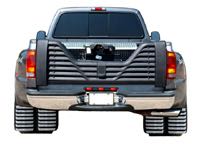 There are pros and cons to the special fifth wheel gates. We’ve RV’d with both a V gate and a standard gate and find that while the V gate makes it easier to hitch up–no need to lower the gate–it’s not all that critical. Detractors say that the V gates may actually reduce fuel economy, particularly when driving the truck solo, as truck manufacturers take tail gates into account when designing in aerodynamic factors. From our own experience we can’t say whether that’s true or not.
 Sad to say, limited weight capacity for cargo is a reality for many RVers. It would seem that manufacturers, who want to build to whim and fancy, tend to stuff their units with plenty of flash and bling, and a lot of it pumps up the scale weight. In the case of the couple we cite, they’re findings were the typical CCC of rigs they looked at amounted to barely 2,000 pounds. With their own weight, that of their gear, pets, a couple of extra batteries, they’d nearly double the rated capacity of many rigs.
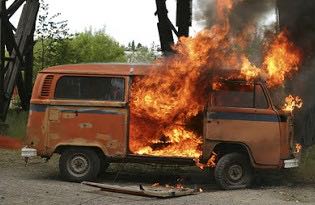 What’s wrong with that picture? First, LP cylinders can and sometimes do leak. Mixing LP with oxygen and applying a little heat can lead to disaster. A few years back in Washington state the local newspaper published a photo of a local who stuck an LP cylinder in the back of their car. There wasn’t much left to see, and fortunately the owner wasn’t killed when the whole thing went up in smoke.


 Dear Gary:
 In practice, the one giving signals must always be in plain view of the driver. If the signal giver is out of view STOP backing and wait until they come back into view. We had an unnerving experience just the other day when pilot lost site of signal giver, the rig on a grade slid back, and narrowly averted smooshing the signal giver. Not good!
 Dear Mike,