

By Greg Illes
The Norcold and Dometic RV refrigerators are ubiquitous, and RVers who live away from AC power a lot of the time really have few other options. By and large they do the job, given their less-efficient (than house-style compressor types) gas-absorption technology.

However, there are several problems that can exist even in the best of RVs. Addressing these issues can help these little units live up to their (limited) potential.
INSTALLATION — The manufacturers are very particular about clearances in the dark area behind the fridge proper. These clearances are essential for proper airflow over the coils and fins of the thermal structure back there. Unfortunately, many manufacturers either don’t try very hard or their production quality is inconsistent. The end result (as I found in my RV) is that the clearance specifications are badly violated. It’s not difficult for a reasonably handy person to pull the fridge out, take some careful measurements and fabricate some trim to establish proper clearances. This way, the airflow can work as the designers intended.
FAN (cooling unit) — For standard fridges with roof vents, there are usually no fans installed. For my side-vent fridge (it’s in a slideout), there was one factory fan. The fan is thermally switched — to put more air through the enclosure if the top coil gets too hot. On warm days, my fan used to stay on for hours and hours, using up battery juice — and the fridge would still be several degrees too warm. The solution was to add one more fan. Now, the extra air flow really cools things down. The fans now stay on for typically less than one hour; and even though the current draw is twice as much, the result is better refrigeration and lower current consumption. Even if you don’t have a stock fan, adding one in could give your fridge an extra advantage. It’s fairly simple to do by tapping into the 12V circuit and using a standard thermal switch.
FAN (fridge compartment) — It’s well known that air inside the fridge is not at a uniform temperature from side-to-side or top-to-bottom. Several aftermarket battery-powered fans are made for “stirring” the inside air, and they all work so-so. Reviews generally speak about unreliability and quick battery exhaustion. Since the concept is sound, adding a permanent 12V fan is a set-it-and-forget-it solution. Caveats: You will have to drill and seal some small holes in your fridge, in a safe place. You should select a fan with fairly low current draw because it will be on whenever your fridge is turned on. I picked a fan from Digikey that draws only 1/8 of an amp, which equates to 1.5% of my battery capacity per day. (Less than one cell phone charger.)
Tackling any, or all, of these tuneups can make your fridge seem almost as good as a household compressor-style unit — so be handy, have fun, and keep your foods and drinks fresh and cool.
image: Pixabay (public domain)
Greg Illes is a retired systems engineer who loves thinking up RV upgrades and modifications. When he’s not working on his motorhome, he’s traveling in it. You can follow his blog at www.divver-city.com/blog.

 When it comes to freezing up your RV, the first rule is: Don’t let it happen. Freezing water in a line is expanding water, and it will likely cause damage. Let’s look outside first. When nighttime lows drop below the freeze point, most RVers abandon any idea of hooking up a hose to their “city water” inlet. Fill the rig’s fresh water holding tank and let your RV’s water pump keep water at the ready. Of course, it’s critical that you keep the RV warm — keep the heat on to keep the rig’s water lines from freezing up.
 My brother-in-law won’t invest in a TPMS (tire pressure monitoring system). He pays his house insurance, he pays his auto and RV insurance, he even pays for “umbrella” insurance — but he won’t pay for equipment for watching his tire pressures. Why? Because he’s never had a problem. He checks his RV and toad tires before a trip, and occasionally while en route. The fact that any tire can pick up a nail going out the driveway doesn’t bother him — but it does bother me. If it bothers you, a TPMS is an excellent choice.
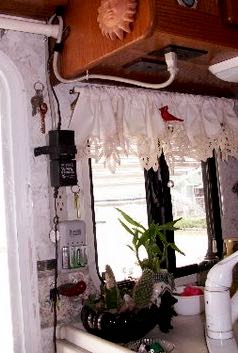 Power outlets under cabinets may be OK for a few appliances, like a mixer or a coffee pot (if the cord is long enough), but a little thing called gravity makes them totally useless for things like transformers, battery chargers and items with short cords. Here is one possible solution.
 Notice that a standard surge protector power strip was secured to the wall. The power strip cord was also secured to the wall and under the cabinet with screw-in wire holders. This makes a neat application utilizing the otherwise useless under-cabinet outlet.
 On arriving at a campground, don’t just assume the power supply is safe. First, make sure the breaker is turned off to the power outlet, then plug in the RV power cord. If you have an exterior power outlet on your rig, plug in an electrical circuit analyzer that indicates circuit problems. If you don’t have an outside outlet, plug the analyzer into an outlet inside and have a helper look at it.
 Only one segment of RVers are exclusively “campers” — those who “camp” for a week or two a year. These people generally camp in the summer, often on family vacations. They typically spend their days sightseeing or hiking and their evenings by the campfire. Their RVs, if they have one, are pretty basic and are often rented.
 In the majority of cases, the difference between the less expensive and the more expensive RV is far more than the “sum of the options” list. Normally, increased cost brings with it better construction, a bigger power train, larger wheels and tires, and so forth.
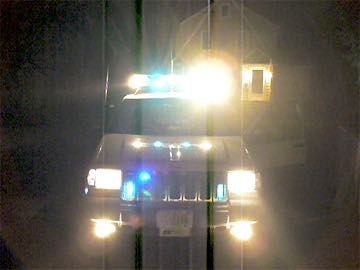 When pulling into a campground during quiet hours, it seems that some forget they may be the only ones awake. A few tips to follow to be considerate to the sleepers:
 You won’t see another motorhome like this one, which I found at the wonderful Miracle of America Museum in Polson, Montana. The plan is to eventually restore it. For now it just sits.
 Marshal had a big problem when he first drove the motorhome: when he turned the steering wheel left, the RV went right. Not good. But it was not a problem that couldn’t be solved, which Marshal did with a bellcrank.