

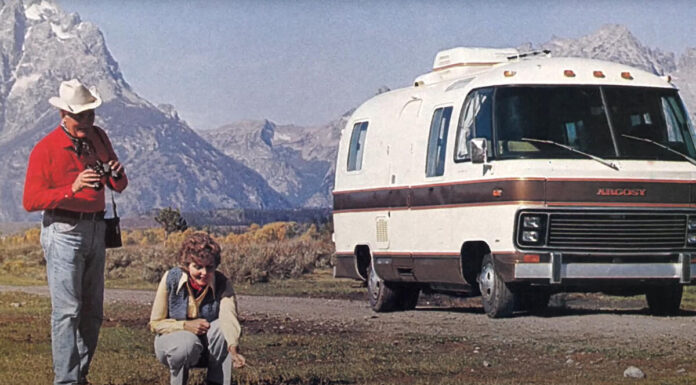
The 1970s weren’t an easy time to be an RVer. Gas prices spiked, speed limits dropped, and motorhomes were anything but efficient. Yet it was during that decade that RV travel moved from the fringes into the mainstream—and some of the rigs built then helped define what the American road trip would become.
That history is suddenly feeling relevant again. As prices for new motorhomes continue to climb, more RVers are taking a second look at vintage rigs—especially 1970s-era motorhomes that were built to be lived in, not financed for decades.
From classic Winnebagos to the still-beloved GMC motorhome and Volkswagen camper, these older designs are drawing renewed interest at rallies, online marketplaces, and restoration shops. They offer a simpler, already-paid-for alternative in a pricey modern RV market.
Winnebago Brave
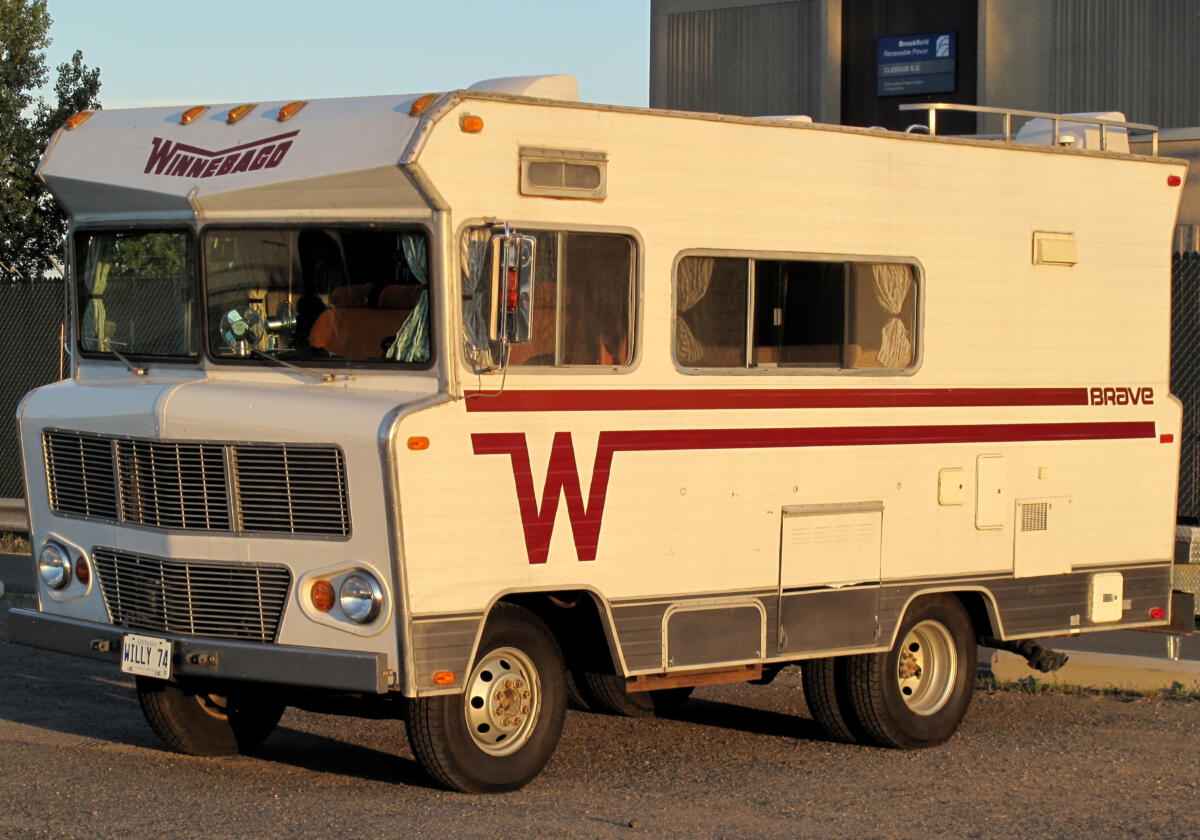
If there’s a single image that sums up 1970s RV travel, it’s a Winnebago Brave parked beside a picnic table.
Introduced before the decade began but hitting its stride in the ’70s, the Brave helped make motorhomes mainstream. Winnebago focused on affordability and mass production, putting motorhome ownership within reach of families who previously could only dream about it. By the early ’70s, “Winnebago” had become shorthand for motorhomes in general.
The Brave’s distinctive over-the-windshield eyebrow, boxy stance, and earth-tone interiors made it instantly recognizable. It wasn’t fancy, but it worked—and it helped normalize the idea that RV travel was for everyday people, not just retirees with deep pockets.
GMC Motorhome
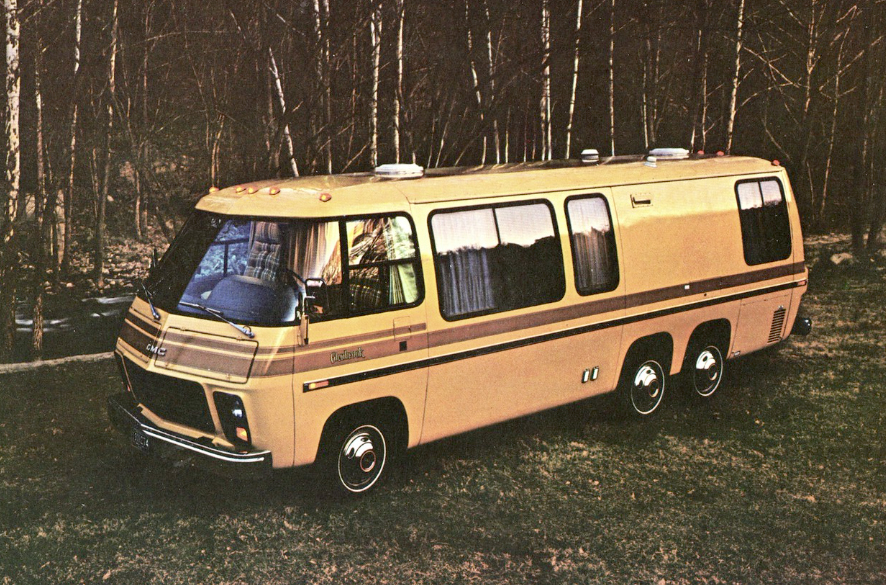
If the Winnebago Brave represented accessibility, the GMC Motorhome represented ambition.
Introduced in 1973, the GMC wasn’t a truck chassis with a box attached. General Motors engineered it from the ground up, using front-wheel drive components derived from the Oldsmobile Toronado. The result was a lower, sleeker motorhome with better handling and a flat interior floor.
Offered in 23- and 26-foot versions, the GMC stood apart visually and mechanically. Its design choices were so effective that an estimated 70 percent of the GMC Motorhomes built in the 1970s are still on the road today—a remarkable survival rate that speaks to both engineering and owner dedication.
Airstream trailers and early motorhomes

Airstream didn’t debut in the 1970s, but the decade helped cement its reputation.
The polished aluminum travel trailers were already iconic, but the introduction of the Argosy line—painted aluminum rather than bare metal—made the brand more accessible. Airstream also ventured into motorhomes during the era, carrying its aerodynamic design language into self-powered rigs.
While many manufacturers leaned into boxy shapes and bold interiors, Airstream stayed focused on efficiency, durability, and unmistakable styling. For buyers then—and now—an Airstream wasn’t about trends. It was about choosing something that would outlast them.
Apollo Neptune motorhome
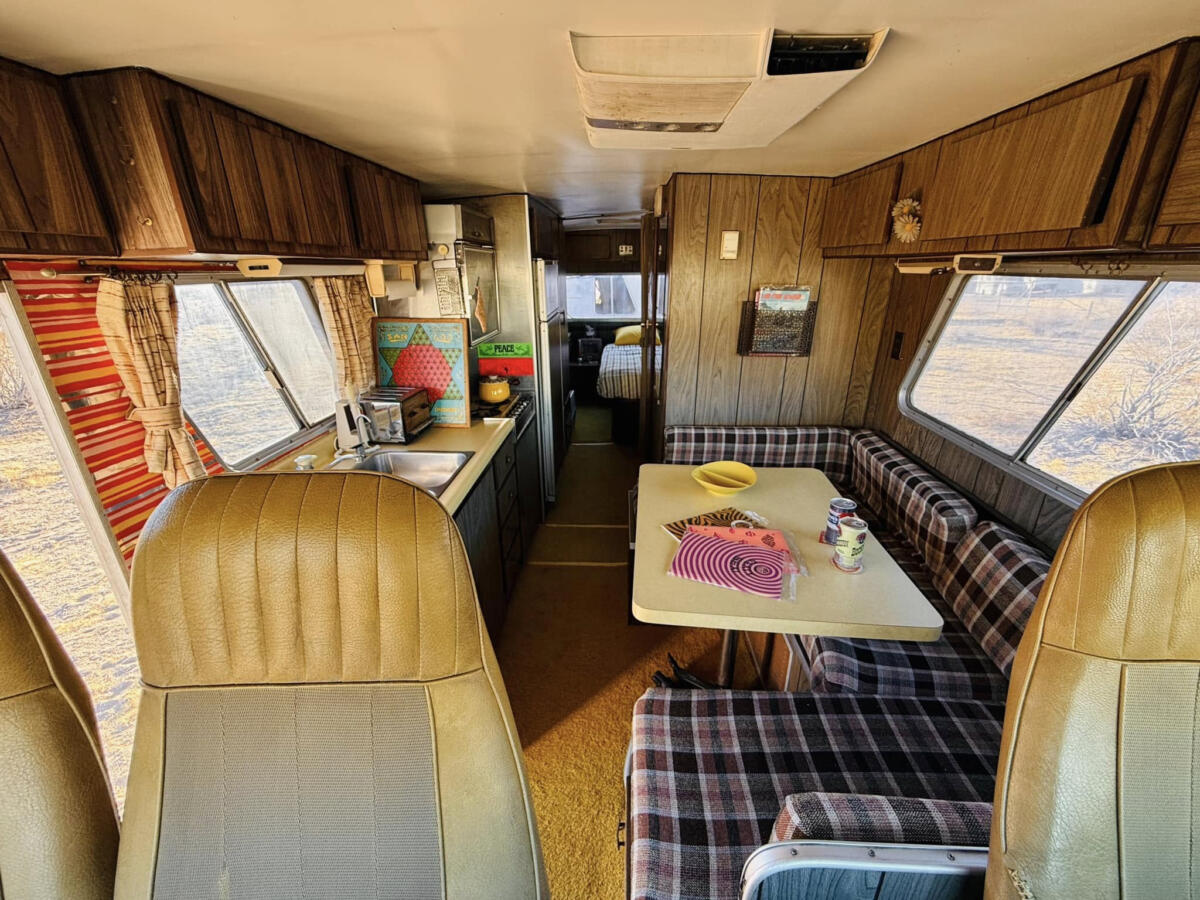
Not every influential 1970s motorhome came from a brand that survived the decades.
Apollo Motorhomes, based in California, produced the Neptune during the early 1970s. It offered family-friendly Class A layouts with kitchens, bathrooms, dinettes, and generous storage—exactly what many buyers were starting to expect from a motorhome.
Apollo leaned on celebrity appeal in its marketing, including ads featuring Bob Hope, positioning the Neptune as a comfortable and aspirational way to travel. The company faded by the mid-1980s, but surviving Neptunes remain reminders of how crowded—and creative—the RV marketplace became during the 1970s boom.
Volkswagen camper van

The Volkswagen camper didn’t start in the 1970s, but it came to define the decade’s lighter, freer side of RV travel.
Bay Window buses and Westfalia conversions turned compact vans into rolling bedrooms and kitchens, often complete with pop-top roofs and fold-out beds. These weren’t rigs for big families or long-term living, but they offered unmatched mobility and a strong sense of independence. Just ask any surviving hippie today.
The VW camper’s influence extends well beyond nostalgia. Its emphasis on compact design and flexible living space helped lay the groundwork for today’s campervan and van-life movement.
Why they still matter
By the early 1970s, RV production had exploded from a niche industry into a mainstream one. What began with a few hundred motorhomes per year in the early 1960s grew into tens of thousands annually. These five rigs sit squarely at that turning point.
They weren’t efficient, and they weren’t perfect. But they proved that the road itself could be the destination—and that RV travel didn’t have to be luxurious to be meaningful. In an era of rising prices and increasingly complex rigs, that idea is finding new life.
RELATED
- Enjoy vintage RV eye candy from the Oregon Vintage Trailer Rally
- If you see these valuable vintage RVs, buy them!
- Tour a 1987 vintage, classic Cadet fiberglass travel trailer
- Using Facebook Marketplace to find amazing vintage RVs
- Visit the best vintage car and trailer museums in the U.S.
- Tour an original vintage 1960 Spartan Carousel trailer
- Tour a rare vintage fiberglass U-Haul travel trailer
RVT1250

In the 70’s we had a Winnebago Chieftain, I believe it was 26 ft with a Dodge engine. The bath even had a tub which was great cause we had 2 little kid’s. The best part was the drop down bed. A great MH that that made us some great memories.
A friend of mine is still using my old ’77 Commander, which now has around 90,000 miles on it. Similar paint scheme as the orange /white Winnnebagos, an interior like the Apollo, and it too was built in the L.A. area. Dodge chassis with the smooth running 440 c.i.d. motor
12,680+ GMC Motorhomes were produced, about 9,000 are currently located, 6,000 are road ready. Most parts are common GMC parts and available at your local parts store. Only 6 parts are not readily available. There are specialist suppliers.
I owned 2 1975 Avion upgraded models. Wish that I still had one, against wife issues.
In we bought a 1964 VW underpowered panel truck, 1250 cc opposed 4 cylinders.
We purchased it from a VW dealer in Beverly Hills. They sent it to a company who converted into a clever Camper. A sofa in back pulled out and the back rest flopped into place. The cushion tops were then even with the cushion over the flat rear engine housing to become a good bed. When the bed was back up as a sofa the space behind the couch was a toddler playpen. Behind the front seat next to the swing-out side door was an ice box. on across to the other side was a workspace and a little bit of storage and drawer underneath. A shelf on the side door could be raised when the door was open for a white gas Coleman stove
I’ve had a 1989 Toyota Sunrader, a 21 ft motor home for almost 4 years. I’ve been slowly fixing it up and replacing all the old appliances with newer ones. I’ve also installed a 3KW Solar Battery Storage system, with 2 permanent 200 Watt panels on the roof, and a 3rd that I deploy after I get set up, that I can aim at the morning or evening sun. This allows me to stay longer at remote sites, as long as there is enough sunshine.
I’m a little shocked that you left off one of the world’s most unique 60s/70s RVs, the Ultra Van. It came before all of the ones you show in your article and was truly unique and that it was an all aluminum (think airplane fuselage) 22 foot, air cooled, 6 cylinder, Corvair powered Class A motorhome. If you want to find out more about this fantastic motorhome, you simply have to go to http://www.ultravan.org.
The American clipper, 20 ft all fiberglass class c.
I full timed for many years in the 1970s in an older converted VW van with several hang gliders on the roof rack. Only rebuilt the engine once!