


Dear Dave,
When we have shore power, all systems work fine. But without shore power, the 12-volt system is inoperable. Both batteries are new with good voltage and test out fine. I know nothing about the converter or testing it. Hey, by the way… Merry Christmas! —Cal, 2017 23-foot Springdale by Keystone
Dear Cal,
There could be a variety of issues, all of which would point to the 12-volt DC house battery system. When you are plugged into shoreline power, 120-volt power is provided to the distribution center that has circuit breakers for the 120-volt AC appliances such as roof air conditioners, refrigerator, and outlets. It also provides 120-volt power to the converter or inverter/charger that provides 12-volt DC power to charge the house batteries.
The house batteries provide 12-volt DC power to components such as interior lights, roof vents, water pump, and all appliances that run on LP power. These are all protected with 12-volt automotive-style fuses that are typically located in the distribution center as well.
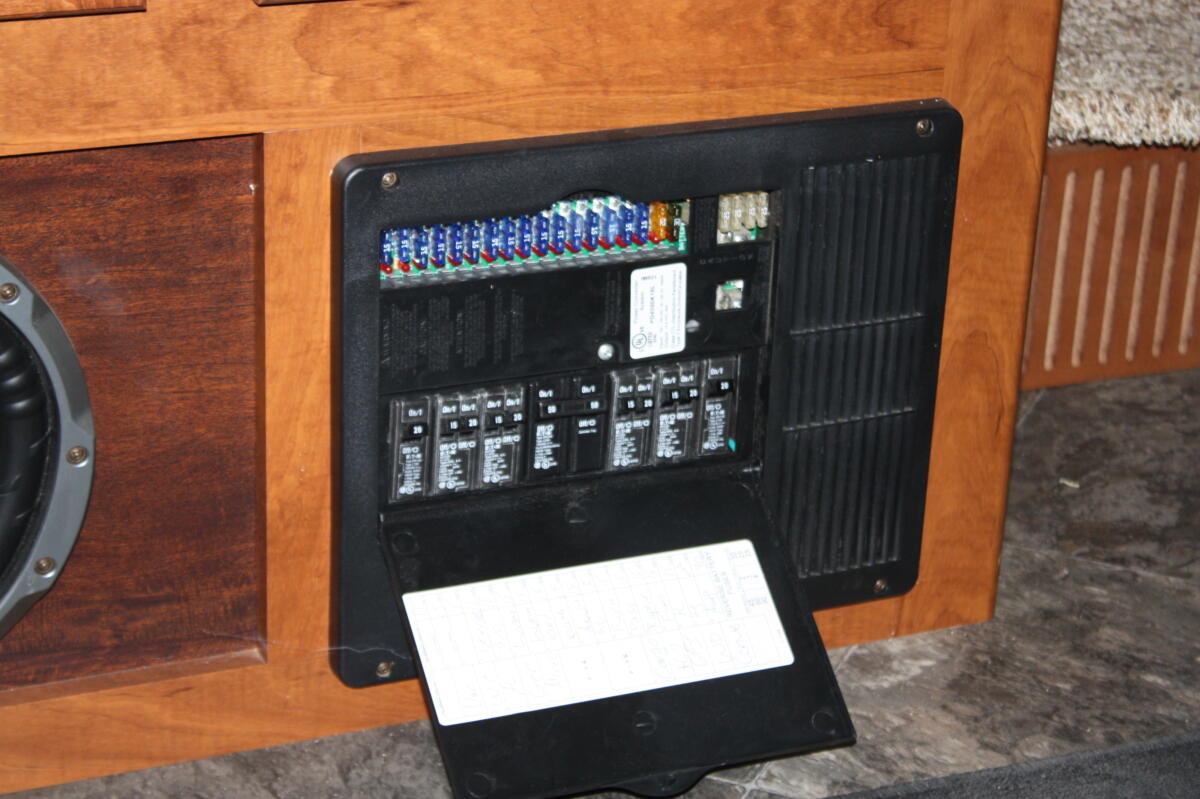
When you are plugged into shoreline power, the converter or inverter/charger provides a constant 13.2 volts to the batteries unless they are low, at which time it will increase to 13.6 volts. You could have bad batteries, a blown fuse, or the battery disconnect switch off.
Check the battery voltage
Disconnect the shoreline power and use a multimeter to check your battery voltage. Fully charged flooded lead acid (FLA) batteries should have 12.6 volts. Anything below 10.5 volts most likely will not provide enough power to run anything. If the batteries are low, connect the shoreline power and verify it is getting at least 13.2 volts. If not, the converter is not working. It could be the circuit breaker for the converter on the distribution center, an inline fuse on the converter, or a bad converter.
If the converter is providing power and the batteries are reading low, the batteries are either sulfated or have a dead cell and need to be replaced. Make sure you also check the positive and negative connection at the battery to ensure it has the cable from the converter to the posts and cable from the posts to the distribution center.
If you are getting voltage from the distribution center and the batteries read 12.6 volts when not connected to shoreline power, then check your battery disconnect switch. It can be located in the same compartment as the battery or in an underneath compartment. Typically, the battery disconnect will stop any 12-volt power going to components even if you are plugged into shoreline power. However, I just ran into a couple of situations where the converter was wired differently and did supply power. Never say never when it comes to RVs!
Check Battery Isolation Management solenoid
The last thing I would check is the Battery Isolation Management (BIM) solenoid, if there is one. This is a solenoid that allows power from your tow vehicle’s charging system to flow through the 7-pin plug to the house batteries to provide a charge while driving. It typically has a fuse that could also create an open circuit to the rest of the coach.
Using a multimeter initially to verify charging power from the converter and the state of charge of your house batteries when not plugged in will help isolate the next steps.
You might also enjoy this from Dave
Why do I need to keep the shore power cord plugged into the onboard electrical box?
Dear Dave,
When I purchased my (used) Coachmen Prism, I was told to keep the shore power cord plugged into the onboard electrical box except when plugged into shore power. It’s difficult to access and I really can’t understand why it’s necessary unless I’m using my onboard generator. It’s a 2008/2009 Coachmen Prism Class C with Freightliner diesel power. Any info would be appreciated! —Doug
Dave Solberg is a leading expert in the RV industry and the author of the “RV Handbook.”
Read more from Dave here.
HAVE A QUESTION FOR DAVE?
Send your inquiries to him using the form below.
##RVDT2284

To add if your RV has the dreaded WFCO converter then waste no time at upgrading it’s internals to a better system,before you find out the hard way. Progressive makes a drop in unit for WFCO that is easy to install and treats your expensive batteries better. I have installed several of these and each one has done it’s job as advertised.
If his Keystone is wired the same as my Forest River, he might look for a circuit breaker between the batteries and the distribution panel. On a boondocking trip I hooked up an inverter directly to the battery without turning off the battery disconnect. That caused the converter to try to charge the batteries while they were being discharged. The result was I got 12 volts if I hooked up the truck but nothing from the battery. The circuit breaker was fried. No one told me the breaker was there. Found it after I got home under a panel on the underside of the trailer.
Dave: Could this not be corrosion on the cables or at the central point ground from the batts to the chassis?
Thank you, Dave! Happy new year!