


Dear Dave,
I actually have two topics, one less involved than the other, perhaps. First, underbelly covering. I see it elsewhere, but mine bulges where the tanks are. I doubt it’s supporting the tanks as they would fall out. Aren’t most coverings flat coming out of the factory? What is this telltale sign? I’ll send my other topic later. —Paul, 2016 Open Road 5th wheel
Dear Paul,
Most tanks that are located below the frame rail or chassis on a travel trailer or 5th wheel are located between frame rails and supported by straps. I think it is a cost issue with most that some of the compartments have a solid floor, but the tanks are just suspended and typically the straps are very thin.
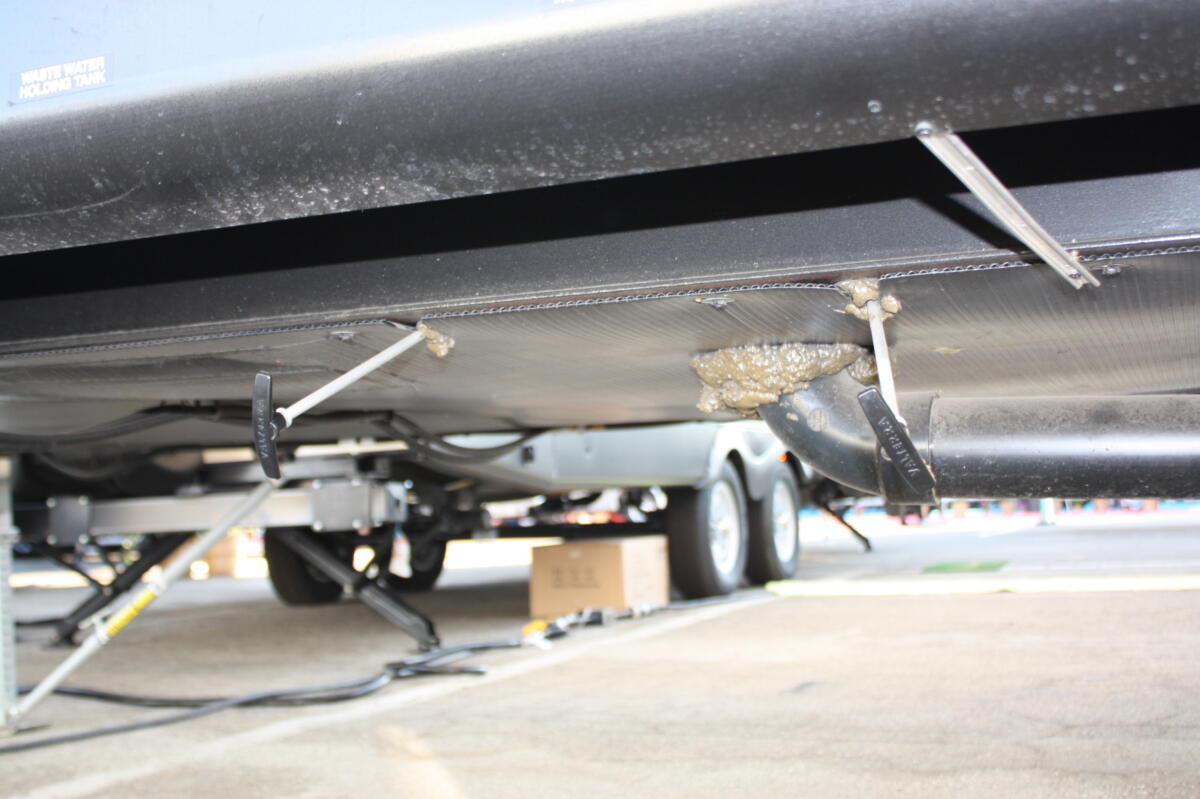
Then the RV manufacturer installs the cheap corrugated plastic and pumps as much expandable foam as they can. We have discussed this a few times in the past as readers have had leaks and valve issues that required them to access the tanks or valves and they have this mess to contend with.
Verify if the tank is bulging
The first thing I would suggest is to verify if the tank is actually bulging or just the corrugated liner. These have a tendency to expand with temperature changes and road vibration loosening at the contact points, which are typically just screws and sometimes a washer. If you fill the tank at least halfway and can push the plastic underbelly up with little force, you might be able to just add more screws to the plastic at the braces. Be careful to not drive a screw into a tank or plumbing.
Most likely you will need to install additional support to the tank. What I have seen used in the past is Unistrut, which is a U-shaped metal channel that is universal for making hanging brackets and wall brackets as well as slide rails. You can find 8-foot sections at your local home improvement store.

How to add support to the tanks
I would remove the plastic underbelly at one of the frame rails to ensure the straps are not broken and verify the tank is good. These straps can also rub into the plastic tank and create a leak. Get a Unistrut bracket and drill a hole in the frame rail to bolt the bracket and support the Unistrut rail on each side. Install the bracket to the outside of the rail. Bolt the Unistrut rail to the bottom of the bracket.

Run the Unistrut rail across the bottom of the corrugated plastic under the sagging tank and you will notice it most likely has a gap. Use a piece of ½” or thicker treated plywood cut to the size of the bottom of the tank to provide expanded support between the Unistrut rail and the plastic. Make sure the bracket and the rail do not interfere with leaf springs, shackles, or other suspension components.
You might also enjoy this from Dave
RV’s underbelly filling up with water. How do I find the source?
Dear Dave,
We may have a leak in the kitchen’s gray tank as the underbelly fills with water and it stinks up the whole place. We empty the tank every two days (used to be four) as I wash a lot of fruit and veggies. Lately we just leave it open. We drilled a couple of holes in the underbelly, about where the middle jacks are (under the office/bunk house slide area), to let it drain faster. …
Read the rest of L. Beal’s question and Dave’s answer.
Dave Solberg is a leading expert in the RV industry and the author of the “RV Handbook.”
Read more from Dave here.
HAVE A QUESTION FOR DAVE?
Send your inquiries to him using the form below.
##RVDT2374

Unistrut also makes a channel to beam strut clamp. Holds the strut to the lip of the frame. No holes need to be drilled.
Thank you, Dave! 🙂 Safe travels! 🙂
A great question I’ve had myself as I observe the bulging underbellies of towables. Thank you, Dave, for the explanation.
All of this is troubling. It’s pretty clear the industry would be very aware of this serious engineering weakness. We’ve all read horror stories of these tanks falling out. It’s incomprehensible that fresh, black, or grey tanks should be mounted on flimsy metal straps that can cut into the tanks causing leaks or severely sag and/or detach.
Surely some manufacturers do it right. Potential buyers need to add this to their due diligence checks before purchase.