

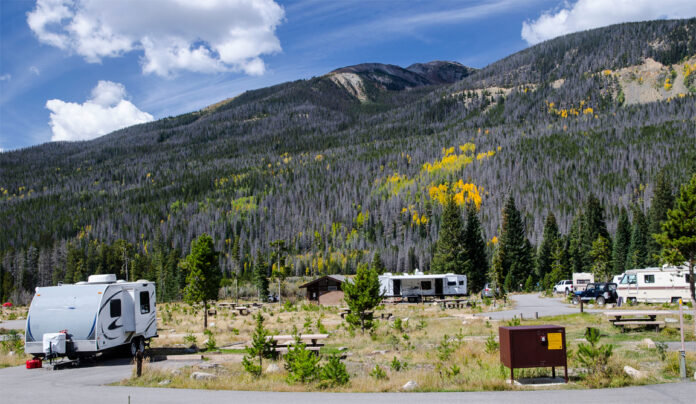
Here we go again. Another national park says it wants to push up the price of camping. This time, camp fees head up in Rocky Mountain National Park. Flashing back to John Denver, the Colorado Rocky Mountain high could refer to the cost to camp. It’ll go up nearly 30 percent, if the plan goes through.
The cost to camp may go up $10
The park is proposing a $10 increase to overnight fees at four reservation campgrounds: Moraine Park, Glacier Basin, Aspenglen, and Timber Creek. This proposed increase in summer fees would be from $35 to $45 per night. There is also a proposed additional increase of $10 for the new electrical sites. These are ones being constructed at the Moraine Park Campground. The proposed fee for these 49 electrical sites is $55 per night.
There are no fee changes to group sites. No changes are planned for the Longs Peak Campground which is a first-come, first-served summer campground. It has no water available. Winter rates will stay the same.
These proposed campground fee increases are based on comparable fees for similar services in nearby campgrounds. So says a park news release.
Why the fee jump?
Why the fee jump? “The proposed fee increases are necessary for Rocky Mountain National Park to improve and maintain high-quality visitor services,” says a park-produced press release. “While basic park operations are funded by direct appropriations from Congress, the recreation use fees collected by the park are used to support new projects and the ongoing maintenance of park facilities that directly enhance the visitor experience.”
How the fees are being used
The park would take advantage of federal law that allows it to collect entrance and amenity fees, retaining 80 percent of the fees collected. Some of the projects funded through the collection of entrance station and campground fees at Rocky Mountain National Park include:
- Hazard Tree Mitigation: The park is among many areas along the Rocky Mountains where trees have been dying from a beetle epidemic. Recreation fee monies have funded extensive mitigation of hazard trees in or near developed areas and other popular park facilities, such as campgrounds, parking lots, road corridors, housing areas, and visitor centers.
- Campground Improvements: The park continues to use recreation fee monies to replace tent pad log linings, fire rings, maintain walking paths, and repair and replace picnic tables.
-
Daniel Mayer (MAV) on wikimedia.org Hiking Trail Repairs and Improvements: Many hiking trail repair projects have been funded by recreation fee monies. These include repairing washed out sections of trail, the installation of bridges, and the installation of vault toilets at heavily used trailheads.
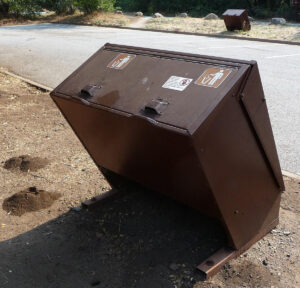
- Bear Management: Park entrance and campground fees help keep bears wild at Rocky Mountain National Park. Thanks in part to fee dollars collected over the past 20 years, 100% of the park’s garbage cans, recycling bins, and dumpsters are now bear-resistant. The park has also gone from zero food storage lockers to 352. Your recreation fees also help support visitor education programs focused on black bears.

Got any thoughts on the cost to camp? The park is accepting public comments on the proposed fee increases. Click here to comment.
##RVT1154b

Again, the cost of doing business with the federal government keeps going up and up. Thank you guys for the report.
Try doing business with privately owned parks-“KOA” for example. The rates quoted are a bargain. “You get what you pay for” To maintain the parks you need money and I have no problem paying to improve and maintain.
Thank you, Russ and Tina! 🙂 I don’t mind fee increases if/when they are plowed back into the park, whether by maintaining the place, or enhancing it. Having said that, this likely has no material effect on our travels. Colorado isn’t a frequent destination or often part of our path of travel. Thanks again and safe travels! 🙂
I thought it just went up $20 last year!