

By Chris Epting
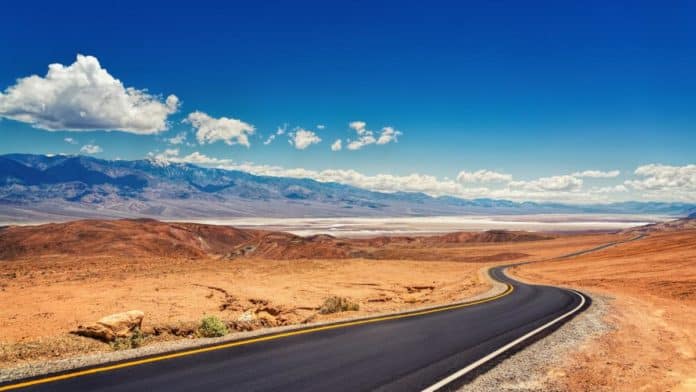
I think that it’s time to rename Death Valley. Yes, I know the moniker has all that great foreboding mystique. Yes, the name itself is probably what draws many of the visitors in the first place. After all, when you tell people you’re going to “Death Valley” it’s a statement – a marker that says you’re interested in exploring the edge.
But despite the fact that the name was inspired by the many who sought to cross the barren bowl on their way to the goldfields of California, only one death was recorded during the famed ’49 Rush.
And besides, though not obvious at first, Death Valley teems with life of all sorts. Much of it is stealthy and subtle, but it is there, impressive and often surreal and unforgettable.
Desert creatures and pupfish

There are many places to explore in Death Valley – many places that do not reveal much of the stubborn, evolved life forms that tend to live more in the shadows. You’ll certainly see plenty of ravens soaring around the fan-shaped mountains of Golden Canyon. Zebra-tailed lizards will be darting about near the breathtaking lookout known as Zabriskie Point. And jackrabbits will be scooting in and out of the brush around Scotty’s Castle (whether or not tourists can get there).
Raptors will soar throughout Ubehebe Crater and Chuckwallas will squeeze in between the seemingly endless crusty salt formations that stud the “Devil’s Golf Course.”
You expect those things in the desert. But fish?
Large lakes in Death Valley
Thousands of years ago in the Pleistocene era, there were large lakes (including Lake Manly) in Death Valley. As the bodies of water dried up, small streams and pools managed to survive. The pupfish (named for the way they frolic in the water) were trapped in these shrinking pools, selected by evolution to survive.
There are a number of types of pupfish in Death Valley, each stranger and rarer than the next. These species include:
- Saratoga pupfish, located at the south end of Death Valley.
- The highly endangered Devil’s Hole pupfish, found 37 miles east of Furnace Creek, in western Nevada.
- Cottonball Marsh pupfish, found in Cottonball Marsh on the west side of central Death Valley.
- The famed Salt Creek pupfish, located in Salt Creek in the central part of Death Valley.
Easily visible for just a few months each year, the inch-long fish can survive in water temperatures that exceed 112 degrees F. In fact, the tiny fish are so adapted to warm water that they must burrow into the mud and become dormant when the shallow stream becomes cold in the winter. Another hurdle these fish face is high salinity. Pupfish can actually live in water that’s up to three times saltier than ocean water.
Watching the pupfish in the crystal-clear pools along a boardwalk is a thrilling bit of business; a real-time evolutionary study. They represent life at its finest – in a place where we typically do not associate life at its finest.
Badwater Basin
Similar charms also exist at Badwater Basin, the lowest point in North America, 282 feet below sea level. The spring-fed pool of briny “bad water” located near the road before the vast white expanse of salt-covered ground is home to the Badwater snail, a minute marsh snail that also has adapted to the harsh environs.
And adaptation is everything in Death Valley. The plants adapt, the animals adapt, and we adapt for our visits, hauling our water and food and measuring our paces as we search for solitude in the lonely, shimmering heat.
Flowers in the desert
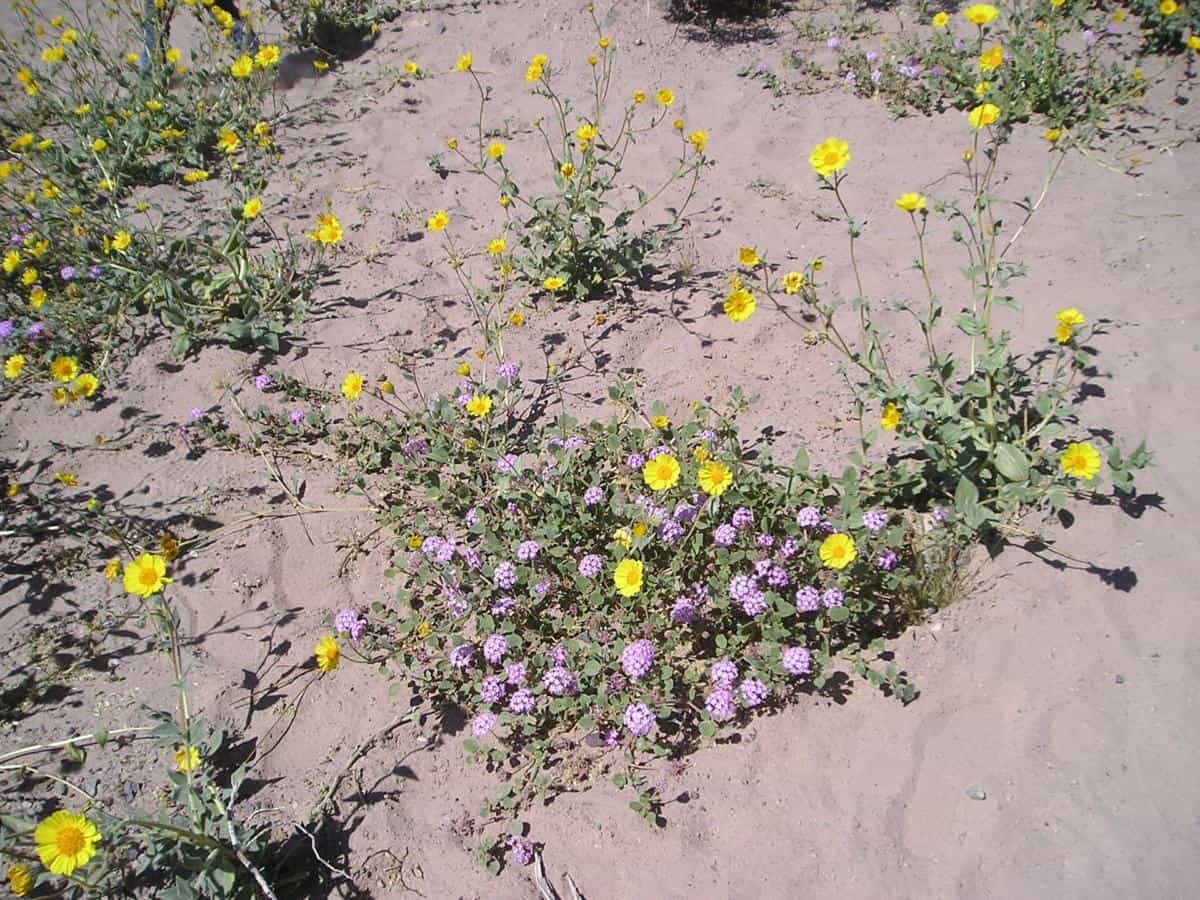 Death Valley, after even a short rain season, presents colorful life if you know where to look. Desert Dandelion, Brittlebush, Prince’s Plume, Desert Paintbrush, Fremont Phacelia, Mojave Aster, Indigo Bush and Desert Globemallow are treats for the eye and the spirit. Explosions of color carpet various parts of the valley, artfully reminding us that life is where you look for it.
“We escape there to remove ourselves from the life we know, and in turn, we encounter life we want to know.”
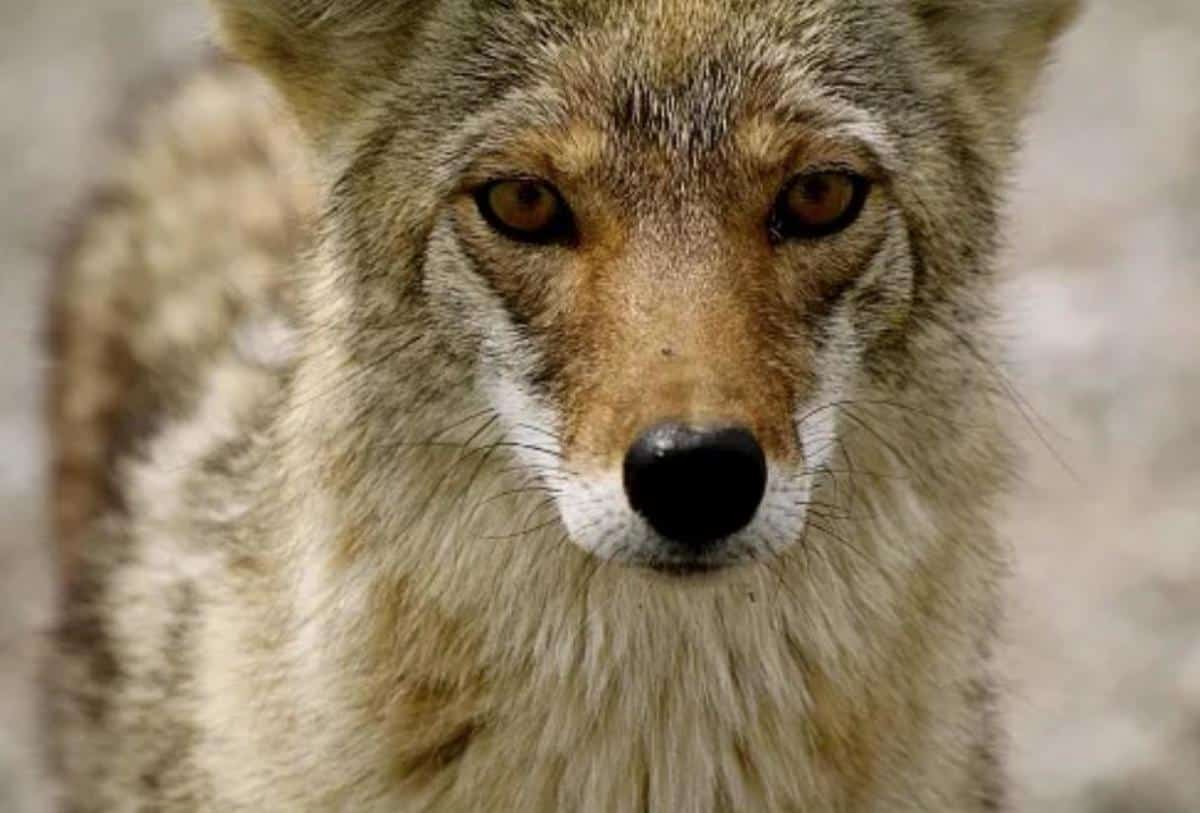 And then you sometimes get the unexpected moment that forever erases any sense of fear or intimidation in Death Valley. For us, it was a tired-looking coyote that approached us as we meandered back from looking at wildflowers. Studying us from just several feet away, she (I think it was a she) seemed bashful, curious, suspicious, and bashful again, all in the span of about 15 seconds. For several minutes she kept us company. Eyeing us. Licking her chops. Then she wandered off into the salt pan, in search perhaps of food, water, or a cool place to rest.
Death Valley, for me, is a life-affirming place. We escape there to remove ourselves from the life we know, and in turn, we encounter life we want to know. The wild, the threatened, the rare and obscure, all thrown together in a pocket of parched, lonely planet bliss that bears a scary name.
It’s not a scary place
But it’s not a scary place at all. It’s holy and naturally sacred, a testament to those that can survive the scorching brutality.
“What makes the desert beautiful is that somewhere it hides a well,” said de Saint-Exupery. This is true. But when it comes to Death Valley, the well may not even be hidden. It is the life before you; it is the pulse in the warm wind, in the sand, and in the billions of stars overhead as you lay down to sleep.
I wish they’d rename Death Valley.
Chris Epting is an author, award-winning journalist/photographer and dedicated road tripper. His best-selling books include James Dean Died Here (the locations of America’s pop culture landmarks), Roadside Baseball, and The Birthplace Book, along with many others that remain popular with many travelers and RVers throughout the country and world. You may learn more about Chris at his author’s site, www.chrisepting.com.
Thank you, Chris! Nice story, easy to read/follow, and packed with information presented in an enticing and interesting way. I enjoyed this. Living far east of the Mississippi River, we rarely see the west or try to visit it. But, you have piqued my interest sufficiently to lobby for including Death Valley in any RV trips that otherwise bring us within 100, 150 miles. Thanks again and safe travels! 🙂
What a great read, Chris! Thanks so much for all of that great information. Your passion for this area is evident in your writing. Please, RV Travel newsletter staff, please continue to post more articles like this.
Great article Chris! Having grown up in the area, I found your assessment of Death Valley similar to my own. I think many interpret the name to be “void of life” when the truth is one must actually be full of life to live there. It’s a struggle for the feeble and weak at best. The advent of air conditioning, paved roads and durable transportation has certainly tamed people’s perspectives, but make no mistake, Death Valley is still deadly to the reckless and foolish. Of recent notoriety, a family of 4 from Germany learned that the hard way.
And to that I’d say, would you go there if they renamed it Live Valley? That’s the same reason movie makers don’t make G rated movies, they are box office failures. Society as a whole doesn’t want to see that so they shoot one scene that gives a R rating and people flock to it, disappointed of course when there’s very little sex or violence but that’s what this country has lowered themselves too.