


Here are some interesting things about Henry Ford you may not know.
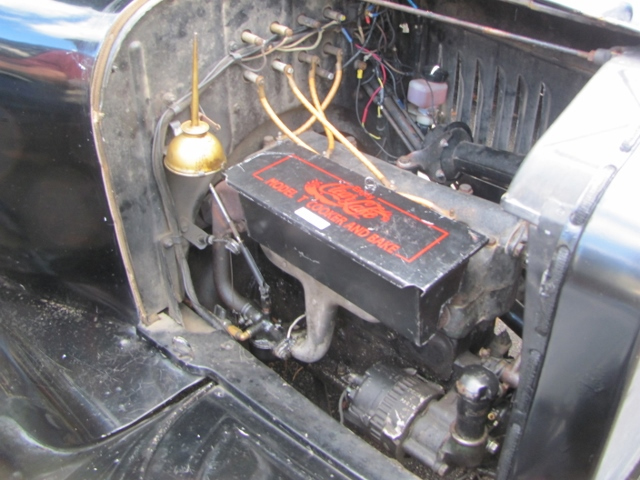
Did you know that the Ford Motor Company developed cooking tools for the Model A, even marketing an early “Blackstone”-type cooking plate that hooked to the engine manifold. Our local Model T Club held a national rally in Clear Lake, Iowa, and the Friday night cruise ended at the Surf Ballroom with a banquet cooked along the cruise route.
Several members had the innovative cooking apparatus on their engine. They cooked steaks, baked potatoes, and even baked beans. It was called a Manifold Cooker and would slide onto the engine manifold and cook just about anything that could be cooked in an oven.
There are several knock-off versions available on various websites.
Henry Ford camping trips and the Ford Camp Cooking Kit
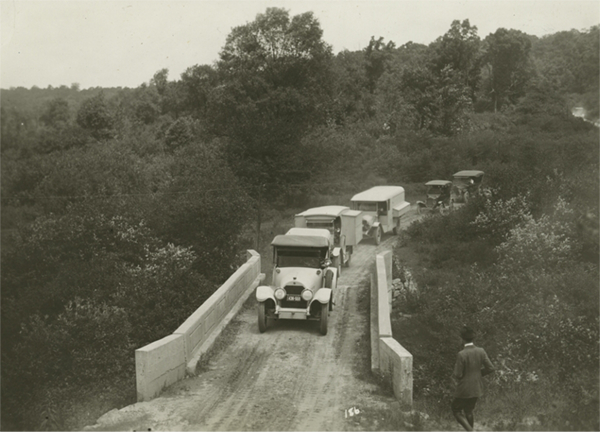
Henry Ford would take legendary camping trips in Model A and Model T cars adapted with tent campers that could be considered early motorhomes. The trips would include Thomas Edison, Harvey Firestone. and John Burroughs; they called themselves the Vagabonds.
They started in 1915 and took annual trips until 1924. These could also be considered the start of what today is called “glamping,” as the outings would include servants, chefs, cars filled with food and provisions, and they were well organized.
In 1919, the Vagabonds hit the road with 50 vehicles including a car designed by Ford that had a gasoline stove and icebox designed for cooking by master chefs. Another car was built on a truck chassis and was designed to carry tents, cots, chairs, and electric lights. One trip even featured a 24-foot round table with a Lazy Susan swivel that seated twenty.
During these trips, the Ford Motor Company designed a camp cooking kit complete with a charcoal grill and utensils. It was marketed only through Ford dealers.
Charcoal briquettes hit the market
Ford automobiles required a large amount of wood for frames and other components, some as much as 100 board feet. A relative of Henry Ford was tasked to purchase forest land to supply the wood. Consequently, there was an enormous amount of waste wood which was brought along on the camping trips to use as firewood. Henry Ford was concerned about the amount of wasted wood and also was looking for a way to create a convenient way to bring this wood on camping trips.
Although the process of burning wood to make “char” dates back hundreds of years, a University of Oregon chemist named Orin Stafford created a method to make pillow-shaped lumps by combining the charred wood with tar and cornstarch.
Thomas Edison designed a factory to produce the charcoal briquettes for the Ford Motor Company. They were sold exclusively through Ford dealers as a “Picnic Kit” with the briquettes, a grill, and “Ford Charcoal”. This was several years before backyard BBQs and Weber grills.
In 1951, an investment group bought the Ford Charcoal brand and named it after Henry Ford’s relative, Edward Kingsford.
You might also enjoy this from Dave
Understanding your RV’s sewage system: Proper black and gray tank upkeep and maintenance
This is Part 6 of Dave Solberg’s “Everything you need to know about RVing” series. Today, Dave looks at RV sewage systems and tells you just about everything you need to know about them. This is useful whether you’re going on your first or 101st RV trip.
Dave Solberg is a leading expert in the RV industry and the author of the “RV Handbook.”
Read more from Dave here.
##RVDT2436

Who knew? Very interesting article Dave! Thanks for sharing.
Stay safe, Joe
Excellent article, Dave. Very interesting.
I’ll bet those tar laden briquettes would have a “WARNING! MAY CAUSE CANCER IN THE STATE OF CALIFORNIA” label on them if still around today! 😅😂🤣
The sale of charcoal lighter fluid has been banned in Cali. You may have to use tar laden briquettes to get them started.
Great story Dave! Thanks for sharing it.
We stayed in a campground, 2 years ago, a couple of miles from the Kingsford factory(?), Unfortunately they didnt have any tours of the place.
Just what your body needs
Tar and flour mixed together to form charcoal cubes. No added poison in LUMP charcoal
A company in Wisconsin used sulfite liquor and flour to bind basically dust into charcoal bricketts
Lump charcoal has no added ingredients
Great read Dave! Thanks for that interesting tidbit of history!
Thank you, Dave! 🙂 Interesting story! Thanks for the information! I don’t know why this was flagged as an editorial, but probably due to the categories RV Travel has. Thanks again, have a great day, safe travels, and safe stays! 🙂
Ah!, the day I could stop by my Ford Dealer and pick up charcoal and picnic supplies, those were the days. I can’t remember the exact gismo, but in college a fellow in my dorm had something to cook on the engine as he went down the road. Ha, in college we “cooked up” a lot of things.
Gee why didn’t gm and chrysler-dodge-plymouth develop things like Ford did?