

Could highways charge your electric RV while you drive?
What if an electric motorhome didn’t need long charging stops — because the highway itself kept the batteries topped off while you drove? Ditto electric pickups and other tow vehicles.
A future that looks just like that moved a step closer to reality recently in Indiana, where engineers built a stretch of U.S. highway that successfully charged a heavy electric truck traveling at highway speeds.
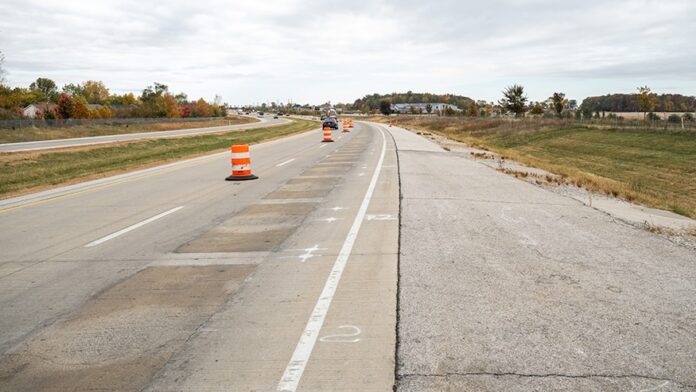
On a quarter-mile stretch of U.S. Highway 52/231 near West Lafayette, Purdue University and the Indiana Department of Transportation embedded coils under the concrete.
While the test involved a commercial vehicle, the implications for RVers — especially those observing the rise of electric motorhomes — could be profound. If scaled up, this technology could one day reduce range anxiety, shrink battery sizes, and make long-distance electric RV travel far more practical.
If it can charge a “heavy-duty truck,” then why not a motorhome — or any electric vehicle for that matter?
How it works
The concept is called dynamic wireless power transfer, and it works a lot like a giant version of a wireless phone charger — but built into the road.
Here’s the simple version:
-
Coils are embedded under the pavement of a highway lane.
-
When electricity flows through those coils, they create a magnetic field.
-
Vehicles equipped with matching receiver coils underneath can capture that energy while driving.
-
The power goes directly into the battery or propulsion system — no plug, no stopping.
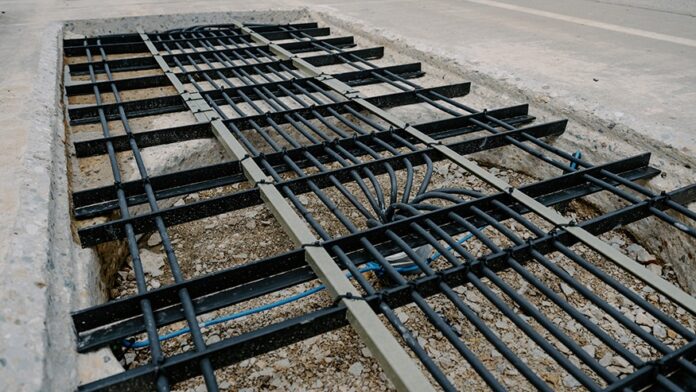
The Indiana Department of Transportation embedded these Purdue-designed coils before covering them with concrete highway pavement. The coils transmit power to receiver coils attached to the underside of an electric heavy-duty truck. (Purdue University photo/Kelsey Lefever)
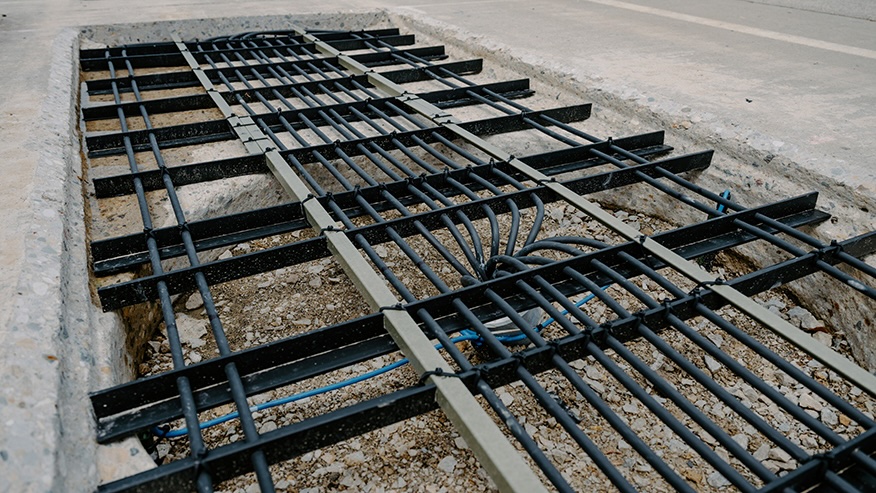
In the Indiana test, the system delivered nearly 190 kilowatts of power to a moving electric truck at 65 mph — enough energy to power dozens of homes, or potentially keep a large electric RV cruising without draining its battery.
For RVers, the implications are huge. Today’s electric motorhomes face two big hurdles: range limitations and long charging stops. Roads that charge vehicles while driving could shift how we plan trips:
- Smaller batteries, less weight: If your RV could top up on the go, manufacturers wouldn’t need huge battery packs just to reach distant campgrounds. That means less cost and weight — and more payload for gear and supplies.
- Reduced range anxiety: Extended journeys could feel more practical if highways gradually kept your battery up while cruising between destinations.
- Universal EV support: Although the technology is proven here on a heavy truck, the same system is designed to work for anything from semis to passenger vehicles — and suitably equipped motorhomes, too.
Coming soon?
Don’t hold your breath. This is still early-stage infrastructure, and widespread deployment would require major investment and standardization. But for the first time, the technology has been proven on a real U.S. highway at real highway speeds — not just in a lab.
For RVers, it’s a glimpse at a future where electric motorhomes aren’t limited by plugs, campground pedestals, or charging detours — and where the road itself becomes part of the power system.
RELATED
- GM shuts down BrightDrop electric vans amid slow EV sales
- Meet the Coachmen RVEX, the first all-electric Class B motorhome
- Thor promises 450-mile range on new Embark electric motorhome
- Jayco’s new Embark EV motorhome is not fully electric despite the hype
RVT1240b

Highway inductive charging is certainly technologically possible. However, the very high cost of installation plus other electronics to identify each vehicle and the amount of power being consumed would also have to be designed and built in. This could only exist on high occupancy highways and would not likely exist on secondary and rural roads often traversed by RVs. I think for RVs the only viable system for electric propulsion will have to be hybrid in which an on-board engine provides battery charging. However, if there were electric highways the onboard engine could take a break.
Is there a link to a published report?
Hi, Michael. Here’s a link to an article from Purdue University with lots of links included which go to much more information. Have a great day. 😀 –Diane at RVtravel.com
Let’s get the road ways in better shape first. My fifth wheel is falling apart with all the rough roads.
Yeah we can’t keep the roads topped with concrete or blacktop now
First big pothole and it would probably damage the electrical infrastructure
I don’t understand why they can’t have generator /alternator built into the drivetrain of vehicles that would drive the wheels and charge a smaller battery to get the vehicle moving from a stop.
The devil is in the details as Gary pointed out. How much will just the highway itself cost? The power grid infrastructure connecting to the highway cost? The increased electricity use for this cost? Repairs on cost? The disrepair of our current roads and the increased cost of this makes me skeptical this will be widely used anytime soon.
I can’t even imagine the Tolls!!!
The government is failing at maintaining plain old pavement. I can’t imagine the cost of maintaining this.
Just a question? Would this give off heat? If it does that would be a benefit in northern climate in winter.
In November of 23, Michigan unveiled the nation’s first charging stretch of roadway in Detroit. It’s a quarter mile, just like Indiana’s.
Thank you for the anecdote, RV Travel. Too little information to currently speculate on whether this implies that highways, particularly interstates, will be maintained better if this gets adopted more broadly. Given how the winter pounds and destroys northeastern and midwestern roads, I do suspect this will arrive there, where roads get repaved or rebuilt with some frequency, first. I also wonder where the money to fund such projects will come? Magically appear? Have a grand 2026 and safe travels!
What will all that electromagnetic radiation do to vehicle electronics? GPS receivers will go crazy and most likely mess up cell phone receivers. Will be fun to watch all those self driving vehicles go in every which direction. And roads fall apart after icing and saltings, but all that metal will disintegrate faster than the road. I imagine road taxes will quadruple to pay for the electricity and maintenance. plus the high voltage power system and substations every 40 miles to deliver a constant power source, which environmentalist will object to.
I agree. Here in AZ the highways fall apart faster than the state is willing to fix them from the summer heat.
This is not economically sound but it is fine with me as long as those electric vehicles pay for it. Frankly, it is time we stop throwing money down black hole called electric vehicles. If they can stand on their own, fine but don’t divert funds from other sources.
Keep dreaming. The Flintstones approach will be working long before the Jetsons get here.
I’d like to see a discussion by the engineers that are designing this on the safety of the proposal. Seems like it would take a lot of power to sustain all of these electromagnetic fields. Much of which would be spent just overcoming the resistance in the pavement and metallic car parts not associated with charging. We are already facing a severe energy shortage when those huge data centers come on line. Plus I would not want to pass myself thru these fields 1000s of time in a single trip. There is a reason those high voltage lines are built so high in the air and far away from foot traffic. Their fields are huge.
Never mind the 50% heat loss between the coils and the receiving vehicle. The electricity for this (just as electrifying all vehicles) doesn’t exist.
This is a: Even though it can be done, should it be done?
As long as I don’t have to pay for it if I don’t have an electric vehicle. Perhaps they can put this advancement in the HOV lane and charge a fee to those entering the lane via EZPass or the like.
Oh, you’ll be paying for it because the cost of building and maintaining it would be so obnoxious on a per user basis that there’s no way that the end users would voluntarily bear the cost. As usual, it would have to be subsidized via the black hole.
The government can’t even manage maintaining pavement. I can’t imagine what it will cost us for them to maintain thousands of miles of this. Never mind the 50% heat loss on the energy transfer between the coils and the vehicle. (Just like wirelessly recharging your cell phone battery)
Fun idea, but in reality this is another pie-in-the-sky experiment paid for via a government grant that will never see the light of day.