

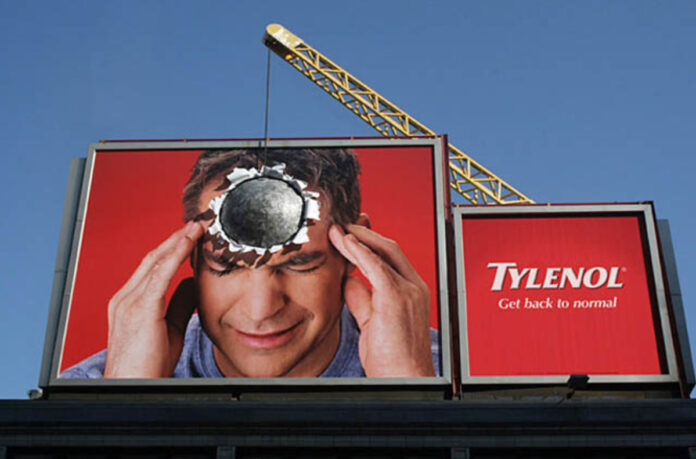
Billboards are a common scene along American highways. They capture our attention with their bold messages and striking designs. Have you ever wondered how these towering advertisements originated? Me too! Here’s a brief history of the beginnings and evolution of billboards, along with some of my own personal favorites.
The origins of outdoor advertising
Outdoor advertising existed long before the rise of the billboard industry. Local merchants created signs or posters and placed them on their buildings or fences to alert passersby to the items they had for sale. It was a simple yet effective way to attract customers.
Folks still use small signage, similar to the very first “billboards,” to advertise. Here’s one person’s yard sale poster.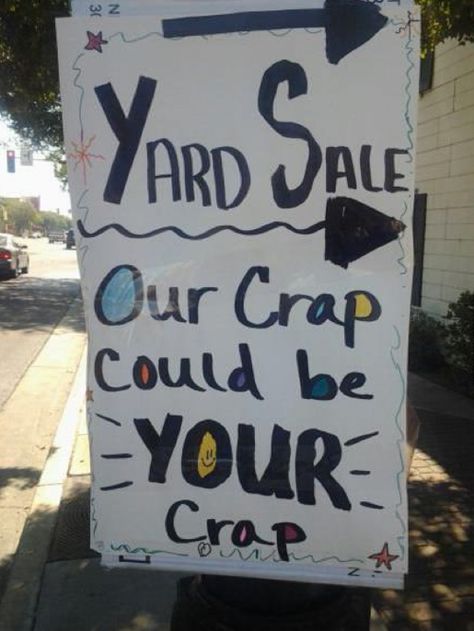
The birth of billboards: The 1830s
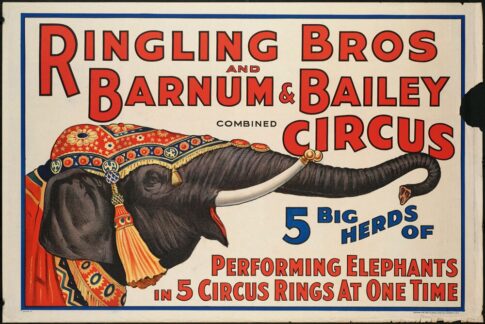
The billboard as we know it today began to take shape in the 1830s. The very first billboard advertisements—posters over 50 square feet—were created by artist Jared Bell in New York to advertise Barnum & Bailey’s 1835 circus. These early billboards were labor-intensive and drawn or painted by hand.
Traveling shows

Throughout the 1800s and early 1900s, billboards became a popular way to advertise traveling shows like Buffalo Bill’s Wild West, carnivals, and vaudeville acts. These advertisements were eye-catching and aimed to attract large crowds to the shows.
Significant billboard milestones
- 1867: The first instances of people leasing space for billboards were recorded.
- 1870: Nearly 300 small sign-painting and bill-posting companies existed.
- 1872: The International Bill Posters’ Association of North America was formed in St. Louis.
- 1889: The “twenty-four-sheet” billboard was introduced at the Paris Expo. These billboards were 20 feet by 9 feet, consisting of 24 sheets put together to create a large image, becoming the standard format for billboards.
Standardization
In the early 20th century, the need for standardization in billboard sizes grew as automobile travel increased. By the 1920s, the Outdoor Advertising Association of America (OAAA) was formed. This organization set standardized dimensions for billboards, which made it easier for advertisers to create and distribute their messages nationwide.
The impact of automobiles
- 1905: The introduction of the Model T made automobiles affordable, increasing American mobility. There were approximately 78,000 motor vehicles in the U.S. in 1905.
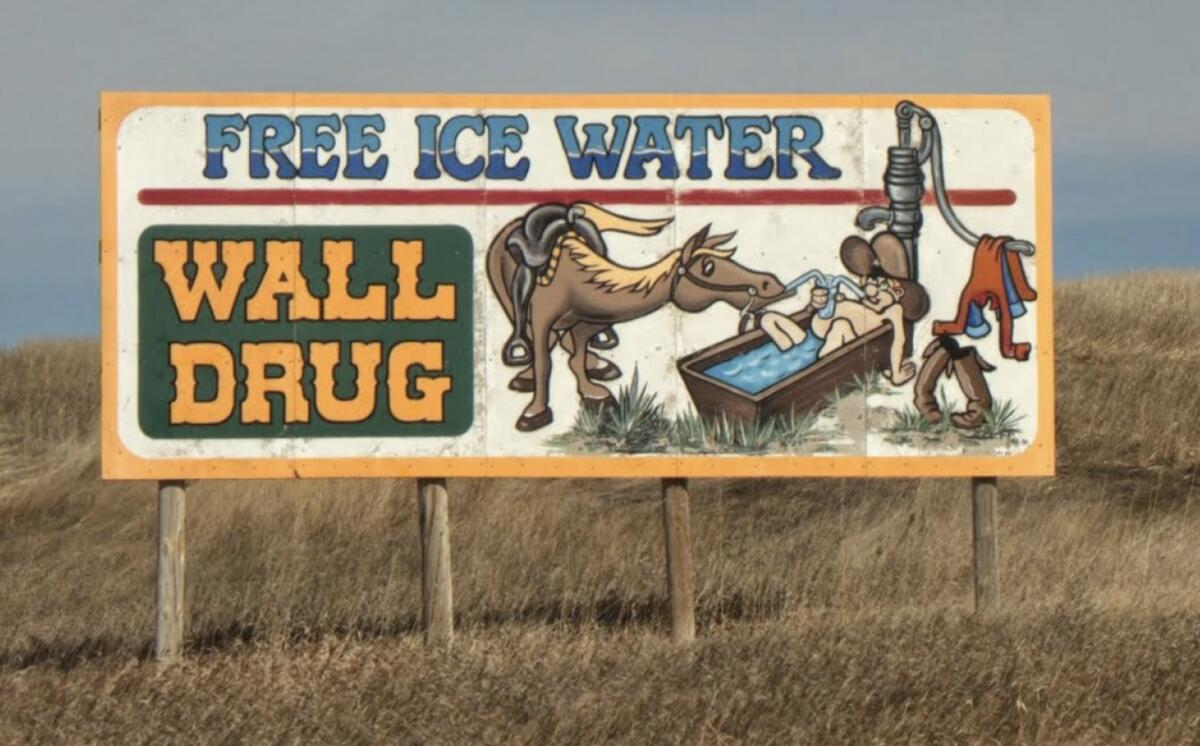
- 1931: Ted Hustead purchased what would become Wall Drug in South Dakota.
- 1940: By this year, the number of motor vehicles had surged to over 27 million.
The “Golden Age”
The construction of the Interstate Highway System, enacted by President Eisenhower in 1953, further accelerated American mobility, creating 49,000 miles of highways. This era, often referred to as the “Golden Age of Billboards,” saw a boom in car travel. Billboards became larger, more colorful, and strategically placed along highways to capture the attention of travelers.
In 1965, the Highway Beautification Act was passed by Congress. This act limited the number of billboards along the highway. It also regulated the size, placement, and lighting of billboards. Although many believed that the Beautification Act might mean the end of billboard advertising, companies simply adapted to the new rules and billboards continued to thrive.
Technology
With the introduction of vinyl in the 1980s and ’90s, billboards could now feature brighter colors and more durable advertisements. Printing technology advanced, making it easier and cheaper to produce high-quality, eye-catching billboards.
Digital revolution
Today, billboards have entered the digital age. Digital billboards can display multiple ads, rotate through images, and use animation. These modern billboards allow for real-time updates and are often connected to the internet, displaying anything from current weather conditions to live sports scores. Digital billboards can feature website URLs, social media handles, or QR codes, encouraging further engagement and enabling measurable results.
The future of billboards
As technology advances, the possibilities for billboards are endless. We might see even more personalized and interactive advertisements, such as billboards that change based on the type of cars passing by or ones that interact with smartphones to offer special deals.
Note: Today, billboards are banned in Alaska, Hawaii, Maine, and Vermont.
Do you have a favorite billboard? Tell me about it in the comments below.
RELATED
- Sign promising free Ice water was a tourist magnet for Wall Drug
- The history behind Wall Drug – America’s favorite roadside attraction
- Ways to be a more attentive RV driver
##RVT1167

We miss Burma Shave on the blue highways.
Yup. I remember those as a kid when my folks would drive way up into Wisconsin for the yearly fishing trip. It was my ‘job’ to read them as we passed.
Nothing like the old Burma shave signs in flat land country. But thanks to a lady Bird they all disappeared.
Maybe not Lady Bird, but surely the birds did their number on those signs.
Oh, for the Mail Pouch chewin’ tabacee signs covering entire barn sides or roofs – OR – “SEE ROCK CITY!” on every barn roof. (Mid-Westerners will recall).
Thank you, Gail! 🙂 Here in the southeast two Chattanooga, Tennessee tourist attractions paint barns to invite visitors to “See Rock City,” or “See Ruby Falls.” As a child (1960s) and later as a young adult (1980s) I visited Rock City with my parents, but never Ruby Falls. More recently, when a grad school friend from Minnesota visited earlier this year, I took him to see Ruby Falls. It was worth the price of admission, but I’m a native and what else would I say? 🤔😯😉 Thanks again, have a great week, safe travels, and safe stays! 🙂