


Dear Dave,
Should I put battery tenders on my RV batteries when i am not using it? —Roger, 2024 Thor motorhome
Dear Roger,
Battery care during storage depends on the type of batteries installed and whether 120-volt power is available. Since your RV is only a couple of years old, it likely still has the original batteries for both the house system and engine starting.
Flooded lead acid batteries
If your RV is equipped with flooded lead acid (FLA) house batteries, they must be kept charged to prevent freezing and sulfation. FLA batteries naturally discharge over several weeks, and that process happens more quickly when there is a constant parasitic draw, such as from an LP leak detector.
Although your model likely has a battery disconnect switch, LP leak detectors are often wired directly and will continue to draw power, potentially draining the batteries within a couple of weeks.
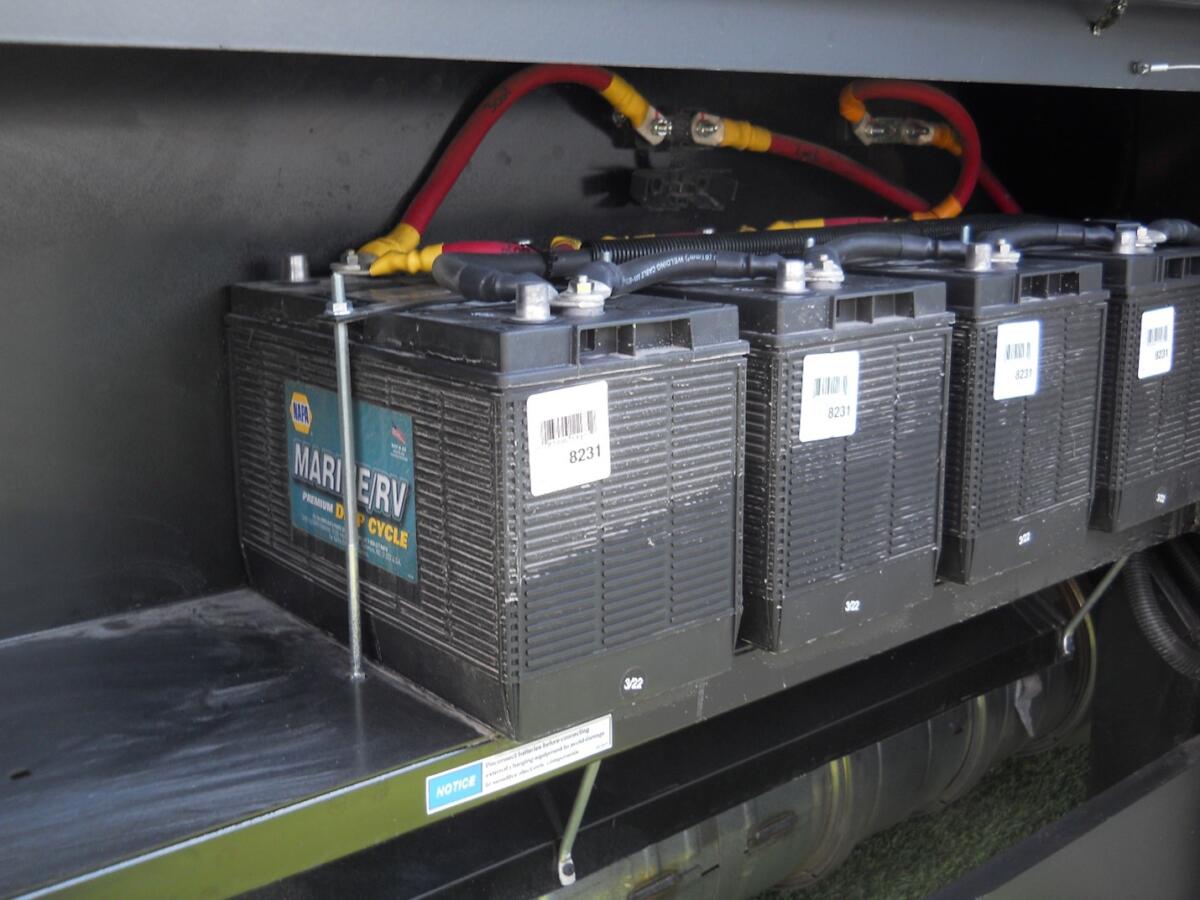
A fully charged FLA battery (100% state of charge) has a freezing point of approximately -90° F, while a fully discharged battery (0% state of charge) can freeze at +32° F. It’s also important to note that for an FLA battery, 0% state of charge corresponds to roughly 11.5 volts.
For these reasons, using a small battery maintainer or conditioning charger is strongly recommended. In addition to protecting against freezing, repeated deep discharges can cause sulfation, which significantly shortens battery life. A maintainer helps prevent this, but it does require a 120-volt power source. You can find this one on Amazon here.
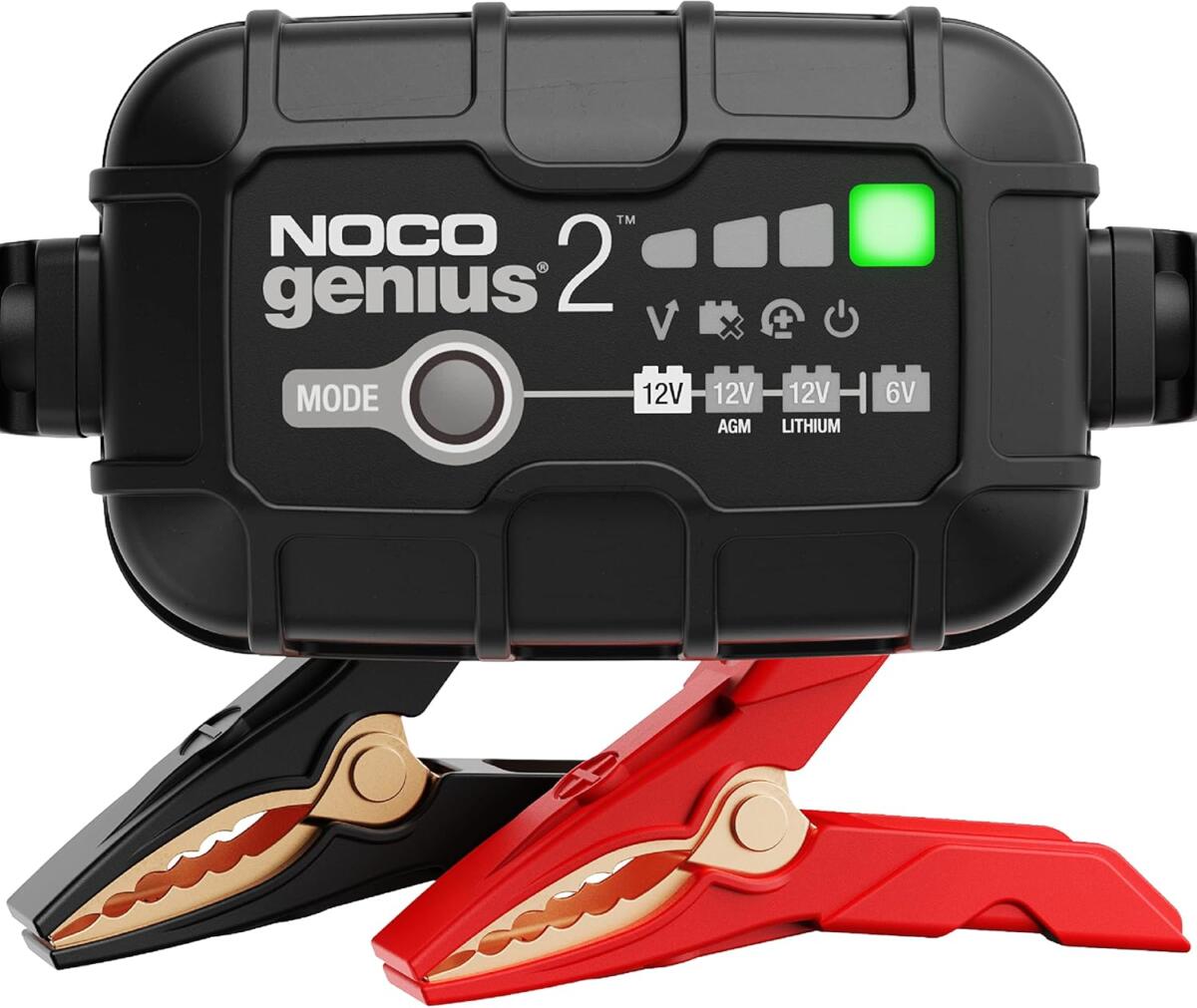
If your storage facility does not provide AC power, you have two alternatives: Use a solar charging panel (provided the RV has direct sunlight for at least five hours per day), or remove the batteries and store them in your garage connected to a maintainer.
If your RV uses lithium iron phosphate (LiFePO₄) batteries, storage is much simpler. Disconnect the negative battery cables to eliminate any parasitic draw and leave the batteries in place. Lithium batteries can retain more than 80% state of charge for six months or longer and are not susceptible to freezing damage.
Engine starting battery
The engine starting battery also requires consideration. This battery is typically a maintenance-free model but still experiences parasitic draw from the engine computer and systems such as radio presets.
Without some form of maintenance charging, it can discharge quickly. I’ve seen this firsthand: My father encountered this issue every spring because he did not have access to 120-volt power.
Each year, his vehicle battery would be dead, requiring a jumpstart followed by a reset process for the engine computer. That process involved idling for about 10 minutes, driving at low speed for several minutes, and then highway driving to restore proper shifting and engine response. The radio presets also had to be reprogrammed—fortunately, his listening preferences were fairly simple.
Maintaining the engine battery can be more challenging because the RV’s converter/charger, when connected to shore power, typically does not charge the engine battery. If you have access to a 120-volt outlet, the best solution is to plug a small trickle charger into one of the RV’s interior outlets and connect it to the engine battery.
If AC power is not available, a dedicated solar charging panel is the next best option. Removing the engine battery and charging it in your garage is generally not ideal, as disconnecting it will erase vehicle presets and computer memory.
You might also enjoy these posts from Dave
- How do I winterize RV’s lithium batteries?
- Can different type and age RV batteries be mixed? Can I add a lithium battery?
- Will my RV’s batteries freeze in cold temperatures?
- How to winterize RV batteries
- My RV’s “larger” batteries are dead. Can I replace them with lithium?
- Will RV’s house batteries ‘play nice together’ if I replace chassis battery with lithium?
- Will my RV’s charger be sufficient for new lithium batteries?
DAVE HAS ANSWERED MORE THAN 1,000 readers’ maintenance and repair questions. Read a directory here. There is so much to learn!
Dave Solberg is a leading expert in the RV industry and the author of the “RV Handbook.”
HAVE A QUESTION FOR DAVE?
Send your inquiries to him using the form below.
RVDT2840

Most modern motorhomes converter/chargers are smart and they do keep the house and engine batteries charged. In this case the best solution, if you have power, is to just use shore power. A trickle charger is not required.
The term “trickle” charger is used in this article.
There is a difference between a trickle charger and a ‘maintainer’ or ‘smart charger’.
Building on Dave’s recommendations- Do you leave behind a parked vehicle while you are on the road? If your vehicle has a FLA or AGM battery (most do), and you will be gone for more than a couple weeks, I recommend using a battery maintainer. Many of the vehicle’s electronics continue to draw small amounts from the battery when parked. Depleted batteries have shorter lives, and without battery power, all the vehicle’s settings will return to default without power.