


For many people, the lure of RVing doesn’t diminish with age, even when their physical abilities do. For the millions of Americans who live with arthritis, a “home on wheels” lifestyle can come with unique challenges. Stiff joints, limited mobility, and chronic pain can make everything from hitching up to climbing into bed more difficult.
Still, thousands of RVers manage arthritis successfully and travel comfortably by making adjustments to their routines, gear, and RVs. Here are some ways they do it.
Start with an arthritis-friendly RV
The layout of an RV can make a big difference. RVers with arthritis often swear by four key features:
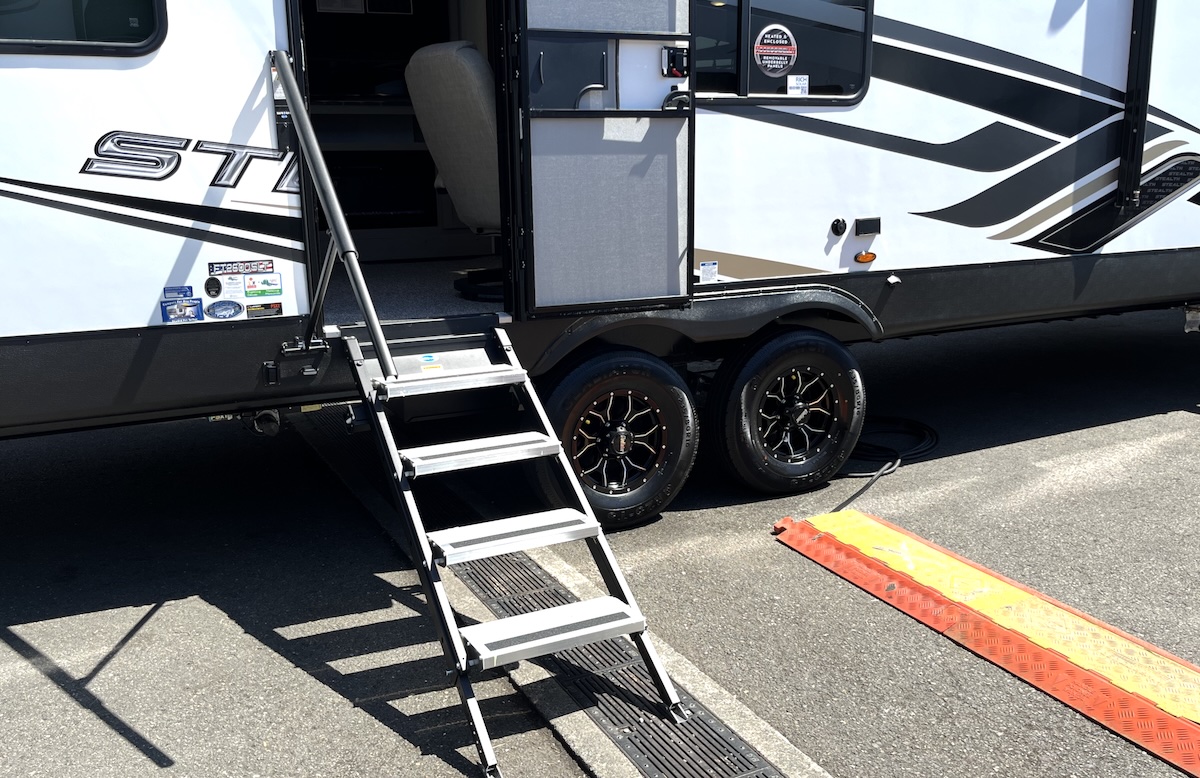
• Easy-entry steps. Upgrading to wider, sturdier, spring-assisted steps can reduce strain on knees and hips. Avoid RVs that require climbing more than a few steps to enter. Add a handrail inside and out for extra support.
• Comfortable seating. Replace stiff dinette cushions with memory foam, or swap out factory recliners for residential, power-lift recliners that are far kinder to arthritic joints. Inexpensive RVs are often equipped with cheap memory foam in dinettes and other seating. It feels fine at first, but will lose its support quickly.
• A quality mattress. Many RV mattresses are cheap and uncomfortable. A quality memory foam or hybrid mattress can ease pressure points and improve sleep, a vital component of managing arthritis. An RVtravel.com poll in 2022 revealed that 57 percent of the nearly 2,000 RVers who responded had replaced the mattress that came with their RV with a more comfortable one.
• Lever-style handles. Swap out round knobs for lever handles on doors and faucets. These require far less gripping strength and are a small upgrade with big impact.
One RVer couple we know sold their fifth-wheel trailer in favor of a motorhome. The steps to the fifth wheel’s elevated bedroom became too much for the wife, whose mobility issues were worsening. The motorhome’s one-level design helped make her life easier.
And, it may seem obvious, but a Class C motorhome or a truck camper with an over-the-cab bed should be out of the question. Climbing in and out is much too difficult. Also, avoid beds that do not allow easy access from the side.
Modify RV tasks
Arthritis can make routine RV chores painful, but there are clever ways to ease the load:
• Use power tools for setup. Electric tongue jacks, power stabilizers, and cordless drills for raising stabilizers drastically reduce hand and shoulder strain.
• Choose an RV with an automated leveling system. Hitting a single button certainly beats cranking a handle or stacking blocks.
• Store items at reachable heights. Avoid high cabinets or deep under-bed storage. Use sliding baskets and clear containers to reduce bending and twisting.
• A big advantage of RV travel is having your own kitchen. Use it to prepare healthy meals. Diet matters!
Keep moving
Medical professionals agree: Gentle movement is one of the best treatments for arthritis. RVers who stay active often report fewer flare-ups. The key is moderation and consistency. A few suggestions:
• Short walking loops around the campground with or without a pet keep joints moving.
• Mobility exercises, such as stretching fingers, ankles and shoulders, can be done while stuck inside during bad weather.
• Pool time is quality time. Choose RV parks with swimming pools. Water exercise reduces pressure on joints while building strength.
• More RVers all the time bring along e-bikes, which allow them to enjoy cycling even if traditional biking is too hard on the knees.
Climate matters
Weather plays a surprisingly strong role in comfort. Cold, damp environments can worsen joint stiffness, while dry or mildly warm climates often help relieve it. RVers with arthritis frequently “chase the weather,” finding seasonal sweet spots:
• Winter: Desert Southwest—Arizona, southern California, Texas Hill Country, Florida
• Spring and fall: New Mexico, Georgia, Tennessee, Carolinas
• Summer: Northern Michigan, Montana, Idaho, Pacific Northwest
Create a comfortable environment
Small comforts go a long way. Heated throw blankets, small space heaters near a favorite chair, and portable humidifiers can all ease stiffness. Keeping the RV tidy also reduces the risk of trips and awkward movements that can aggravate joints. Many RVers with arthritis also appreciate voice-controlled devices like Alexa or Google Assistant to reduce the need to reach or twist to operate lights and switches.
Know when to ask for help
One of the most valuable tools for RVers with arthritis is the RV community itself. Whether checking tire pressure, lifting a propane tank, or backing into a site, fellow campers are willing or even eager to help. RV parks and campgrounds are filled with people who understand physical limitations: Many have been through or are dealing with their own challenges.
The late well-known RV writer and seminar speaker Gaylord Maxwell, a self-proclaimed “unhandy person,” advised using a “scratch your head” system. Gaylord would stand outside his RV when he had a mechanical problem, scratching his head and staring at his RV. “Sooner or later someone would come up and ask me if they could help,” he explained.
Online forums and groups also offer tips from seasoned RVers who’ve found creative solutions for nearly every mobility concern.
Of course, the best situation is having an understanding travel companion along, who can assist with chores that are difficult for you.
Arthritis doesn’t have to limit your travels
Living or traveling in an RV with arthritis certainly requires adjustments, but it doesn’t mean giving up the lifestyle. With thoughtful modifications, the right equipment, and a bit of planning, seniors or people of all ages dealing with arthritis can continue exploring the country comfortably and confidently.
Please leave a comment if you have additional suggestions about dealing with arthritis on the RV road.
RELATED
- RVers’ mental health is great; many factors contribute to why RVers are so happy
- How to balance RVing and frequent healthcare visits
- Medicare coverage tips for RVers
- Study says fresh air beats the gym for boosting mood and health
- Full-time RV health insurance options
- Adjusting your RV travels for medical needs
- Getting sick, or worse, while RVing: Precautions to take
RVT1236
I always wear work gloves to protect my hands against bumps and bangs. I use sewer hose wrenches and adjustable oil filter pliers for dumping connections. A rubber mallet is surprisingly useful in the many instances when my hand strength is no longer strong enough.
Thanks for the tip about using a rubber mallet. I have an oil filter wrench to help with the dumping connections.
Interesting. We winter in Texas Hill Country (here now) and summer in Upper Michigan (our domicile). As both locations are pretty much fixed bases, we are going to sell the big trailer in favor of a park model RV (flavor of tiny home, not a destination trailer) for fewer exterior maintenance chores (hiring is expensive and the work is never as good as when I do it). We have a much smaller trailer for travel – rarely more than a week at a time at this point. The small trailer requires regular maintenance but the scale is less.
My mom’s physical therapist used to say, “Motion is joint lotion.” Although it is true, when I’m in pain, moving is not what I want to do, but I know I have to.
I hear ya Cookie P, I’ve got the same problem and my medication only works so much, it’s heck getting old!
When I went to the “… automated leveling system..” it was the most hugest help. Getting down (and back up) to do the stabilizer jacks was the hardest part of setting up the camper.
I have arthritis in my neck, makes it hard backing up. Dr mentioned about getting a shot and was thinking about it for camping season. Have to check again with the Dr. Not sure if I can have the shot being also on blood thinner. A friend said they told his wife it could kill her.
My husband struggles with the 20lb. propane tank ~ any suggestions?