

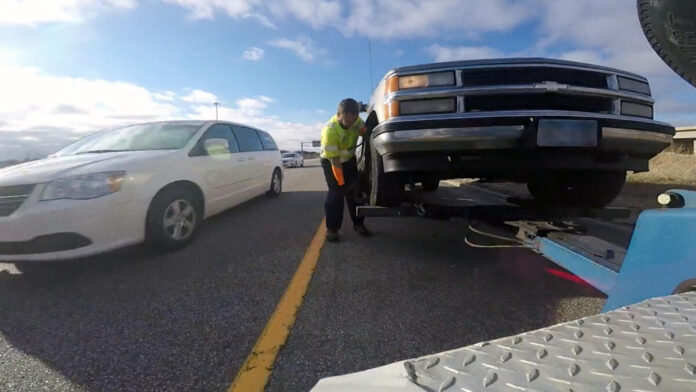
In the real world of RVing, having a tire fail or other breakdown is a reality. Sitting next to the highway with traffic speeding past is nerve-wracking enough. But imagine the stress level for your “highway hero,” the man or woman who comes out to change your tire or rig up a tow. They literally take their lives into their hands at each roadside response. While all 50 states have move-over laws, most don’t apply to these workers. And even worse, only a third of all drivers even know what a move-over law is, and how it applies to them.
Four times more fatalities than “official” stats indicate
A new report from motorist support group AAA reveals some truly frightening information. “Official” crash data statistics say 34 roadside assistance providers were killed in road incidents between 2015 and 2021. The truth of the matter, found AAA Foundation research, is that 123 of these highway heroes were killed during those years—more than three-and-a-half times as many. Why the difference in numbers? Says the foundation report, “The discrepancy is due to a persistent failure of state police crash report forms to capture that crash victims were roadside assistance providers and were often recorded as ‘pedestrians.’”
No matter how you count your numbers, over a seven-year span, 123 parents, children, or mates didn’t come home to their families because they were struck and killed while working. In many instances, killed while helping out folks like us. What can reduce the carnage?
“Understanding the circumstances and causes for fatal crashes involving roadside workers is vital if we are serious about saving lives,” said Dr. David Yang. He’s the president and executive director of the AAA Foundation for Traffic Safety. “Many of these crashes can be avoided if drivers focus on driving and observe the law by slowing down and moving over when they see roadside assistance providers performing their duties.”
Just what is a move-over law?
But, as we pointed out, two-thirds of drivers on the road today are unaware of move-over laws. So just what is a move-over law? Here’s how Wikipedia defines it. Move-over laws are ones “requiring drivers to give a one-lane buffer to stopped emergency vehicles. For example, while driving in the right lane, if the driver sees a stopped police car, the driver is required to move one lane over to the left to give enough buffer space to avoid any potential accidents.”
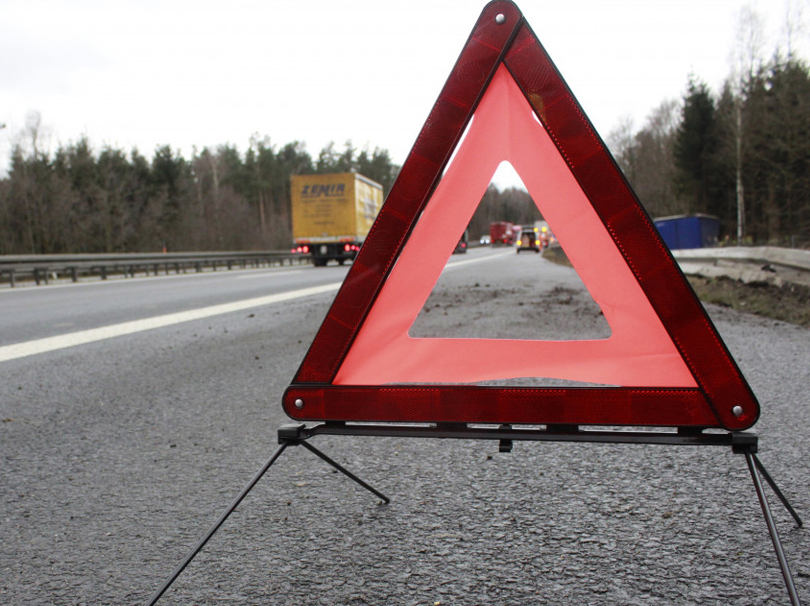 But in the definition lies the problem. “If the driver sees a stopped police car” is true in all 50 states. Police officers, fire fighters, and ambulance attendants are all classified as “first responders.” First responders have the benefit of move-over laws across the country. But tow truck operators and others of their like are considered “second responders.” The majority of state move-over laws don’t require drivers to move over and give them a lane of buffer.
The same is likewise true for other “just plain folks,” like RVers who run into a roadway misadventure. Blow a tire and move onto the shoulder. If you need to step out of your rig you run a huge risk of becoming a “pedestrian” fatality. Because of a lack of uniformity of laws, by one count, only about 20 states mandate moving over for all vehicles in distress. But even there, there are a variety of definitions in state laws as to what indicates distress. Flashing lights? Road triangles? There’s no common definition among the laws.
Personal view from behind-the-wheel
Arizona was one of the early-adopting states that mandated move-overs for all vehicles. This writing team puts a lot of miles on, traveling over Arizona interstates. From personal experience, we can tell you it’s evident not all drivers are aware of the move-over law. Too many drivers blissfully blast past disabled vehicles without a move-over, or even a slight decrease in speed. But here is something we have seen: If a driver does move over for a disabled rig, it’s far more likely that other drivers behind that first rig will themselves move over.
For the safety of those in the disabled rig, and especially for those who are responding to them, why not do something simple. Don’t worry about what a specific state’s law does or doesn’t require in terms of the shoulder-stuck rig. Why not just move over? Flip on the turn signal, check your mirror, and move over. And if you can’t because of traffic, then get off the accelerator. It’s simple. It’s not illegal. And maybe, maybe, you’ll save someone’s life.
##RVT1142

The problem with todays drivers is that they believe the laws do not apply to them. It’s like there license was gotten from a Cracker Jack box with no training at all. Stop lights, stop signs are ignored, speeding, passing stop school buses and not moving over for fire and emergency vehicles are the every day driving habits one sees on the road every single day. And to top that all off one does not see very many police out there patrolling our roadways and making arrests for these bad drivers.
Their turn indicators also don’t work.
Florida put a move over law into effect this year. Also, get out of the high speed or passing lane addition to the list.
Common courtesy no longer exists, as they speed along in their steel coffins.
without enforcement and increase of dollar amount for not obeying the law, folks just won’t adhere to doing so. yes, there will be those that will not follow the law and do what they want but should maybe have a three strikes kinda rule. each offense, increase the fine and points removed from drivers license, license suspension which has a ripple effect that could impact their insurance rates. again, will still have some that simply don’t care, but as the word spreads of the consequences the number of offenses will decrease. there isn’t a cure all for the situation, but it sure can be mitigated.
A few years ago in my area the State Police had a setup of flares, red triangles, and etc for an emergency vehicle on the side of the road. A mile or two down the road they had a long line of cars pulled over issuing tickets. The majority of vehicles that passed me on the right had New York and New Jersey license plates. I had a good laugh.
Now that’s a procedure I could support! A round of that every week or so, on a permanent basis, would do wonders for the amount of common sense that would get applied in those situations.
Move Over Laws are well intentioned. But possibly not well thought out and come with their own set of problems. As an RV’er, I try to not change lanes unnecessarily. Trying to move from the R lane to the C or L lane can be a problem, especially with the “me first” people who don’t want to let me in, in front of them. Even when trying to “move over”.
How about slowing down if you can’t move over?
And take longer to get to where they are going???
Amen!
PERFECT last paragraph!
This is exactly what we always do. We have no idea what the laws are in every state we travel through, but the safe and right thing to do is move over or at least significantly reduce speed.
I do this also. The biggest problem is, when I move over, the idiot in the vehicle behind me speeds up in the right hand lane to get around me and the rest follow him.
PA has the law, It pertains to road crews, emergency and disabled vehicles. Very few follow the law. I’ve seen them fly past police vehicles on the side with their lights on.
Sometimes, due to traffic you can’t move over. I think the solution to this is wider shoulders. On many freeways and highways the shoulder is barely wide enough for a car, let alone someone walking around the car. They should all be 4-5 feet wider.
When I learned to drive, it was common courtesy to move over. My state is slow down or move over. The slow down is 10 under the speed limit. They do ticket for not slowing down. It breaks my heart when I hear of someone getting hurt just doing what they need to along side the road. If the left hand lane is full, then slow down and hug the center line.
Yeh, right. I’m changing a blown tire on Interstate 10 in Texas.Drivers side. Pulled right as far as I could. Here comes Smokey, speed limit is 80? 85?; Never slowed down never moved over and was the only car on the road right then. Do as I say, not as I do.
And most Leo’s drive well over the speed limit. If it’s an emergency, they should have their lights on.
If your vehicle dies in the road, that is one thing. I have pushed a disabled woman’s vehicle in the #2 lane, over lanes #3 and 4 to safety in rush hour traffic. When broken down and not moving that is one thing. When stopping to change a tire, that is another. In most all cases a flat tire is ruined anyway (run-flat or worse), drive as far as needed to a safe location for your safety and the safety of others. Although in California, it is move over or “slow down,” because it is rare to be able to move left in heavy traffic. And if moving left, do not signal or most California drives won’t let you in, speeding up to block you. Just slow down.
I was 14 in 1947 in southern California when I got my first driver license. They don’t do that anymore except for kids driving farm vehicles. Back then speed limits were speed limits, even if the limit seemed ill advised for the area. Now, I follow limits or whatever the prevailing traffic is. But, generally speaking, too many people don’t follow limits or even take limit signs as advisory. It is a selfish ‘I will do as I want ‘ attitude. We are now seeing the same attitude in campgrounds, stores and everywhere else. I am glad to have grown up during a more gentile age.
Thank you, Russ and Tina! Just today, I had two or three instances of something stopped on the shoulder while driving the RV and towing the Jeep. As you note, others followed my lead (but may have moved had I not, don’t know). If I see traffic in the right lane overtaking me, then I turn on my right turn-signal so they know I’m returning to the lane soon (as soon as I pass whatever is on the shoulder). They usually will move behind me, or pass me on the left (if there are three or more available lanes).
it’s just common sense to move over, been doing it for at least 25 years.
Quite sad that common sense needs to be legislated, but it is what it is.
As a driver of a big 5er, we always move over. However, sometimes you come up to visibility and you can’t get over due to vehicles in the other lane. You can only do what the sign says “Move over OR SLOW DOWN for stopped or emergency vehicles.”
BTW, Texas amended it’s move over statute so now drivers are required to move over or slow to a speed that is 20 mph below the posted limit for first responders, tow drivers, and construction workers.
I bet 1 out of 3 vehicles I see that are over for whatever reason don’t have their flashers on.