


Dear Dave,
I have a newly installed refrigerator that is supposed to run on propane or electricity. The problem is the wiring for the camper. When I switch the refrigerator to electricity and try to run it, it blows a fuse. Is there an inverter/converter I can run to hook up directly at the campground? —George (no year or model supplied)
Dear George,
If your refrigerator is designed to run off propane (LP) or 120-volt AC power, it is an absorption refrigerator and most likely a Norcold or Dometic. Since you did not provide the make, model, and year of the rig or the refrigerator, I will assume it is fairly old, as most units today are going to residential or 12-volt compressor-driven. Not all, but it is harder to find new units with absorption models.
What “fuse” are you referring to?
My first question is what “fuse” are you referring to and where is it located? The 120-volt power is supplied from the circuit breaker at the distribution center typically to a plug-in outlet in the back of the refrigerator compartment. This is accessed from outside by removing the vent cover.
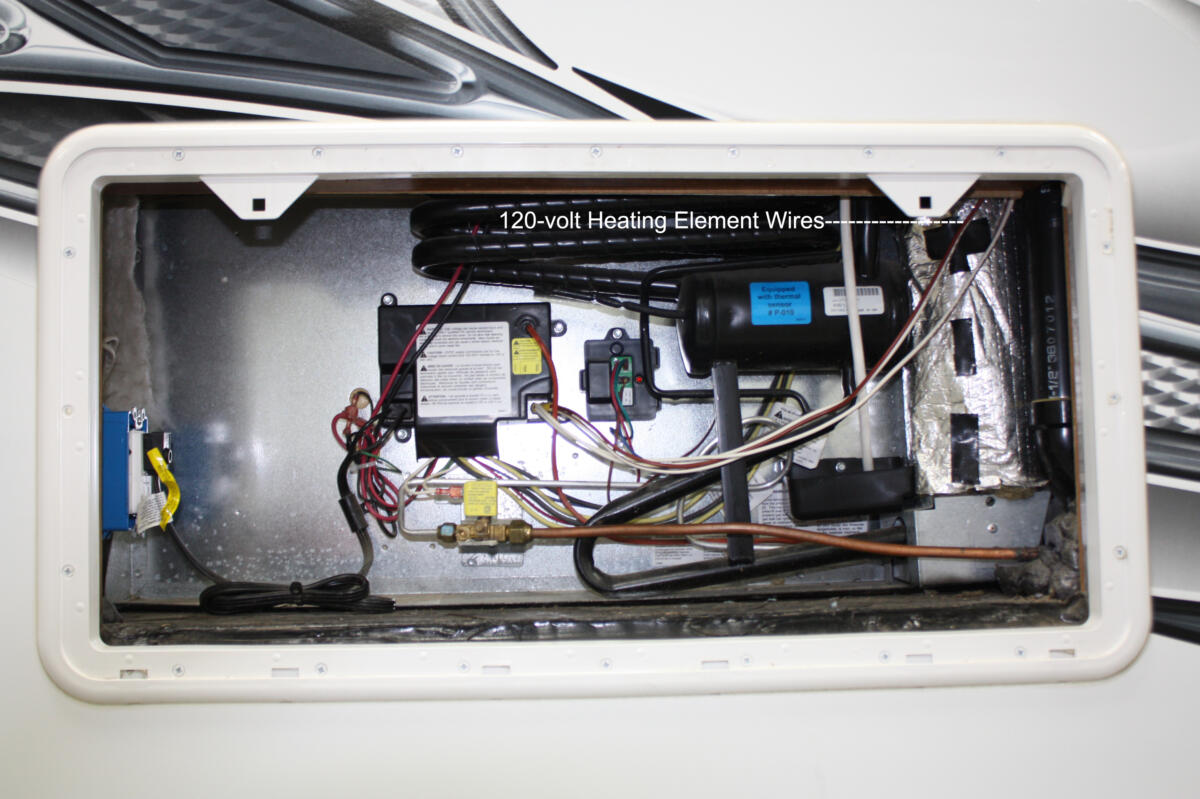
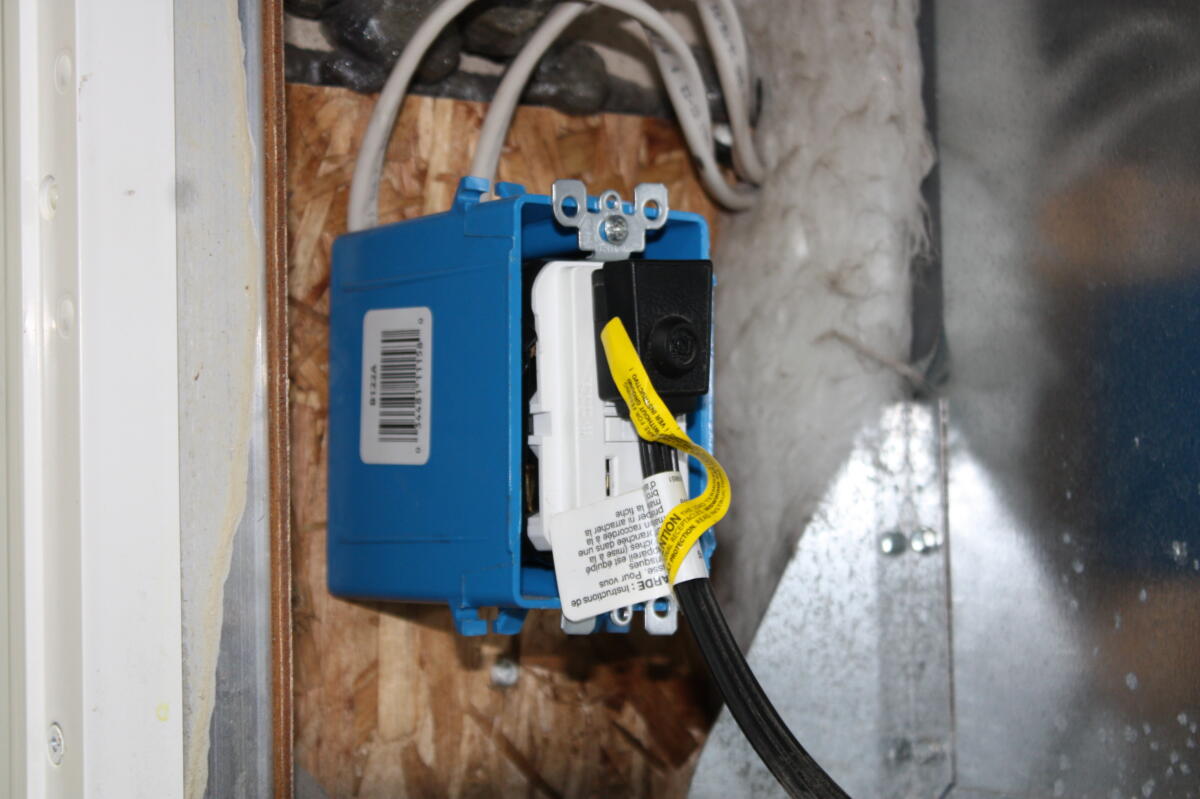
This photo shows the outlet to the left inside a blue electrical box and the power cord is a typical three-prong plug. The first thing I would do is unplug the refrigerator, make sure the circuit breaker is on, and test the plug for proper voltage and wiring, which you can do with a GFCI outlet tester. When the refrigerator is plugged in and switched to the 120-volt mode, power goes to the module board, which is the black box in the middle, and that powers the heating element shown in the photo above. If the outlet is OK, which I assume it is, and the circuit breaker trips when set to 120-volt mode, you have a wiring issue in the refrigerator, not the camper. Most likely it is the wires going to the heating element or the heating element itself is shorted out.
What if it is a fuse?
There are two places that have fuses for the refrigerator: the distribution center and the module board. The distribution center has automotive-style plug-in fuses for the 12-volt operation. The module board has in-line glass fuses for both the 120-volt and 12-volt. I doubt you are seeing a blown fuse in the distribution panel, as these are for all 12-volt operations. Since it works on LP, that mode would be using the same fuse, so it should not be the issue. If it is the glass fuse in the module board, again I doubt it is the 12-volt fuse, but rather the 120-volt one. That would also be in the refrigerator wiring with a short somewhere at the module board or the heating element.
Can it be hooked up directly?
Yes, it can be hooked up directly. However, let’s address your question about an inverter/converter. An inverter is a standalone box that takes 12-volt power from the house battery or batteries and outputs 120-volt power to specific components. Smaller inverters can only handle some outlets like a TV, while larger ones can provide enough power for residential refrigerators IF there is enough house battery power.
Providing power to your refrigerator that is blowing a “fuse” through an inverter would not solve the problem, but would rather blow the inverter fuse, in my opinion. The converter is a battery charger that receives 120-volt power from the distribution center and converts an output of 12-volt power to charge the batteries. This would not provide 120-volt power to the refrigerator.
You can unplug the power cord of the refrigerator from the outlet in the compartment and run a dedicated extension cord from an outside source.
Use a meter to measure amp draw
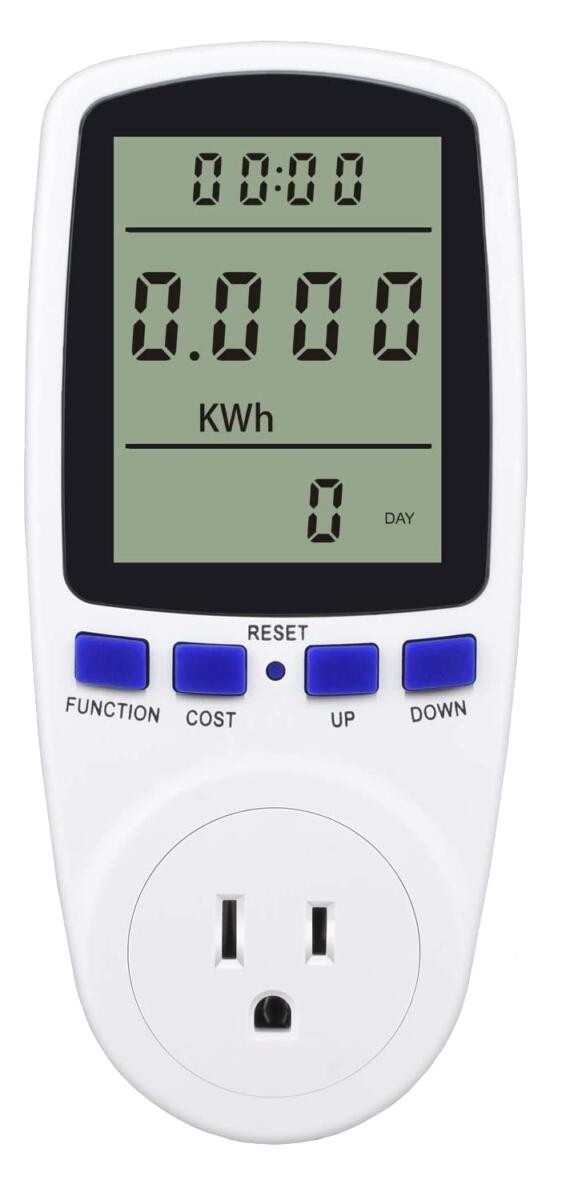
Since you are having an issue with blowing a fuse, I would suggest using an inline watt/amp/voltage meter to measure the amp draw, which will tell you what is happening with the power. This one on Amazon also has an overload protection, so it will not cause an issue with the power source.
One final question pertaining to your refrigerator. The typical absorption refrigerator that is designed to run on 120-volt power or LP has a control panel on the front of the refrigerator. It is located either at the top on older models, referred to as the “eyebrow board,” or between the freezer and refrigerator door. Most have a setting of “Auto” and LP.
The “Auto” setting is 120-volt power and is the default. That means if there is 120-volt power available, it will run on the 120-volt mode. If there is no 120-volt power available, such as a breaker trips on the campground source, the refrigerator will automatically (auto) switch to LP. It will automatically switch back to 120-volt mode when power is restored. When it is in the LP mode, it will only work on LP but will still use 12-volt house battery power to detect temperature through the thermistor, open the gas valve, and provide spark.
Does your refrigerator have this setup? How are you switching it to 120-volt mode? I believe the issue is in the refrigerator, not the camper. Going through these steps will help isolate the issue and make it easier to fix.
You might also enjoy this from Dave
My RV’s absorption refrigerator died. What replacement would be best for dry camping?
Hey Dave,
First, I, like many, wish to thank you for ALL of your help and advice. My 3-way Norcold fridge is finally done. I replaced the main board this past summer ($700 CDN) and was told if that didn’t work I would need to replace the fridge. It worked for about 3 months and now doesn’t. The front panel on the fridge won’t light up and I can’t turn it on. The shop I use is great and told me this might happen. So, my question is, what do I replace it with? I do a lot of boondocking, have two huge solar panels and eight batteries, so have a lot of power. But I feel I need propane also for those cold, cloudy, Canadian days; however, I am open to suggestions. —Larry, 1996 Winnebago Luxor
Dave Solberg is a leading expert in the RV industry and the author of the “RV Handbook.”
Read more from Dave here.
HAVE A QUESTION FOR DAVE?
Send your inquiries to him using the form below.
##RVDT2386


Thank you, Dave! 🙂 Despite my thickheadedness, you are slowly managing to educate me; thank you! Thanks again and safe travels! 🙂
Hi Dave sounds like what you had said that the issue is in the refrigerator, George also said it was a newly installed refrigerator that is supposed to run on propane or electricity! But George didn’t say it was a new one! Your idea of using a extension cord to a dedicated 120 VAC that has a breaker of the right amperage would be the first thing George should try! I hope George finds the issue & lets you know about it & how he fixes his issue!
Thanks Dave
Snoopy