

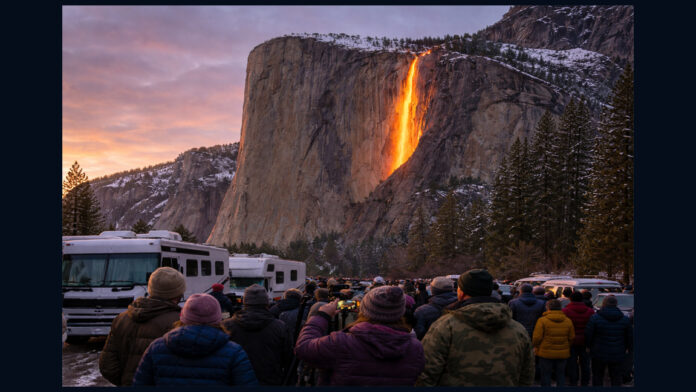
Yosemite Firefall reservations won’t be required this winter, a change that restores flexibility for RVers—but does revive some familiar Yosemite challenges. For the first time in several years, visitors hoping to see the glowing orange “Firefall” at Horsetail Fall can enter Yosemite National Park during the February viewing window without a timed reservation in advance
RVers should know up front: parking, not park entry, is likely to be the biggest challenge during Firefall evenings
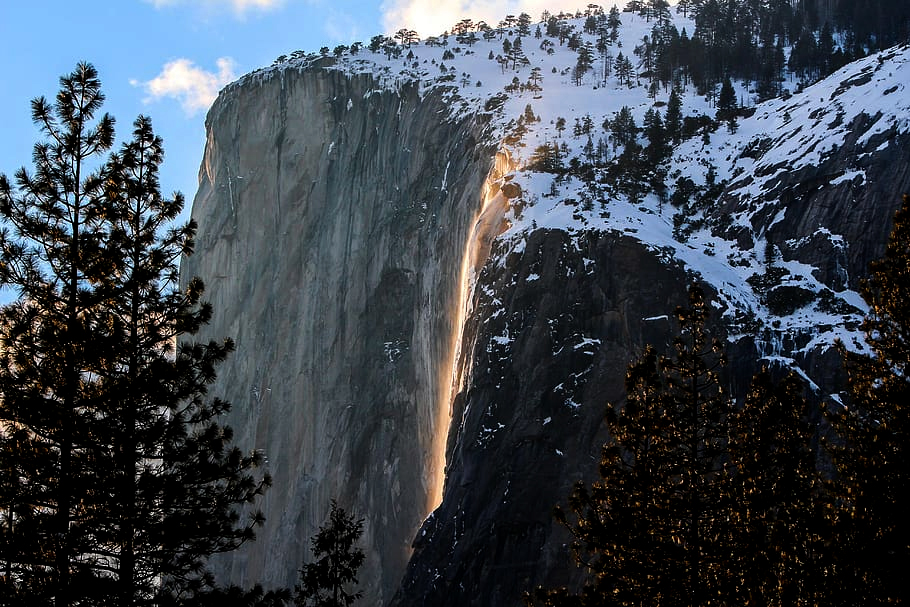
That freedom will be welcome news for those who don’t always plan trips weeks ahead. But it also means crowds, traffic control, and parking pressure move back to center stage during Firefall season, especially in Yosemite Valley near sunset. For RVers, the experience will hinge less on what happens at the entrance gate—and more on what happens once you’re inside.
In past years, reservation systems limited how many vehicles entered the park on Firefall evenings. Without them, park officials say they’ll rely on staffing, traffic controls, and parking restrictions to manage congestion. That approach may feel more flexible, but it also puts a premium on early arrival, smart parking decisions, and patience—particularly for larger rigs.
Firefall prep for RVers: What to do the night before
If you’re hoping to see Yosemite’s Firefall, the work that matters most happens the night before, not at sunset.
• Park your RV with tomorrow in mind. If you’re staying inside the park, don’t count on moving your rig easily late in the day. Park once and plan to walk or use shuttles.
• Scout your viewing spot early. Walk the El Capitan area in daylight so you know where you can stand, where access is restricted, and how long the walk back will be after dark.
• Check clouds and water flow, not just the forecast. Firefall depends on clear skies and enough water on Horsetail Fall—both can change quickly.
• Dress and pack for standing still. Warm layers, waterproof footwear, a headlamp, and patience matter more than camera gear.
• Eat early. Leaving the valley for food near sunset is a losing bet.
• Charge everything. Phones, cameras, headlamps—cold drains batteries fast.
Firefall isn’t guaranteed. Being prepared makes the experience worthwhile even if the glow is brief—or doesn’t appear at all.
Parking, not reservations, will shape the Firefall experience
For RVers, parking is often the deciding factor. Viewing areas near the El Capitan Picnic Area fill early, and once lots are full, access to parts of Yosemite Valley can be closed to additional vehicles. Late arrivals may face long walks—or miss Firefall altogether.
The Park Service has been clear about one thing: Firefall viewing doesn’t magically create new parking. Stopping along road shoulders isn’t allowed, which means RVers—especially those in larger rigs—are far better off getting parked early rather than trying to roll in at the last minute.
In other words, while Yosemite Firefall reservations are gone, planning still matters—just in different ways than before. RVers who treat Firefall like a sunset event rather than an evening errand will have a much better experience.
Sources include: San Francisco Chronicle, SF Gate, National Park Service — Horsetail Fall info, National Park Service — reservations & entry info
RELATED
- Yosemite announces new campsite release dates
- Dream job or free labor? Yosemite’s 40-hour volunteer posting sparks backlash
- Yosemite’s campgrounds fully open for first time since 2019
- Yosemite resumes campground reservations: Here’s when to book your spot
- Mystery stowaway! Yosemite critter takes joyride in tourist’s car, discovered days later
RVT1244b

Thank you for the suggestions, Russ and Tina! Seems a lot of trouble for a viewing lasting a few (several?) seconds. Must be quite the view! Have a great week and safe travels!