Home Blog Page 2119

Test drive: 2016 American Coach Eagle motorhome


Gary Bunzer takes you for a spin in the 45-foot 2016 American Eagle 45N. In this 10-minute, he shows you the interior, exterior and the coach’s drivability. The American Eagle, made by REV Recreation Group of Decatur, Ind., is built on a Freightliner Liberty chassis and powered by a Cummins ISX15, 600-horesepower engine. Join Gary as he checks out the bays, compartments and systems of the luxury coach, and points out its standout features.

RV Travel Reader RVs, Nov. 19, 2016

0


Send a photo of your RV and a 150- to 200-word description of it, how and where you use it, and what you like or don’t like about it, to Diane (at) RVtravel.com . Be sure to include your name(s) and hometown, or if you’re a full-timer. (These are posted in the order received.)


The RVs of RVtravel.com readers and how they use them

Issue 66; Posted Nov. 19, 2016


Cathy and John Adler, Full-timers

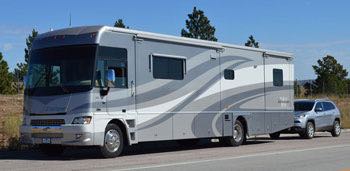
rv-adler-11-5-2016Planning ahead for when we would sell our campground in the Black Hills, we purchased a 2007 Winnebago Adventurer a year and a half ago. In June 2016, we sold the business and now live full-time in our motorhome. We love it! 

Our motorhome (“Elroy”) has a great floor plan with opposing slides in the living room which allows the TV to be across from the reclining love seat. No getting a sore neck from having to turn our heads to watch TV. We like the large double door refrigerator/freezer and large kitchen with two pull-up counter extensions. 

While we weren’t looking to get an RV with a washer/dryer, we have found that having one in the motorhome is well worth it. With a 7-foot ceiling and lots of storage, we have more than enough space to call this home. We have everything we need in our Winnebago to make this our own comfy tiny house. We tow a Jeep (“Judy”). The picture was taken at Wind Cave National Park, S.D.

See you on the road!


John C. Henderson, Tucson, Arizona

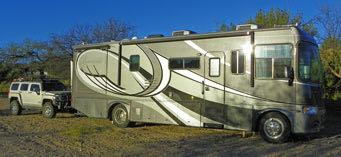
rv-henderson-10-29-2016I have a 2008 33-foot Gulf Stream Crescendo with a full wall slide on the driver side and a rear bedroom slide on the passenger side. This motorhome works well for me and my two dogs. It probably wouldn’t work for a large family, as it only sleeps four; but for a couple and dogs, it would be great. As you can see, I pull a 2007 Hummer H3 Adventure.

My favorite place to visit is the San Juan district of the Rocky Mountains. This would include Durango, Silverton, Ouray, Telluride, Lake City and others. I unhook my Hummer and four-wheel drive all over the place. A lot of history here: ghost towns, old mines and buildings.

I also use my motorhome to camp out while I’m doing Ham Radio public service events in Arizona. I hope to expand out to Colorado and Nevada when I can afford it.

I generally like camping out, but sometimes I’ll go to a conventional campground. It usually depends on how crowded the boondocking areas are or sometimes I just get a wild hair and decide to pay for a crowded campground.

I’m a Life Member of Good Sam as well as a member of Good Sam Roadside Assistance.


Roger and Nancy Marble, Ohio

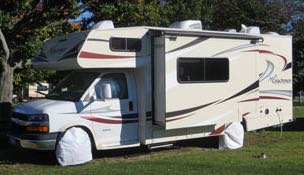
This is our 2016 Coachmen 23QB. rv-marble-11-9-2016With our home in Ohio, my wife, Nancy, and I travel mostly east of Mississippi and north of the Mason-Dixon line, except for Perry, Georgia. Many trips are to large RV conventions and rallies, where I give seminars on RV tires and on genealogy.

This is our second Class C. It is perfect for the two of us as we don’t do much “camping” at just one location but do put many miles on the unit. This smaller RV can go just about anywhere a large pickup can go, and can even turn around by backing into a driveway.

Editor: Check out Roger’s excellent blog at RVtireSafety.com.


Copyright © 2016 by RVtravel.com

MORE IN A COUPLE OF WEEKS

Click here to see the last issue of RV Travel Reader RVs.

Wildlife Safari near I-5 in southern Oregon year-round family RV Short Stop

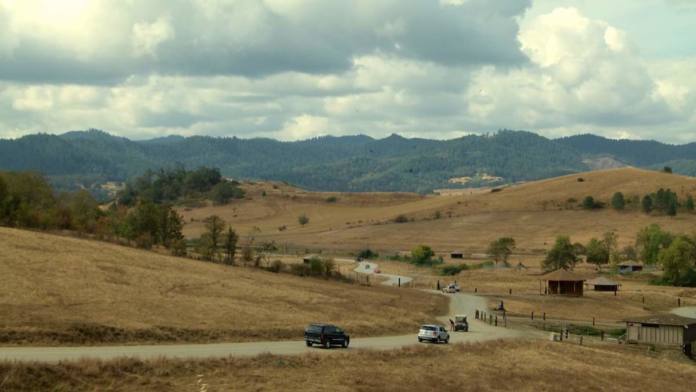
Cars meander through the 600-acres of the Wildlife Safari (Julianne G. Crane)

I’m not a big fan of zoos.  In a perfect world all living creatures would be free to roam in their natural habitat. However, that is not the world we live in these days.

Cheetah Conservation

Therefore, wildlife parks like Wildlife Safari in southern Oregon have their place. And, this 600-acre park serves a crucial function in conservation and protection of endangered species “while educating the public about them and their important roles in the fragile ecosystem,” according to its website.

“Wildlife Safari is home to a world-renowned cheetah breeding program as well as one of only two AZA (Association of Zoos and Aquariums) accredited facilities with hands-on elephant experiences in the USA; and up-close and personal animal encounters with more than 600 animals to see during the Drive-Through and in the Village.”

The Drive-Through

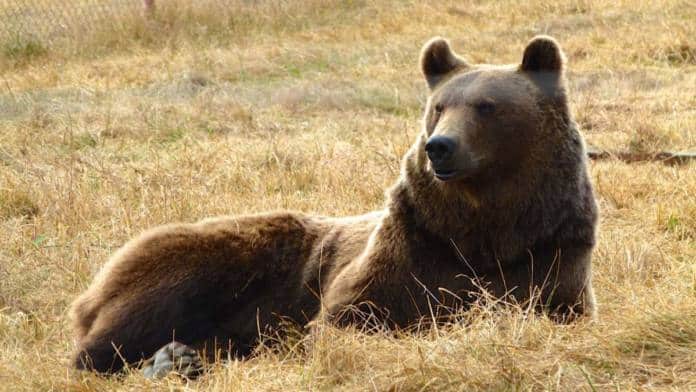
Brown Bear (Julianne G. Crane)

“Wildlife Safari opened in 1972 and is the only drive-through wild animal park in Oregon. Nestled in a large wooded valley … visitors can view more than 76 species from their cars including tigers, giraffes, zebras, lions, elephants, bison, elk and bears.”

Driving in your own vehicle along the more than four miles of winding road, allow about 1-1/2  hours to complete the circuit. You will receive a map of the park when you pay.  It gives an overview of the park and will help you identify animals. All vehicles are allowed EXCEPT — No open top vehicles (convertibles must have tops up at all times). No motorcycles.

Jimmy Smith and a curious Australian emu.

Attention pet owners: No pets in the Village or Drive-Through. Kennels are available outside the Village. Why? According to Wildlife Safari: “Pets in vehicles can attract the attention of other animals. This could endanger the lives of our guests and park personnel, as well as result in damage to vehicles. So, for the safety of everyone, pet kennels are available for visitor’s pets.”

Animal Encounters

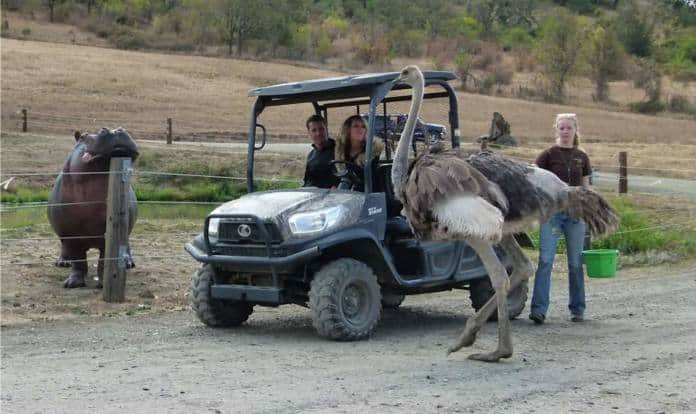
‘Hulking Hippo’ encounter with a nosy ostrich.(Julianne G. Crane)

There are a number of personal ‘Animal Encounter’ opportunities for an additional fee. This is the perfect way to see and sometimes touch a few of these amazing creatures. During the Hulking Hippo encounter a “keeper will tempt the hippo out of the water so visitors can admire their unusual teeth and body structure while they receive their favorite treats.”

The Safari Village

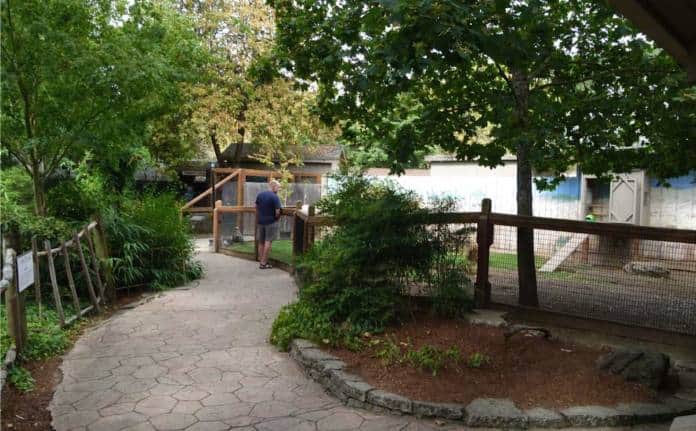
Jimmy Smith walking through The Safari Village (Julianne G. Crane)

The Safari Village area is free for guests throughout the day. It offers a relaxing walk-through area with more than 300 animals. The White Rhino Cafe features burgers, chili dogs, corn dogs, nachos and other munchies. There are restrooms in this area. 

If you go:

Cotton Top Tamarin

Wildlife Safari
1790 Safari Rd.
Winston, OR 97496
 541-679-6761
Directions: Take I-5, Exit 119 West on Hwy 42/N 99 towards Winston. Right on Lookingglass Road and follow the signs on the right.


Costs:
Adult (13-59) $17.99/person
Child (3-12) $11.99
Under 2 – free
Military or Veterans (with IDs) receive 10% off.
Price includes 2 drive-throughs of the park in one day
Also check Groupon.com for Up-to-39-percent off

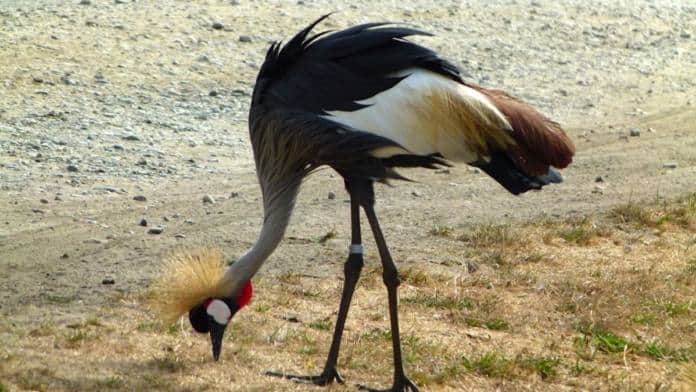
East African  Crown Crane (Julianne G. Crane)

Hours:
Opened 363 days a year
(Closed Thanksgiving and Christmas)
Nov. 8-March 12
Drive-through: 10 a.m.-4 p.m. (last vehicle admitted at 4 p.m.)
Village and Gift shop: 10 a.m.-4 p.m.
March 13-Nov. 7
Drive-through: 9 a.m.-5 p.m. (last vehicle admitted at 5 p.m.)
Village and Gift shop: 9 a.m.-6 p.m. (March 13-Sept. 1); 9 a.m.-5 p.m. (Sept.2-Nov.2)

This is an excellent way to spend a few hours.
For information on the Wildlife Safari RV Campground click here.

Julianne G. Crane

To read more articles about the RV lifestyle by Julianne G Crane, go to RVWheelLife.com 

Creature Photos from the top:   (Julianne G. Crane) 
Brown Bear– Ursus arctos
Usually dark brown, subspecies vary from light cream to almost black. Tips of guard hairs are white; they give the bear a grizzled appearance. Large hump of muscle over shoulders, dished profile and longer claws on front paws. —
Wildlife Safari Website 
Emu- Dromaius novaehollandiae
These soft-feathered, brown, flightless Australian birds reach up to almost seven feet in height. They have long thin necks and legs. Emus can travel great distances at a fast, economical trot and, if necessary, can sprint 31 mph. They are opportunistically nomadic and may travel long distances to find food. Emus will sit in water and are also able to swim. They are curious birds who are known to follow and watch other animals and humans. Emus do not sleep continuously at night but in several short stints sitting. — Wildlife Safari Website
Hippopotamus- Hippopotamus amphibius
Back is purplish grey-brown, pinkish undersides. Patches of pink on face. Hide is virtually hairless.

— Wildlife Safari Website 
Common Ostrich- Struthio camelus 
Male is black and white, female is brown and off-white. Only bird with just two toes and is the largest non-flight bird.  Can run at up to about 43 mph, the fastest land speed of any bird.   The ostrich is the largest living species of bird and lays the largest eggs of any living bird. — Wildlife Safari Website 
Cotton-top Tamarin– Saguinus oedipus is part of the most diminutive family of monkeys, Callitrichidae, the marmosets and tamarins; it weights a little less than one pound on average. Its head–body length is 8 – 10 inches while its tail—which is not prehensile—is slightly longer 13–16 inches. The species has modified claws, called tegulae, on all digits except its big toes which have the flat nails, called ungulae, common to other primates. The white hair on the back of the head and neck inspires its common name, “cotton-top”. The skin of the face is black with gray or white bands located above the eyes. These bands continue along the edge of the face down to the jaw. — Wildlife Safari Website 
East African Crown Crane – Also known as the Grey Crowed Crane.  The body plumage is mainly grey. Wings are predominantly white. Head has a crown of stiff golden feathers.  This crane does not migrate. Its geographical range is Uganda and Kenya, and South Africa. Habitat is dry savanna, nests in somewhat wetter habitats. Conservation status: Endangered. — Wildlife Safari Website 

The readers always write – from washers to finding items in RV


By Russ and Tiña De Maris

emailHere’s our every-other-week compilation of highlights of comments from our readers. 

It all comes out in the wash

In our Issue 768, Chuck mentioned his adjustment to the full-time lifestyle. “I miss having a washing machine. I don’t miss a dishwasher or a garbage disposal, but I do miss the washer. Our RV is too small for an onboard laundry, but I wouldn’t want one anyway. From what I hear they take forever to wash and then dry. So we use coin laundries — some in the RV parks and others a short drive away. We have lots of time on our hands, so it’s no big deal. We can go about two weeks between washings.”

Well, when Chuck put it on the line, readers were quick to wade in with some bold comments.

Tren would never go without an in-RV system. Before having one, “I found myself bringing 10 washer loads at a time to the coin laundries which were between $1.25 and $2.00 per load and using all of the machines at once. It took $20+ to get everything washed. I would go at 10:30 at night when no one else would be there.” And with a washer in the old RV? “Life became easier and more free. I can now put a load in and forget it until it’s time to put it into the dryer. Yes, it takes a long time to dry, but who cares? I’m not sitting there watching it!”

In a similar vein, Pianist337 observed, “We have a Splendide combo unit that is going strong in its 12th year. We detest most public laundry facilities, but even with the nice ones, there’s still the dragging the clothes to and from, plus the high cost of coin laundry these days. We also mostly air dry by hanging clothing about the motorhome. Towels and sheets do get a dry cycle. We find it so much more convenient to do it ‘in-house.'”

And as to the age-old dispute of “combo” versus “stacker” units, here’s how Linda Hanson weighs in: “I hated the combo washer/dryer units. The washing cycle worked fine but drying took 3-4 times longer than it should – and clothes and linens were really, really wrinkled. Our current unit (larger) has a stacked set. They are wonderful. We full timed for a year and the only time I had to use an outside laundry was for large items (comforters). For me, having the stacked set would be a requirement to full timing again.”

Perhaps a suitable end to this subject comes from RAGftw is a Laundromat story. “One time on the Alaskan Highway in Dawson Creek a sign in the laundry read, ‘If you are going to wash your horse blankets please select a second rinse.’ Horse hair in my tighty whities is not something I look forward to!” Results? “We have a Splendide combo and the DW would not be without it.”

Lost in the RV

Our story, “Loss prevention in your RV” focused on how to find all that stuff you squirreled away in the rig. Readers had a few suggestions to add:

Helen suggests, “I don’t have a problem with finding something in the RV, but I do suffer from not knowing whether an item is in the RV or in the sticks and bricks. One tip that helps is to keep a note pad in the RV and to make a note every time I remove something. This happens frequently when I have to raid my second kitchen to replenish a pantry item or something else that I have ‘borrowed’ from the RV. It serves as a good check list when we are getting ready to head out or to go shopping.”

George has his own take on Helen’s view: “Easiest way not to leave something behind is to have a set of everything in the RV and a set at home. My neighbor tells me I have more tools in my RV than he has in his garage so I guess that’s why he comes to me when he needs something. Also, for my toiletries, I have a complete set that never leaves home, a complete set in the RV, and a complete set for traveling without the RV. That way you never forget your toothbrush. Cost-wise it all works out in the end and is so convenient. Now my wife and all her bags…..naw, won’t go there.”

Speaking of lists, Paulette says it’s not so much the lists – as the user. “I made these lists about 10 years ago and laminated them, then taped them inside the closet door. My only problem is getting my husband to put things back in the correct bay!”

Finally, here’s Ed’s way of dealing with it. “When we go looking for something in the RV I try to remember the first place I look, so when I do find the item, after I use it I move it to that first place. Next time, voila.”

Lost in the desert

Our man, Bob Difley, wrote about a great boondocking location in his story, “An oasis near Vegas perfect for RV boondocking.” Some wondered about more specific directions. Bob gives us more detail:

“The Mormon Well route begins at Highway 95 Northwest of Las Vegas on Corn Springs Road, which you follow for four miles to the Corn Springs visitor center. Just beyond the visitor center, turn right on Alamo Road and left on Mormon Well Road which terminates at Highway 93 just south of State Route 168. The part beyond the visitor center requires high-clearance or 4WD. You can see it on Google maps. 

Thanks to all of you who’ve chimed in with your views.

New foam car debuts: Your next dinghy?


car-769You’ve likely never seen a car like the new electric drive Spira, which debuted at the L.A. Auto Show. The enclosed three-wheel electric trike is steered with a tiller with an exterior that looks like a toy car covered in styrofoam. It carries two passengers (but just barely). 

The body is constructed of recyclable light foam, fiberglass and plastic. Top speed is 75 mph. The gas version is priced at $6,000 and the electric version is $10,000. Watch this 30 second video from the Weekly Driver for a demonstration.

Your next dinghy, perhaps?

Wanted: Person in NW to talk up RVing to millennials

1


rv-show-769The MHRV Show Association, which presents the annual Seattle RV Show, is looking for a pleasant and knowledgeable person who is enthusiastic about the RV lifestyle to demonstrate a small, trendy travel trailer to millennials at events around Western Washington.

The successful candidate will play a fundamental role in enthusiastically promoting all the things that can be done with an RV along with the benefits that come with the RV lifestyle. The candidate must be comfortable making product and services presentations, generating interest and soliciting prospects for a year-long trailer give-away contest. Compensation will be negotiated.

Responsibilities

• Transport and set up (awning, jacks, etc) promotional Travel Trailer at designated event locations with people interested in outdoor activities (i.e. State Park events, bicycling events, hiking events, etc.) – weekends only, 1-2 weekends per month •Set up promotional materials (banner, posters, flyers, DVD, etc.).
•Demonstrate and provide information on the promotional travel trailer.
•Create a positive image and let all age groups know about the fun with RVing. 
•Encourage viewing of DVD inside the trailer. 
•Engage with people and distribute brochures, flyers etc. to encourage participation and entries to Travel Trailer Giveaway Contest via iPad provided with touch screen questions.
•Take down promotional Travel Trailer and return to storage location (or their own storage location), maintain and clean unit inside and out.
•Report on demonstration related information (interest level, questions asked, number of samples/flyers distributed etc.).

Requirements 
•Outgoing positive attitude.
•Ability to engage with people.
•Knowledge of RVs a plus, could train if needed.
•Some selling skills a plus.
•Strong listening, communication and social skills.
•Enjoys an active lifestyle.

If you or someone you know is interested, please contact Dave Helgeson at mhrvshowdirector (at) gmail.com .

ABOUT the MHRV Show Association
 The MHRV Show Association was formed in 1966 for the express purpose of promoting the RV and manufactured home industries. MHRV showcases the best and newest products while educating the public through trade shows, seminars and exhibits. MHRV consists of manufacturers, dealers and vendor member organizations with an all volunteer Board of Directors. MHRV produces The Seattle RV Show and The Puyallup RV Show.

Video: How Main Street fought early mail order catalogs


By Chuck Woodbury
ROADSIDE JOURNAL
Here’s a bit of historical trivia about how Sears and Montgomery Ward catalogs challenged Main Street and what Main Street did to try to fight them off. You’ll be surprised. And why did preachers preach against the”wish books?”

Is TPMS adversely affected by balance beads?


Dear RV Shrink:
rvshrinkI have heard that owning a motorhome or a boat has been compared to throwing money into a black hole. We have been experiencing that lately. We bought six new tires a couple of years ago at the cost of almost $4,000.

Recently, we decided to add a tire pressure monitoring system that we see advertised in RVtravel.com (TireTraker). What we didn’t realize is there is a possibility of problems if our tires have balance beads in them. We never even thought about this when we purchased tires. We now see on our tire invoice that our tires were balanced with beads instead of weights.

My husband wants to just buy the monitor system and take our chances that everything will be fine. I don’t want to spend $500 to see if the beads will clog the sensors or not.

Can you talk some sense into my husband’s careless attitude about sensors? —Tired in Tucson

Dear Tired:
I emailed TireTraker and received this answer from the company:

As long as a filtered valve core was/is installed there would be no issue. If it’s just the normal valve stem, then the beads could leak and damage the sensors. The Lifetime Warranty covers the monitor and the sensors should they fail by no fault of your own. We would repair/replace any components for the duration of your ownership.

You might monitor the comments on this post. Perhaps someone has tried using a pressure monitoring system with balance beads and will post their experience. I do know you will spend as much to have your beads removed as you will on the system. I also have balance beads and, like you, had no clue I was getting them. I just assumed when I bought tires I would get weights.

For those thinking about tire purchase it would be wise to make that decision ahead of time and not let some tire business make it for you without even asking. Someone specializing in RV tires will probably have the equipment to balance large tires. Many businesses do not and opt to toss a bag of beads or powder in each tire for balancing. I am no tire expert, but have been told by a few professionals that the powder can damage tires and wheels.

At this point your cheapest option would most likely be new filtered valve cores. We asked RV tire expert Roger Marble at RVtireSafety.com to weigh in on this subject, and his comments are posted below.

Until then, keep a close watch on your husband’s beady little eyes and don’t let him do something foolish without first exploring all other options. —Keep Smilin’, Richard Mallery a.k.a. Dr. R.V. Shrink

Some Winnebago Views, Itasca Navions recalled

0


Winnebago Industries, Inc., is recalling some 2017 Winnebago View and Itasca Navion motorhomes manufactured March 21, 2016, to September 15, 2016. The affected vehicles may have loose driver and front passenger seat mounting bolts, potentially allowing the seats to detach from the mounting pedestals. More than 800 vehicles are included in the recall.

If the seat detaches from the mounting pedestal, it can increase the risk of injury and crash.

Winnebago will notify owners, and dealers will tighten the seat mounting bolts to the proper specification, free of charge. The manufacturer has not yet provided a notification schedule. Owners may contact Winnebago customer service at 1-641-585-3535.

Trail-Lite RV has pump and electrical issues

2


gary-736Dear Gary,
I recently purchased a 2007 R-Vision Trail-Lite RV. I live in Iowa and am trying to winterize it but when I put the RV antifreeze in, I can’t get it to circulate throughout the system. Am I doing something wrong or do you think I have a bad pump? The owner’s manual has very sparse information. I also have a couple of plug-ins that don’t have any juice. Do you happen to know where I can get an electrical diagram for this camper? Thanks! —Bill A.

Dear Bill,
rv-antifreeze-rv-doc-rvt-769The easiest way to induce the RV antifreeze into the system is to pour a couple gallons directly into the fresh water tank and allow the 12-volt pump to pump it through the system. Are you saying your water pump won’t operate at all? You can also empty the tank, disconnect the hose leading to the water pump inlet and insert that hose into a bottle of RV antifreeze, but that still requires the RV’s water pump.
There are also kits available that attach to the kitchen faucet where you can “back fill” the system using a manual hand pump. Some RVs are equipped with a “tee” fitting and valve located between the tank and pump that permits a short section of hose to be inserted directly into the bottle of RV antifreeze. These types of kits can easily be added after the fact. Some even come equipped with a separate, permanent tank for the antifreeze. But if it pumps water, it will pump antifreeze.

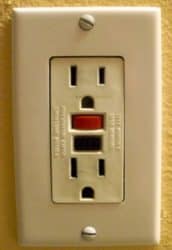
gfciI’m assuming the “plug-ins” you refer to are 120-volt AC receptacles. If all the circuit breakers are turned on and you do have power at other receptacles, check the GFCI mounted in the lavatory or galley. It’s likely tripped and is protecting more than just that receptacle. Simply push the reset button and then check those other receptacles. GFCIs are usually configured to protect the bathroom and/or galley circuit plus all other receptacles installed downstream of that one.

Personally, I do not have source for an electrical diagram (if one even exists). R-Vision does, however, have an active club online at this website. But, alas, you must be a member to search the forum. I’d suggest you join that organization (it’s free) and see if any of the members have access to the diagram you are looking for. Individual brand RV clubs are great sources of information, from owner to owner. Almost certainly you’ll gain additional help from that group.

Read more from Gary Bunzer at the RVdoctor.com. See Gary’s videos about RV repair and maintenance.

##RVT769

The tree stump that refuses to die


The stump that wouldn’t die
stump768
Normally when you cut down a tree and leave a stump, it dies. Eventually it rots and other plants begin to grow from the “nurse” tree. But notice that nothing grows from this Douglas Fir stump near Crater Lake. That’s because it’s still very much alive.

The reason is because before it was cut down its roots had grafted onto its next door neighbor, also a Douglas Fir. So when the tree got chopped down, no problem, it just kept on going, sort of like the Energizer Bunny! 

. . . And in case you have ever wondered, the Douglas Fir is named after David Douglas, a Scottish botanist and collector who first reported the extraordinary nature and potential of the species. But, alas, there is more to the story: the tree’s scientific name, Pseudotsuga menziesii, honors a rival botanist, Archibald Menzies. This doesn’t seem fair to me, but that’s the way it is.

Never get lost with Avenza maps – use even offline


Avenza Maps app
Avenza Maps app

By Bob Difley

Imagine being out in the boonies somewhere, as we RVers tend to do quite often, and you find yourself just a little lost. So you open your smartphone to get directions and — no Internet connection. Also imagine that you had already downloaded the Avenza Systems map for your area through its free app, and voila! There is your map!

Avenza Systems Inc., producers of MAPublisher® cartographic software for Adobe® Illustrator® and Geographic Imager® geospatial tools for Adobe Photoshop®, produces the Avenza Maps app, an all-inclusive mapping platform for iOS, Android, and Windows mobile devices. Consumers can download the app for free, get geo-referenced maps from the Avenza Map Store, and use them completely offline with a variety of tools.

Browse, preview, purchase and download professionally created, high quality maps from the Avenza Map Store, including 1:24,000 scale USGS topographic maps for the entire United States.

Use the built-in GPS in your mobile device to locate yourself on any map (even works offline without network connectivity). Want to record where you’re at? Simply drop placemarks at your location.

Navigating through a forest? Use the compass to orient yourself. Want to see how far you’ve walked, hiked, driven or biked? Record your activity using Record GPS Tracks and see exactly where you’ve been. View stats like elevation change and distance traveled on a graph including total time.

What’s a map without interaction? Drop placemark pins anywhere on the map with the tap of a finger. Need to move it? No problem. Just tap and hold a pin to pick it up, move it to the spot you want, then release it to drop it.

Easily find Latitude/Longitude, Northing/Easting, and Military Grid Reference System/United States National Grid. This tool also has the ability to search for a specified coordinate. How far is it to that next intersection? Use the Measure Distance tool to measure how far you need to travel. Use the option to quickly change the measurement units. Captured a photo of something interesting and want to plot it on your map? Simply add the geotagged photo and a placemark will drop in the correct location on your map. It couldn’t be any easier.

APP FEATURES
• Use maps offline without network internet connectivity
• Plot placemarks, change pin colors, position and label names, enter attribute data and notes
• Track real-time movement with GPS (includes speed and elevation statistics)
• Easily find the coordinates of any location in a map
• Measure distances and areas

For more information, visit the Avenza Maps website.

You can find Bob Difley’s RVing ebooks on Amazon Kindle. Follow on BoondockBobblog.

##bd11-16; ##RVT769