Dear Mike,
I have a 50 amp outlet I had put in, and from either hot to the neutral it reads 120 volts, but measuring between both hots it reads 240 volts. Is this outlet wired correctly? —Craig
Dear Craig, Yes, that’s correct. Most consumers don’t realize that we have 240 volts coming into our homes in the USA, but it’s split in half by the neutral. So testing Neutral to either Hot should measure 120 volts, and testing Hot-1 to Hot-2 should measure around either 240 volts or 208 volts (depending on if you’re wired into a single-phase panel or a 3-phase service panel). Ground to Neutral should measure very close to zero volts if there’s no amperage load on the panel, but can go up to 3 volts during high current draw in the panel and still be in code compliance.
Mike Sokol is an electrical and professional sound expert with 40 years in the industry. Visit NoShockZone.org for more electrical safety tips. His excellent book RV Electrical Safety is available at Amazon.com.
Parking your RV at a friend’s or relative’s house? What happens if you keep blowing fuses because your RV pulls more amps than the 15 amp circuit can supply? Heatwave not allowing you to use your air conditioner because you really need 50 amps to make it happen? Well, do not despair, help is as near as your local hardware store.
Depending on the electric code of the state you live in, this job may be done several ways, either as a temporary setup or as a permanent outdoor 50 amp receptacle. Either way I highly recommend you hire a certified electrician to connect it for you because we are dealing with electricity here and it’s DANGEROUS if you don’t know what you’re doing. In reality, it’s dangerous even if you do know what you’re doing! A certified electrician will install your receptacle using the proper code guidelines for your state. That being said, your electrician can put a 50 amp circuit breaker in the electric service box, hook up #6 wire to it and run it outside and into a weatherproof 2 gang (deep) box with a weatherproof cover and you are in business.
In my case I could not route the Romex #6 wire casing outside without tearing out the drywall around the box. Since we were only staying here a few days, my brother-in-law and I decided to rig a temporary “emergency” setup until a more permanent solution could be achieved. I bought about 10 feet of #6 Romex wire which has four wires in a sheath. It consists of a ground wire, a white #6 common, a red #6 and a black #6 and costs around $2.50 per foot at Home Depot. I also purchased a 50 amp breaker that fit the electric service box and a 50 amp female receptacle that has its own self-contained box. We basically made a heavy-duty extension cord that comes right off the electrical service box.
scottbb on flickr.com
Your electrician will remove the service cover and determine if there is room for a 50 amp breaker. In our case we removed a 40 amp breaker that wasn’t being used. We installed the receptacle after stripping the proper amount of wire off the Romex. We removed about 16 inches of the Romex cover to expose the wires that would be going to the breaker and service box. We stripped the tips of the wires and inserted the black into one side of the breaker and the red into the other side. It doesn’t matter which side your electrician puts the red or black wires on.
Next we inserted the white common wire on the electric service common bar and also inserted the ground wire onto the ground bar in the box. All these connections are made secure by tightening screws down on the wires. How your electrician brings the wire out of the box to the receptacle depends on the local electric code. We inserted the breaker, tested the receptacle with a volt meter, plugged in the RV and flipped the breaker to the “on” position and have been enjoying refreshing air conditioning ever since.
The way you test to make sure the receptacle is properly wired is to set your volt meter on AC to measure 240 volts. Place one lead into the receptacle where the black wire is and one where the red wire is and you should get a reading of 240 volts. Move the black test lead down to the common (white) wire and you should read 120. Now move the test lead that is on the red wire over to the black side while leaving the other test lead in the common (white) and you should read 120. Next move the lead on the black wire to the ground wire (the hole) and the other lead remains in the common (white – bottom blade) and you should read 0. If it checks out you’re good to go; if not, then troubleshoot the problem. Make sure the ground wire is in the green receptacle screw down holder and the common (white) is in the bottom blade position on the receptacle.
Warning: Do not attempt this as a do-it-yourself project; use a qualified electrician to install it for you. This information is only intended to inform you so you can speak intelligently to the electrician you hire to install your outlet.
If you’re planning your first visit to Quartzsite, or perhaps are already there, it may take a little time to “get the lay of the land.” Quartzsite is definitely an “original,” and it is decidedly a small town – despite the fact that during the height of the season you’ll think you’re in the middle of an LA traffic jam. But speaking of jam, where do you get it? Jam, that is, or for that matter, any other of your needed groceries? We’ll try and sort out the offerings in and near Quartzsite.
Quartzsite has but three “regular” grocery stores, that is, more or less permanently moored sticks and bricks retailers. Each has its own look and feel. Starting at the east end of town and moving west, they are:
General Store: Perhaps the longest-lived grocery in all of town, the General Store is a relatively small retailer. A fair variety of common grocery items are available. The dairy case rarely runs out, the bread can get a little thin at the height of the season. When it comes to produce, well, there is generally a limited supply of produce, but don’t expect high quality in terms of freshness, nor a big selection. Perhaps the General Store’s claim to fame is the meat department. Much of the offerings here are cut “in store,” and the butcher will be happy to assist you with selections and even in portion sizes. Years back it was really the only sensible place to buy meat; prices (like everywhere) have inched up, but look for specials. A small hot deli will provide you with necessary “grab and go grub.” On the B-10 (Main Street) just west of Quartzsite’s “shopping center,” Beals and the Dollar Store.
Roadrunner: The management at the Roadrunner have pushed hard to make their establishment “the place” to shop. They’ve expanded overall floor space to add greater selections in their cold cases, and have a pretty fair selection of produce, undoubtedly the largest in town. Produce prices tend to be all over the map, leaning toward a little high, compared to larger city prices. Dairy and bread are generally always available; they are trying to make a big claim in the meat department, having their own “in store” butcher. Compare their prices and quality to the General Store and you’ll have to make up your own mind. All in all, Roadrunner probably has the largest offering of general grocery items of anyone in town. You’ll find them a couple of blocks east of Highway 95.
Big Market: Despite its name, and the fact that the building is fairly large, the Big Market doesn’t really have a big selection of groceries, per se. If your thirst takes you out for beer, well, then you’ll find many feet of cold ale just awaiting your selection. Looking for hardware on Sunday when Herb’s Hardware is closed? Well, your choice is the Big Market, where nearly half the floor space is taken up with hardware-like supplies. What about fresh meat and produce? Look elsewhere, pardner – it ain’t happening here. And if your moral values tend to cause you to avoid looking at salacious materials, well, DO NOT take a right turn as you head in the door. A large rack of slick magazines, catering to more prurient interests, lies to the right of the door, and the covers are not stashed behind plain wrappers. Big Market is on the south side of Main Street, close to the west end of town.
Alternative shopping in Q: If you’re looking for milk, eggs and bread, check out Dollar General on Main Street, a couple blocks west of the Big Market. Gallons of moo are less than $2, and if you hurry, you’ll find all three grades of cow nectar. Egg quantities are limited to keep dealers from buying and reselling this low-priced hen-fruit.
Of course, each season “dent tents” rise up all over the countryside, selling dented cans, and past-pull-date cereals. Buyer beware here: We’ve found in many cases mashed cans for sale in some of these establishments that could be purchased for less money – and without dents – at Walmart. If you’ve got plenty of time and a feel for good prices, dig away!
Or head out of town: If you don’t mind putting a few miles on your odometer, chugging into Blythe or Parker will lead you to a wider selection of groceries, and lower prices.
Blythe Albertsons was until just recently the “big gorilla” of grocery stores. They have the typical selection of groceries of all varieties of any big city grocery store, but with a twist. We’ve run into folks who’ve come into Blythe from, say, the Los Angeles area, carrying their current Albertsons store fliers. Once in the Blythe store they’ve been downright upset that the “sale” prices from the flier were less than the “sale” prices in the Blythe store. Locals tell us that’s particularly so at the height of the season. From our perspective, prices in the Blythe store are higher than the proverbial cat’s back. And if you’ve a sensitive nose, beware the “fresh fish market” at the back of the store. ‘Nuf said.
Smart & Final in Blythe is now really giving old Joe Albertson a run for his money. After years of operating out of a tiny joint in the backwoods of the north end of town “Fart and Smile” (as the kids snickeringly call the place) rolled open the doors to their HUGE market at the corner of 7th and Hobson Way – just kitty-corner to the Albertsons venue. Call me a little nasty, I had to giggle when I saw their new location. It’s a BIG store, and has a huge selection. The outfit carries a wide selection of grocery items; their produce department puts Albertsons to shame, and while no in-house meat cutting, the prices on carnivore-delight are decidedly better than Albertsons. Don’t be put off by the thought that Smart and Final is somewhat akin to a wholesale supplier. While they do have “club” sizes, they also have plenty of the same stuff in packages that are sized to accommodate the small living (and storage) space of RVers. Look for “manager specials” that aren’t in their sales fliers. We spotted packs of chicken breast with rib meat for less than 40 cents a pound.
Walmart up in Parker is labeled a “Super Center,” but, hey, I think it must have been around for an episode of “Honey, I Shrunk the Kids.” Typical Walmart prices of groceries, and a fair selection thereof. The produce department runs on a par lower than your average Walmart store – if you could even believe that possible. Sorry, but this is one of those Walmart stores where management needs to have its stern-quarters kicked. Look to see empty shelves here and there, and don’t expect to find a particularly helpful attitude. You may spend more money but find greater selection across the street at …
Safeway: Most decidedly a better selection of products than most small-town stores but, of course, you’ll pay for it. Still, the prices at the Parker Safeway seem to look about the same as Safeways elsewhere, rather than taking on a “captive audience” mentality. If you’ve shopped Safeway regularly, though, you probably know that since Albertsons bought out the chain the prices have crept up a bit.
Bashas’ also had a presence in Parker. Within the last year they’ve relabeled themselves as Food City. That’s a lower-tier cousin in the company line-up. To make sure you really knew it, they ripped up the tiled floors and give you concrete to walk in. Seriously, this was their idea of a “remodel.” Their produce department, albeit small, does have the occasional good find, but not as good as when they wore the Bashas’ banner. Still, it might be worth a one-time look-see to figure out if you want to make the store a stopover.
Big city run? For our money, once a month we pack up for the day and head over to metro Phoenix. Our typical stops include Costco (plenty of these in the area), a specialty hardware run to Lowe’s or Home Depot, and a couple of hours in Winco.
On this latter, if you haven’t made acquaintance with this employee-owned grocery store, well, you’re in for a surprise. Acres and acres of pretty much lower prices than most everybody else, and if you can’t find it, surprise! Just ask any employee and expect to be treated with genuine concern and friendliness. Their bulk food area is terrific, and you can buy just the amount you need – with really good prices. Ha! We used to crow about the meat prices at Costco, and for some items, they’re still the King. But if it comes to ground beef, you’ll find less-fat-percentage hamburger for less money than you’ll spend getting a big bunch from the freezer over at Costco.
Most historic or recreation sites managed by the BLM don’t get a lot of publicity and even less advertising. So you may zip on by such a location and not even know it existed, or that you’ve passed within a stone’s throw from it.
Painted Rock Petroglyph Site, about 90 miles southwest of Phoenix, is typical. The only clue you get while barreling down the Interstate 8 freeway is the name given to Exit 102 — Painted Rock Dam Road — 12.5 miles west of Gila Bend.
If you are curious enough to take the exit looking for the “Painted Rock,” you will have to follow Painted Rock Dam Road for 10.7 miles (thankfully it is now paved), then 0.6 miles (unpaved) due west on Rocky Point Road. It may come as somewhat of a surprise when you arrive to find picnic tables, barbecue grills, fire rings, toilets, and a primitive campground.
Sorry, no hookups, no drinking water, and no dump station (which keeps about 90 percent of the RVers from spending the night), but you will find a helpful and informative host from October through April. There is a day use charge of $2 and camping is $8 — but don’t go telling everybody. Right now it is a nice, isolated campground, far enough off the Interstate you won’t hear it even in the blissfully quiet desert nights.
However, this archeological site exists not because of the campground, but because of the hundreds — yes, hundreds — of petroglyphs carved into the rocks by prehistoric Native Americans. You will also find inscriptions from the beginning of Arizona history made by members of Juan Bautista de Anza’s expedition that founded San Francisco, the Mormon Battalion when they passed through on their way to Utah, and the Butterfield Overland Mail — one of the first mail delivery services to the Wild West.
In the spring, the wildflower bloom can be spectacular. Winter temperatures are typical of the Sonora desert, with near freezing on the coldest nights and rising to 80 degrees on the warmest days. Boondockers carrying plenty of water and arriving with empty holding tanks will find this a quite comfortable and quiet stopover or getaway from the crowded snowbird locations around Phoenix.
Accidentally scratching the paint on an RV with a metal handle while washing it is a thing of the past with Shurhold Industries’ new Handle Mate PFD. It protects RV surfaces from scratches, dings and other blemishes that can be caused by unintentional slips.
The Handle Mate PFD is a durable black neoprene sleeve that fits securely over the company’s 5′, 6′ and 9′ handles. Easily installed, the patented device provides a soft, cushioned grip while protecting an RV’s paint. If ever used on a boat or near the water, an included foam insert slides inside the hollow handle for additional flotation.
The innovative device increases the functionality of Shurhold’s One Handle Does It All system. Now mops, brooms, squeegees and any of the company’s other handle attachments can be used without fear of damaging the finish.
Handle Mate PFD for Shurhold’s 5′ fixed length handle sells for $12.98, and $14.98 and $17.98 for the 6′ and 9′ telescoping handle, respectively. A couple of the sizes are currently available on Amazon.
Learn about RV camping, RV travel, RV news and much more. This newsletter, now in its 16th year of continuous publication, is funded primarily through advertising and voluntary subscription contributions from our readers. Thank you!
Issue 768 • Week of Nov. 12–18, 2016
Home sweet home. That’s me doing a little typing on the picnic table.
Editor’s corner With Chuck Woodbury Chuck (at) RVtravel.com
I’m in my third month of full-time RV living. So far everything is good. Here are some thoughts:
•Even though, at 32 feet, my motorhome is relatively short for full-timing, Gail and I do not feel cramped. Having two distinct rooms (plus the bathroom) makes a huge difference. When we want some time to ourselves, we can adjourn to the bedroom, close the door, and have our privacy. I like to read in there and write at my small desk. A full-wall slideout on the driver’s side of the RV and a slideout at the head of the bed on the passenger side add a lot of living space.
•You “live and breathe” RVs when you RV full-time and stay mostly in campgrounds and RV parks. You look out your window and it’s RVs and RVers. You watch these people come and go, hook up, unhook, tinker with their rigs, and there’s a constant parade by your campsite of all shapes and sizes of RVers and their dogs. Gail loves dogs, so she makes lots of new friends, human and the furry kind.
Home sweet home every two weeks.
•I miss having a washing machine. I don’t miss a dishwasher or a garbage disposal, but I do miss the washer. Our RV is too small for an onboard laundry, but I wouldn’t want one anyway. From what I hear they take forever to wash and then dry. So we use coin laundries — some in the RV parks and others a short drive away. We have lots of time on our hands, so it’s no big deal. We can go about two weeks between washings.
•Gail and I both sleep well in our bed (with its electric blanket), and the kitchen is big enough for Gail to prepare meals pretty much as in a home kitchen. We don’t watch much TV, but the TV is well positioned in our RV so it’s easy to see without bending our necks (as in many stupidly designed RVs).
My Jetpack. I can get online at very fast speeds with this. My service is with Verizon, but all services offer basically the same thing.
•GETTING ONLINE IS NOT MUCH DIFFERENT from what it was at my former home, except we now have limited bandwidth. Gail and I both have Verizon Jetpacks (MiFi cards) so can connect from about anywhere. We use campground WiFi when available. Watching Netflix either exhausts your bandwidth or slows the WiFi at a park, so it’s not something we do anymore. I still watch YouTube videos, but at a low bandwidth (learn how to do that here).
•I miss my friends and family, but the stimulation of being on the road makes up for it. Gail has grandchildren, who she misses. She’ll fly to see them a couple of times a year and we’ll swing by occasionally in the RV, too. For now, I stay in touch with the important people in my life by email, chat and Facebook, so they never seem far away.
•I do not miss my mortgage payment, my condo dues, homeowner’s insurance, Comcast and other utility bills.
A big refrigerator is nice.
•I do not miss my clothes. I gave away three-quarters of what I had, keeping the basics. If I need something else I’ll just buy it. Same with Gail.
•I am thankful for our big refrigerator. Full-time RVing would be more challenging with a smaller one, although it certainly could be done.
•We have so far stayed a couple of weeks in each RV park. In the future we plan to stay a month or longer. Having our small Honda Fit along is terrific for our freedom and our pocketbook (35 mpg). When we want to stay “home” and just take it easy, fine. When we want to run errands or sightsee, the car is right there.
•Taking care of finances is a snap. We can do all our banking and manage all our other affairs online. I’ve gone mostly paperless so there’s only a trickle of snail mail to my PO box. A friend monitors what does arrive. Every few weeks we video chat. He holds up whatever looks important. It’s mostly junk, but once in awhile I have him open something to show it to me. If necessary, he can forward it along.
•I still do not like driving my new, longer motorhome, and I don’t like its height, about a foot taller than my last one. I don’t envision driving many secondary highways and other back roads in my future. Narrow lanes, low underpasses, longer braking distances, and the inability to back up (with the dinghy) make driving more challenging and less enjoyable. I’ll write more about this later.
•I am beginning to think of campgrounds as “cramped-grounds,” because they are often crowded even in the winter season. So far we’re okay, but we’re not very far south yet, where the snowbirds have already arrived and occupied many of the best places. There are a lot more full-timers today than even five years ago. Many are living in RVs because of economic necessity. Their RVs are too-often old and beat up, which junks up the campgrounds where they stay.
Anyway, those are just some of my observations so far.
Decisions, decisions.
P.S. Happy belated Veterans Day to all you who have served or are serving our country. My staff and I appreciate your service very much!
Also . . . my 2008 Winnebago View motorhome is still available. It’s a great unit that was largely trouble free while I owned it. I’m not sure why it hasn’t sold. It’s here if you’re interested.
My Roadside Journal (about whatever is on my mind, not necessarily RV-related)
• Roadside Journal Entries for Nov. 8:
• Walking Dead • Building on a building • Purple-haired woman • Too much for a newspaper • Oregon trivia
Happy Birthday! Happy Anniversary!
Wish your special someone a Happy Birthday or Happy Anniversary and we’ll post your well-wishes and your short comment right in this newsletter. It’s super easy to leave your greeting. Just click here. Remember to send them in prior to the Saturday before the big event.
See this week’s greetings near the bottom of this newsletter.
Drive there in your RV, tour there on your Evelo! Park your RV and use your space-saving Evelo electric bike to tour, run errands and stay in shape (by using manual mode). The Evelo is fun, economical and energy-efficient — a perfect match for RVing adventures. Save BIG during our upcomingBlack Friday sale! Watch the video, then click here for more details on the sale and how to purchase.
Kidde recalls 5 million combination smoke/CO alarms
Approximately 5.1 million Kidde NightHawk combination smoke/carbon monoxide (CO) alarms sold in the U.S. and Canada are being recalled. The alarm can fail to continue to chirp when it reaches its seven year end of life if the batteries are replaced, leading consumers to believe it is still working. This poses a risk of consumers not being alerted to a fire or CO incident in their home. Learn more.
Forest River, Holiday Rambler issue RV recalls
Forest River is recalling certain model year 2017 Dynamax Isata motorhomes manufactured May 19, 2016, to October 19, 2016, for issues which could cause a propane leak and fire. REV Recreation Group (REV) has also issued a recall for certain model year 2015-2016 Holiday Rambler Vacationer motorhomes for conditions which may increase risk of a fire or a crash. Read more.
Is reading this newsletter worth 10 cents to you? Our staff works hard to bring you a valuable newsletter. Readers help make it possible with their voluntary subscriptions. Even a pledge of $5 a year is appreciated — that’s less than 10 cents an issue! Many readers pledge more — $10 a year is less than 20 cents an issue! Your contributions make it possible for us to continuing publishing. Enter a voluntary subscription. Thank you.
Reader RVs
What RV do you drive or tow? Send us a photo of your RV (and tow vehicle) with a 150-200 word description of where and how often you travel with it, and what you like or don’t like about it. Include your name(s) and hometown. We’ll post them to RVtravel.com. Send to assistant editor Diane McGovern at Diane(at)RVtravel.com . CLICK HERE to see last week’s RV Travel Reader RVs. (More next week.)
THIS WEEK’S CONTEST! UPDATE 12:30 Monday: WE HAVE OUR WINNER (as picked by Random.org).. Hold your entries. Good luck next time! Win this incredible mug. Few would argue that it’s spectacular! The winner will be chosen randomly out of all correct entries received by noon (Pacific), Monday. The question: In this issue’s Trivia section below, in a 1907 ad what did a woman need to do to get a free box of Kellogg’s Corn Flakes? Email your answer to RVcontests (at) gmail.com. We can only ship prizes to addresses with a U.S. Zip Code. Only one entry per household. Contest ends Monday at noon (Pacific) at which time a winner will be selected using Random.org. We’ll let you know if you win. The winner will have 24 hours to respond or forfeit the prize. After that, another potential winner will be selected until we hear from and have a winner.
Last week’s winner: Paul Richardson, of Newnan, Georgia.
If you’ve been dodging potholes and pavement cracks and think it’s getting worse – you’re right. A non-profit highway watchdog, TRIP, says nearly a third of U.S. major urban roads are in “substandard or poor” condition, costing drivers plenty of money to fix damage. The top three “worst” roads in the U.S. are (not surprisingly) in California: San Francisco, Los Angeles and San Jose. Buckle up!
Andrew Molera State Park in California’s Big Sur country has partially reopened. Used as a base camp for crews fighting a forest fire, the park was closed entirely for some time, but now areas west of Highway 1 have reopened. Camping is available for tenters on a walk-in basis; no RV camping is available.
Illinois’ state park management has come under fire by the U.S. Army Corps of Engineers. The federal agency says the state has taken such bad care of South Shore State Park near Carlyle that the agency has been forced to take back the property from the state, which had leased it. The park is now closed while the feds “make the area safe for public access.” It may or may not mean reopening of the campground at the site.
El Segundo, Calif., RV owners talked and city lawmakers listened – at least for now. The city council was about to approve an RV parking ordinance when a group of local RV owners raised a squawk. Calling the new ordinance discriminatory because it would ban overnight RV parking and require payment for a permit to temporarily park a rig near a residence, RVers prevailed on the council to retreat. Council will rework the proposed law and revisit the matter in January.
Hazard tree removal has forced the shutdown of Princess Creek Campground west of La Pine, Ore. The Forest Service says the campground will be closed for several weeks.
Photos: National Park Service
A popular holiday tradition at Mesa Verde National Park (Colorado) has been scrubbed. Spruce Tree House, the third largest cliff dwelling dating back to the 1200s, has typically been an “open house” illuminated with candles at night during the winter holiday season. Due to rock fall danger, park management has canceled this year’s Open House and Luminaria event, citing the need to avoid danger to park staff if sent into the dwelling to place and light candles.
Arizona high country camping has officially closed down for the season in campgrounds of the Williams and Tusayan Ranger Districts of the Kaibab National Forest. Many are in the Williams area, and will reopen come May 2017.
Photo: Doug Kerr on Flickr.com
If you grouse about having to pay at a tollbooth, put your feet in the shoes of the Pennsylvania Turnpike Authority. Because of the volume of traffic, there are no barriers in the “E-ZPass Lane,” so if a vehicle blasts through the lane without payment, there’s no stopping them. Evidently some truckers know it, so the agency now has a list of trucking companies who haven’t paid – a whopping $9 million worth. The worst offender owes $680,000 for some 7,600 scoff-law incidents. The offending companies have thumbed their noses at requests for payment. Now the state legislature is working on a bill that would help collect on the unpaid fines.
RV Armor has tough skin! RV Armor’s tough skin was featured recently in Trailer Life. Read the full story here. RV Armor offers a unique, liquid applied roof system that is Guaranteed for the Life of the RV! No more maintenance, seams, or headaches. Nationwide mobile service. We come to you. To learn more, call 1-855-782-7667 or click here. Click the video to see our 2-day process in 6 minutes!
More News
In case you missed the announcement last week regarding the total eclipse of the sun, which will be visible in parts of the U.S. on August 21, 2017: Oregon State Parks officials are ramping up early, since a number of parks will be in the path. Starting at 12:01 a.m.,November 17, the reservation website oregonstateparks.org will accept reservations for parks in the “path of totality” and 30 miles outside the path. Phone reservations will open at 8:00 a.m. Local motels and hotels already report being booked full for the date. For information about reservations at Missouri State Parks for the total eclipse, click here.
For the folks in Ottawa, Ontario, Canada, 2017 is an important year – Canada’s 150th anniversary. During the big-bash weekend of June 29 through July 4, there will be a huge influx of folks and city fathers say they’ll allow “pop up” temporary campgrounds in places like sport arenas. But just because it’s a “campground,” it won’t be quite the same: no campfires, no booze, and – gasp! – no utility hookups.
Some RV parks in the Yuma, Ariz./Winterhaven, Calif., areas are providing their guests with dirty, smelly water. The law says they must provide clean, drinkable water, but some are ignoring it. Read more.
RVers have been following the case of Travis Vader, accused in the murders of Lyle and Marie McCann, a Canadian couple who vanished while RVing in 2010. In mid-September, Vader was acquitted of first-degree murder, but found guilty of second-degree murder by an Edmonton, Alberta, judge. In a new twist, the same judge has vacated Vader’s judgment and found him guilty of manslaughter. The judge says he’ll release his reasons in writing somewhere down the road.
Unusually warm weather has created a shortened fall leaf-peeping season, say Indiana officials. The usual autumn leaf displays have been late coming on and, as a result, fewer days of enjoyment are available. Tips? Southern Indiana tourist towns are putting on a good show now, and the oaks of central Indiana will be good for a few more weeks.
Trying to control RV parking has proved to be a frustrating exercise for Walbridge, Ohio, village council members. For the last two years the council has tried (and failed) on at least three occasions to draft a new ordinance. The village’s building and lands committee chairman, whose committee brought the matter up to start with, is so tired of the issue he says if an ordinance can’t be worked out by the end of the year he’ll resign from the committee.
Photo: Howell Township Police 911 Communications
No treats for the Howell, N.J., RVer who went for a wild motorhome drive on Halloween. Robert Kalipersad, 52, was allegedly intoxicated and blasted at least four utility poles and a 150-foot run of fence, ripping open the side of his Class C motorhome in the process. When police attempted to collar him, he tried driving the rig off into the woods, got stuck, then tried to beat feet. No good — he was apprehended and now faces 10 charges of law violating.
A man who claimed to be a park ranger didn’t prove too convincing, but he shoots a good arrow. Brian C. Elliot approached visitors at Tom Sawyer State Park near Louisville, Ky., claiming to be a ranger and demanding the visitors leave the park. When the visitors asked for identification, Elliot allegedly pointed to a spot on a tree then used a crossbow to hit the spot with an arrow. The latter action was enough to convince the visitors to leave – and call genuine law enforcement. Elliot was later arrested and faces charges.
Photo: trippinavan on facebook.com
Not spending enough time together as a family? Why not try an RV vacation on the coast? Justin and Rebecca Lorrimer did just that, but the Australian family hadn’t counted on local wildlife to enliven the trip. A kangaroo jumped through their motorhome’s open door and refused to leave until lured back outside with an apple. Next day, the ‘roo returned – with friends in tow. Check out Justin’s video.
Scammers have apparently sent emails to members of the Escapees RV Club to update their PayPal credit cards. The email appeared to come from clubbusiness@escapees.com. The Escapees, a club of mostly full-time RVers, report the emails are bogus and they are taking up the matter with the FBI.
Keep up with RV Industry news throughout the week at RVbusiness.com.
Winter Differently This Year! When temperatures drop and the snow starts to fall, head south for the Winter! Florida, Arizona and South Texas benefit from beautiful sunny days and gentle warm breezes. You can too! Stay a week, a month, or the whole season! Book your long-term seasonal or annual stay at one of over 80 resorts in the Southern United States. Click here to learn more!
Ephrata, Pennsylvania, honors veterans on banners along two main streets. A banner sponsorship is $160 with proceeds helping support local veteran assistance programs.
RV Quick Tips
Keep your “Welcome” mat flat
Parked on a concrete RV pad? Keep your “Welcome” mat from blowing away or bunching up by sticking it down with duct tape.
How to handle speed bumps
If you take your RV across a speed bump, you may find it pops open cabinet doors. Alleviate this issue by taking on the speed bumps “dead-on” and slow, rather than hitting them at an angle. An angle approach causes more coach rocking.
Is your roof air conditioner dripping?
Got a dripping roof air conditioner, but it’s not raining outside? If the a/c drips when operating, you probably have clogged drain holes inside the unit. Disconnect shore power, shut off the generator. Remove the shroud from the unit and look for debris blocking drain holes in the bottom plate of the roof-top unit.
Do you have a Quick Tip? Send it to Diane (at) RVtravel.com and you just might see it here!
Reduce air drag and boost fuel efficiency — Airtab® your RV! Just peel and stick Airtabs™ to the rear sides and the rear roof of your RV coach or trailer to create swirls of air that reduce aerodynamic drag, save fuel and improve stability. Airtabs™ dramatically reduce trailer ‘fish tailing’ and crosswinds pressure to RVs from passing trucks, while improving fuel efficiency 2% – 5%! Click on the video.
Get more from your solar panels — Keep them clean!
Rich “The Wanderman” checked his RV recently to see how everything was doing after winterizing it a few weeks ago. He was very surprised that the solar charging system was only producing a few watts of power. Thankfully, the cause was readily apparent and easily remedied. Find out why it’s imperative to keep your solar panels clean, and how to clean them. Learn more.
Motorhome blows tire, rolls over. Sad!
Here’s what happens when a motorhome blows a tire and the driver doesn’t know how to react. If he had known the correct procedure to get the rig under control, his only problem would likely have been fixing the tire. Watch the video. Also included is a video about what to do if your RV or other vehicle blows a tire. Critical information!
How to keep your tanks, water lines from freezing
With cold weather arriving soon, one RVer asks: “How can I keep my tanks and water lines from freezing up in cold weather?” It’s a good question, and one Russ and Tiña De Maris learned about early in their RVing days when they woke up one frosty morning to find their water line looked like an icicle. Here are some great tips from Russ and Tiña to prevent freeze-ups.
Are tires made in China really that bad?
You hear a lot of talk about Chinese tires being inferior to tires made in the United States. In this segment from the webcast RV Talk Live, RVtravel.com editor Chuck Woodbury talks with tire expert Roger Marble about Chinese tires and their merits. Watch the video.
Lube your slideout?
Chris Dougherty, certified RV technician, received the following question from a reader while he was serving as RVtravel.com’s technical editor: “We own a 2011 Coachmen Mirada 29DS. The DS means that it has double slides: one for the bedroom, and the other for the living area. How often do I need to lubricate the slide mechanisms and what should I use to lubricate them?” Read Chris’ response.
RV Parts and Accessories
Give Dyers a try on your next purchase of RV parts or accessories. Large selection, great service, low prices and fast shipping. Visit our website.
No Shock Zone, Part Eight
In this episode, learn about GFCI (Ground Fault Circuit Interrupter) outlets and breakers. The information in this 12-part series has saved lives. It’s very important.Take the time to read. If you missed last week’s episode about how wattage works and how to keep from tripping the circuit breaker, read it here.
Advice about when to replace tires may be wrong
How much tread do you have left on your tires? When is it time to replace them? One traditional piece of advice is to place a penny into the groove of a tire and if you can see Lincoln’s head, it’s time. But that may not be good enough. See why in this revealing two-minute video from ABC News. What you learn could end up saving your life. Watch the video.
Find boondock spots in the Southwest
Most of the land in the southwestern deserts, if not occupied with cities and towns, is part of the 253 million acres — about one-eighth of the nation’s entire land mass — managed by the federal government’s Bureau of Land Management (BLM). There are millions of acres where you can camp free. “Boondock Bob” Difley suggests ways to find these camping areas.
Mod that wet bed so it stays dry!
We RVers sometimes suffer an obnoxious — and health hazardous — problem: water condensation under the bed mattress, which can lead to mold and mildew. But here’s a quick and simple mod that can give you real comfort, particularly if you’re a winter RVer.
For a better rest, use a backflow preventer
We received a letter from a reader, as follows: “My husband is a neat-freak. He can’t stand to think about the stuff that lives in our motorhome holding tanks, and thinks that he needs to flush the tanks clean as a whistle every time we get home from an RV trip. I say he’s nuts. How can I get him into therapy?” Read Russ and Tiña De Maris’ humorous but helpful recommendations.
Like to sew? Cool ‘camper’ fabric!
If you like to sew, here’s a fun 100 percent cotton fabric you can turn into clothing or other projects for your favorite camper! Shirts, boxer shorts, pajamas, curtains, pillow cases, aprons — the list is endless. The dimensions of the fabric are 44 inches wide by the number of yards you order in length. Machine wash/tumble dry on low. Learn more or order.
This week in history Week of Nov. 12–18 Compiled by Dell Bert
1851 – “Moby-Dick” is published. (“Call me Ishmael.”)
1883 – Railroads create the first time zones.
1907 – Oklahoma enters the Union.
1954 – Ellis Island closes.
1956 – Elvis makes movie debut in “Love Me Tender.”
1958 – The Kingston Trio brings folk music to the top of the pop charts.
1965 – Craig Breedlove sets new land speed record (600.601 mph).
1982 – Vietnam Veterans Memorial is dedicated.
2001 – First Harry Potter film opens.
Keep your RV toasty warm
with indoor-safe radiant heater With a large heating surface, fold-down handle, swivel-out fuel connection, and an easy-start four-position control, RV Buddy’s Heater is great for RVs. With its low-oxygen shut-off and tip-over safety shut-off systems, this highly rated propane heater provides safe, reliable heat. Approved for indoor and outdoor use; clean-burning; nearly 100-percent efficient. Learn more or order at a big discount.
RV Club of the Week Here is an RV club we like. We hope you do, too!
Passport America
Passport America is the original half-price camping club. For $44 a year, members receive 50 percent discounts on nightly camping fees at more than 1,800 participating campgrounds and RV parks in the US, Canada and Mexico. For most RVers, it pays for itself with just a few nights’ stay. Negatives to a membership are that many parks do not honor discounts during the tourist season or holidays.
The Most Scenic Drives in America GREAT GIFT! The newly updated trip planner & travel guide will steer you down the most scenic road every time. From Florida’s Road to Flamingo, to British Columbia’s Sea to Sky Highway, to Cape Cod’s Sandy Shores, each featured road trip is pictured in stunning full color and described in vivid text, keyed to an easy-to-follow map. Whether you choose a drive on a distant road or a back road in your own state, this book is your ticket to North America’s most beautiful byways. Learn more or order.
Bumper sticker of the week I drive me RV; my wife drives me dinghy.
Funny/clever business slogan
Not a “slogan,” per se, but definitely an attention-getter: Beneath the Ice Cold Air sign in Hudson, Fla., is this message: “MY BOSS TOLD ME TO PUT SOMETHING ON THE SIGN.” Thanks to Bob Gaston, Dade City, Fla.
Have you seen a funny bumper sticker or business slogan? Send it to Diane(at)RVtravel.com
Microwave cover collapses for easy storage When heating your food you don’t want to spend 10 minutes later cleaning the splatters inside the microwave. Here’s the solution — and perfect for RVers: it pops down flat for easy storage. Lid perforations allow steam to escape to keep food moist. Doubles as a strainer, too! Learn more or order at Amazon.com
Upcoming RV Shows See the list of upcoming RV shows for 2016 and 2017.
GREAT GIFT No-touch dispenser automatically dispenses soap
Just put your hands beneath the dispenser and presto, just the right amount of soap is dispensed. Never pump again! Hayden’s soap dispenser uses Infrared Technology to automatically detect your hand fast. Uses 3 AAA batteries. The RVtravel-mobile has one of these and loves it! Learn more or order.
This sign in the pet area at a rest stop along I-5 near Red Bluff, Calif., warns visitors to watch out for rattlers!
Websites of the Week Here are three we like:
Inside some million-dollar motorhomes
Check out these “land yachts” — some of the priciest motorhomes on the market now. Do they make you want one? Or do they make you think, “Nah. I’m perfectly happy with what I have”? From lovemoney.com and msn.com.
Slow cooker comfort foods
These slow cooker comfort foods are the warm hug a lot of people might need right now. Try Hard Cider Bacon Mac and Cheese, Black Bean Chili With Lime and Cheddar, Crock-Pot Chicken and Dumplings, Slow Cooker Focaccia, Enchilada Soup, Pumpkin Brownies — just to name a few of these 50 deliciously comforting recipes. From SheKnows.com and msn.com.
The most iconic restaurant in every U.S. state
Dinner with a side of history, anyone? Over the years, certain restaurants have emerged as the ultimate representation of each state. Some of the restaurants on this list are rated the best in the country. Make sure to include some on your itinerary! From purewow.com and msn.com.
Quick, easy way to
change your trailer tire A flat tire on your trailer never comes at a good time. And when it happens, it can be a hassle getting the flat tire off the ground. Well, here’s a safe, quick and easy way to do it — without having to hassle with a jack! Learn more or order.
Good reading from RV123.com
• Cajun Palms is an exciting RV resort in southern Louisiana that offers fun for the whole family.
• Tired of ATM surcharges? The Allpoint ATM Finder app locates surcharge free ATMs near your location.
• This delicious and healthy clam chowder recipe is perfect for those cold nights.
Strengthen your hands, fingers and forearms Here’s a great, easy way to build up the strength in your hands, fingers or forearms. Perfect for RVers. If you suffer from arthritis, carpal tunnel, tendonitis or tennis elbow this is for you. It’s also great for simply building up the strength of your grip. This is a best-seller and costs about $8. GREAT GIFT! Learn more or order.
Ask the RV Shrink
Did RVers buy “too much” motorhome?
Dear RV Shrink:
I think we bought too much motorhome. It makes my husband nervous to drive. He’s always saying, “I just want to park this sucker.” We are now headed south for the winter and he will only drive on interstate highways, stay in commercial campgrounds with pull-thru sites and use truck-stop-sized gas stations…. I think we should lose about ten feet of living space, but my husband says we will take a bath on downsizing. Are we stuck? I wanted to see America, but not at 65 mph rocketing along some super slab. Help! —SuperSized in Santa Fe
Essential for big RVs! 2017 Rand McNally Motor Carriers’ Road Atlas If you drive a big RV — extra long or extra tall — then this truck driver’s road atlas will be a huge help in knowing where you can drive without encountering a low bridge or getting stuck hanging over a cliff. This is an essential aid even if you have a GPS! Coverage: United States, Canada, and Mexico. Learn more or order.
RV Tech Tips from Mark Polk
Our biggest RVing error
What is the most critical but least maintained component of your RV? The tires! In almost all cases, tire failure can be attributed to improper tire maintenance. The leading causes for tire failure are overloading and underinflation. Tires are rated for a maximum load capacity, but they can only support that capacity if they are inflated to the proper air pressure. The COLD PSI rating, on the sidewall of the tire, means if you inflate the tire to the recommended PSI when the tire is COLD (before traveling) it can support the maximum load capacity the tire is rated for. Less air pressure equals lower load capacity.
When you weigh your LOADED RV, you should weigh each individual tire or set of tires. If you weigh it by each axle, as opposed to each tire, it may not exceed the Gross Axle Weight Rating (GAWR) but can exceed a tire rating without you knowing it!
Mark Polk is the owner of RV Education 101, the premiere source of educational DVDs about buying, maintaining and using an RV. Learn more.
Latest fuel prices Here are the latest U.S. average prices per gallon of gasoline and diesel fuel: Regular unleaded gasoline: $2.23 (on Nov. 7). Change from week before: Up 0.3 cents; Change from year before: Down 0.2 cents. (Splitting hairs here. 😉 ) Diesel: $2.47 (on Nov. 7). Change from week before: Down 0.9 cents; Change from year before: Down 3 cents.
Fix it In Foil! Tasty Recipes. Easy cleanup! Easy prep, great taste, good nutrition, quick clean-up! “Fix It In Foil” includes 51 fantastic recipes to make in foil — plus instructions for cooking in an oven, on an outdoor grill, or on a campfire. Fix it in foil and forget about scrubbing pots and pans. And, with plenty of substitution suggestions, enjoy a whole new list of recipe possibilities! Great for RVing! Learn more or order.
RV Travel Reader Pets
Do you travel with a pet? We’d love to introduce your pet(s) to fellow readers. Send a photo or two of Fido or Boots and a 150-200 word description of your furry friend(s), along with your name(s) and hometown to Diane(at)RVtravel.com .
Click here to see the last issue of RV Travel Reader Pets.
Cooking with Convection Don’t know how to cook with your RV’s convection oven? Then this book is for you. Beatrice Ojakangas, an authority on convection cooking, explains how to use your convection oven to achieve perfect results in dramatically less time than with a conventional oven – from meat to side dishes to dessert — all at the same time. GREAT GIFT!Learn more or order.
The RV Kitchen with Janet Groene
Apple Cream Bars Applaud this apple dessert.
Bar cookies are so easy to make in a small oven. Simply cut them in squares and serve as is or topped with ice cream, whipped cream or yogurt. These apple-tite pleasing bars are moist and flavorful, an ideal encore to a meal of grilled chicken or ham steak. Your shortcut ingredients are a box of cake mix and a can of apple pie filling. Get the recipe.
Toss your colander. This is better! The adjustable Snap ‘n Strain silicone strainer fits nearly all pots and pans. Once snapped in, the pot can be tilted over a sink or bowl to do its magic. Leave it on the pan even while cooking! Works with heavier foods like potatoes. Super compact for storing, perfect for RVs. Dishwasher safe. Learn more or order.
The Digital RVer
Snowbird RVers can get DSL or cable Internet service
We’ve written a lot of articles here about how RV travelers can get Internet service. All the options are some type of wireless service because there is no wire that stretches with your RV down the road! But wired is almost always better than wireless — it’s more reliable, it’s usually faster, and there are generally no usage limits. So if you have that option – do it! Read how in this article from Chris Guld of Geeks on Tour.
The special offer for RV Travel readers is back!
Become a member of Geeks on Tour and get a 20% discount. Click here.
SAVE MONEY! Don’t toss away good batteries! Most RVers rely on battery-powered devices while on the road, whether flashlights, radios or cameras. But sometimes you just can’t tell how much life a battery has remaining so you toss it to “be sure.” This small, inexpensive tester will alert you in an instant to the condition of a battery, saving you money from needlessly tossing ones with plenty of remaining life! Works on AA, AAA, C, D, 9V and button-type batteries. Learn more or order.
Ask the RV Doctor The RV Doctor, Gary Bunzer, answers your questions
Getting the RV ready for winter storage For many RVers who live in northern regions where freeze warnings, wind chill and snow will soon become common talk on local weather forecasts. Late October and early November typically signal the end of the travel season for many RVers — time to prepare the RV for possible harsh winter weather ahead. Here are steps you should take to winterize your coach and protect all of its vital systems so the vehicle is ready to roll once the trees start budding out again. Read Gary’s article.
It’s Fall: Time to change your water filter! Camco TastePURE Water Filter with Flexible Hose Protector This best-selling product reduces bad taste, odor, chlorine and sediment in drinking water with a 100 micron fiber filter. Its durable in-line, exterior mount filter has a wider body to increase flow. Use it at your campsite to keep sediment out of your RV water tank and to improve the taste and smell of your drinking water for a whole season. Many RVers consider this essential equipment.Learn more or order at a big discount.
Boondocking tips with Bob Difley
Become a “boondocking expert”
You can become a boondocking expert if you do it often. Keep a log on how many days you can boondock without having to dump or replenish your on-board systems, and what measures — such as carrying extra water, watching less TV or using the shower warm-up water to flush the toilet — have contributed to extending your boondocking days. Soon you will be practicing these conservation habits automatically. These skills will open up thousands of square miles of forest land and open desert to you for boondocking and exploring.
Keep rodents out of your RV when stored this winter!
This is the only plant-based rodent repellent registered for inside use by the EPA. It effectively repels rodents up to 100 days with a “woodsy” scent that’s pleasant to humans but offensive to rodents. It’s safe around kids and pets. 98% biodegradable. Tested and endorsed by the Good Sam Club. Learn more or order.
Gizmos and Gadgets
Portable collapsible outdoor LED camping lantern
Etekcity’s portable collapsible outdoor LED lanterns are perfect for emergencies or for camping. They feature an omni-directional design with 30 low-current, energy-saving, bright-white light emitting diodes, yielding 360 degrees of high-intensity, long-lasting illumination. They are built with military grade water-resistant plastic for long-time durability and reliability. Read more.
Make plug-in electric heaters safer with SmartPlug
Portable heaters are a convenient way to ward off the season’s chill, but these devices increase amperage loads that poorly maintained electrical systems can’t handle. SmartPlug Systems, maker of the revolutionary SmartPlug, offers tips to identify potential safety hazards in a shore power system, and ways to safeguard against overheating and possible fire. They have an easy-to-install Retrofit Kit which includes everything needed to safeguard against these and other dangerous shore power situations. Learn more.
Use inside for reaching high cabinets! Fold-up step helps enter and exit RV Camco’s Folding RV Step is an extra-wide 8″ by 19″ platform with angled legs to provide stability. The folding legs lock open for an overall height of 8.75″. The gripper strips on the platform help keep you on solid footing. It folds down to only 2″ high for easy storage. The heavy-duty steel frame supports up to 350 pounds. This will really come in handy!Learn more or order at a discount.
RV Electricity with Mike Sokol
Dear Mike,
We recently purchased a pop-up camper. We set it up in the driveway to check things out. My daughter got a shock when she was standing on the grass and touched the camper door. I checked it out and realized that the extension cord had a bad ground wire. I hooked up an extension cord with a good ground wire, then the camper did not shock me. Exactly what’s happening? —A Shocked Reader
Mike Sokol is an electrical and professional sound expert with 40 years in the industry. Visit NoShockZone.org for more electrical safety tips. His excellent book RV Electrical Safety is available at Amazon.com.
Avoid moisture damage to your RV DampRid FG50T Hi-Capacity Moisture Absorber, 4-Pound Tub eliminates musty odors in RVs and other spaces, protecting them from moisture damage for up to 60 days in areas up to 1000 square feet, and up to 6 months in a 250-square-foot area. Don’t let your rig get damaged from moisture this winter. Learn more or order.
Stupid Statements of Yesteryear
“The concept is interesting and well-formed, but in order to earn better than a ‘C,’ the idea must be feasible.” —A Yale University management professor in response to Fred Smith’s paper proposing reliable overnight delivery service. (Smith went on to found FedEx.)
Convert your RV’s stove top to a temporary food prep area The Universal Fit Stove Top Cover provides extra counter space in your RV as well as protecting and hiding the burners when the stove isn’t in use. The rattle-free design is compatible with 3- or 4-burner stoves and will enhance and complement your RV or marine kitchen decor. Cover is made of durable 20-gauge steel with a powder-coated black finish. Learn more or order.
Videos you’ll like
Harvest Hosts: Staying at farms and wineries
A young full-timing couple explains their experiences as members of Harvest Hosts, where members ($44 a year) can stay overnight for no charge at farms and wineries across the USA. Watch the video.
Should you unplug your RV during lightning?
RV electricity expert Mike Sokol offers advice and includes an explanation about how a damaging strike can happen even if it occurs far from your own RV in the campground. Watch the video.
Random RV Thought Winter is coming soon, and that means rain. If you will be using your RV in the winter or storing it outside, be sure to have its roof inspected for leaks. A leak can severely damage your RV’s structure, an often very costly repair.
WINTER IS HERE! Stock up on RV antifreeze
at a great price! Prestone RV Waterline Antifreeze is ideal for winterizing RVs and other types of potable water supply systems. It features burst protection to -50 degrees Fahrenheit, a non-staining dye, and a ready-to-use formula. It does not need to be diluted. Learn more or order at a great price.
Trivia
In 1907, an ad campaign for Kellogg’s Corn Flakes offered a free box of cereal to any woman who would wink at her grocer.
Lightweight vacuum perfect for RVs This Dirt Devil Simpli-Stick Lightweight Bagless Stick Vacuum is compact and it works great. Plus it converts to a hand vacuum in a snap! It’s the vacuum of choice in the RV Travel motorhome. Weighs less than 4 pounds. Learn more or order for about $20.
Worth Pondering “All the great things are simple, and many can be expressed in a single word: freedom, justice, honor, duty, mercy, hope.” —Winston Churchill
Stay warm, save money with a space heater Most RVers carry a portable electric space heater. They save money, and the space heater provides a nice, steady heat compared to the often off-and-on pattern of a built-in propane system. If you aren’t carrying a portable space heater you’re just tossing away money on propane at RV parks when the electricity is free. Learn more or order from Amazon.com.
Readers’ Birthday and Anniversary Greetings
Happy Anniversary! • November 18: To Donna from Bob. Happy 39th Anniversary, Hun. Love you the mostest. xoxo
RV Travel staff Editor and Publisher: Chuck Woodbury. Assistant editor: Diane McGovern. Contributing editor: Russ De Maris. Contributing writers: Greg Illes, Bob Difley, Richard Miller, Richard Mallery, Janet Groene, Roger Marble and Julianne Crane.
About the RVtravel.com editor Chuck Woodbury has explored America by RV for nearly three decades. In the ’90s he published the quirky travel newspaper Out West, and was an “on the road” writer for the New York Times Syndicate. His book, “The Best from Out West” is available at Amazon.com. Woodbury’s RVing adventures have been profiled on ABC News, CNN, NBC’s Today Show, and in People Magazine, USA Today and in hundreds of newspapers. Nowadays, he lives near Seattle, where he drinks massive amounts of coffee and travels often in his motorhome and sometimes by plane when vast expanses of saltwater would turn his RV into a leaky submarine. He is the host of the Better Business Bureau DVD “Buying a Recreational Vehicle,” the definitive guide to purchasing an RV the right way.
Everything in this newsletter is true to the best of our knowledge. But we occasionally get something wrong. We’re just human! So don’t go spending $10,000 on something we said was good simply because we said so, or fixing something according to what we suggested (check with your own technician first). Maybe we made a mistake.Tips and/or comments in this newsletter are those of the authors and may not reflect the views of RVtravel.com or this newsletter.
Our offices are located at 610 5th Ave. S, Suite F, Edmonds, WA 98020.
This website utilizes some advertising services. Sometimes we are paid if you click one of those links and purchase a product or service. Regardless of this potential revenue, unless stated otherwise, we only recommend products or services we believe provide value to our readers. Amazon and the Amazon logo are trademarks of Amazon.com, Inc . RVtravel.com is a participant in the Amazon Services LLC Associates Program, an affiliate advertising program designed to provide a means for sites to earn advertising fees by advertising and linking to Amazon.com.
RVtravel.com includes links to other websites. We cannot control the content and/or privacy policies of those sites. Please be aware when you leave this newsletter or any other section of RVtravel.com to read the privacy statements of any of those websites that collect personally identifiable information. Our own privacy policy applies only to RVtravel.com and its affiliated blogs.
This newsletter is copyright 2016 by RVtravel.com
TODAY’S DEALS ON RV PARTS & ACCESSORIES AT AMAZON.COM. Click.
From United States Consumer Product Safety Commission, November 10, 2016:
Approximately 5.1 million Kidde NightHawk combination smoke/carbon monoxide (CO) alarms sold in the U.S. and Canada are being recalled. The alarm can fail to continue to chirp when it reaches its seven year end of life if the batteries are replaced, leading consumers to believe it is still working. This poses a risk of consumers not being alerted to a fire or CO incident in their home.
Consumers may contact Kidde toll-free at 855-239-0490 from 8 a.m. to 5 p.m. ET Monday through Friday or online at www.kidde.com and click on “Product Safety Notice” for more information.
This recall involves Kidde NightHawk talking combo smoke/CO alarm with model number KN-COSM-IB and manufacture dates between June 1, 2004 and December 31, 2010. The alarms are hard-wired into a home’s electric power. The unit has a compartment on the back for the installation of a replaceable 9V backup battery. The alarm is white, round and measures about 5 to 6 inches in diameter. “Kidde” is engraved on the front of the alarm. “Kidde,” the model number and manufacture dates are printed on a label on the back on the alarm.
These units were sold at electrical distributors and home centers nationwide and online at Amazon.com from June 2004 through December 2010 for between $40 and $65. The units were manufactured in China and imported by Walter Kidde Portable Equipment Inc., of Mebane, N.C.
Kidde has received eight reports of incidents with the recalled alarms. No injuries have been reported.
Consumers should immediately stop using the recalled alarms and contact Kidde directly for a free replacement alarm based on date of manufacture or a discount on a new alarm.
Forest River is recalling certain model year 2017 Dynamax Isata motorhomes, models ISC24FWM, ISC24RWM, ISC35DBD and ISC36DSD, manufactured May 19, 2016, to October 19, 2016. The affected vehicles may be missing a securing cable tie on the rubber grommet for the copper liquid propane (LP) gas line, allowing liquid propane to enter the cabin.
If the rubber grommet is not properly sealed and secured, there is an increased risk of propane leak and a fire.
Forest River will notify owners, and dealers will inspect the grommet and install a cable tie, as necessary, free of charge. The recall is expected to begin December 19, 2016. Owners may contact Forest River customer service at 1-574-262-3474 extension 203. Forest River’s number for this recall is 55-10162016-0257.
REV Recreation Group (REV) has also issued a recall — for certain model year 2015-2016 Holiday Rambler Vacationer motorhomes. The affected vehicles have a front truss that may not be adequately supported at the attachment points, allowing any wire harnesses or hydraulic lines routed between the truss and its supporting framework to be pinched or crushed.
A damaged wire harness can cause an electrical short, resulting in intermittent operation of electrical systems or a vehicle shut down. A damaged hydraulic line may leak fluid. Either condition may increase risk of a fire or a crash.
REV will notify owners, and dealers will install additional steel to support the front truss. Dealers will also inspect the hydraulic hoses and electrical wiring, relocating them as necessary. These repairs will be done free of charge. The recall is expected to begin November 30, 2016. Owners may contact REV customer service at 1-800-509-3417. REV’s number for this recall is 161018REV.
We’ve written a lot of articles here about how RV travelers can get Internet service. All the options are some type of wireless service (Wi-Fi, Cellular, Satellite) because there is no wire that stretches with your RV down the road!
But wired is almost always better than wireless, it’s more reliable, it’s usually faster, *and* there are generally no usage limits. So if you have that option – do it!
What do I mean by a “wired” connection?
By “wired” connection I mean DSL or cable. A service where you have a physical wire (or cable) to your Internet service provider. If you’re staying in one RV park for 3 months or more, you may have one of these options.
One winter we stayed at Paradise Island RV park in Fort Lauderdale, Florida. We got there mid-October and stayed thru March. There are telephone lines at each site in this park so we called AT&T to get DSL Internet service. They turned on the service at our site within just a few days, and we paid $42/mo adjusted down to $19/mo promotional deal after the first month.
No Yearly Contract
This is the second winter season we’ve done this. When we left last April, we just called AT&T and told them to discontinue service. Not so long ago, you had to sign a yearly contract to get service, but that’s not the case now.
The AT&T line gets plugged into a DSL modem and that in turn is plugged into our WiFiRanger router. So, I don’t need to change anything about how my computer connects – it connects to the WiFiRanger via Wi-Fi.
Cable Internet
If your park does not have phone lines to the site, you might still be in luck if they have Cable. Check with the park office, or with the cable company to see if a Cable Internet connection to your site is possible. We did just that in Palm Creek RV in Casa Grande, Arizona. We were only there for one month, but we had cable Internet!
Getting Spoiled
If you’re parked in one spot for the season, check it out. See if DSL or Cable is an option for you. You’ll need to ask several questions – just because there is cable, or phone lines at the site, it doesn’t necessarily follow that you can get the Internet service.
But, if you can, I highly recommend it. I love the unlimited high speed Internet connection we get with DSL. We can use all of our tech toys (5 laptops, one iPad, one ‘Dash’ and leave them online all the time with no worries of going over limits. We can watch streaming movies from Netflix, and TV shows on Hulu. Life is good!
The only problem is I am SOO spoiled for our summer travels!
Walking Dead
Halloween zombies in Central Point, Oregon field.
Building on a building
In the photo above, the double doors are real. The rest is painted, as you see in the photo to the right. The building is downtown Grants Pass, Oregon. The building is mostly an office complex these days, but the 3-D mural recreates the old Hotel Josephine built on the site in 1893 but later torn down. John Michener painted the mural on an addition to the old building built in 1925. One of the most interesting things about the Josephine Hotel was a large banquet room designed to resemble a cavern in the Oregon Caves.
Purple-haired woman
I found this woman in an Ashland, Oregon store window. She is not real of course. But I liked her hair. As I always do when studying mannequins, I wonder if a real person modeled for this fake one. If you have ever modeled for a mannequin or know someone who has, please drop me a line and tell me about it.
Once, a long time ago — maybe 25 years — I came upon an old slot machine in Virginia City, Nevada that looked like Marilyn Monroe. The head and revealing upper torso was attached to the actual slot machine below, which took nickels. It was definitely supposed to be Marilyn Monroe. It didn’t say it was her, but that’s who it was.
Too much for a newspaper
It costs $1.50 for a weekday edition of the Medford newspaper, and $2.50 on a weekend. That’s way too much.
I love newspapers. I miss reading them very badly. I subscribed to the Seattle Times when I had a home that stayed in one place all the time. But now, I’m moving all over the place in my wheeled house. My only newspaper subscription now is to the online edition of the New York Times. But, I can’t hold it in my hands so it’s not as satisfying to read.
Newspapers are in trouble around the USA, a real shame. But if editors think people will pay $1.50 for a normally skinny one (in the case of today’s Medford Mail Tribune, two sections) instead of a quarter or 50 cents. . . well, that’s ridiculous!
Oregon Trivia
•Oregon is one of only two states to prohibit self-serve gasoline. New Jersey is the other.
•An extinct cinder cone volcano sits right in the middle of Bend, Oregon. Called Pilot Butte, it rises 511 feet above the surrounding area and makes Bend one of only two U.S. cities with an extinct volcano. Portland is the other.
Mills End Park. Photo: Creative Commons by atul666
•Mill Ends Park in downtown Portland is the smallest park in the world according to the Guinness Book of Records. The park is a circle two feet across.
•The world’s oldest shoes, 9,000-year-old sandals made of sagebrush and bark, were found at Fort Rock Cave in central Oregon in 1938.
•Boo Boo Lake in Lane County has nothing to do with Yogi Bear’s buddy Boo Boo. The lake was once stocked accidentally with trout, thus creating a “boo boo” that resulted in the name. More Oregon Trivia
Dear RV Shrink:
I think we bought too much motorhome. It makes my husband nervous to drive. He’s always saying, “I just want to park this sucker.”
We are now headed south for the winter and he will only drive on interstate highways, stay in commercial campgrounds with pull-thru sites and use truck-stop-sized gas stations.
Today was our most stressful yet. We pulled into a Flying J and pulled up to a gas bay that had another truck in it. My husband thought it was leaving because it was not fueling. Once he pulled up tight behind it we noticed there was no driver. We were blocking traffic and could not back up because of our toad.
We were getting the stink eye from dozens of people for several minutes until a woman finally came out of the store embracing a month’s worth of junk food. She had left her vehicle at the pump while she went shopping, yet everyone was annoyed with us.
I think we should lose about ten feet of living space, but my husband says we will take a bath on downsizing.
Are we stuck? I wanted to see America, but not at 65 mph rocketing along some super slab. Help!
—SuperSized in Santa Fe
Dear SuperSized:
I have no idea what size your motorhome is, but obviously it’s too large for your driving comfort. I agree that you would most likely take a bath downsizing, but there are other options.
I would start with investing in some driver’s training. Yes, there is such a thing. Many people bite off more than they can chew when choosing a big rig, adding a toad and other toys. They are so big and powerful that I have seen people take out electric and water facilities while leaving a campsite and not even realize it.
Becoming comfortable with your home on wheels is essential to happy travels. Be aware that size will limit you at times as to where you can camp, drive, park and fuel.
You describe one of my pet peeves with your story of pulling into the gas station. You will always have to deal with people who are not courteous. It doesn’t matter what size RV you have. That said, the bigger the rig, the more planning involved in making your approach to a campsite, fuel pump, dump station, etc.
Don’t wait too long to look into driving lessons or downsizing. I have witnessed people destroying their whole RV making one swing through a campground they never should have attempted. That route can often lead to more of a loss than a bad trade. —Keep Smilin’, Richard Mallery a.k.a. Dr. R.V. Shrink
With cold weather arriving soon, one RVer asks: “How can I keep my tanks and water lines from freezing up in cold weather?” It’s a good question, and one we learned about early in our RVing days when we woke up one frosty morning to find our water line looked like an icicle.
When it comes to freezing up your RV, the first rule is: Don’t let it happen. Freezing water in a line is expanding water, and it will likely cause damage. Let’s look outside first. When nighttime lows drop below the freeze point, most RVers abandon any idea of hooking up a hose to their “city water” inlet. Fill the rig’s fresh water holding tank and let your RV’s water pump keep water at the ready. Of course, it’s critical that you keep the RV warm — keep the heat on to keep the rig’s water lines from freezing up.
If you’ll be in camp for awhile and have electrical hookups, some RVers have kept their water hose ice-free by carefully applying “heat tape” to the hose. Heat tape is typically sold in hardware stores to be wrapped around pipes at home to keep them from freezing. When using it on a hose, the trick that’s said to work is not to wrap the hose with the heat tape but, rather, run the heat tape parallel with the hose and tape it on. We’ve never tried it, but some say it works. And it may, provided it doesn’t get too, too cold.
Next, there’s the matter of the sewer hose. Again, if you’re in a park with sewer hookups, we typically recommend leaving the black water valve closed and allowing gray water to flow freely into the sewer. Not good advice in cold weather. Keep both valves closed, and dump only when your tanks fill up. If you’re in serious cold country and your tank valves are not in a heated basement compartment you may find them “frozen shut.” We’ve dealt with this by carefully pouring hot water over the valves to unstick them.
What about holding tanks? Again, if your rig is “winter ready” the tanks are probably safely tucked away inside a heated compartment. Only our truck camper has ever had this option, and we’ve always had to deal with exposed tanks. In our experience, if the weather warms up above freezing by day, we’ve always been good. But if you’re dealing with protracted below-freezing days and nights, you’ll need to do more. If you’re stuck in a cold-weather area, skirting around the rig may help keep some of the cold out. Hay bales are easy, but they mold and attract vermin. Using “real” skirting may be your only option.
Even with skirting, if there’s a danger of a holding tank freeze-up, your last viable option is a holding tank heater. Think of it as an electric blanket for your tank. It sticks on the bottom of the tank and uses electricity to warm the tanks above the freeze point. One manufacturer has a “dual power” system that uses shore power when in camp, and 12-volt power when the rig is under way. At about $100 per blanket (meaning two for the typical RV), it’s not an inexpensive solution.
If cold weather is severe, be concerned about keeping your inside pipes warm, too. Typically basement storage compartments are heated with your rig’s LP furnace. If you try to conserve LP by turning it off and heating with a space heater, you’ve blown keeping the storage compartments warm. We’ve found in really cold weather that it’s best to open the cabinet doors to areas where water pipes run to ensure warm air gets to the precious plumbing.
As a general rule, it’s never a great idea to keep your RV in the open winter air for the season. Look into RV self-storage units in your area.
We use cookies to ensure that we give you the best experience on our website. By continuing to use our site, you consent to accepting cookies. We NEVER have or will sell reader's data. For more info, please see our privacy policy page.


 Mike Sokol is an electrical and professional sound expert with 40 years in the industry. Visit NoShockZone.org for more electrical safety tips. His excellent book RV Electrical Safety is available at Amazon.com.


 If you’re planning your first visit to Quartzsite, or perhaps are already there, it may take a little time to “get the lay of the land.” Quartzsite is definitely an “original,” and it is decidedly a small town – despite the fact that during the height of the season you’ll think you’re in the middle of an LA traffic jam. But speaking of jam, where do you get it? Jam, that is, or for that matter, any other of your needed groceries? We’ll try and sort out the offerings in and near Quartzsite.
 However, this archeological site exists not because of the campground, but because of the hundreds — yes, hundreds — of petroglyphs carved into the rocks by prehistoric Native Americans. You will also find inscriptions from the beginning of Arizona history made by members of Juan Bautista de Anza’s expedition that founded San Francisco, the Mormon Battalion when they passed through on their way to Utah, and the Butterfield Overland Mail — one of the first mail delivery services to the Wild West.




 •Did you miss last week’s RV Travel?
 Park your RV and use your space-saving Evelo electric bike to tour, run errands and stay in shape (by using manual mode). The Evelo is fun, economical and energy-efficient — a perfect match for RVing adventures.
 Kidde recalls 5 million combination smoke/CO alarms


 If you’ve been dodging potholes and pavement cracks and think it’s getting worse – you’re right. A non-profit highway watchdog, TRIP, says nearly a third of U.S. major urban roads are in “substandard or poor” condition, costing drivers plenty of money to fix damage. The top three “worst” roads in the U.S. are (not surprisingly) in California: San Francisco, Los Angeles and San Jose. Buckle up!


 RV Armor has tough skin!
 For the folks in Ottawa, Ontario, Canada, 2017 is an important year – Canada’s 150th anniversary. During the big-bash weekend of
  Unusually warm weather has created a shortened fall leaf-peeping season, say Indiana officials. The usual autumn leaf displays have been late coming on and, as a result, fewer days of enjoyment are available. Tips? Southern Indiana tourist towns are putting on a good show now, and the oaks of central Indiana will be good for a few more weeks.

 Keep up with RV Industry news
 Winter Differently This Year!
 When temperatures drop and the snow starts to fall, head south for the Winter! Florida, Arizona and South Texas benefit from beautiful sunny days and gentle warm breezes. You can too! Stay a week, a month, or the whole season! Book your long-term seasonal or annual stay at one of over 80 resorts in the Southern United States.


 Like to sew? Cool ‘camper’ fabric!
 Keep your RV toasty warm
 The Most Scenic Drives in America
 Microwave cover collapses for easy storage
 When heating your food you don’t want to spend 10 minutes later cleaning the splatters inside the microwave. Here’s the solution — and perfect for RVers: it pops down flat for easy storage. Lid perforations allow steam to escape to keep food moist. Doubles as a strainer, too!

 A flat tire on your trailer never comes at a good time. And when it happens, it can be a hassle getting the flat tire off the ground. Well, here’s a safe, quick and easy way to do it — without having to hassle with a jack!
 Strengthen your hands, fingers and forearms


 Fix it In Foil! Tasty Recipes. Easy cleanup!
 Cooking with Convection
 The adjustable Snap ‘n Strain silicone strainer fits nearly all pots and pans. Once snapped in, the pot can be tilted over a sink or bowl to do its magic. Leave it on the pan even while cooking! Works with heavier foods like potatoes. Super compact for storing, perfect for RVs. Dishwasher safe.


 Keep rodents out of your RV
  Portable collapsible outdoor LED camping lantern
 Use inside for reaching high cabinets!
 Avoid moisture damage to your RV
 Stupid Statements of Yesteryear
  Convert your RV’s stove top to a temporary food prep area

 Trivia

 Stay warm, save money




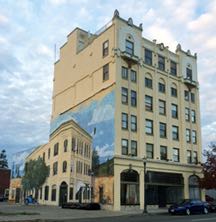 Building on a building
 I found this woman in an Ashland, Oregon store window. She is not real of course. But I liked her hair. As I always do when studying mannequins, I wonder if a real person modeled for this fake one. If you have ever modeled for a mannequin or know someone who has, please drop me a line and tell me about it.
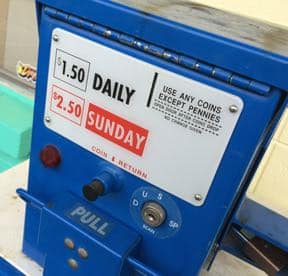 Too much for a newspaper

 When it comes to freezing up your RV, the first rule is: Don’t let it happen. Freezing water in a line is expanding water, and it will likely cause damage. Let’s look outside first. When nighttime lows drop below the freeze point, most RVers abandon any idea of hooking up a hose to their “city water” inlet. Fill the rig’s fresh water holding tank and let your RV’s water pump keep water at the ready. Of course, it’s critical that you keep the RV warm — keep the heat on to keep the rig’s water lines from freezing up.