

By Russ and Tiña De Maris
One of the first things a new RVer learns is how to dump the holding tanks. That’s a subject that’s been discussed at great length, but here’s a related question: Do you wear gloves when dumping tanks or do you ‘bare hand’ it?
 Many RVers don’t wear gloves because, they say, it’s just too much bother and they can’t see much advantage to it. The reasoning usually runs, “The stuff stays in the hose, so what’s the big deal?” In a perfect world it’s a good line of reasoning. But since we’re not living in a perfect world, the ‘stuff’ doesn’t always cooperate and stay in the hose. Pinhole leaks can occur and a misaligned bayonet fitting can pop off, unloading an unholy amount of stuff. File that under, “Been there, done that.”
“So you get a little doo-doo on your hands, just wash it off,” is the next comment. Good idea, a thorough washing with warm water and soap for at least 20 seconds. Meantime, make sure none of it gets off elsewhere and ends up in your mouth or nose. And hope in the meantime that you have no minor breaks in your skin. What can happen with a bit of misplaced sewage bacteria? Here’s the short list:
- Gastroenteritis, characterized by cramping stomach pains, diarrhea and vomiting;
- Hepatitis, characterized by inflammation of the liver, and jaundice;
- Infection of skin or eyes.
Not sure of any RVer who’d like to have a bout of any of those manifestations. In our rig a pair of heavy neoprene gloves is the order of the day when handling tank dumping duty. Washing up even when using the gloves is a good idea, and an outside “shower” unit that many RVs are equipped with is just great for it.
Why not throw-away gloves? They typically tear easily and if one of the support wires in your sewage hose gets loose (not an uncommon event) it’ll easily rupture your “safety” net.
#nrv

 Camping in snow? You’ll need to keep your vents clear–not just your heater and water heater, but your refrigerator vent (up roof top) free from snow.

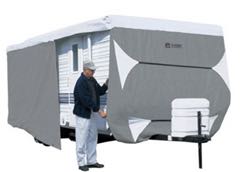
 RV cover manufacturers have as much pizzazz for selling their products as snake oil merchants. ‘Look! Consider these covers as you would a 24-hour security guard against damaging UV-radiation, dust and dirt, the horror of bird droppings, and to keep a stored rig cooler. Since they’re a lot less expensive than a storage building big enough to accommodate an RV, price often is a big draw for those who chose to pack their RV away in a giant size storage bag.’

 The team currently has a working prototype that can produce nearly 4 gallons of pure water per day and hopes to finance the next stage of the project with an Indiegogo fundraiser. You can read more on the
  We are close to making a buying decision on a new motorhome. We have studied them to death. It’s a very expensive step, and I want to make sure we do it right the first time. I have read your comments about making sure the thing fits our needs, and that we both agree on the floor plan and options. Before we make the jump, can you give us anymore input?
 The safest (and most warranty-wise) answer: Do what your rig’s manual tells you to do. Here’s a lift from a Keystone manual: “The recreational vehicle must be level to avoid binding the slide-rooms. Remember, stabilizing jacks are not capable of supporting the weight of you vehicle! They are intended only to stabilize the unit maintaining a level condition. Non-leveled conditions cause sticking situations providing damaging strains on the slide-out mechanism.”
 Every holiday season, Amazon.com hires thousands of employees at its warehouses to help with the huge increase in its business. In this one hour and twenty minute webinar from Workamper News, you’ll learn everything you need to know about Amazon’s CamperForce program.

