 When Australian caravan accessories manufacturer Purple Line contacted us to try out their new AEROplus wind deflector, I met the project with a bit of skepticism. After all, I wondered how attaching this thing would improve my fuel economy and handling as the company claimed it would. As I began to learn more about the product, including laboratory testing, I became more interested in trying it.
There was a problem, though, which would make my test far more challenging. The AEROplus was designed for SUVs and caravans in the U.K., and our test vehicle was a 2012 Ford F-350 with a Leer commercial cap with roof rack (and plenty of equipment inside) and a 2013 Coleman 34-foot travel trailer. The combined weight as tested was 19,980 pounds. What could this little thing do for me, I wondered?
Well, I am here to tell you, again, as I have with some other products we’ve tested: This thing works.
When I received the test unit, the first thing I did was assemble the brackets. A quick look at their online video before doing this is a help, and plan for a lot of wrench time tightening the nylock nut that holds the main brackets down. This only needs to be done once, however, and the rest of the install is easy for most … but not all.
 The Leer DCC commercial cap is a toolbox that mounts to the bed of the pickup truck, and comes in various heights with custom storage cabinets on the sides, and an aluminum ladder rack on the roof. I thought with this rack it would be easy to install, and I was wrong. The AEROplus, designed for SUV roof racks, would not fit this rack directly. I thought this would be the end of the test, or I would have to find another SUV and trailer to test the unit on.
Well, Paul Liner, the managing director of Purple Line, wouldn’t settle for that. He wanted us to do a real world test here in the U.S. So, we looked at a number of options, from fabricating a new rack, or re-engineering the existing one, to replacing the whole assembly. Well, we put our heads together and came up with a combination of all the above. Paul supplied the parts I needed, and I fabricated the rest.
So, we wondered, how do we conduct the test? I have done fuel economy tests lots of times, but I didn’t want to just do a “controlled” test this time. In fact, Purple Line had the AEROplus tested extensively by the Motor Industry Research Association known now only as MIRA Ltd., a leading automotive design and test organization in the U.K. and the University of Johannesburg Technolab. We wanted to see how this worked on a “real RV trip.”
So we decided to do a round-trip in Massachusetts, from Springfield to Brewster, which is on Cape Cod. On the way to the Cape we would have the AEROplus unit installed; the way home would be without. To calculate the mileage we would simply use the truck’s computer as a guide from point to point, instead of using fueling points the old fashioned way. What we really wanted to see was if the truck and trailer handled differently on a long trip.
The trip was mostly interstate travel between Springfield and the Cape, using I-90 and I-495, and the trip was Aug. 29, the Friday leading into Labor Day weekend. We were pleasantly surprised by not only delightful weather but light traffic on I-495 headed down to Cape Cod. On I-90, however, we encountered relatively heavy traffic including many trucks, but the speed was maintained at 65 mph.
As a side note, the F-350, which is pretty stout, is also equipped with Torklift upper overload bumpers and a Reese weight distributing hitch system attached to their class five hitch. Even with all this, towing this size trailer could be, at times, stressful. Not that it handled badly most of the time, mind you, but I always knew the trailer was there, and trucks could do a pretty good job of sucking the trailer around. All things considered, I’ve towed much worse, so I guess I figured it just couldn’t be improved.
 Well, I was wrong … again.
With the AEROplus installed, and at highway speed, I noticed quite a difference in the tow. In fact, my wife even noticed I was considerably more relaxed driving “the team.” Except for occasional porpoising, which has nothing to do with the aerodynamics of the vehicle, the trailer had largely stabilized. There was minimal buffeting by crosswinds, trucks, or the drag that develops between a tow vehicle and trailer. Counter- steering, or making steering adjustments to account for wind buffeting and trailer sway, reduced dramatically in my highway testing. In other words, it did what it was designed to do.
The return trip a few days later, Tuesday, without the AEROplus in place was back to the norm, and being midweek, we again encountered truck traffic on I-90. The drag and buffeting was back, and in our setup, while not being “hair-raising” by any means, did make the drive less enjoyable and more “tiring” or stressful.
Now, that said, the AEROplus counts on having air movement to work in order to create the slipstream to stabilize the trailer. While there is no way for me to quantify this, imagine a chart with one side representing the increase in stability, and the other being the increase in speed. The stability factor would rise as the speed increases. At slower speeds, the effect, while still there, is less noticeable but is needed less at slower speeds. We were also doing this test with a 34-foot long trailer, which is about as long as a travel trailer gets. Shorter and lighter trailers, which most people have, will probably benefit from a more pronounced effect than we did.
Fuel economy was also slightly improved with the unit in place. I normally get around 9.9 mpg towing this trailer on the highway. On the trip out I got 10.7, and on the way home about 10. Not a huge increase in mileage, but anything helps. The company says that a 15-percent increase was seen in the MIRA testing; however, Caravan World Magazine saw a 13-percent increase, the University saw a 6.3 percent increase, and we saw a 7 percent increase. We did have some hilly terrain, however, and we had a particularly large and heavy truck and trailer combination.
All in all, the AEROplus performed well, with an almost complete reduction in turbulence and buffeting between the trailer and truck, a definite increase in lateral stability even when driving in high-speed truck and bus traffic, and some fuel savings, which was a bonus.
More information AEROplus Wind Deflector is available at the company’s website. It may be ordered at Amazon.com.


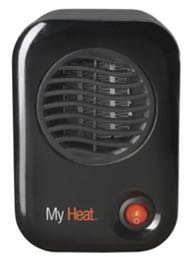 The space it heats is “your space.” It won’t heat an entire room.
 Air-Dryr is the perfect choice for winterization of vacation cabins, boats, and RVs. Constant air circulation reduces condensation in enclosed spaces that are sealed up during the fall and winter.
 I recently recommended the Leatherman tool as a good tool to have along as an RVer. Well, upon doing some research I found the new Leatherman New Wave has taken their tool to a whole new level, and now is especially good for RVers. The New Wave:
 What’s great for RVers is that the company offers a set of bits that fit the driver which include every type of bit imaginable, including the square Robertson bits that are found in RVs!
 There are three companies making drinking-water-safe heated hoses for the RV market now.
  must be a grounded, GFCI-protected 120VAC supply. Extension cords must be used with care and must be sized larger than the hose cord itself due to continual high-amp loading. Remember, volts drop and amps go up with long cord runs, especially if the cord isn’t big enough. If you’re spending up to $250 for the hose, spend the extra $50-$100 to get the right heavy-duty extension cord you need.
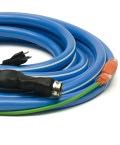 The nofreezewaterhose.com hose is also a self-regulated hose, and of the ones listed is the only one that’s “insulated,” according to the company. That said, it’s only tested to -30F, and the element is wrapped around a heavy-duty, 3/4-inch drinking water hose, not molded into it, which means the “insulation” is holding the element to the hose.
 Once that’s done, inspect the roof and all seals for damage. This includes the slideouts. Look for tears and signs the roof may be suffering other damage like soft spots or where it may be separating from the roof decking or from the seams.
 There are two things that are used frequently in RVs: staples and brad nails. The staples that are used require a special tool and an air compressor, but the brads really don’t. Here’s a tool I carry that has come in pretty useful on a bunch of occasions.

 It snaps into the vent hole on the inside (no need to remove the outside vent cover) where the side pressure keeps it in place even while traveling. The upward facing surface is covered with a reflective material to reflect the sun’s hot rays and the three inches of foam help to stop heat transfer both in and out.
 But ignoring this simple maintenance procedure may cause you problems down the road and even possibly premature failure and replacement.