


By Greg Illes
By now, most folks know about e-books (electronic books), those microscopic packets of electrons that blossom magically into entire books in full color. E-books are sometimes embraced, sometimes hated, and nearly universally misunderstood to some extent.

For RV life, electronic books are a huge blessing, virtually eliminating any space or weight taken up by conventional tomes. So it’s worth looking at some features and details, and getting a full understanding of the virtues of this technology.
• E-books are cheaper — On Amazon, a typical e-book may sell for $5-$10, whereas a paperback, and especially a hardcover, will be more costly.
• E-books don’t require a special reader — You don’t need another piece of electronicsbecause you can read an e-book on a computer, a smart phone, a tablet or a laptop.
• E-books can be easily shared — If you share an Amazon account, you can download the same e-book to all of your shared devices. The same book can be read simultaneously on two or more devices. (However, you might not get it to open exactly where you left off.) Non-copyrighted e-books can be copied and shared by email or thumb-drive.
• There are thousands of free e-books — On Amazon, Gutenberg, and hundreds of other sites, there are far more choices of really good books than you could absorb in a lifetime, all free for the download.
• It’s super easy to share a book — If you have a free book, you can email it to a friend; if it’s a pay-for book, you can send them the link to purchase it (or send them a gift by email). It’s no longer necessary to hand over a two-pound printed copy for a friend to share your reading experience.
• E-books don’t need a reading light — No lamp required. Want to read in the dark? Not a problem. Poor light in a waiting room, or wishing not to disturb your sleeping partner, don’t impact your ability to keep on reading.
It’s pretty easy to see how the benefits of e-books fit nicely into the RV life. And so far we’ve only talked about printed-matter books. There are also extensive choices for audio books, which also take no more than a bit of disk or USB thumb-drive space. Imagine being able to “read” a new book as easily as listening to the radio while you’re driving down the road.
True, some folks just love the feel of flipping the pages of a paper book, and this merit can’t be argued. But you do get quickly accustomed to the convenience and flexibility of the electronic style, and most of us can give up a little nostalgia for the sake of carrying our entire reading library along on every trip — in our pocket or purse.
photo: Pousha sh at wikipedia
Greg Illes is a retired systems engineer who loves thinking up RV upgrades and modifications. When he’s not working on his motorhome, he’s traveling in it. You can follow his blog at www.divver-city.com/blog.
 All goes well unless the seal breaks, and the rear of the commode becomes a storage container for bodily waste. When this happens the entire commode must be replaced. The Series 300 has been replaced by Series 310 at your service center.
 “While in Utah recently, we were hit by a sudden, damaging hailstorm. Several RVs in the park where we were sustained damage. The hail was not large, but the wind drove it almost like bullets. Several units lost their vent lids. Those of us with vent covers (like MaxxAir) were OK, but those whose vent lids were somewhat brittle from sun exposure suddenly had a problem keeping rain out of their RVs.
 The old Onan 4KW series, and most older portable generators, use a fuel motor (gas/diesel/propane) to drive a motor-generator. This requires that the engine run at a constant 3,600 rpm in order to achieve the standard 60Hz AC voltage frequency (sine wave). The end result of this technology is a lot of weight and noise.
 A lot of the time, the “ground vehicle” is just used for going to the store, visiting local sights and similar short trips. But if your travel is just a little more adventurous, you could find yourself quite a ways from RV-home, with all those home comforts and tools far out of reach.
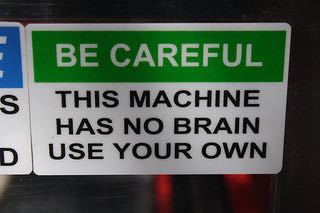 So what’s the problem with electric cube heaters or something similar? Two things: First, many campers, even those four-season models (a misnomer if there ever was one!), are designed with ducting that heats water lines and dump tanks. With no furnace heat, water lines can freeze and dump valves can ice up. In a worst-case scenario, in one instance I had to replumb water lines when the furnace quit and the owner switched to electric heaters for several days. If you are going this route, try to use the furnace some to help keep things from freezing and open cabinet doors to allow heat to reach water lines.
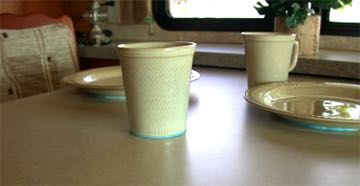 Each of these stick-’em products has a specific recommended application. We added color treatment to Museum Putty to show where it’s attached to an object we don’t want to shake loose. Here an RV dealer uses Museum Putty to hold the dishes secure on the table so they can take customers on test drives without breaking the decorations.
 The answer isn’t a straight “yes” or “no,” because so much depends on what electrical-consuming appliances you’ll want to use in your RV. Plugging an RV into a “smaller” circuit simply requires the appropriate adapter. You’ll find these at any RV parts outlet, at many Walmart stores, and at
 • Consider installing solar panels. Most of the desert is wide open to the sky and you get a full day’s worth of charging — even though the days are shorter. Even a single panel will provide enough electricity to run some of your systems, decreasing the amount of generator run time.

 When it comes to freezing up your RV, the first rule is: Don’t let it happen. Freezing water in a line is expanding water, and it will likely cause damage. Let’s look outside first. When nighttime lows drop below the freeze point, most RVers abandon any idea of hooking up a hose to their “city water” inlet. Fill the rig’s fresh water holding tank and let your RV’s water pump keep water at the ready. Of course, it’s critical that you keep the RV warm — keep the heat on to keep the rig’s water lines from freezing up.