Home Blog Page 2213

Landsailing – fun RV boondocking destination

RVers boondock on the Ivanpah Dry Lake. (David Farmer)

“It’s surreal,” says landsailing aficionado David Farmer of Eastern Washington, “camped on the edge of the playa in a wilderness environment, (within a short distance of) the headlights of an amazing stream of humanity heading to-from LA and Las Vegas, and the garish lights of Primm, the first gambling establishment” in Nevada off Interstate 15.

A veteran of windsurfing and sail boat racing, Farmer participates each year in the America’s Landsailing Cup, America’s premier landsailing event held during March on the Ivanpah Dry Lake on Bureau of Land Management land in southern Nevada, about 45 miles southwest of Las Vegas.

Ivanpah Dry Lake, near Primm, NV. (David Farmer)

RVs* are the preferred accommodations on the playa,” reports Farmer.

“Tents are horrible when it blows 30-knots all night. Ask how I know?  I sleep in the back of my Ford van, surrounded by all the piles of equipment it takes to pursue this passion,” he says.  “Anyone with any interest is most welcome to come and hang with us for any duration. It is indeed an amazing group of intensely interesting folk.”

David Farmer’s two landsailing crafts. 

Farmer competed in two events at Ivanpah–the IC2 Class, racing his Johnny’s Rocket under sail number US 246 (pictured at right partially hidden); and in the Fisly 5 Class, sailing his smaller yellow-and-red-hull yacht.

“Landsailing goes on all year round for the locals in California and Nevada, but it is the annual America’s Landsailing Cup and the Alvord Desert (in southeast Oregon) for a week in the fall, for those of us with more miles to travel,” says Farmer, an Eastern Washington resident.


2014 North American Land Sailing Association (NALSA) Events:

– May 25-27 Memorial Day weekend: Cow to Cow at Smith Creek Playa, near Austin, Nevada.
– July 12-19: World Championship of Land and Sand Yachting
 at Smith Creek Playa.

– 
Sept. 14-21: The BBC–Big Boat Coalition at Alvord Desert, Ore.
This week-long event is a great time to watch some of the best.  “Since there is no official racing (or any other program for that matter) feel free to come and go as best fits your schedule.” 

For more information on landsailing and a full list of events, go to North American Land Sailing Association (www.nalsa.org/)

* Remember that these are boondocking (dry camping) destinations where campers bring in (and take home) all the food, water and fuel they will need for as long as they plan to camp in the desert.

Click on photos to enlarge. All photos by David Farmer, Tum Tum, Wash.


For more articles on the RV lifestyle by Julianne G. Crane, go to RVWheelLife.com.

Hike among the hoodoos at Goblin Valley State Park, Utah

0

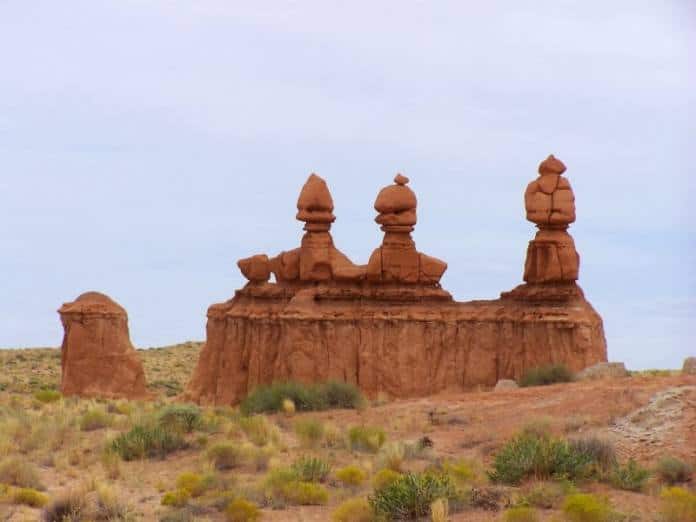
Goblin Valley State Park is one of Utah’s most popular parks. It
offers incredible scenery and great opportunity for hiking and camping.
The goblin-like hoodoos here are unique and fun for all ages. Goblin
Valley includes an area where soft sandstone has eroded into interesting
shapes, somewhat resembling goblins. In some spots the rock formations
are close together and produce a maze-like playground ideal for family
explorations.

(Photo: geology.utah.gov)

Many people think the park landscape has a surreal appearance. A Hollywood movie, “Galaxy Quest,” was filmed at Goblin Valley State Park because of its unearthly scenery. Many serious photographers come here to get shots of the goblins during the late evening or early morning hours, when shadows provide contrast to the sun-bathed rock.

Activities include sightseeing from the park overlook, hiking among the goblins, photography, picnicking and camping. Nearby you’ll find ATV and mountain bike trails, as well as slot canyons.

Facilities include a campground with heated restrooms/showers, group camping spot, picnic areas, hiking trails, and a Visitor Center.

(Photo: de.wikipedia.org)

Spring and fall are ideal times to visit this park. Winter days are
often mild and hiking can be enjoyable, but winter nights can be very
cold (often near 0 F). Summer days can be very hot. During summer it is
pleasant to explore here during the early morning and late evening
hours. 

Open year-round; no holiday closures. The Visitor Center is open daily from 8 a.m.
to 5 p.m. However, during winter months (Nov. – Feb.), the Visitor Center may be
closed for short periods while staff is away at lunch or on park business, and
occasionally may be closed all day if no staff is available.

Located near the town of Hanksville, approximately 216 miles southeast of Salt Lake City. From I-70, exit onto Highway 24 and drive south for
approximately 24 miles to the signed park turnoff, which is also the turnoff
for Temple Mountain. From the Hwy 24 turnoff, follow the paved road for about
12 miles to park.
Entrance Fees
$7 per vehicle
$4 per vehicle with a Utah senior 62+
$75 annual pass is available at the park
$35 Senior Adventure (annual) Pass
Camping
Main Campground: $16 ($8 extra vehicle fee).
Back-in sites are available and can accommodate RVs up to 59
feet. No hookups. There is a sewage disposal station. Group overnight camping is available.

Camping Reservations:
Online: ReserveAmerica (this website also includes additional information)
800-322-3770 (toll-free from outside the Salt Lake City area)
801-322-3770 (from within the Salt Lake City area)

Contact Information:

Goblin Valley State Park
P.O. Box 637
Green River, UT 84525-0637
435-275-4584

Barney Smith’s Toilet Seat Art Museum

0
Barney Smith is a 92-year-old folk artist with an odd medium: toilet seat covers. Well, maybe that’s not so odd for a man with a flair for arts and crafts who grew up in a family of plumbers and was a master plumber himself for many years. 
(Photo from Toilet Seat Art Museum Facebook page)
The subjects of his works of art, over 1,000 of them, range from sports (1996 Super Bowl, for example), to nature (ash from Mt. St. Helens, bear claws, an owl mounted on a cactus limb), historical (a piece of the Berlin Wall, barbed wire from the Auschwitz concentration camp), tributes to celebrities and other famous people, occupations, events, and just about anything imaginable. The museum was listed in Conde Nast Traveler as one of the world’s strangest museums. 
Visitors to the Toilet Seat Art Museum have said that it is better than visiting the Alamo, and a lot of that has to do with Barney, himself. He has appeared on TV shows, had dozens if not hundreds of articles written about him and his museum, including in The New York Times and National Geographic News, and practically has a cult following. If you want to learn more about the museum and the legend behind it, just Google Barney Smith Toilet Seat Museum and you’ll have over 26,000 results to choose from, virtually all with rave reviews!

If you want to meet Barney and have him give you a personal tour of his one-of-a-kind museum, which is in his garage, just be sure to phone ahead so he can get his shoes on and put the orange cone at the bottom of the driveway, which indicates the museum is open. His phone number is 210-824-7791.

Toilet Seat Art Museum
239 Abiso Ave., San Antonio, Texas

Take an unforgettable journey through military history at the AAF Tank Museum in Virginia

0

Tank and Ordnance War Memorial Museum
3401 U.S. Hwy. 29B, Danville, Va.

Boys
big and small, young and old will fall in love with the American
Armoured Foundation, Inc. Tank Museum in Danville. It’s the most
extensive collection of tank and cavalry artifacts in the world with
more than 115 tanks and artillery pieces, 15o mid-size weapons, and more
than 1,800 uniforms, headgear, pins, patches, and more. The collection
dates from 1509 to present day with all nations represented. Open
Saturdays only through March, and then Wednesdays through Saturdays
April through December. $12 per adult and $10 for ages 5 to 12. – See
more at:
https://blog.virginia.org/2014/02/5-places-central-southern/#sthash.bnTHJlAv.dpuf
Boys
big and small, young and old will fall in love with the American
Armoured Foundation, Inc. Tank Museum in Danville. It’s the most
extensive collection of tank and cavalry artifacts in the world with
more than 115 tanks and artillery pieces, 15o mid-size weapons, and more
than 1,800 uniforms, headgear, pins, patches, and more. The collection
dates from 1509 to present day with all nations represented. Open
Saturdays only through March, and then Wednesdays through Saturdays
April through December. $12 per adult and $10 for ages 5 to 12. – See
more at:
https://blog.virginia.org/2014/02/5-places-central-southern/#sthash.bnTHJlAv.dpuf
Boys
big and small, young and old will fall in love with the American
Armoured Foundation, Inc. Tank Museum in Danville. It’s the most
extensive collection of tank and cavalry artifacts in the world with
more than 115 tanks and artillery pieces, 15o mid-size weapons, and more
than 1,800 uniforms, headgear, pins, patches, and more. The collection
dates from 1509 to present day with all nations represented. Open
Saturdays only through March, and then Wednesdays through Saturdays
April through December. $12 per adult and $10 for ages 5 to 12. – See
more at:
https://blog.virginia.org/2014/02/5-places-central-southern/#sthash.jkDHIUdU.dpuf
Boys
big and small, young and old will fall in love with the American
Armoured Foundation, Inc. Tank Museum in Danville. It’s the most
extensive collection of tank and cavalry artifacts in the world with
more than 115 tanks and artillery pieces, 15o mid-size weapons, and more
than 1,800 uniforms, headgear, pins, patches, and more. The collection
dates from 1509 to present day with all nations represented. Open
Saturdays only through March, and then Wednesdays through Saturdays
April through December. $12 per adult and $10 for ages 5 to 12. – See
more at:
https://blog.virginia.org/2014/02/5-places-central-southern/#sthash.jkDHIUdU.dpuf

Panzer tank

The American Armoured Foundation, Inc. Tank and Ordnance War Memorial Museum has the most extensive collection

of international tank and cavalry artifacts in the world, dating from 1509 to the present, with all nations represented. The museum collection is exhibited in a 330,000-square-foot facility with over 30,000 international tank and cavalry artifacts, and is the only military museum with all artifacts under one roof.

Vietnam-period U.S. M38A1C
recoil-less gun-mounted jeep

Primarily a tank museum by design, the Museum’s diverse collection offers the visitor a
great many other interesting items relating to military history. The
collection presently has over 115 tanks and artillery pieces, 150 midsize weapons, over 1,500 tank and cavalry uniforms, 1,300 pieces of
headgear from 1790 to present, pins, patches and other military memorabilia all pertaining
to the tank and cavalry.


Also explore: 

  • Rifle Room Exhibit with over 60 rifles from the unique and rare to the very common military types.
  • International Hall of Tank & Cavalry Generals with over 340 generals in attendance.
  • Sandbox Soldiers Exhibit with 37 children’s military uniforms.
  • 300 women’s uniforms dating from 1852 to present.
  • Radio Control 1/16-scale indoor battlefield — 6,000 sq. ft in size and the only indoor RC battlefield in the world.
  • And much more!
1963 U.S. M108, 105mm self-propelled Howitzer

The Tank Museum was founded

in 1981 as a 501(c)3 not-for-profit charitable organization, with a  mission 

to educate, collect, restore, preserve and display as varied a collection of

military tank and cavalry artifacts as is possible, so that present and future generations will

have a significant part of military history available for them to learn from and

explore.

WWI tank

Virginia is for Lovers is the tourism and travel slogan of the Commonwealth of Virginia. And it’s also home to the largest collection of tank and cavalry artifacts in the world. As the saying goes: “All’s fair in love and war”–at least in Virginia! 

Take a journey through military history — this is an awesome adventure for young and old alike.


2014 Museum visitor hours: 
   January – March: Open Saturdays only, 10:00 a.m. to 4:00 p.m.; last admission at 3:15 p.m.
   April – December: Open Fridays and Saturdays, 10:00 a.m. to 4:00 p.m.; last admission at 3:15 p.m.

Click here for more info.

(all photos courtesy AAF Tank Museum)

Visit Chicago’s Museum of Science and Industry–one of the largest science museums in the world!

0

Chicago’s Museum of Science and Industry (MSI) is the largest science museum in the Western Hemisphere and is home to more than 35,000 artifacts and nearly
14 acres of hands-on exhibits designed to spark scientific inquiry and
creativity. Since opening its doors in 1933, more than 180 million guests from around the world have visited the museum. Following is a list of just a few of the reasons for its popularity:

EXHIBITS:
Treasures of the Walt Disney Archives: Through May 4, 2014. Explore nine decades of The Walt Disney Company’s history and artifacts.

80 at 80 Exhibit: To commemorate its 80th anniversary, the Museum presents this new
exhibit featuring 80 rarely displayed artifacts from the Museum’s
extensive collection, carefully selected by MSI curators. Many of these special items are going to be revealed for the
first time! See how modern-day GPS started with the 1909 Jones Live Map
Meter. Check out the engine from a British Supermarine Spitfire plane,
made famous during World War II. View 78 more rarely seen items.
 
Transportation Gallery: Explore how humankind has flown, soared, sped and chugged throughout the years.
YOU! The Experience: A permanent exhibit celebrating the connection between the human mind, body and spirit.
Science Storms: Feel the physics and consider the chemistry of natural phenomena like tornadoes and avalanches.
U-505 Submarine: Experience the real U-505, the only German submarine in the United States.

Coal Mine: Descend the mine shaft, take a ride on the rails and learn the technology of coal mining. 

Ships Through the Ages: Follow the story of man’s quest to travel the seas with the Museum’s collection of model ships.

Swiss Jolly Ball: See the world’s largest pinball machine right before your eyes.

All Aboard the Silver Streak: Pioneer Zephyr: Step aboard one of America’s first diesel-electric streamlined passenger trains.

The Great Train Story: Witness 20-plus trains run on 1,400 feet of winding track from Seattle to Chicago.

Yesterday’s Main Street: Journey back in time and experience America in the early 1900s.

OMNIMAX THEATER: Sit back, relax and enjoy a scientific adventure in Chicago’s only five-story, domed, wrap-around theater:

Space Junk: Through Feb. 26, 2014. A visually stunning exploration of our planet’s perilous ring of orbiting debris.

The Last Reef: Through June 5, 2014. Take a thrilling underwater journey to explore the beauty and mysteries of coral reefs.

Museum Hours: Daily from 9:30 a.m. to 4 p.m.; Open daily except Thanksgiving and Christmas.

Museum Location: 5700 S. Lake Shore Drive, Chicago, IL 60637

Click here for more information.
Learn how to get 49 percent off the admission price.

(all photos from MSI website)

Caverns of Sonora in west Texas


Caverns of Sonora, a family-owned attraction in west Texas, is a National Natural Landmark due in part to the phenomenal display of speleothems known as “helictites” and in particular “bladed helictites,” rare and beautiful cave formations. It is considered a world-class cave because of its stunning array of calcite crystal formations.

Calcite crystal formations. (Wikipedia)

The founder of the National Speleological Society, Bill Stephenson, said of the cave after his first visit: “This is the most indescribably beautiful cave in the world, its beauty cannot be exaggerated, not even by a Texan,” according to a post on Wikipedia.

History of the cave: The Mayfield family began its ranching operations in Sonora, Texas, around the turn of the 20th Century. An opening in the rocks was found in the southern part of the ranch when a dog chased a raccoon into this 20-inch opening. Locals began exploring the cave sometime in the early 1920’s. It took another 40 years before the Caverns of Sonora was opened to the public on July 16, 1960.

 Caverns of Sonora Visitors Center. (Julianne G. Crane)

FYI: “All tours are guided, walking tours. The cave is 71 degrees with a 98-percent humidity level which makes it feel about 85 degrees.
Dress appropriately; no jackets or sweaters are necessary. There are approximately 360 stair steps throughout the tour. Animals are not allowed in the cave, but the Caverns provides free, on-site kennels. These precautions are taken to ensure the safety of guests, as well as the cave itself.”

 RV campground area (Julianne G. Crane)

The RV and Tent Campground is only a few steps away from the entrance to the Visitors Center. There are 48 RV-tent sites with water and electricity. The night we stayed we were the only ones in the campground. There are about a dozen pull-through sites that can accommodate big rigs.

Due to the presence of the cavern, a dump station is not available; however there are restrooms with flush toilets and showers.

Caverns of Sonora

Sign at Exit 392 of I-10 (Julianne G. Crane)

1711 PR 4468 @ I-H10 Exit 392
approximately 8 miles west of Sonora, Texas.
Sonora, Texas 76950
Phone: (325) 387-3105
GPS Location:
N- 30º33.297′
W-100º48.733′
Hours:
Open daily except Christmas Day.
Winter: Tuesday after Labor Day-Feb. 28–9 a.m. to 5 p.m.
Summer: March 1-Labor Day–8 a.m. to 6 p.m.
Tour costs: General: 12 years and up: $20 onsite, or $18 online; Children: 4 – 11: $16; under 4 years: free.

To read more RV lifestyle articles written by Julianne G. Crane, go to RVWheelLife.com

Note from editor: If you go to Sonora, please note the following from Wikipedia: “Sonora is one of the leading speed trap cities in the nation, writing over 48,000 citations per annum, mostly to out-of-state travelers along the I-10 corridor.” You’ve been warned. 😉

Updated 7/26/2016. 

Explore the intriguing Edgar Allan Poe Museum in Virginia

0

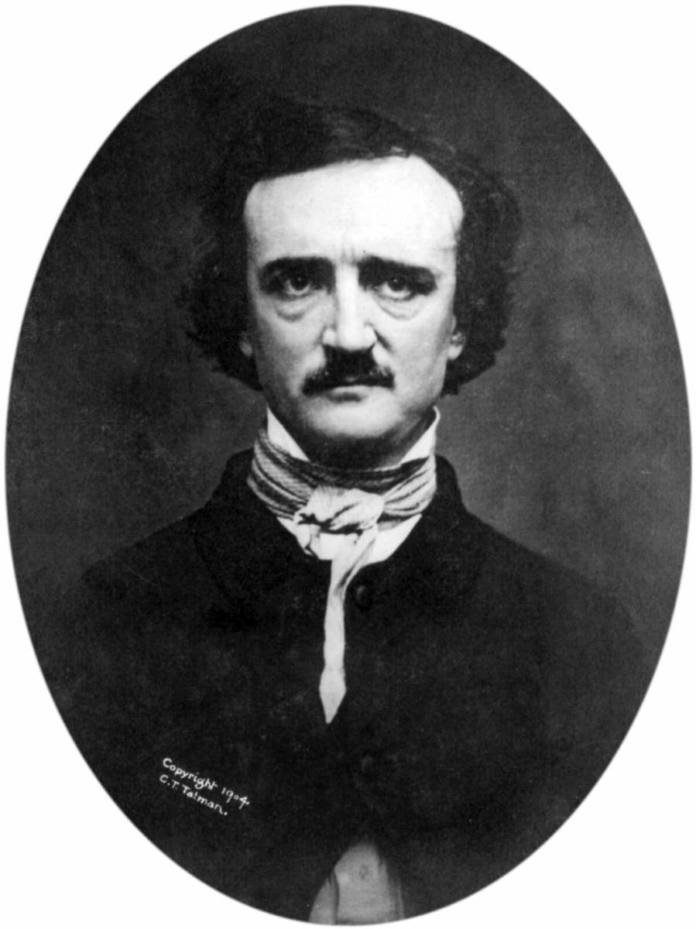
“Once upon a midnight dreary, while I pondered, weak and weary,
Over many a quaint and curious volume of forgotten lore, …”

(en.wikipedia.org)

Called “America’s Shakespeare,” Edgar Allan Poe created or mastered the short story, detective fiction, science fiction, lyric poetry and the horror story. His dark genius has invited children and adults to read and love literature for over 150 years.

Richmond’s Poe Museum boasts the world’s finest collection of Edgar Allan Poe’s manuscripts, letters, first editions, memorabilia and personal belongings. Opened in 1922, in The Old Stone House, the museum is only blocks
away from Poe’s first Richmond home and his first place of employment,
the Southern Literary Messenger.

(photo: Poe Museum)

The Poe Museum provides a retreat into early nineteenth century Richmond. The museum features the life and career of Edgar Allan Poe by documenting his accomplishments with pictures, relics and verse, and focusing on his many years in Richmond. Fans of Poe will enjoy seeing the walking stick he accidentally left in Richmond fewer than two weeks before his mysterious death, the key found in his pocket during his final delirious days that opened the trunk in which he packed his few possessions, and the lock of hair a friend clipped from the poet’s famously lofty brow after he died.

Poe and his works have been a fixture in popular culture ever since “The Raven” caused an international sensation in 1845. The Poe Museum avidly collects items like movie posters, comic books, advertisements, records, videos, commemorative stamps and toys that feature Poe and his works. One of the largest pieces on display to the Poe Museum is an 1885 marble and bronze memorial to the author. One of the smallest is a bronze bell with a handle in the shape of Poe.

(photo: Enchanted Garden, 1927, Poe Museum)

The Poe Museum began in 1921 as the Poe Shrine, the highlight of which was the Enchanted Garden inspired by the gardens described in Poe’s poetry. The landscaped garden contains a Poe Shrine constructed from the bricks and granite salvaged from the building in which Poe edited the Southern Literary Messenger. After extensive restoration by Hampton Hotels’ Save a Landmark Program in 2008, the Poe Museum’s garden now appears much as it did during the 1920s, when it was already a destination for visiting writers from around the globe. Today the garden is the site of monthly Unhappy Hours and weddings.

You might be surprised to learn Poe loved nature and wrote a number of pieces about nature and landscape gardens. Plan a trip to visit the Poe Museum during April, National Poetry Month, when the Enchanted Garden is in full bloom. Take a virtual tour here.

The Edgar Allan Poe Museum is located at 1914-16 East Main Street, Richmond, Va.

Learn more about the Poe Museum here.

“… Quoth the Raven, ‘Nevermore.'”

‘Cowboy Capital of the World’ (Bandera, Tex) a favorite of snowbirds, weekend motorcyclists

Bandera is a rustic small town in the Hill Country of Texas that is proud to call itself the “Cowboy Capital of the World.”

Nestled in central Texas, this little town (pop. 900 or so) holds a “really big place in the hearts of Texans,” and is a regular destination for weekend motorcyclists from the big cities of Austin and San Antonio. Also attracted to this crossroads of State Highways 16 and 173 are “Winter Texans” — those snowbirding RVers from “Up North” who still remember John Wayne and watch reruns of Gunsmoke in black-and-white.

Walkway in downtown Bandera, TX (Julianne G. Crane)

The Bandera Chamber of Commerce wants visitors to be reminded of “a different, more authentic, era, when a handshake was all the contract you needed, self-reliance was the norm, and chivalry was a given. There is a spirit of independence and individualism here that speaks of the cowboy tradition of hard work and hard play.”

Rich in early western history, “after the Civil War, Bandera was used as a staging area for cattle drives to Dodge City and beyond. Each year during Labor Day weekend, Bandera holds a longhorn cattle drive through the streets of Bandera.”

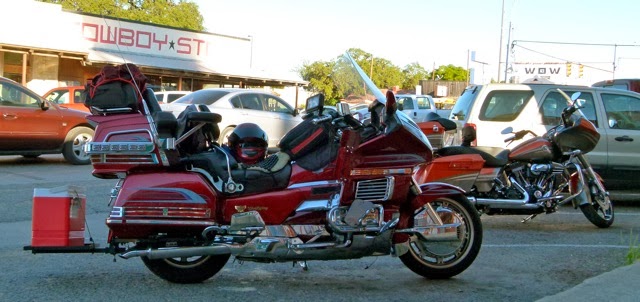
Motorcycles, horses line Main Street. (Julianne G. Crane)

Bandera strives to embody its strong rodeo tradition. Today there are often horses tied to downtown hitching posts, along with Harley Davidsons and Gold Wings.  According to HillCountryCruising.com: “The ride to Bandera is a very scenic one no matter which route you take.”

Chamber of Commerce (Julianne G. Crane)

For more information:
Chamber of Commerce
331 Main Street
P.O. Box 2445
Phone: 830-796-3280
URL: banderatex.com
Bandera, TX 78003

To read more RV lifestyle articles written by Julianne G. Crane, go to RVWheelLife.com

Arizona’s Tumacacori Mesquite Sawmill

Tumacacori Mesquite Sawmill offers free tours. (Julianne G. Crane)

There are a number of RV Short Stops along this stretch of I-19 south of Tucson, Ariz., between Green Valley and Nogales. (See other links at end of this post.)

RVer Bill Knowles searches remnants. (Julianne G. Crane)

One afternoon traveling along the frontage road between Tubac and Rio Rico, we pulled over at the Tumacacori Mesquite Sawmill located in the beautiful Santa Cruz Valley, in the historic community of Tumacacori, 20 miles north of the Mexican border in the heart of the mesquite bosque (forest) region of the Sonoran Desert.

Mesquite furniture

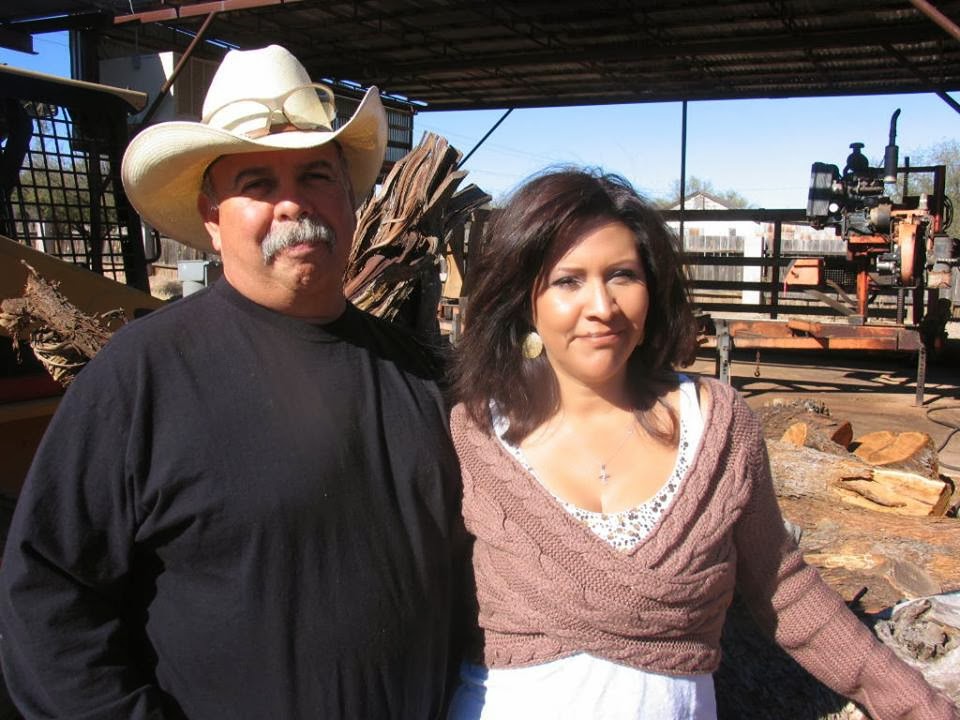
Owner Art Flores was out in the yard with a chain saw cutting up pieces of Velvet Mesquite. He stopped his work to tell us a little about the sawmill.

It seems since 1982, the sawmill has been providing customers across the United States with the finest mesquite lumber, burls, posts, limbs, stumps, custom finished interiors and crafts.

Flores and his wife, Valerie, welcome visitors who are interested in seeing “the transformation from mesquite logs to stunning one-of-a-kind heirlooms and learning about this true desert treasure.”

Tumacacori Mesquite Sawmill
2007 E. Frontage Road
Tumacacori, Arizona 85640
Ph: (520) 398-9356
www.memesquitedesign.com
info@mesquitedesign.com
Hours: Monday – Saturday, 9 a.m. to 5 p.m.; closed on Sunday.

Other RV Short Stops posts about this region include:

– One on the charming tourist town of: Tubac, Arizona = Southwest art, pottery, clothing, food, history

– Then for the nearby Tumacacori Mission click here.

– Other local places to visit, include: the Santa Cruz Chili & Spice Co. and the Tumacacori Outpost, with its hodge-podge of antiques and collectibles.

To read more RV lifestyle articles written by Julianne G. Crane, go to RVWheelLife.com

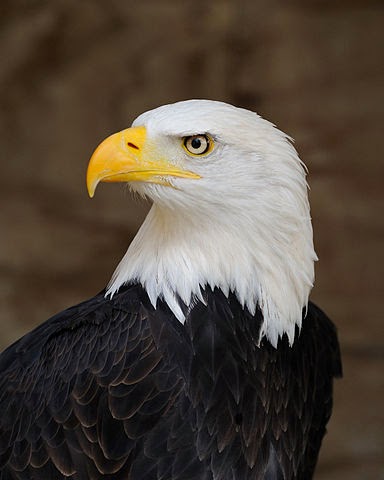
Bald is beautiful: Where to see eagles near you

W. Lloyd MacKenzie via flickr.com

America’s majestic bald eagle is a wildlife conservation success story –and a thrill to see. The species almost succumbed to habitat loss and DDT contamination before earning federal protection in 1967. After 40 years of recovery efforts and the banning of DDT, eagles have rebounded and the bird has been removed from the federal endangered species list.

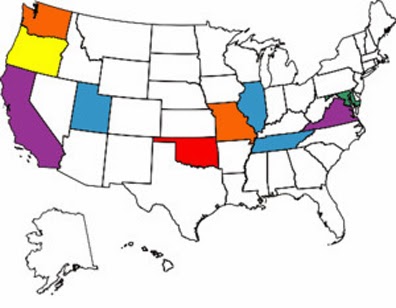
Winter is a great time to see eagles in much of the country. Here are some refuge hot spots for winter eagle viewing and events that give you a front-row seat.

ILLINOIS

Crab Orchard National Wildlife Refuge Eagle Watch

January 18 and 19, 8 a.m., 11 a.m. and 2 p.m.
January 25 and 26, 8 a.m., 11 a.m. and 2 p.m.

Take a guided van tour to see an active bald eagle nest and other eagle hangouts. Reservations are required: 618-998-5933 or 618-997-3344 ext. 1.

Upper Mississippi River National Wildlife and Fish Refuge

In winter, more than 1,000 bald eagles hunt the open water below the river’s locks and dams, swooping down to catch fish. On one recent mid-December day, more than 850 eagles were seen from Lock and Dam 13 at Fulton, IL. Aerial displays and pair bonding are best viewed January through March

MARYLAND
Blackwater National Wildlife Refuge  Eagle Festival

March 15, 2014; 9 a.m. to 4 p.m.

The festival includes several free “eagle prowls” – short bus tours to see active eagle nests on the refuge. No pre-registration. Information: 410-228-2677. More than 200 bald eagles winter on the refuge, which supports the largest Atlantic Coast nesting population of bald eagles north of Florida.

MISSOURI

Squaw Creek National Wildlife Refuge Bald Eagle Days

December 7-8

Just because the refuge’s signature eagle event is past doesn’t mean you’re out of luck. Hundreds of bald eagles hang out here all winter long. A one-and-one-half-mile hiking trail called Eagle Overlook offers eagle viewing from the wetlands.

OKLAHOMA

Sequoyah National Wildlife Refuge  Eagle Tours

January 18-19, 25-26, 9 a.m. to noon
February 1-2, 8-9, 15-16, 22-23, 9 a.m. to noon
March 1-2, 9 a.m. to 2 p.m.

Take a guided bus tour to see nesting bald eagles through scopes.

Wichita Mountains Wildlife Refuge Eagle Watch

January 4, 11, 12, 18, 19, 25, 26, 1:30 to 4 p.m.
February 1, 2, 8, 9, 1:30 to 4 p.m.

Take a bus tour to search for bald and golden eagles. Reserve after December 31: 580-429-2151. Children must be 8 or older. $5 per person.

OREGON/CALIFORNIA

Klamath Basin Refuges Winter Wings Festival

February 13-16

The six wildlife refuges of the Klamath Basin make great places to see eagles even if you miss the Bald Eagle Conference hosted by the refuges in February in Klamath Falls. At Upper Klamath National Wildlife Refuge, the winter eagle population can reach 500. The Klamath Basin Birding Trail shows mapped viewing routes. Or see dozens of eagles along auto tours at Tule Lake National Wildlife Refuge and Lower Klamath National Wildlife Refuge in California. You can sometimes see more than 50 eagles from one spot.

TENNESSEE

Reelfoot National Wildlife Refuge Free Eagle Tours

Thursdays, Fridays, Saturdays, December 19 to February 28, 8 a.m. and noon. Reserve ahead: 731-538-2481

Take a six-person tour through Grassy Island wildlife drive to the viewing tower over scenic Reelfoot Lake, where eagles congregate because of the abundant ducks and geese. Get a close-up look at two active bald eagle nesting sites where you can often see eagles tending their nests, and later, incubating their eggs. Bald eagle numbers peak in February, with more than 200 wintering eagles around Reelfoot Lake. Resident eagles account for 32 nests. Some parts of the refuge close in the winter to give waterfowl a chance to rest, but two refuge observation decks remain open year-round to accommodate visitors.

UTAH

Bear River Migratory Bird Refuge Bald Eagle Day

February 8, 10 a.m. to 4 p.m. —

Take a tour to view eagles resting or feeding. The refuge will also provide maps to other eagle-viewing locations around the state.

VIRGINIA

Elizabeth Hartwell Mason Neck National Wildlife Refuge

The first refuge established for the protection of bald eagles, Mason Neck Refuge, has been listed as one of the top ten spots in the country to see them. The Great Marsh Trail provides a good overlook from November through March, when eagles are building nests and laying eggs.

WASHINGTON

Ridgefield National Wildlife Refuge

Dozens of bald eagles drop by to feed on waterfowl and fish in the winter Along the Columbia River. Washington is one of the largest eagle nesting sites in the country. The big birds are usually easily visible from December through March and sometimes beyond, depending on the Columbia salmon runs.

Source: U.S. Fish and Wildlife Service and rvtravel.com

Fredericksburg’s Admiral Nimitz State Historic Site – National Museum of the Pacific War

Fredericksburg, the unofficial capital of the Texas Hill Country, was founded in 1846 by German immigrants. It sits just 70 miles northwest of San Antonio and 75 miles west from Austin.

Old fashion murals adorn buildings. (Julianne G. Crane)

The town has maintained its charm by preserving much of the 19-century regional architecture and institutions of historical importance; and by encouraging the development of a central Texan feel for its Main Street’s shops, galleries, brew pubs and restaurants. (There is a local German Bakery that deserves a visit.)

George H.W. Bush Gallery (Source: WikiMedia Commons)

One of the major local historic attractions is the six-acre National Museum of the Pacific War which is the only museum in the “continental United States dedicated exclusively to telling the story of the Pacific Theater battles of World War II.” The Museum includes the Admiral Nimitz State Historic Site and Museum, the George H.W. Bush Gallery, Pacific Combat Zone, Plaza of Presidents, Memorial Courtyard, Japanese Garden of Peace, and the Nimitz Education and Research Center.

Admiral Nimitz Museum (Source: WikiMedia Commons)

The whole complex started back in the mid-60s with an idea of a museum honoring native son, Admiral Chester William Nimitz, Commander-in-Chief of Allied Forces, Pacific Ocean Area, who died in 1966. In 2000, the complex was renamed Admiral Nimitz State Historic Site – National Museum of the Pacific War National Museum of the Pacific War.

Of particular appeal is the Nimitz Hotel built in 1852 by the Admiral’s grandfather. “Locals referred to it as the Steamboat Hotel because of the ship’s bow front. The hotel had its own saloon and brewery, a ballroom that doubled as a theatre, a smokehouse, and a bath-house.” The hotel was restored to its original design and renamed the Admiral Nimitz Museum by an act of the Texas legislature in 1969.

Click on map to enlarge

IF YOU GO:
The National Museum of The Pacific War
Address: 340 E Main St, Fredericksburg, TX 78624
Phone: (830) 997-8600
URL: www.pacificwarmuseum.org

Hours: 9 a.m. – 5 p.m. daily, except on Thanksgiving, Christmas Eve, and Christmas

Admission:
WWII Veterans: Free
Adults: $14; Seniors 65+: $12
Military w/ID (active or retired): $10
Children 6+ and Students w/ID: $7; Children 5 and under: Free

The entire complex is accessible and the museum provides wheelchairs and motorized chairs free of charge for those who need them to tour the Museum Complex.

Click here for more information about Fredericksburg.

To read more RV lifestyle articles written by Julianne G. Crane, go to RVWheelLife.com

Presido La Bahia, Fannin’s Memorial, Angel of Goliad, Gen. Ignacio Zaragoza Birthplace

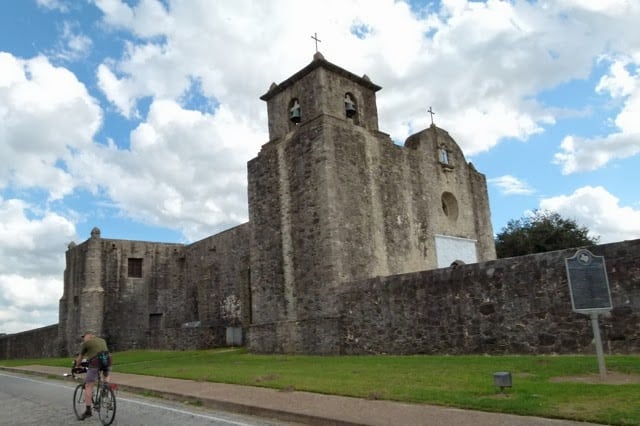
RVer Jimmy Smith outside of Presido La Bahia (Julianne G. Crane)

The Presidio Nuestra Señora de Loreto de La Bahía was established  in 1721 on what is now known as Matagorda Bay (on the Gulf Coast), and it was relocated to its present  Goliad site in 1749, along with Mission Espíritu Santo.

Sitting south of Goliad State Park along the San Antonio River, La Bahia is the best-restored Spanish presidio in the United States. In the 1960s, local philanthropist Kathryn O’Connor donated $1 million to restore the presidio. Construction took place between 1963 and 1968. The fort was rebuilt to its 1836 appearance, based on documents and archeological evidence dating from the Texas Revolution.

Today it is a National Historic Landmark and is listed on the National Register of Historic Places. It has been owned by the Catholic Church since 1853 and is currently operated by the Catholic Diocese of Victoria, Texas.

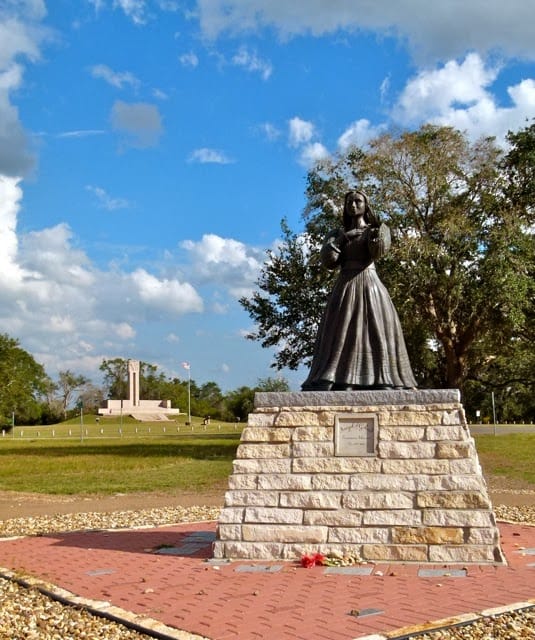
Angel of Goliad & Fannin’s Memorial  (Julianne G. Crane)

Another point of historical interest is Presidio La Bahía’s major role in the Texas Revolution.

Colonel James Fannin and his approximately 350 ill-fated men were captured nearby and held at the Presidio prior to being executed at Gen. Santa Anna’s order, an act of infamy later recalled at the Battle of San Jacinto with the cry, ‘Remember Goliad! Remember the Alamo!'” The nearby Fannin Memorial Monument (in the distance above) marks the common burial site of these soilders.

There is also a statue to Francita Alavez (ca.1816 – ca.1906) known as the Angel of Goliad. Alavez is credited with saving the lives of numerous Texas prisoners of war in the “Goliad Massacre” and at Copano and Victoria, by interceding on their behalf and persuading the help of Mexican officials.

Gen. Ignacio Zaragoza (Julianne G. Crane)

Also featured on the grounds is a bronze statue of Gen. Ignacio Zaragoza, who defeated the French at the Battle of Puebla in 1862 on Cinco de Mayo. Visit the reconstructed Zaragoza Birthplace State Historic Site (adjacent to the Presidio) to learn about this Texas-Mexican hero, born in Goliad in 1829. The museum is open on Saturdays.

If you go

Presido La Bahia
1-mile south of Goliad, Texas, on U.S. Highway 183 and 77A
Phone: (361) 645-3752
Open: 9 a.m. – 4:45 p.m.
Closed: New Years Day, Easter, Thanksgiving, Christmas
Admission: $4; Seniors: $3.50; Children Under-12: $1; 5-and-under: Free

For a post on the nearby Mission Espiritu Santo, click here.

For information on the Goliad State Park campground, click here.

Photos by Julianne G. Crane (Click on photos to enlarge.)
To read more RV lifestyle articles by Julianne go to RVWheelLife.com