Home Blog Page 2212

Make sure your RV’s countertop sinks are not leaking

Certified RV technician Chris Dougherty of RVmedics.com ( https://RVmedics.com ) has a tip about how to keep

What to do when your RV power plug begins to fail

Sooner or later, the connection between your RV’s power cord and its plug will begin to separate. When this happens,

How to help prevent damage to your RV’s electrical circult board

RV technician Chris Dougherty of RVmedics.com ( https://RVmedics.com ) offers two tips that will help you avoid

Don’t let your RV become an “Ant Farm”

Did you know that ants can tunnel into some RV’s walls just like in the Uncle Milton Ant Farms that

Inspect your RV slideout’s interior seal to keep water out.

Gary Bunzer, the RV Doctor, explains that RV slide outs have two seals— one outside the coach and one inside.

Quick tip about RV slideout maintenance

Chris Dougherty, certified RV technician, provides advice about how to easily maintain your RV’s slideouts.

The Thetford seal conditioner mentioned in this video is available by clicking here.

An RV technician’s tool guide for RVing

Chris Dougherty, the technical editor of RVtravel.com, lists the best tools to carry in an RV to deal with routine

Seattle’s Underground Tour

Seattle’s Bill Speidel’s Underground Tour beneath Pioneer Square

If you are RVing anywhere near the Seattle Puget Sound area, and have a place to park your recreation vehicle (so you don’t have to drive into town) one amazing place to spend a couple of hours is Seattle’s Bill Speidel’s Underground Tour.

View of Seattle’s old underground street (circa 1984)

Bill Speidel an ardent preservationist in the 1950s and 1960s was “one of a group of visionaries who saved Pioneer Square by mounting a citizen campaign to convince the city to designate downtown’s oldest neighborhood an historic district, thus sparing from the wrecking ball the largest collection of Victorian-Romanesque buildings in the United States. The Underground Tour, which Speidel founded in 1965, is a by-product of that campaign,” according to the tour’s website.

Amber glass panels seen from underground (top above photo).

Traversing the old streets of Seattle, located a full story (or more) below current street-level, the tour gives information about how 25-downtown blocks were essentially “razed” [torn down and rebuilt] after the Great Fire of 1889 to prevent flooding.

It is an intriguing and entertaining family outing. An added bonus is that no matter what the weather, you will be out of the elements down under Seattle’s historic Pioneer Square. It is a good history lesson, with a fun twist provided by the highly skilled tour guides.

Amber glass panels at street level.

The tour begins on the street level in the Bill Speidel’s Underground Tour bar where well-informed and entertaining guides give colorful background information about Seattle.  Then everyone goes down below the buildings and the sidewalks to see what it was like. It is a fairly easy walking 75-minute tour, however there are several points where visitors climb up and down stairs. Walking shoes recommended.

Among the many fascinating tidbits was why the “skylights” in the sidewalk were invented– they help illuminate, with a faint amber glow the underground. These glass panels on the streets of Pioneer Square can be seen while walking the neighborhood.

Seattle Underground Tour store front.

If you go:
Bill Speidel’s Underground Tour
608 First Ave, in Seattle’s Pioneer Square,
 between Cherry Street and Yesler Way.

Take the James Street Exit from I-5.
[206] 682 4646
URL: UndergroundTour.com

Hours: Open daily except Thanksgiving and Christmas
April – Sept.: Daily, 9 a.m.-7 p.m.
Ticket Prices
$18 Adult (18-59 yrs)

$15 Senior (60+ yrs)
 & Student (13-17 yrs or with valid college ID)

$9 Child (7 –12 yrs)

Kids 6 and under are admitted free, but may find the 75-minute tour challenging

Where to park in Seattle?
Don’t try it. Strongly suggest you find a place to park where you can take the bus or light rail (metro.kingcounty.gov). If you really want to drive, and have a small tow vehicle, there is parking available throughout the Pioneer Square area both on the street (meters) and in parking garages. Click Here for a Parking Map.

Read more RV lifestyle articles by Julianne G Crane at RVWheelLife.com

Photos source: Bill Speidel’s Underground Tour

What to do about bubbles on a rubber RV roof

On this episode of “Ask The RV Expert,” RVtravel.com editor Chuck Woodbury talks with RVT’s Technical Editor Chris Dougherty about

Uncle Sam suggests: Five camping spots you’ve never heard of

Every RVer has a little file in his or her head, listing some of their favorite haunts. Well, Uncle Sam has a file too, and recently, recreation.gov cut loose with a list of five destinations you may want to put on your investigation list.

USFS

Boulder Creek, California (Plumas National Forest)

  • Location: This spot is in the northern Sierra Nevada Mountains, northeast of San Francisco.
  • Features: It has everything nature lovers would want, such as beautiful lakes, streams and mountains, as well as prairies surrounded by plants and animals.
  • Activities: It is a place where you can swim, fish, ride a boat or kayak, mountain bike and camp.

recreation.gov

Alley Creek Camp, Texas

  • Location: On the edge of Lake O’ the Pines, east of Dallas and near the towns of Jefferson and Marshall.
  • Features: There’s a magnificent lake surrounded by pine trees and the region’s native flora and fauna. The lake is a result of the construction of a dam, but now it’s considered an oasis of outdoor recreation.
  • Activities: Families can enjoy camping, swimming, hunting, fishing, boat rides, or hiking along trails and exploring nature.

recreation.gov

Buck Lake, Florida

  • Location: This recreational area is located in Ocala National Forest.
  • Features: The Buck Lake area has the second longest forest in the state of Florida, and more than 600 lakes, rivers and springs that are popular tourist attractions.
  • Activities: This site offers a variety of ways to enjoy the open air, including fishing, boat rides, camping, picnics, hiking and more.

recreation.gov

Camp Gateway, New York

  • Location: Situated at Floyd Bennett Field in Brooklyn, this park is a great natural space within the urban environment of New York City.
  • Features: The area’s meadows, trees, sand dunes, lagoons and beaches attract many tourists year-round.
  • Activities: You can choose among hiking, fishing, biking or camping. There are also guided tours and other programs available.
recreation.gov

Apache Trout Campground, Arizona

  • Location: This spot is east of Phoenix, near the New Mexico border.
  • Features: Wide open spaces, pine forests, mountain scenery and Big Lake are all ideal for relaxation.
  • Activities: This is a good spot for outdoor activities like trout fishing, hiking, mountain biking, picnics and camping.

Top five southern Oregon parks listed

Looking for that perfect camp site while traveling through Southern Oregon? The Associated Press recently ran a story by Statesman Journal writer, Zach Urness, who lines out his pick of the top five campgrounds in the region.

In order from bottom of the list to top, here are the finalists.

JohnDahl on wikimedia.org

5. Bolan Lake Campground: Close to the California border near Cave Junction, Urness describes Bolan Lake with those irresistible words, “little-known destination.” With only 15 sites on a stocked trout lake, and plenty of hiking trails. If you got a sense of heights, rent the Bolan Mountain Lookout on recreation.gov. Come from June to September. Here’s a link to the government website on the campground.

4. Illinois River Canyon: A gut-wrenching road with the name of Illinois River Road is infested with campsites, beaches, and trails. Thrill to wildflowers including the cobra lily, who’d prefer a little flesh for dinner. Start out in Selma, Oregon. For more information, contact the Wild Rivers Ranger District. Come spring to late summer, says Urness.

K Comandich on flickr.com

3. Crater Lake and Diamond Lake. OK, so this listing doesn’t make the “little-known” status, but you may not have heard of the latter, unless you’re a local. Diamond Lake is said to be home to giant-sized trout, while Crater Lake claims Oregon’s only national park. Take a cold dip in the deepest lake in the country there, too. Set your visit from mid-June to September. Crater Lake National Park info here. Or details on Diamond Lake here.

Marion Vaden MD, public domain

2. Applegate Valley: Make the winery tour from Grants Pass to Ruch along Highway 238. Tired out from tasting? Drop anchor at Applegate Reservoir at either Cantrall Buckley or Jackson campgrounds, set alongside the river. Bring fishing poles, boat, or hiking shoes. Plan your trip from May to September. More info from the Star Ranger District.

And top of the list?

1. Rogue River: Zach’s choice of any of the over 200 miles of the river’s venues would put you down in the neighborhood of Merlin and Galice. Fishing, river running, or just water splashing appear to be the order of the day. Top of the list for campgrounds? Indian Mary and Almeda County parks.

See Zach’s complete article here.

Wind Cave National Park is two parks in one

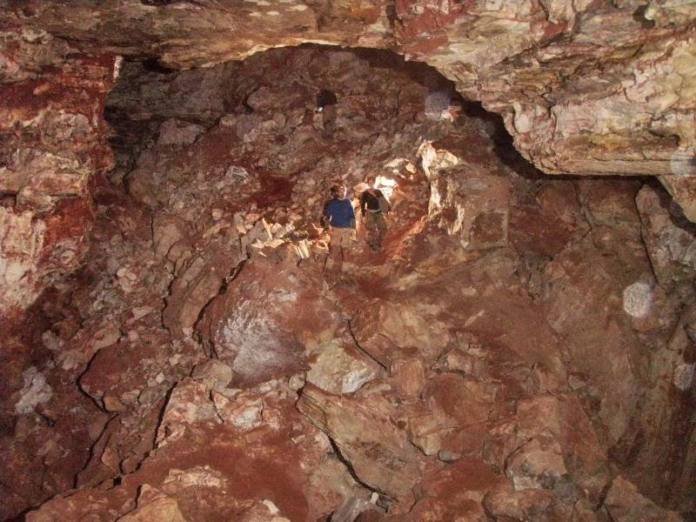
Exploring Club Room of Wind Cave (NPS)

Wind Cave National Park, in the southern Black Hills near Custer, South Dakota, is really two parks in one–both of which are stunning and surprising.

The surface is 28,000 acres of a complex mix of prairie grasses and ponderosa pine forest ecosystems with an array of wildlife. (More on this later.)

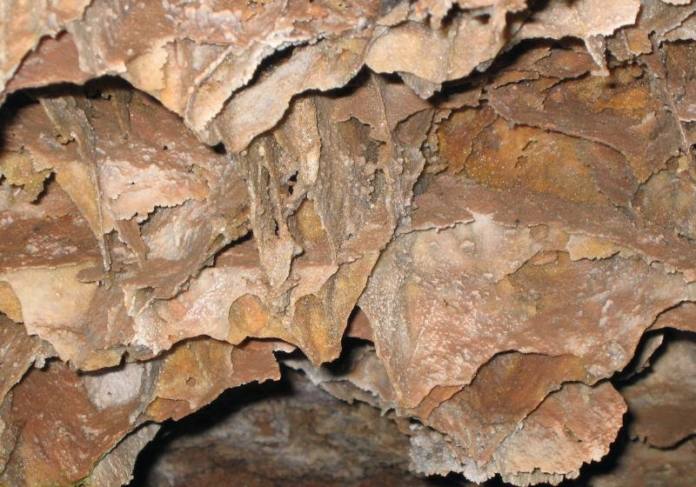
Secreted beneath this unique intact prairie is one of the world’s longest caves, say rangers at the park. Named for barometric winds–a loud whistling noise, emitting from a small hole in the ground at the cave’s only natural opening–this complex labyrinth of passages contains unique calcite formations – boxwork.

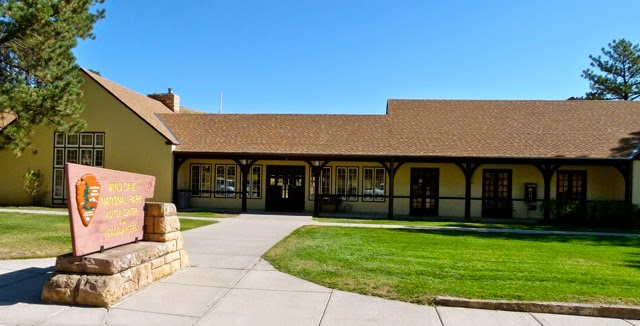
Wind Cave NP Visitor Center.  (Julianne G. Crane) 

The Wind Cave Visitor Center is the place to start. It is open from 8 a.m. to 4:30 p.m. daily, with extended hours during the summer. (Closed on Thanksgiving, Christmas and New Year’s Day.) All cave tours (escorted by park rangers) begin at the visitor center and are offered daily throughout the year when the visitor center is open. The visitor center features three exhibit rooms about the geology of the caves and early cave history, the park’s wildlife and natural history, and the work of the Civilian Conservation Corps in the park.

Among the underground adventures is the Natural Entrance Cave Tour that winds through the middle level of the cave. Wind Cave’s famous boxwork (right) is abundant throughout this trip. Most of the 300 stairs along this route are down. This moderately strenuous 1/2-mile tour lasts 1¼ hours and exits the cave by elevator.


Tour Fees are reasonable, (depending on tour) $5-$6 for seniors and $10-12 for 17-61. Holders of the Senior (Golden Age)/Access Passes are eligible for half price tickets for cave tours and camping fees for the cardholder only.
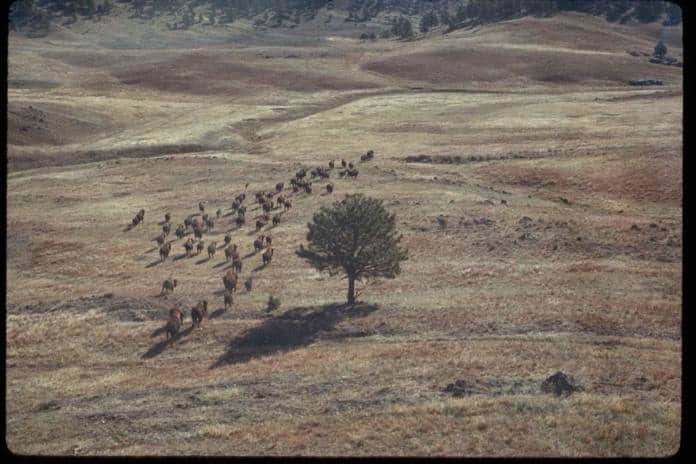
Bison herd freely roam Wind Cave National Park. (NPS)

Bison, elk, prairie dogs roam on open grassland

Above the 6th largest cave system in the world, the vast majority of the Wind Cave National Park is open grassland, and living in that ecosystem is a large variety of mammals.

The breathtaking Wind Cave bison herd is one of only four free-roaming and genetically pure herds on public lands in North America. The other three herds are the Yellowstone Park bison herd, the Henry Mountains bison herd in Utah and on Elk Island in Alberta, Canada.

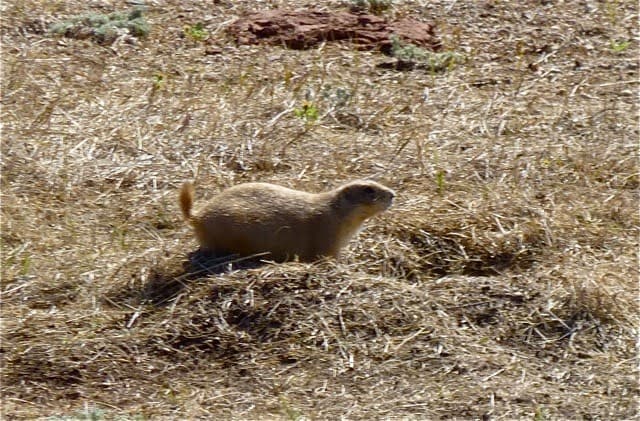
Blacktail Prairie Dog (Julianne G. Crane)

The Blacktail Prairie Dog (right) is one of the more sociable wild animals of the grasslands. is  a rodent that belongs to the squirrel family. “The name ‘prairie dog’ came from their bark-like call, not from their appearance. They were called ‘petit chien’ or little dog, by early French explorers and were scientifically described in the journals of Lewis and Clark,” according to the park’s website.

There are 30 miles of hiking trails where visitors can view the native plants and wildlife of the prairie ecosystem.

To find the Wind Cave National Park Visitor Center take US Hwy 385 about 20 miles south of Custer, SD; and 11 miles north of Hot Springs, SD.

Click here to start planning your trip.

Click on photos to enlarge.
For more articles on the RV lifestyle by Julianne G. Crane, go to RVWheelLife.com.