


Dear Dave,
We were camping and I accidentally plugged into a 50-amp outlet, but my motorhome is 30 amp. On the way home the motorhome quit running. I didn’t mean to do that, but now it’s not running. What did I mess up? It’s still at the garage to be repaired. I don’t know where else to take it; towing it was very expensive. Thanks for your help. —Ellie, 1997 30′ Allegro Star
Dear Ellie,
Since your unit is a 30’ model, I assume it is on a gasoline chassis and that could be either a Chevy P30 or Ford F53. Either way, I don’t see any way plugging your unit into shoreline power could affect the chassis engine even if you were able to plug into 50-amp power.
30-amp and 50-amp outlets
If your rig is wired for 30 amps, the shoreline cord will only have three prongs and cannot plug into a 50-amp outlet without an adapter. Here are the configurations of a 30-amp and 50-amp outlet.


To plug either a 30-amp shoreline cord into a 50-amp outlet, or a 50-amp shoreline cord into a 30-amp outlet, you would need an adapter such as this one.

This has the four spades which are Hot 1, Hot 2, Ground, and Neutral. It eliminates the Hot 2, so you can plug your 30-amp shoreline cord into the adapter with Hot 1, Ground, and Neutral.
The Hot 1 line goes to the distribution center. It is protected by circuit breakers with a main 30-amp breaker and individual circuit breakers for outlets and appliances such as the air conditioner and refrigerator.
Converter or battery charger
Your rig also has a converter or battery charger that provides a 12-volt charge for the house batteries. I would assume your 1997 unit has an all-in-one model with the converter on the side of the distribution center rather than a standalone located under cabinetry or the bed. The converter will provide 13.6 volts of charging power to the house batteries if they are low, and 13.2 volts of maintenance charge when they reach 12.6 volts, or fully charged.
Most rigs also have a Battery Isolation Manager (BIM) which is a solenoid that is wired between the house batteries and the engine battery. This allows you to “jump start” a dead engine battery with the house batteries by pressing the switch on the dash. It also allows 12-volt power to flow from the engine battery through the solenoid to the house batteries when you are driving so the engine alternator will charge the house batteries. Newer models also allow a charge to flow from the house batteries to the engine battery when plugged into shoreline power.
All of this is protected with circuit breakers and the solenoid, so I doubt you messed anything up by plugging into a 50-amp outlet. It’s more likely a coincidence that there is some engine issue just after plugging it in, as it would not have started leaving the campground?
Questions to help with troubleshooting
However, I have learned to never say never when it comes to RVs, so I have a few questions about what you are experiencing with the engine.
You stated that it “quit running,” so apparently it did start up and ran for a period of time. Did it just stop while driving down the road, or not start after stopping somewhere? Does it turn over when trying to start it and won’t start? Or is just dead with nothing happening?
The first point of troubleshooting is to see if the engine turns over. If not, it is either a dead battery or the starter. It could also be a blown engine but, hopefully, it’s something a little less expensive. If it is a dead battery, you could use the BIM to jump start it.
If it does turn over but doesn’t start, it is either fuel or spark. A good service center should be able to identify which it is.
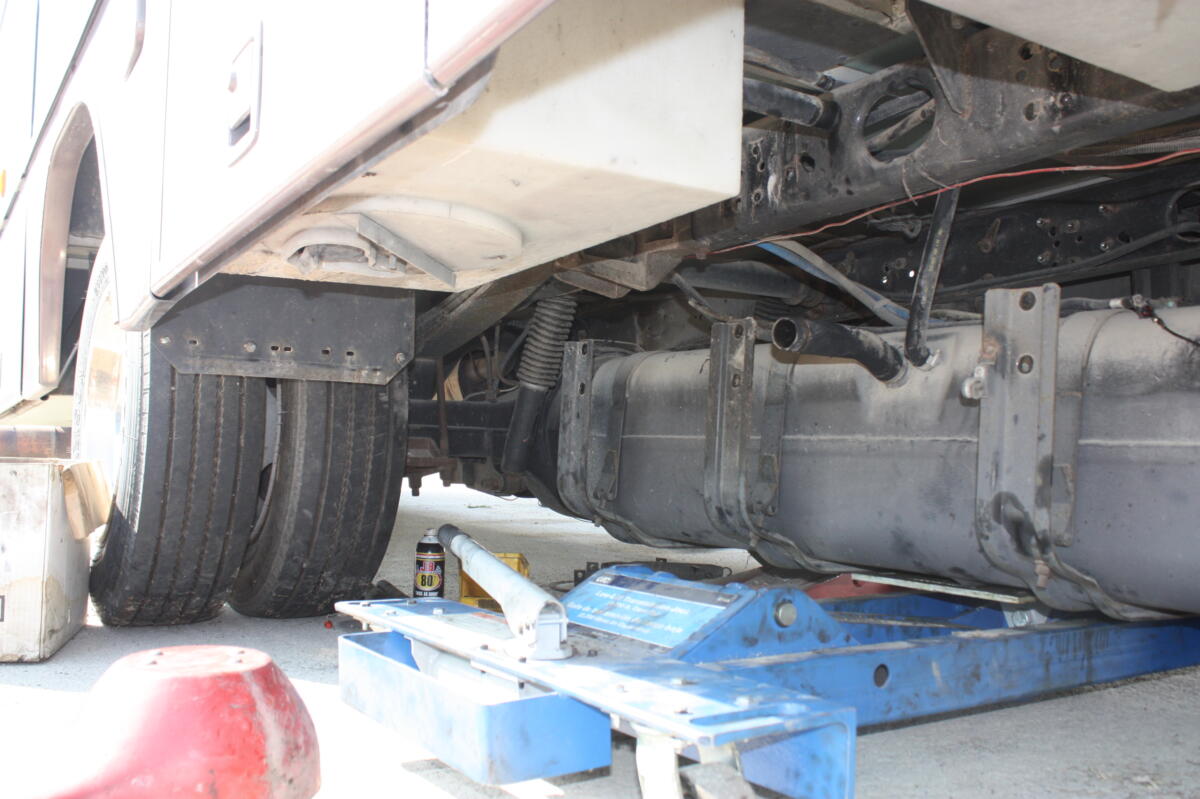
We had a similar situation with a 2000 Winnebago Adventurer here that we used for content shoots on RV Lifestyle & Repair. It turned out to be a relay on the automotive circuit panel. Unfortunately, the service center towed the unit from the owner’s house to their location, dropped the fuel tank, replaced the fuel pump and filter, and it still did not start. I got them in touch with Winnebago’s Owner Relations, and a simple relay cube on the firewall fixed it. Make sure whoever is working on the unit isn’t just swapping parts.

You might also enjoy this from Dave
Some fun facts I learned about electricity this week
Here are some fun facts I learned this week about electricity, including: What direction should 120-volt outlets be installed? Why won’t a smart charger charge a dead battery? Why is there reverse polarity with a house battery?
Dave Solberg is a leading expert in the RV industry and the author of the “RV Handbook.”
Read more from Dave here.
HAVE A QUESTION FOR DAVE?
Send your inquiries to him using the form below.
##RVDT2549

How did you manage to fully insert your 30A into the 50A receptacle? A sledgehammer perhaps or did you forget to state that you were using an adapter? Otherwise, I can’t fathom your mistake.
I doubt if it can even be partially inserted. The pins are a totally different configuration and spacing is different. Definitely something missing here.
I’d like to know what the outcome of this problem is in the future . If the picture of the class A was the one in the article the tow truck was hooked to the rear putting undue weight on the rv’s front suspension.
WHAT are you even talking about! That pic had nothing to do with Ellies issue!
Snoopy
Walt, the unit being towed was the Winnebago Adventurer I was referring to and the tow company has worked with Winnebago and hooking to the chassis from the back was recommended as it was only being towed 2 miles. This unit had a shorted relay cube on the fuse block. I’ll post Ellies results if she responds.
Did he maybe plug into a welding outlet or 240-volt dryer outlet and thinks it was 50 amps? And maybe the converter fried itself and quit charging the battery? And maybe that 1997 alternator has worn out brushes and wasn’t charging the chassis battery? Lots of ersatz possibilities. Our diesel pusher wouldn’t restart once, it had a transmission fault code, after a lot of diagnostic time it turned out to be a bad alternator, dead chassis battery, and the transmission was saying to the engine, “don’t start because I don’t have enough volts to be able to shift!”
Thank you, Dave! Interesting stuff. Happy new year and safe travels! 🙂
This story doesn’t make much sense to me . Too much information missing.