

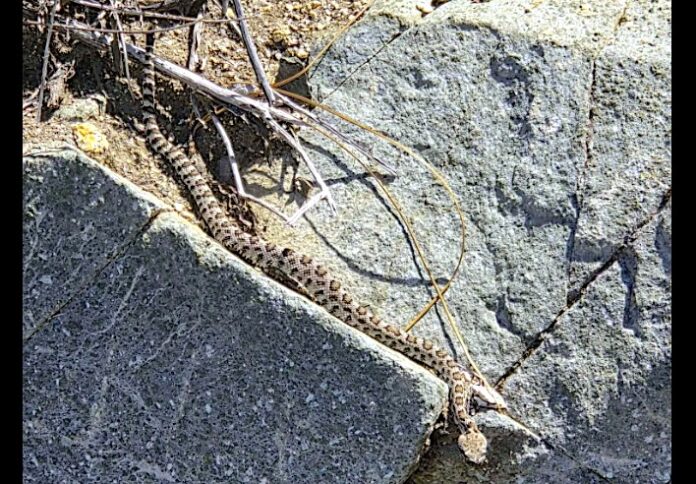
Yosemite National Park is home to the northern Pacific rattlesnake (Crotalus oreganus). It’s the only rattlesnake found in the California park. It uses its venomous bite to capture prey, which helps control the park’s rodent populations. But, if agitated or startled by humans, it will bite. So far this year in California, three people have died from fatal rattlesnake bites.
The snakes are found throughout western North America, ranging from the southern interior of British Columbia in Canada, extending south through Washington, Oregon, and California, and reaching as far as Baja California in Mexico.
Many of the snakes have been recently spotted in the park, including the one in the photo above. “These reptiles are an important part of Yosemite’s ecosystem, but we need to take precautions to protect ourselves, our loved ones, and our pets,” the park advises on its Facebook page.
How to interact with the rattlers
When hiking, wear protective clothing like high boots and heavy pants. Walk or hike in areas where the ground is clear, so you can see where you step or reach with your hands. Never put your hands in areas where you cannot see. Brush, ledges, cracks, or holes are common areas where rattlesnakes can be found resting.
If you hear a rattlesnake, stay still until you can see the snake and then move away. Don’t rely on hearing alone: Some snakes might not rattle even when startled.
Here are a few things you should NOT do if bitten by a snake:
- DON’T apply a tourniquet.
- DON’T pack the bite area in ice or ice water.
- DON’T cut the wound with a knife or razor.
- DON’T suck out the venom by mouth as infection can occur.
- DON’T let the victim drink alcohol.
- DON’T attack or kill the rattlesnake for using its natural defense mechanism.
All rattlesnake bites are a medical emergency. If you or someone you see is bitten, immobilize the bite area, gently wash it with soap and water and apply a cold, wet cloth over the bite if possible. Mark the area of the swelling with a pen and the time and keep the bite at the same level as the heart. Remove anything that might constrict swelling. Most importantly, call 911 or transport to the nearest emergency facility for further treatment and to be treated with antivenin aka antivenom.
Learn more about rattlesnakes at the Rattlesnake Conservancy. And if you are in Albuquerque, do not miss the Rattlesnake Museum in Old Town.
Have you ever encountered a rattlesnake in the wild or been bitten by one? If so, please leave a comment.
RELATED
- It’s summer. Beware of rattlesnakes
- Caution: Rattlesnakes biting earlier than ever this year (from 2025)
- Don’t let snakes frighten you out of RV country
- Caution! Snakes, scorpions and spiders lurk near campgrounds – beware!
- Don’t make these mistakes with venomous snakes
RVT1265
