


A Forest Service firefighter who was arrested and charged with reckless burning has seen his case dismissed. It was a first for the Forest Service, as Ricky Snodgrass was charged with a crime for doing his job. The Service has posted its relief that the reckless burning charges were tossed out of court.
Reckless burning charges stem from controlled burn that got away
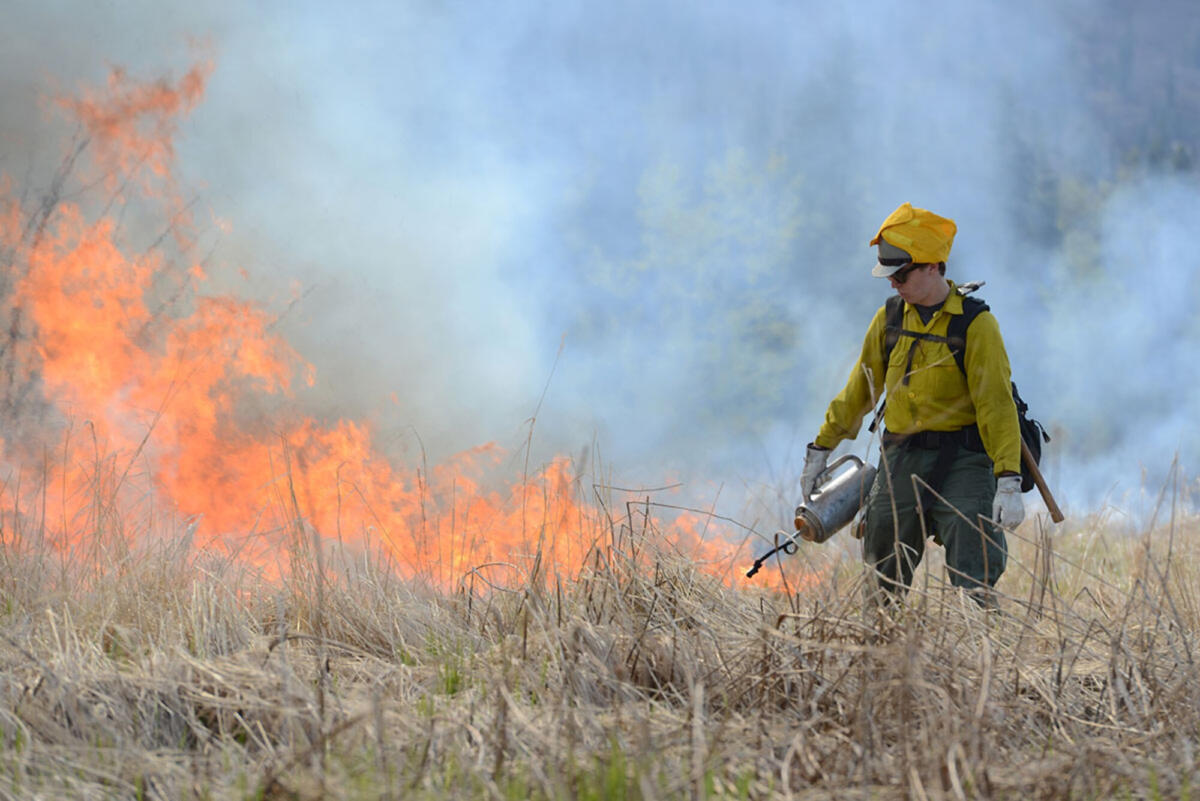
It all flared up on October 19, 2022, when Snodgrass and his team were at work on a prescribed burn in Grant County, Oregon. Snodgrass was the Burn Boss, and the fire was set to take out fuels in a controlled manner that might otherwise fuel a major wildfire. At the time it was a coolish day at 73 degrees, with winds occasionally gusting to three miles per hour.
Somehow the burn got out of the prescribed area when embers caught by wind dropped onto private property across the road. Before it could be contained, several acres of a rancher’s property burned up. The neighbors got upset due to this, leading to another kind of heat. Feeling his crew was being threatened, Snodgrass called the local sheriff’s office for support.
When the sheriff arrived on scene he had a discussion with Ricky Snodgrass. Then he cuffed him, put him in a patrol car, and drove him away from the scene. Snodgrass was taken to the county lockup, charged with reckless burning, and released. Meanwhile, the remaining crew at the fire scene knocked down the ranch fire, and kept the prescribed burn where it belonged.
Year-and-a-half wait until grand jury gets the case
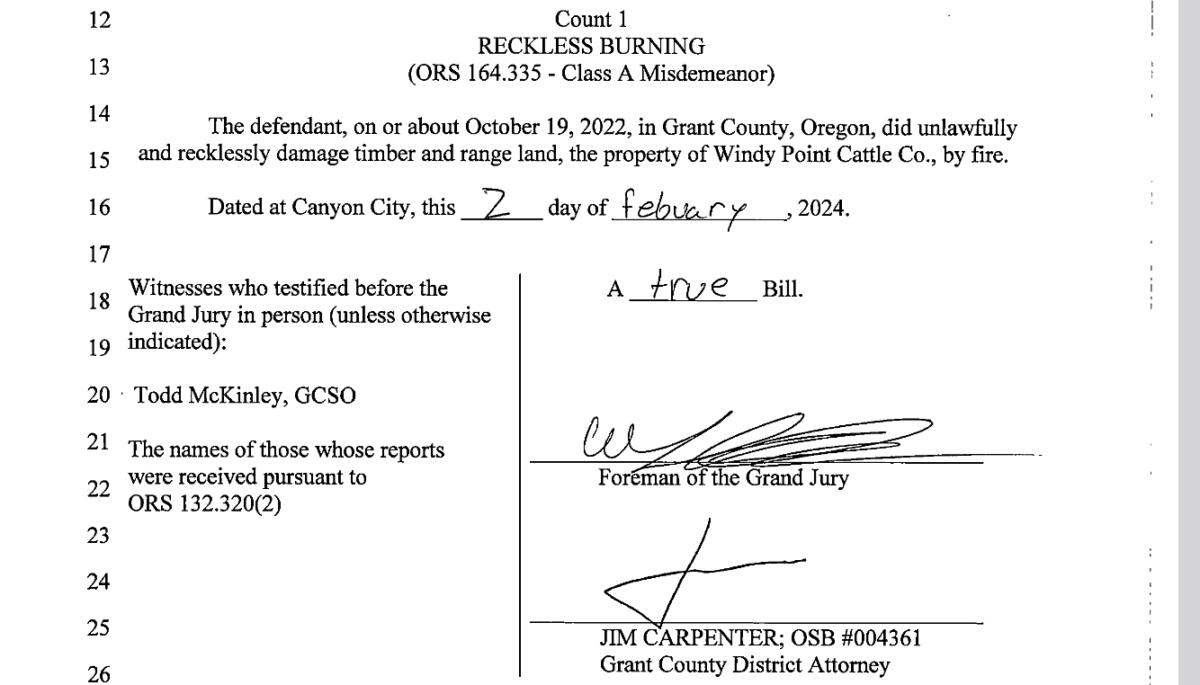 The sheriff turned his report over to the district attorney, who convened a grand jury. It took a long time for the grand jury to get the case. The fire that Snodgrass was allegedly responsible for was in October 2022. The grand jury met on February 2, 2024—a year-and-a-half later. The jurors returned an indictment on the reckless burning charges.
Under Oregon law, the crime of reckless burning is when one recklessly damages property of another by fire or explosion. Shortly after Snodgrass’ arrest, the District Attorney laid out what he said was the legal standard for determining whether a burn is reckless. “The risk must be of such nature and degree that disregard thereof constitutes a gross deviation from the standard of care that a reasonable person would observe in the situation,” he said.
People take notice
Ricky Snodgrass’ arrest, charges, and indictment did not go unnoticed. Major news organizations picked up his story. The Forest Service brass got involved, including the top man, Forest Service Chief Randy Moore. A Forest Service employee was charged criminally while carrying out his lawful duty, causing the Chief’s indignation. Moore essentially said that if there were any charges to be filed, that they should be brought against the agency—not the employee.
It wasn’t just the media and top brass at the Forest Service who were watching. Other forest firefighters were watching—and expressing concern. Max Alonzo is a former federal Forest Service firefighter. He no longer fights wildfires, but acts as a representative for land management employees who are members of the National Federation of Federal Employees. A piece carried by Government Executive quoted Alonzo.
“If this were to be a successful prosecution of Ricky Snodgrass, it would completely change the landscape of our country,” Alonzo said, referring to the way the government mitigates wildfires. “If wildland firefighters are scared of doing any sort of controlled fires, they’re not going to do it.”
Forest Service firefighters across the country expressed concerns about Snodgrass’ case. Essentially, many wondered if attempting to climb the firefighting career ladder to that of Fire Boss was such a good idea. Better pay. More recognition. But having the position could come with a liability they just didn’t want to take on.
County grand jury indicts—case moves to federal court
Ricky Snodgrass’ indictment on reckless burning charges came in February. Where did it go from there? Snodgrass’ attorneys fought to have the case taken out of local jurisdiction and heard before a federal judge. They won their argument. In the U.S. District Court of Oregon, they argued Ricky Snodgrass’ arrest amounted to a disagreement with the sheriff about U.S. Forest Service policy. In their request to the judge, they said Oregon was subject to the Supremacy Clause of the Constitution. With all that in place, they noted, Snodgrass in their view was immune from prosecution.
Presiding Judge Andrew Hallman gave Grant County’s attorney a chance to carry the case forward. The District Attorney, Jim Carpenter, decided he wouldn’t fight the issue, and last week, Judge Hallman tossed the reckless burning charges out. Ricky Snodgrass is a free man.
##RVT1161b

Doing his job in this country is NOW a crime…..So many things wrong with this law suit ….people want free money it looks like…
A Sheriff wanting to make a name for himself?
Look up the DA.
Look up previous sheriff.
And decide for yourself what was really at play.
DA should have been disbarred in 2001, what a jerk!
Look em up, or lock em up?
Thanks Doug for pointing that out. It is very interesting reading.
Thank you, Russ and Tina! 🙂 Hmm, … is this an example of what is generally known as, “no good deed goes unpunished?” Thanks again and safe travels! 🙂
What a conundrum. Yes, I agree we need forestry service controlled burns. But, in this case if something goes awry, nobody is to blame? If more than a few acres of pastureland had burned, there would be no recourse for the injured party? What if your house is burned to the ground, your family or pets injured. No recourse for you?
Despite what some may think, some government workers are careless when performing their tasks.
This smacks of the excuse – we were only doing what the government told us to do. Sound familiar?
The rancher should have filed a claim against the Gov’t (USFS) for the damage. If the claim were denied then the rancher had grounds to sue the USFS.
Ohhhh, I didn’t notice it was Oregon at first.
Now I understand.
There’s a reason those Eastern Counties want to join Idaho.
I don’t think HE should have been punished, but I do think the rancher should have been compensated for the damage to his property. Nothing was said about the damages and what was done, if anything about that.
The rancher, sheriff and DA should have all been fined for trying to lock the firefighter up and wasting court’s time. The rancher could have taken the forest service to court to recover any damages to his grasslands. I wonder if a wildfire occurs on his property the forest service may be a bit slow to respond.