

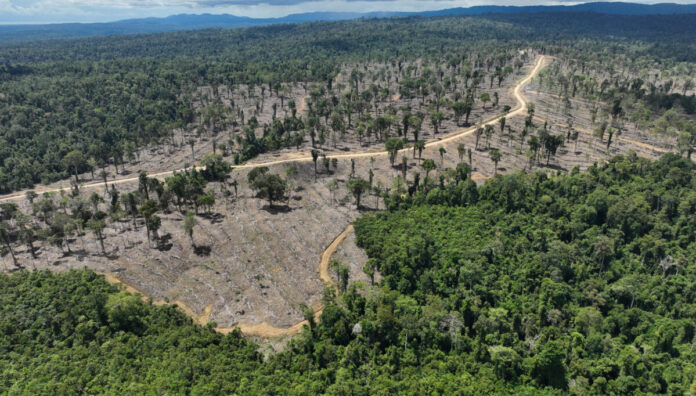
Recreational vehicles are more popular than ever in the United States. Yet new research from Earthsight and Indonesian partner Auriga Nusantara reveals a troubling connection—RVs and rainforest deforestation. Some of America’s most popular RVs are built using wood sourced from rainforests that have been destroyed.
The wood in question is thin, lightweight, water-resistant plywood called “lauan” in the U.S., and “meranti” in Indonesia. Lauan is commonly used for RV walls, floors, and ceilings, with some rigs containing up to 700 square feet of this plywood. At first glance, lauan may seem like a practical, eco-friendly material, but its origins tell a very different story.
The New York Times recently amplified this startling revelation with a major investigative article.
NOTE: The content of this story is based on a news release from Earthsight. We’re providing this information strictly as a news report—not as editorial opinion. You can read the full report here, including scores of references Earthsight uses to substantiate its findings.
‘RV buyers—many of whom value nature—are unknowingly supporting large-scale environmental harm’
RVs and rainforest deforestation
Earthsight and Auriga traced lauan from a major deforester in Borneo, Indonesia—PT Mayawana Persada—to a California importer that supplies the RV industry. This investigation showed that U.S. RV demand has made the country the largest consumer of tropical Indonesian wood. But that wood is often sourced from forests cleared in ways that destroy ecosystems and displace wildlife.
Although U.S. companies importing lauan publicly claim to prioritize sustainability, in practice they often choose cheaper timber connected to rainforest destruction. This means that RV buyers—many of whom value nature—are unknowingly supporting large-scale environmental harm.
20 million football fields worth of rainforest lost
Indonesia has lost 26.5 million acres of tropical primary forest between 2002 and 2024—an area larger than the state of Kentucky, or roughly 20 million American football fields. This land was home to orangutans, rhinos, elephants, and tigers. Much of it was cleared for palm oil plantations or fast-growing timber used in the wood and paper industries. While deforestation rates fell slightly in the late 2010s, they are rising again, with Borneo losing the most forest in 2024. Within Borneo, East Kalimantan has suffered the greatest losses.
One of the main actors in this deforestation is a company called PT Indosubur Sukses Makmur. It holds a license to convert more than 69,000 acres of orangutan habitat into timber plantations—an area roughly equivalent to the size of 54,000 football fields. Since 2021, the company has bulldozed more than 3,000 acres of rainforest—more than three times the size of New York’s Central Park, or about 2,300 football fields.
In its place come plantations of fast-growing, non-native species such as acacia and eucalyptus. These trees are harvested for plywood, wood products, and wood pellets used in energy production. In 2024 alone, the company cleared 1,067 acres, roughly 820 football fields, equivalent to three American football fields per day.
Ecological and social losses
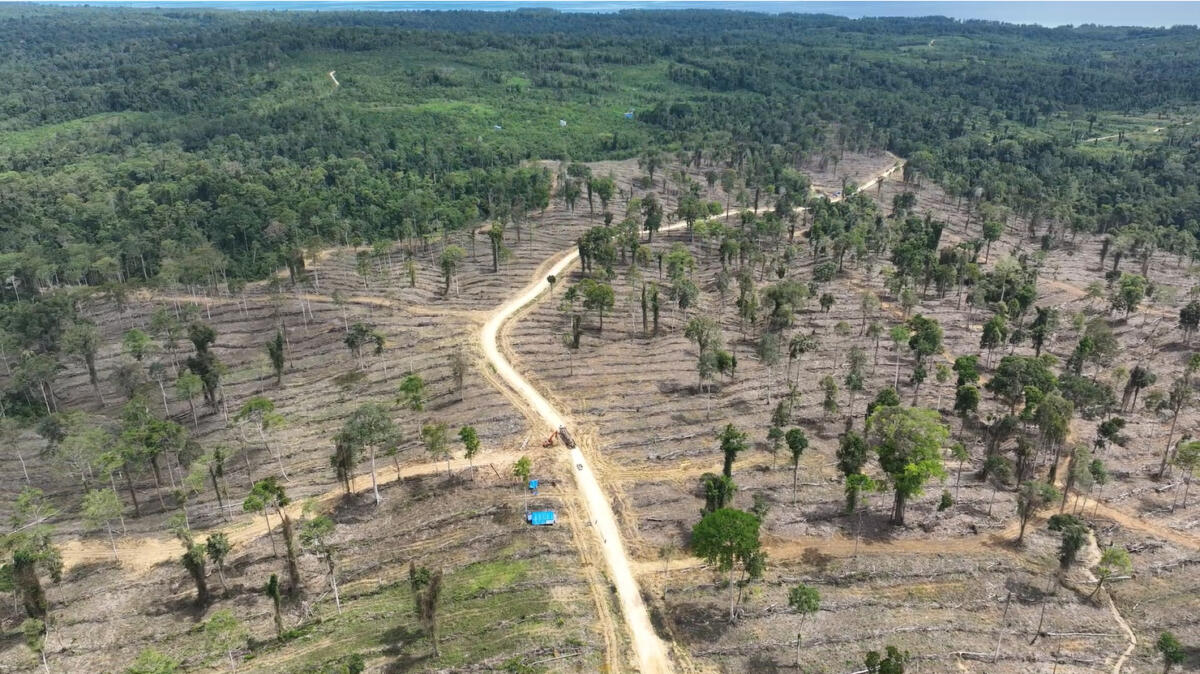
Satellite imagery and site visits in January 2025 revealed landscapes transformed from dense tropical forest into expanses of bare earth crisscrossed by dirt roads. Heavy machinery worked continuously to transport freshly cut logs.
The destruction is not only ecological but also social. The Indigenous Dayak community in Teluk Sumbang village, whose territory overlaps with the concession, reported disrupted access to natural resources like rattan and honey, essential to their livelihoods. Compensation and communication with the company have been minimal.
‘The U.S. RV industry has now become the country’s largest consumer of tropical wood, surpassing homebuilders.’
“America’s best-selling travel trailer” confirmed to use lauan
Deforestation wood is cheaper than selectively logged timber. In selective logging, only a few trees are cut and the forest can recover. Meranti trees, the main source for plywood, dominate this trade. In Indonesia, plywood production uses more tropical logs than any other sector. U.S. suppliers sell these logs as lauan, and RV builders use them widely.
Earthsight and Auriga traced deforestation wood from PT Indosubur Sukses Makmur to major U.S. timber companies supplying RV manufacturers. Lauan plywood is now used in nearly every RV. Travel trailers—the most popular type of RV in the U.S.—are largely produced by Thor Industries. It owns brands including Jayco and Airstream. Jayco, which makes America’s best-selling travel trailer, the Jayco Jay Flight, confirms that its RVs are built using lauan plywood.
Jayco’s largest supplier of lauan plywood is MJB Wood, which sources from Indonesian companies including PT Kayu Lapis Asli Murni (PT KLAM). MJB Wood is headquartered in Bristol, Indiana, only minutes away from the RV manufacturing capitol, Elkhart, Indiana. Shipment records show multiple container loads of plywood arriving in the U.S. in 2025. PT KLAM reports that 87 percent of its wood in 2024 came from PT Indosubur Sukses Makmur’s concessions, demonstrating a direct link between Borneo deforestation and American RVs.
Other U.S. companies, including Tumac Lumber and Patrick Industries, also source lauan plywood from suppliers that use deforestation timber. Patrick Industries, a major parts supplier for Thor, Forest River, and Winnebago, distributes this wood across the RV industry. Elkhart County, Indiana, hosts warehouses and headquarters for these companies. Despite public sustainability claims, none of these companies provide evidence that their plywood comes from sustainably managed forests.
“Highly likely” lauan used in U.S. RVs comes from Borneo forest clearing
It is virtually impossible to confirm whether a specific RV contains deforestation wood. However, the combination of U.S. import data, company sourcing records, and lack of sustainability measures makes it highly likely that much of the lauan plywood in RVs comes from forest clearance in Borneo.
The U.S. RV industry has now become the country’s largest consumer of tropical wood, surpassing homebuilders. Customs data suggests that nearly half of all lauan plywood imported into the U.S. in 2024 was destined for RV production. Each day, around 500 meranti trees are harvested in Indonesia to meet this demand.
Are there alternatives?
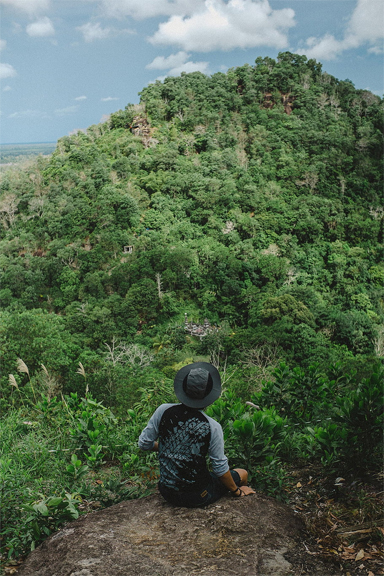
Despite the availability of certified sustainable wood, almost none is used by the American RV industry. FSC-certified meranti logs exist in abundance in Indonesia, but companies avoid the slight additional cost. For example, requiring all lauan to be FSC-certified would increase the average RV price by at most $20—less than 0.1 percent of total costs. Yet companies continue to prioritize price over sustainability, contributing to environmental degradation. Forest Stewardship Council (FSC) certification ensures products come from responsibly managed forests that provide environmental, social, and economic benefits.
In Europe, new legislation—the European Union Deforestation Regulation—will ban imports of products linked to deforestation starting in December 2025. U.S. laws, including the Lacey Act, ban illegally harvested wood but do not prevent legal deforestation like that in PT Indosubur Sukses Makmur’s concession. Enforcement is limited, leaving American consumers unknowingly complicit in rainforest destruction.
What manufacturers—and RV buyers—can do
RV manufacturers—particularly Thor Industries, Forest River, and Winnebago—control the majority of the U.S. RV market and have the power to change sourcing practices. Industry action could eliminate deforestation wood from supply chains by commissioning independent audits, tracing wood back to its source, adopting FSC-certified standards, and publishing progress reports annually.
RV buyers, owners, and dealers can help by demanding transparency and refusing to purchase RVs built with non-sustainable lauan plywood. Shareholders of major RV manufacturers and suppliers also have a role in holding companies accountable to sustainability promises.
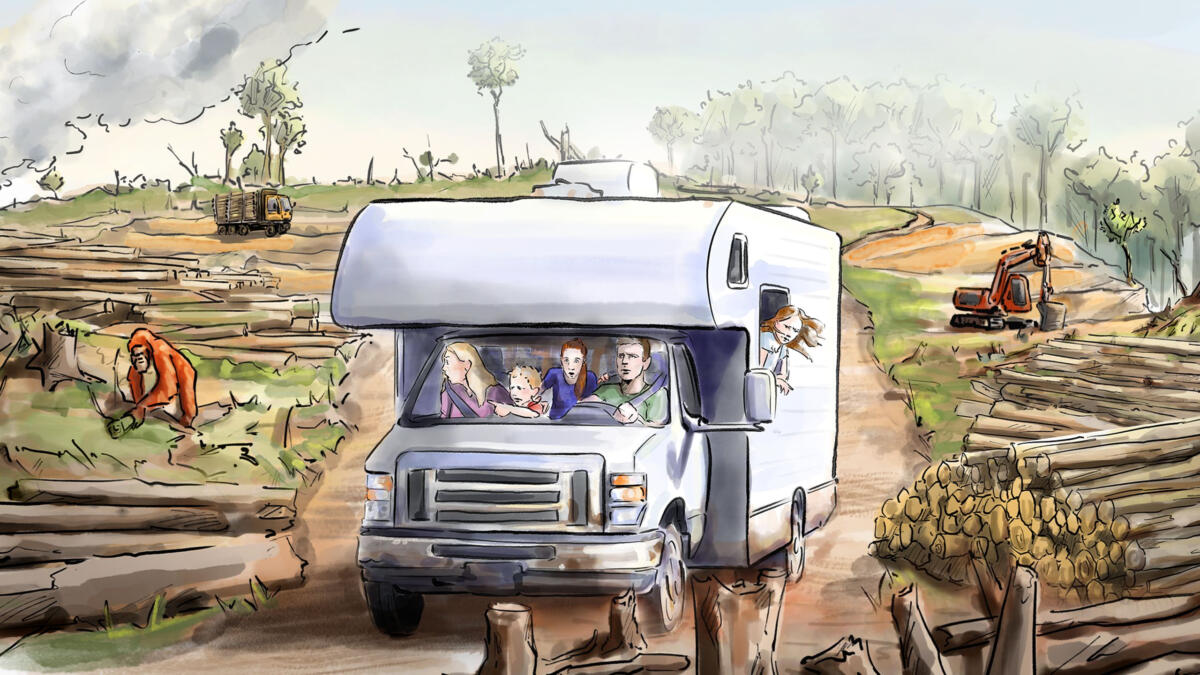
For Americans who buy RVs to enjoy nature, the destruction of Borneo’s forests represents a stark contradiction. Studies show RV buyers are willing to pay a premium for eco-friendly options, yet current practices undermine conservation goals. By raising awareness and demanding change, RV owners and the industry alike can help protect rainforests and wildlife while continuing to enjoy the freedoms of RV life.
RELATED
- Latest numbers show 26 percent more new RVs shipped to dealers than sold
- Fewer Americans embrace RV life in 2024: RV sales fall short
- Most popular states and cities for new RV sales
- RV tech reveals the 3 most common lies RV salesmen tell
- For other retail RV sales report information, click here
RVT1223b


A pretty sad and sobering report to read. Something I never would have even thought about…
Way back in 1987 with the purchase of a new Bounder the sales brochure indicated that lauan plywood was under the aluminum sheeting on the roof and again under the rubber roof of our 2000 Bounder. The RV industry has been using this wood for a long time. To me, it looks something like mahogany. I didn’t know what lauan was or where it came from, nor why it was used. After reading this informative and disheartening article, I still don’t know why the RV industry uses it but would like to see complete abandonment of this product. Rainforest harvesting needs to be entirely illegal worldwide and enforced. They are the earth’s lungs and the only habitat for many creatures big and small.
$20.00 a unit produced more! The greedy “bas—-s” that run the RV manufacturers should be made to pay a $1,000.00 fine for every unit produced with out using certified wood products
Sure. Then that fine would be passed along to the consumer. The manufacturer wouldn’t ‘feel’ a thing.
True, but the consumer has a choice. The critters in the rainforests don’t. Who funds the FSC?
But, happily, we have a choice of manufacturers to buy products from.
Thank you, Russ and Tina, for sharing this. I can see why some folks would lie awake at night once they learn of this. But I can also see that this is a legally awarded concession by a sovereign nation. People can buy what they want and if someone is offering something that no one buys, then it won’t be offered for long. Besides, azdel is a better material with which to construct RVs than luan because of its better resistance to water intrusion. Have a great day and safe travels!
I don’t know what Studies show RV buyers are willing to pay a premium for eco-friendly options. But we all look for the lowest price. I’m sure there are alternative wood or product’s. They could probably save money by building RV’s right the 1st time instead of having dealers fix them under warranty.
And yet this website highlights the use of electric vehicles whose batteries also are responsible for devastating environmental damages. Can’t have it both ways.
If by “highlights” you mean “reports on”, then yes. As Joe Friday said, “Just the facts, ma’am”. Having it both ways is not meaningful.
This is a bit of a paradox.
Luan plywood is a secondary product made from the scraps of tropical hardwoods, not the primary product. But let’s assume consumers rally together and boycott consumption.
Doing so will force the locals to simply burn the scraps or leave them to rot rather than gather them up and make it into a useful product to sell.
Let’s say the boycott is really strong and eliminates demand for the primary hardwood as well.
That will force the locals to stop the costly harvesting of these trees and replace it with the cheaper slash and burn approach so they can at least farm or industrialize for income.
TLDR: Be careful with what you ask for.
Thank you for “the rest of the story”.
(CP) beat me to it.
interesting read and this statement stands out to me the most, “wood is often sourced from forests cleared in ways that destroy ecosystems and displace wildlife.” which could be said to the housing industry, commercial building industry, ELECTRIC CAR industry…just saying, it’s sad to see this happening though
And now huge Solar farms.
There is a large Solar company that wants to convert 50 acres of wooded land into a solar farm. They will also clear cut the area around the Solar array.
Not only will this disrupt the local ecosystem around that area. Water runoff will be a major problem.
Plus, all the batteries needed to store the power. Another toxic waste problem when the batteries are no longer viable.
The lifetime of a the solar array is between 20-30 years.
What happens to this stuff after that? More toxic landfills destroying even more land!
Maybe tariffs will make manufacturers think about using American wood? Our B van builder used wood that has been killed by pine beetles. It has these lovely blue streaks. https://wanderfulwheels.com/custom-sprinter-van-conversions/144-wb-sprinters/2021-mercedes-sprinter-4×4-1-sc4xa
So there’s context to the 26 million acres and what that size is like, but no context of that to the overall forest there. The Nature Conservancy estimates there is 346 million acres of forest in Indonesia. That is equivalent to Texas x2 or 261 million football fields. There are also plans to reforest more than the 26 million acres according to several different sources. So, yes this is a problem AND let’s get all the facts to give it the appropriate context.
Exactly! Thank you Larry……
So you are saying that there is more to the story than devastating catastrophic apocalyptic deforestation…. ? Nothing like getting some context and as Paul Harvey would have said…. “and that, is the rest of the story”.
As far as “deforestation” is concerned…I don’t know the numbers but I suspect the acres of fires in North America in the past 10 years is a thousand times bigger than that of the commerce involved in this story. I think also that what that country does with their resources is very much their business and not ours.
if you want to do your part…don’t buy an RV.
And what will the local people do to earn a living? It’s their country after all and apparently they have bigger fish to fry.
Before you pass judgement on the mfgr’s listed in this article, I suggest you read the research article (https://www.earthsight.org.uk/news/unhappy-campers) and bear in mind it was published by the NY Times. With that said, it is necessary to preserve the rain forests on the earth which in turn control a lot of our climate. There are other products which can be substituted for lauan – which also impact the earth or the environment in general. Think of lithium mining, think of lost farm fields to solar and wind farms; coal, oil and rare earth material extraction. Picture landfills full of worn out electric vehicle batteries….. Hmmm? What is “the rest of the story”?
…. as a side note: In our area right now – there is a plan for a $3 Billion, 900 acre “AI campus” factory or storage or processing center (whatever!) Large amounts of electricity and water needed and less producing farm land – but 200 high paying jobs!
Luan plywood has been used in home construction and remodeling for years. Now all of a sudden it’s the RV industries fault the rain forests are being cut down. Another article sensationalizing something that has been going on for way over 22 years and making it a current event. The rain forests have been cut and burnt for many other reasons over the years.
Lauan is also used in much furniture for the same reason that it is used in RVs. Don’t waste your time trying to make RVers feel guilty about its use. No matter what product is used, someone has a complaint about it.