

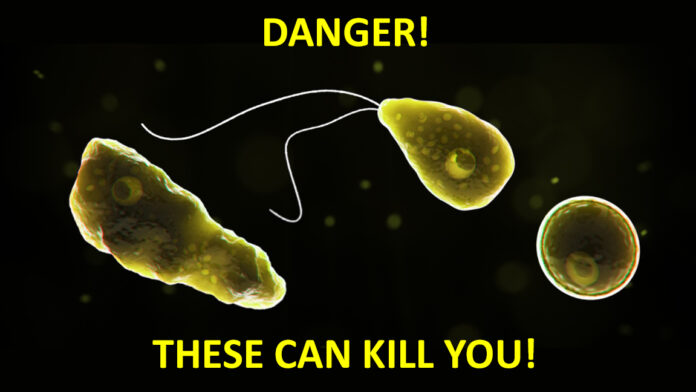
Recently, a 71-year-old woman died after using a nasal rinsing device filled with tap water from her RV’s water system at a campground. Tests confirmed she was infected with Naegleria fowleri. The Centers for Disease Control and Prevention (CDC) now says it’s the first known death linked to nasal rinsing with untreated water from an RV system. Is there anything RVers can do to protect themselves from brain-eating amoeba in RV water?
How to avoid brain-eating amoeba in RV water
The rare but deadly infection called primary amebic meningoencephalitis (PAM) is caused by a tiny organism named Naegleria fowleri. It’s often called the “brain-eating amoeba.” This microscopic amoeba lives in warm freshwater and can enter the body through the nose. It can cause a severe brain infection that is almost always fatal. Unfortunately, there are very few effective treatments.
Doctors warn that using water that isn’t properly disinfected for nasal rinsing can be extremely dangerous. Even if the water looks clean, it may contain harmful germs like this deadly amoeba.
Can RVers test their water for this amoeba?
Unfortunately, testing for Naegleria fowleri is not practical for most RVers. The organism is microscopic and requires specialized lab tests that aren’t available for consumer use. While some water testing kits can check for common bacteria, they cannot detect this amoeba. Testing water immediately before nasal irrigation isn’t feasible, so prevention is the best approach.
What about water filters?
 Some water filters can remove certain bacteria and cysts, but most are not designed to remove all pathogens, including Naegleria fowleri, reliably. If you use filters, make sure they are rated to remove particles as small as 1 micron or less. Even then, filtration alone may not guarantee safety from this amoeba.
How can you keep your RV water safe?
To avoid health issues related to water, always fill your fresh water tank from trusted, treated municipal supplies or certified safe water sources. That’s a good trick, and in this case, hard to determine. In the case of the tragedy that befell the RVer, testing couldn’t find out just what the source of the amoeba was. Neither the RV fresh tank, the nasal spray bottle, nor the RV park water system turned up traces of the bug. How could that be?
Investigators pointed out that the water samples were taken 23 days after the woman used the water for nasal rinsing. Because of this delay, it’s possible the harmful organism was no longer present or was in amounts too small for the tests to detect. Even though the amoeba wasn’t found in the samples, it was still clear that the water had not been properly disinfected. So what else can you do?
More tips for keeping water safe
- Regularly sanitize your RV’s fresh water tank and plumbing. This usually involves flushing the system with a bleach solution and thoroughly rinsing afterward.
- Never use tap or RV tank water directly for nasal rinsing. Instead, use distilled, sterile, or boiled water (boil for at least one minute, or three minutes at higher elevations).
- Keep your water hoses and connections clean, using only hoses rated for drinking water.
- Some RVers only use water from their fresh tank, or an unknown-quality water supply, for cleaning and cooking. When it comes to drinking or toothbrushing, they rely on known-quality bottled water.
Although more research is needed to fully understand infections like this and how to prevent them, taking these simple steps helps reduce your risk. Protect yourself and your family by making sure your water is safe every time you fill your RV tanks and before using it for sensitive uses like nasal rinsing.
RELATED
- RVer dies from brain-eating amoeba in campground water
- RV water safety: What every RVer needs to know
- YUCK! There was green algae growing in the water hose we drink from!
- Quick tip: A no-mess way of adding bleach to sanitize RV’s fresh water tank
RVT1219b

I think there has been at least one other death from brain infection caused by this type of nasal rinse.
Thank you for sharing the tragic news, Russ and Tina! Thank you even more for the following discussion about prevention. Have a great day and safe travels!