

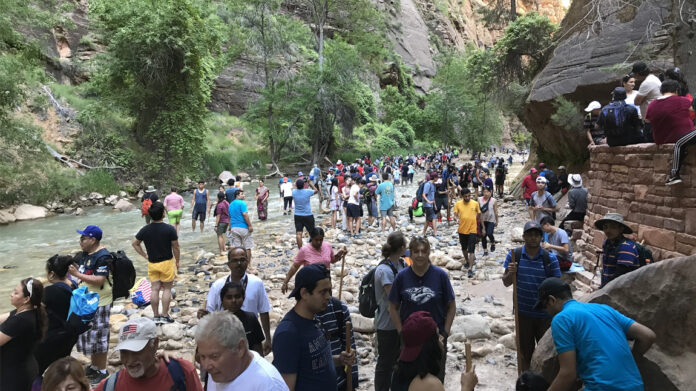
For years, experienced RVers have relied on a simple strategy to avoid packed campgrounds and traffic-clogged national parks: Travel earlier in the season.
But in 2026, that quieter “shoulder season” may not be feeling quite so quiet anymore.
Early visitation signals are already starting to appear
Across parts of the West, signs are emerging that spring visitation is ramping up quickly again this year. Gateway communities, campground reservation systems, and park planners are once again preparing for another busy season at some of the country’s best-known destinations.
For RVers, that may mean the old strategy of “going a little earlier” no longer guarantees lighter crowds.
National Park Service parks, including Yosemite, continue using reservation and timed-entry systems during portions of the travel season, reflecting the ongoing challenge of managing heavy visitation. At the same time, campground demand appears to be arriving earlier in the calendar at many popular destinations.
The shoulder season may not be as quiet anymore
For many longtime RVers, one of the biggest changes of the past decade has been the growing need to plan further ahead for trips that once felt more spontaneous.
Spring and fall travel once offered a fairly dependable way to avoid the worst summer congestion. Retirees, full-timers, and experienced travelers learned to drift into popular regions before schools let out or after families returned home in the fall. It was often easier to grab campsites, enjoy quieter roads, and spend more time actually appreciating the scenery.
But more travelers appear to have adopted the same strategy.
As national parks and outdoor travel grew in popularity over the past several years, shoulder seasons began attracting larger crowds of their own. In some places, RVers who once arrived in April expecting elbow room are now finding campgrounds already filling quickly.
That shift is especially noticeable around marquee destinations, scenic mountain corridors, and parks that regularly dominate travel lists and social media feeds.
RVers may need to adjust their planning habits
None of this necessarily means RV travel is becoming impossible. But it does mean flexibility may matter more than it once did.
Many experienced RVers now reserve sites earlier than they used to, even if they later cancel and adjust plans. Others increasingly travel midweek, look for smaller nearby campgrounds, or build trips around lesser-known destinations instead of the biggest-name parks.
Some RVers are also drifting farther toward public lands, county parks, and smaller state parks where crowds can still feel more manageable. For travelers willing to wander a little farther off the heavily advertised routes, the quieter camping experience many remember may still exist.
Reservation systems continue reshaping the RV experience
Reservation systems themselves remain a source of frustration for some RVers, especially longtime travelers who miss the spontaneity that once defined many road trips.
Instead of simply pulling into an area and finding a campsite, many travelers now feel pressure to monitor reservation windows, compete online for campsites, and lock in plans months ahead of time. For RVers who enjoy flexibility, that shift can feel like a major cultural change in the RV lifestyle itself.
Park officials, meanwhile, argue the systems help reduce traffic backups, overcrowding, and gridlock at heavily visited destinations. And with visitation remaining strong at many national parks, reservation systems are unlikely to disappear anytime soon.
Popular parks are unlikely to get quieter anytime soon
The broader trend may simply reflect the continuing popularity of outdoor travel itself.
Even with concerns about fuel prices, inflation, and RV ownership costs, national parks and scenic outdoor destinations continue attracting strong interest from both RVers and non-RVers alike. Millions of travelers still want the same iconic views, famous hikes, and bucket-list experiences.
That means RVers hoping to “beat the crowds” may increasingly need to rethink what that phrase really means. In many places, avoiding congestion may no longer be about finding the perfect week. It may be about finding different parks, different routes, or different expectations altogether.
RELATED
- The hidden cost of ‘cheap’ campgrounds
- These are RVtravel.com readers’ favorite municipal campgrounds in the U.S.
- Military campgrounds offer a great opportunity for many RVers
- AI dynamic pricing hits campgrounds nationwide as rates change by the minute
RVT1259b


Just returned from a 3-week RV trip to northern AZ, central NM, and western TX. Had reservations for only 3 nights in Camp Verde, AZ before we left. We made some reservations as we traveled and stayed in several FC-FS campgrounds. We also camped several nights in USFS and BLM campgrounds and one state park and one county fairgrounds with E/W hookups. Got our first choice of RV parks and campgrounds every night, even when calling only an hour or two before arrival. So, little difference in overnight availability from our spring and fall “shoulder-season” trips to the Southwest over the past 15 years.
Thanks Steve. I’m tired of hearing that everything’s getting worse.
I’ve been getting up at 5am to get reservations for provincial parks in Atlantic Canada for the last month, 2:30am for Newfoundland! Usually I got one of the last sites available. Yesterday I checked back at one campground and found a bunch of sites available, including the one I originally wanted! I think people make a bunch of reservations and then cancel. Of course it cost me $5 to switch sites! I think I could have saved my sleep and come back a week after the opening day and found lots of sites available!
Yes, keeping an eye out for cancelations helps…
For months now, I’ve read tariffs, gas prices, budget cutbacks, rising fees, fewer Canadians, NPS staff reductions, timed entries and inflation are going to all but empty the parks. Can we let that come to fruition before we move on to speculating the shoulder seasons are all but gone too now?
I’ve noticed that this author does a lot of speculating with terms of, possibly, could happen, might happen, could get worse, etc. I’m not seeing all these negative possibilities coming to fruition either.
Thank you for the discussion, Russ and Tina. We visited Ireland about a decade ago and learned a valuable lesson we frequently apply to our RV travels. The Ring of Kerry is a hugely popular and crowded tourist destination. When we were in that area, we hired a guide for a day to see the adjacent and much less popular Ring of Beara. We missed some of the sights of the Ring of Kerry, but saw many other, albeit from a greater distance. We also were able to more immerse ourselves in the sights because we were not closely following a tour bus while being closely followed by a tour bus. You advice is excellent and sure to promote more satisfying travel. Have a great weekend and safe travels!
We have been on the road around the country since March 30th (now May 2nd) and we have not seen a busy campground yet, both private and public. Most often we have been one of less than 10 campers at any given campground. It has been delightful and we have been blessed with good weather for the last month, with one day exception in Illinois where it poured! LOVE Spring travel!
Traveled to AZ in February and the Grand Canyon was crowded. Canadians (thought they were boycotting), South Koreans, Japanese, Serbians, Germans, etc. were among those there. So much for the non-busy season. Page, Tucson, Phoenix, Tombstone, were all busy.
Recently tried booking some August camping sites. Sometimes only 3, 2 or even just 1 site remaining. Can’t imagine the crowds when fuel prices drop in a couple months.