

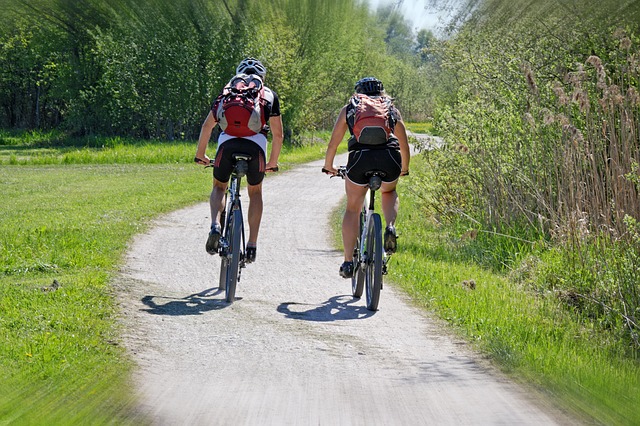
It was a RVing bicyclist’s dream: level terrain, clear skies with 73-degree weather, and little to no wind. Breathtaking scenery. Perfect! That is, until we happened to ride over a mass of goathead!
Read on and I’ll explain.
Goathead?
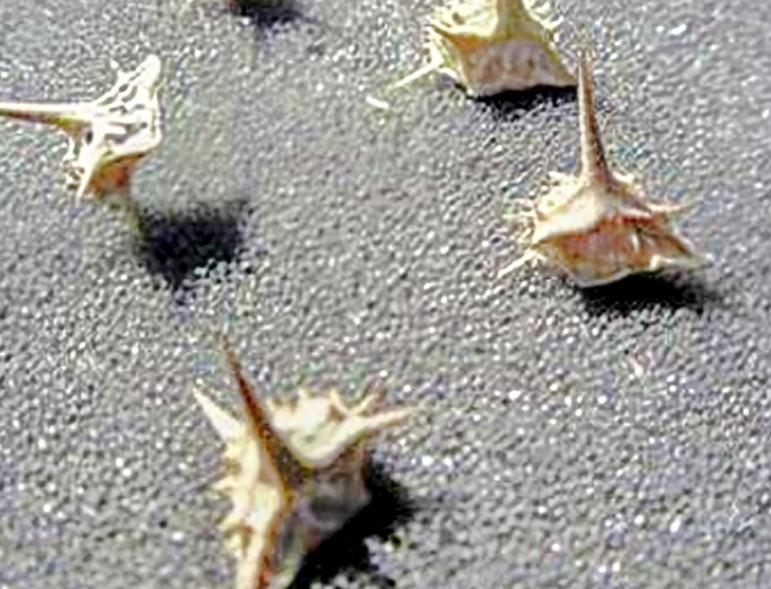
Also called devil’s thorn, cat’s head, and puncturevine, this weed is a menace! The goathead are hard, sharp seed pods that can painfully penetrate your pet’s paws, stick to clothing and, yes, even flatten bicycle tires!
What is it?
Tribulus terrestris is the scientific name for the goathead weed. It’s a low-growing invasive plant that thrives in dry, sandy, and/or disturbed soils. Its tough seed pods, called “goatheads” for their spiky appearance, readily attach to passing animals, vehicles, and human shoes and clothing. This helps to spread the menace far and wide.
Where does it grow?
Goatheads are found in many states, including California, Colorado, Montana, Idaho, New Mexico, Texas, Arizona, and Utah.
Be aware
If you enjoy biking during your RV travels, you should know about this weed and use caution. Here’s why the goathead weed matters:
• Cyclist hazard: Bicycle tires are vulnerable to punctures from the hard, spiky seed pods. This can lead to unexpected flats or even dangerous riding conditions. (You can purchase puncture-proof or thorn-proof bike tires here.)
• Pet and foot safety: The rigid seed pods can cause discomfort or minor injuries if stepped on—this applies to RVers as well as their pets.
• Widespread presence: Invasive species like goathead weed are quick to dominate open areas—from busy campgrounds to bike trails—making vigilance key wherever you travel.
Identifying goathead weed
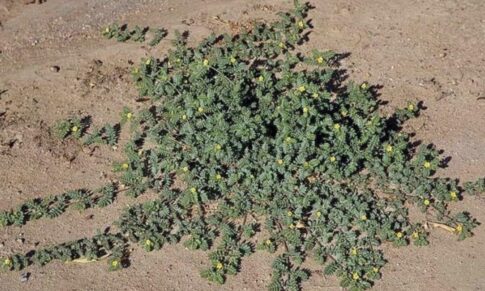
Being able to spot goathead weed can help you take the necessary precautions and alert the campground manager. (Horticulturists recommend prompt treatment to eradicate the fast-spreading weed.) Here are some tips:
• Low-lying growth habit: This plant tends to spread along the ground, making it a common sight in campsites, parking areas, and along trails.
• Spiky seed pods: The most telling feature is the weed’s distinctive, jagged seed pods that resemble miniature “goat heads.”
• Rapid spread: Once established, goathead weeds can quickly take over open spaces, meaning routine checks are essential.
Management and prevention
Dealing with goathead weed is easier when you know what to do. Here are some strategies for preventing this menace from interfering with your travels:
• Regular site inspections: Whether you’re parking your RV or taking your bike out for a spin, a quick look around your setup can help you spot goathead weeds. Avoid these areas, especially when walking your dog or bicycling.
• Clean as you go: After driving or riding through open areas, give your clothing, bike, and any pets a quick check to remove any attached seed pods.
• Tell campground managers: Alert local management if you notice goathead weed infestations so that they can immediately address the problem.
I’d never heard of goathead weed until experiencing punctured bicycle tires. I know about them now—and I’ll likely never forget! How about you?
RELATED
- British couple fined after stowaway found on their RV’s bike rack
- Poll: Should e-bikes be allowed on traditional bike trails?
- The joys of RVing with a Lectric XP 3.0 electric bike
- Why you need an electric bike
- Creative ways to use a bike storage tent when RVing
##RVT1205

Never heard of these things, until they punctured my husband’s tire in Zion National Park. We rode into the canyon, stopped for a picnic along the Virgin River and continued on to the end at The Narrows. We hiked around for a couple of hours and came back to the flat! It was an ebike and (FYI) the shuttles cannot accommodate the weight of ebikes. So, we had to take the shuttle back to the visitor’s center and request a special pass to drive our truck into the canyon (a unique opportunity!) to retrieve our bikes, with explicit instructions that we do not stop anywhere on the way to or from! Took the bike to a little shop in Kanab, UT and learned it was…Goatheads, tiny but dangerous!
Several years ago my husband and I were camping at Antelope Island State park in the Great Salt Lake. We rode our bikes and had our first experience with goatshead. Wound up walking and pushing our bikes back to the trailhead. Yes we did have puncture proof tires but still found over 50 punctures in the 4 tires. Inserted tubes but that didn’t keep the tires up. Wound up replacing all 4 tires. We know what Goatshead look like now!
as a kid growing up in West Texas, where if it didn’t stick, sting, or bite, it was dead (and still might), we were constantly fixing our bike tires due to goat heads or other spikey things. A rider (kid) get real good at fixing tires. A repair kit with tools is fairly easy to carry and they make small air pumps to reinflate. I remember buying puncture resistant tubes, but not sure if they did any good. (that was 50-60 years ago)
Goatheads are the main reason that more expensive mountain bikes now come with “tubeless-ready” rims.
Tubeless tires are filled with a few ounces of sealant which almost instantly plugs any hole, except for a tear.
My tires have hundreds of small punctures that the sealant has automatically fixed. Occasionally a large puncture has to be fixed by inserting a tubeless tire plug. Just takes a couple of minutes on the trail.
You can retrofit most rims with a “Stan’s NoTubes” kit like this:
https://amzn.to/4jJi4ec
I get the Schrader valves or convert over Schrader valves, rather than using Presta.
Recently I was out riding in Arizona and got a 2 inch thorn right in the middle of the tire.
The hole was about 3 mm, much larger than a goat head. I was getting ready to stick in a plug, but I decided to let the sealant work. I kept pumping in CO2 and spinning the tire.
Sealant was spraying out 18 inches, like a sprinkler system.
But over a few minutes, the latex sealant in contact with air cured and the leak stopped. Have not touched the tire since except for routine inflation.
Note sealant for tubes and tires is a different chemistry. Tire sealant is a permanent repair because tires don’t flex much. Tubes flex a lot, so tube sealant doesn’t hold up as well.
We have goathead here in Eastern WA. Within the first week I had a flat on my new E-bike and took the bike to a local bike shop for repair. They also recommended a liquid sealer to add to the tires. After a little research, most of the people I knew with bikes had done this. Two years on, there have been no more punctures.
Great article Gail to help others be aware! I’m thinkin most people don’t know what goathead stickers are until they experience them…we sure as heck didn’t! If we discover they are around we go into “strict check the bottom of your shoes mode” BEFORE entering the rig! They really hurt to step on barefooted!
We had a CruiseAmerica rig at Goulding’s in Monument Valley for a night on our way to Moab. I never knew they were called goatheads until now, but it took me half an hour to get them out of my crocs. I had a name for them, but I won’t print it here.
Growing up in N Cal just south of Folsom, they were everywhere. We called them bullthorns in Cal, north and south back then.
Goatheads…the spawn of Satan.
As a child living in the SF Bay Area, these seeds were the bane of our bicycle rides. When we rode our BMX bikes on trails, we always had a tire patch kit with us. Can’t remember how many times we repair our tires every week.
They are also in Florida.
Thank you for the information, Gail! We saw something approximating this at a Florida state park campground a few years ago. It was especially unpleasant for our dog. Have a great day and safe travels!