


Are you planning on traveling out of the U.S. with your dog? Heads up! Come August 1, dogs coming back into the U.S. have new rules. The CDC (Centers for Disease Control and Prevention) says the rules apply to dogs coming into the country, even those that have only traveled across a single international border, and set out stringent regulations.
Starting on August 1, 2024, dogs entering or returning to the United States must meet new, specific requirements depending on where they have been in the six months before entering the U.S. and where they received their rabies vaccines (if required).
Requirements for all dogs
All dogs must meet the following requirements:
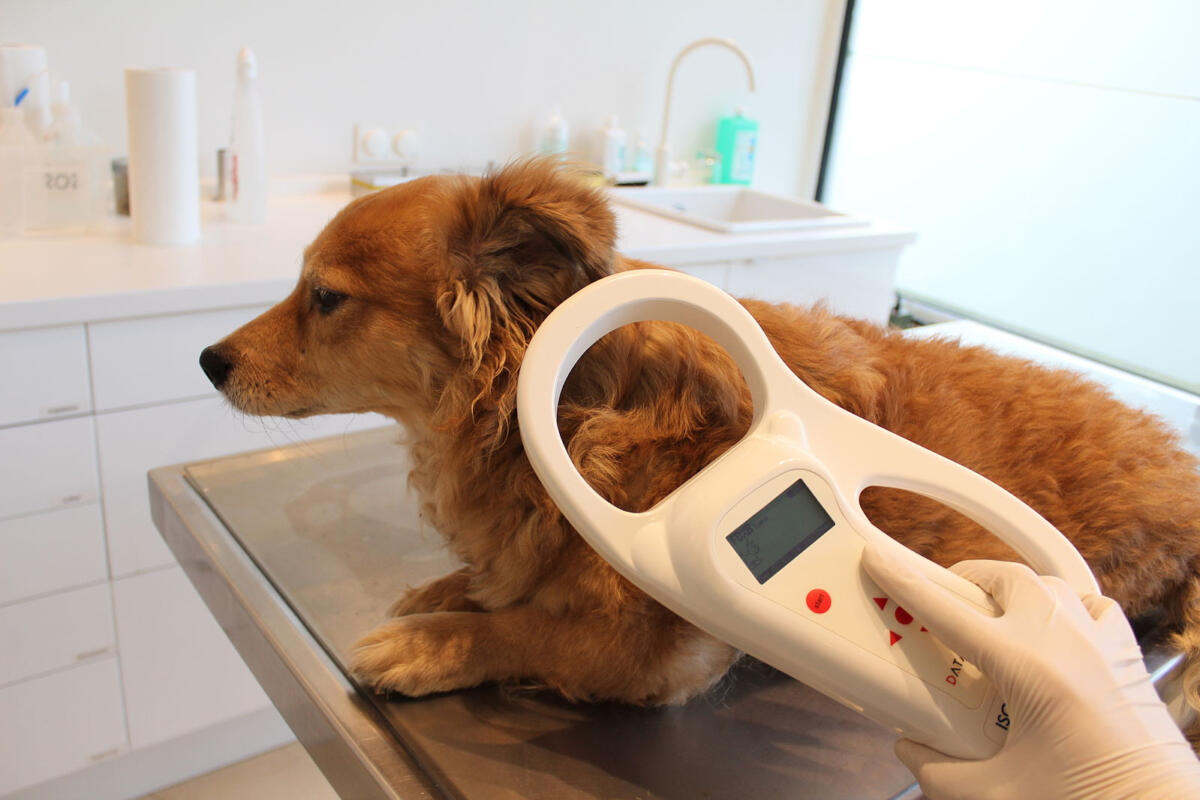
First, they must be at least six months of age at the time of entry or return to the United States.
Second, they must have an implanted International Organization for Standardization (ISO)-compatible microchip. That chip must have been implanted before any required rabies vaccination. The microchip number must be documented on all required forms and in all accompanying veterinary records..
Third, your dog must appear healthy on arrival at the border. Dogs can’t enter the United States if they’re carrying a disease contagious to people. What happens if your dog looks sick? Then you may be on the hook to pay for the dog’s isolation, a veterinary examination, and additional testing. All of this may be required to determine if the dog has a contagious disease and to prevent spreading it.
Dogs coming back into the U.S. have new rules and paperwork!
You’ll also need to have a “CDC Dog Import Form Receipt.” The CDC says that ideally, you’ll fill out a form, online, anywhere between two and ten days before you arrive at the border. But, you can complete it right before arrival—even while sitting in line at the border crossing, provided you have internet access.
But let’s say you fill out the form days before you hit the border crossing—and then something changes. Then you’ll need to submit a new form and indicate you are making changes to an existing form. All information, including the port of entry where the dog is arriving, must be correct at the time of arrival.
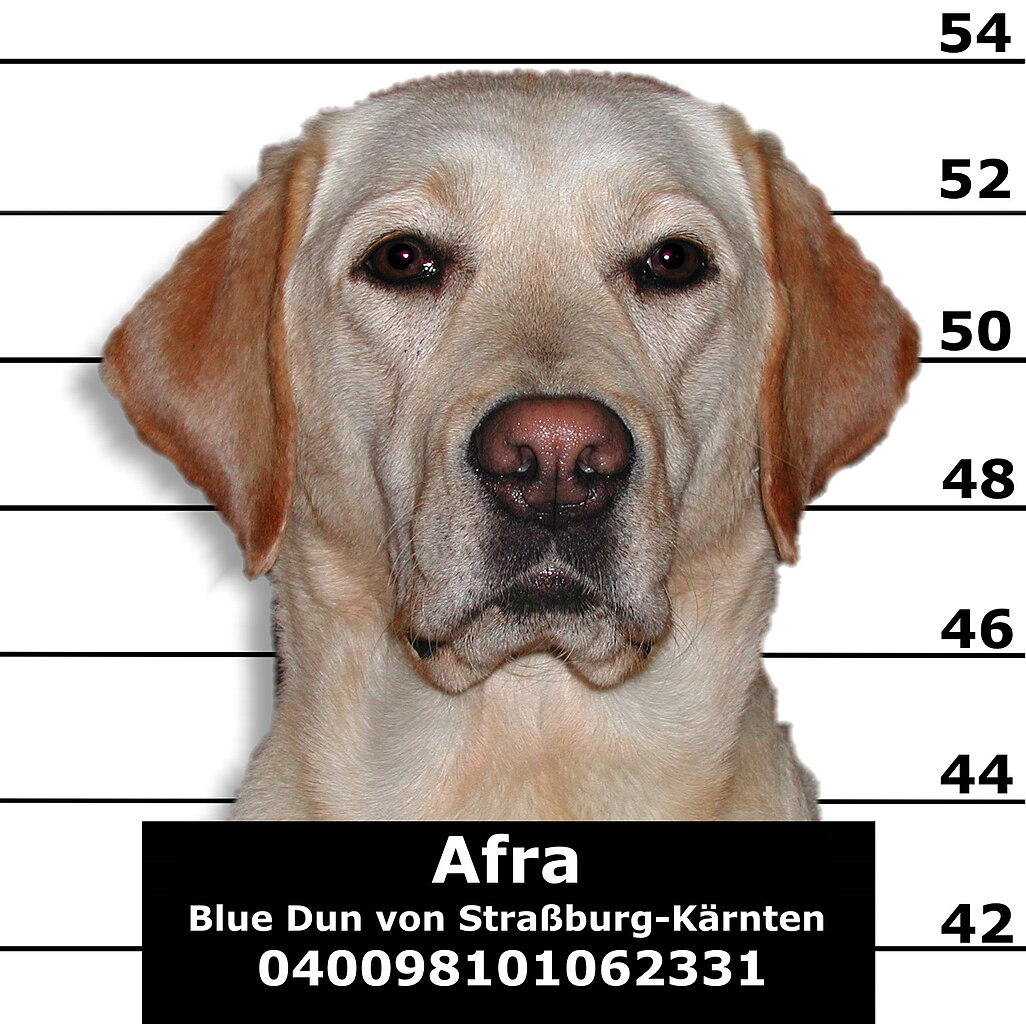 When completing the form, you’ll need a doggy mugshot. That translates to a clear photograph of your dog showing its face and body. If your dog will be younger than a year old when you hit the border, you’ll need to have a fresh photo—one taken within 10 days of your border crossing. You’ll upload the picture, along with the form. Happily, there’s no charge for that. No, don’t use one like this one—the head and body need to be in the same picture.
Finally, additional “documentation which varies depending on where the dog has been in the 6 months before entering or returning to the United States, or if the dog has a current rabies vaccine administered in the United States” will be needed.
What sort of “additional documentation”?
If your dog got a rabies shot in the U.S., and the vaccination is current, and the dog HAS NOT been in a high-risk country in the last 6 months, you’ll need to do these things:
First, your dog must meet all of the requirements in the section, “Requirements for all dogs,” above.
Second, it will need to have one of the following documents:
Either a Certification of U.S.-Issued Rabies Vaccine form that was endorsed by USDA before the dog departed the United States;
Or, a USDA-endorsed export health certificate. The export certificate must demonstrate the dog is six months of age or older, and list the microchip number. It will also need to “Be for the dog rabies-free or low-risk country where the dog’s return itinerary originated (the form will only be valid for 30 days if it does not contain rabies vaccination information).” OR the export certificate will document a valid (unexpired) rabies vaccination administered in the United States (the form will be valid for the duration of the rabies vaccination [1 or 3 years]).
Finally, if you and Fido have “dotted your I’s and crossed your T’s, there’s that dratted CDC Dog Import Form receipt. When you fill out the form and submit it, BE SURE you list the land border crossing that you’ll be coming though for your return.
What if you don’t have the “appropriate documentation” or a current U.S. rabies shot?
 There are additional requirements for dogs that have been in a country at high risk for dog rabies within the six months before entry and do NOT have appropriate documentation of current U.S.-issued rabies vaccine. You may be able to heave a sigh of relief here. As long as your travels have only taken you only to Mexico or Canada, then you have not traveled to a country at high risk for dog rabies.
If your dog HAS BEEN in another country, other than the U.S., Mexico, or Canada, we urge you to click here for more information.
But wait! There’s more!
Dogs coming back into the U.S. have new rules, and there are also additional requirements for dogs that have been ONLY in countries that are dog rabies-free or low-risk in the six months before entry, for example, in the U.S., Canada, or Mexico.
Dogs, including service dogs, that have been ONLY in dog rabies-free or low-risk countries during the six months before entry into the United States must:
First, meet all requirements in the “All Dogs” section above.
Second, have one of the five following (note: any documentation that is not from the United States must be completed in the country where the dog’s travel originates):
ONE: Either a certification of Foreign Rabies Vaccination and Microchip form, including the endorsement by an official veterinarian of the dog rabies-free or low-risk country where the dog has been located. Then add to that, EITHER (1) a valid rabies serology titer, OR (2) veterinary records [see note below] (which list the microchip number) for the dog from the exporting country for the previous six months. The form must be completed within 30 days before arrival to the United States.
OR, TWO: Certification of U.S.-Issued Rabies Vaccination form that was endorsed by USDA before the dog departed the United States.
OR, THREE: A valid USDA-endorsed export health certificate. If you have this, then it must meet one of these requirements: EITHER it is for the dog rabies-free or low-risk country where the dog’s return itinerary originated (the form will only be valid for 30 days if it does not contain rabies vaccination information), OR will document a valid (unexpired) rabies vaccination administered in the United States (the form will be valid for the duration of the rabies vaccination [1 or 3 years]).
OR, FOUR: A Certification of Dog Arriving from DMRVV-free or Low-Risk Country into the United States form endorsed by an official veterinarian in the exporting country; AND veterinary records* (which list the microchip number) for the dog from the exporting country for the six months before traveling to the U.S. The form must be completed within the 30 days before arriving at the United States.
OR, FIVE: A foreign export certificate that documents the dog is at least six months of age, lists the dog’s International Organization for Standardization (ISO)-compatible microchip number, and has been endorsed by an official veterinarian of the exporting country; AND veterinary records* (which list the microchip number) for the dog from the exporting country for the previous six months.
And, once again, that CDC Dog Import Form receipt must list the land border crossing that you’ll be coming through.
Are you panting yet?
If this complicated information has you panting, your dog commiserates with you. Here’s one more note on this business. Any documentation that is not from the United States must be completed in the country where the dog’s travel originates. For example, if the dog’s documents were issued in France, the dog may not enter the U.S. via a land-border crossing from Mexico to the U.S.
*And here’s the note about “veterinary records.” Examples of veterinary records that must accompany completed forms are European Union pet passports or proof of payment for veterinary services received in the exporting low-risk country for the previous six months. Records must include the dog’s microchip number.
Can you “slide” on any of these requirements?
Think you just might be able to “slide by” on these requirements? Hop in the motorhome with Fido, head on into Canada for a few weeks, then just pop on back to the U.S. without the necessary documents? Read this, slowly: “Dogs that do not meet all entry requirements or do not have accurate and valid forms will be denied entry to the United States and returned to the country of departure at the importer’s expense. These requirements apply to all dogs, including service dogs and dogs that were born in the United States.”
“DogBot” may make this easier.
 As we completed this article, we ran across an “electronic helper” that could make this process a lot less hair-pulling. The CDC has an electronic help system, where you can click many “yes or no” answers into the system. It will then guide you through the requirements. You’ll find Bowser’s DogBot on this web page—it’s highlighted in blue and easy to find. Hopefully, it’s as easy having DogBot walk you through the process as it is to take Bowser for a walk. Everybody say, “Who’s a good human?”
Just proofreading this article made us glad we used to only travel with a cat. [And made this proofreader glad she doesn’t travel out of the country.]
##RVT1158b

The Government must have become more effective at controlling border crossings. Must be the reason that they are increasing the burden on Citizens, when they travel with their pets.
WOW…you said that far more diplomatically than anything that was running through my mind!
I haven’t heard of massive issues caused by domesticated dogs crossing the border. “Mules” and “Coyotes” seem to be a far greater issue.
I was biting my lip as I read the above, thinking along similar lines. Glad you beat me to it before I posted my more intemperate thoughts.
Thank you! We live on the US-Canada border. While we would not normally cross the border with our (fully immunized and microchipped) dog, or cats. There is the off-chance of RV travel with our pets to northeast States – and the shortest route is through Canada.
I do ‘get’ why the CDC has such rules. At the same time, as an international traveler, I will say that it is often far more difficult to return to the United States than it is to enter other countries. Probably because U.S. citizens represent a lower risk of bringing difficult to control diseases to those countries.
Since you ‘get’ why the CDC has such rules, could you explain it to the rest of us, who see these rules as nothing more than a ‘solution’ in search of a problem?
How is this going to affect the Canadian snowbirds that come south each year? Or has this been in place already for our neighbors to the north? The Canadians have a regulation for everything, so this may not be new. I don’t know.
Thank you, Russ and Tina! 🙂 I’ll forward this to DW for her edification. We plan to travel to Alaska in the next couple of years and will have to meet all these requirements. Thankfully, by then dog #3 will be well-beyond six months of age. 🙂 Thanks again, have a great weekend, and safe travels! 🙂
And yet our government is letting millions of illegals into the country from all over the world unchecked, not knowing what kind of medical condition they might be in and not even able to support themselves. I think Washington has their priorities all messed up.
What if your dog has had a DUI lol? Seriously though we had to cancel a 4 week trip to Banff and Jasper last year because our 19 year old mutt couldn’t get a rabies shot due to her age. She passed away in Sequoia last fall. We’ve rebooked for this August. But there are a lot of rules for travel into Canada, you need a Canada card for vehicle insurance, health insurance would be good to have, and proof of ownership of your RV oh and no DUI’s !!! It’s so easy to forget Canada is international travel just like an airport passport control and customs. No fresh or wet food, not too much booze either.
Wholey Carp! It had to be a committee that dreamed up these rules. No one person could be this consistently stupid. On the other hand, this should stop Canadians from all of this wild dog smuggling that has so badly infected our nation. (Sarcasm before someone jumps on me.) What the…? Who the …? How the …? Why the …? We all know that it is a cat problem, not a dog problem. Feild mice – stop those field mice at the borders. They sneak into Arizona and eat the wires off RVs!
Like I mentioned, I’m glad I don’t go out of the country anymore. Sheesh!🤯 At least there are forms online to fill out. Hopefully that helps a little. Have a good night, Kelly. 😀 –Diane
“At least there are forms online to fill out.” After the Army and working for the State of Fla., I try very hard to keep from filling out forms. My dog will have to fill out her own forms. The cat gets off scott free??
Yeah, I hate forms also. But it was sure mind-boggling proofing that post. I can’t imagine how Russ and Tiña maintained their sanity while putting it together.😲 Take care, Kelly. 😀 –Diane
The people at the CDC have lost their minds!
Last time I traveled to Canada or Mexico I needed a current drivers license… probably won’t go again…✨🎊✨🥳✨🎉
Being Canadian this brings back the reminder of Canada’s ArriveCan app that had to be filled out before coming home while a Covid was in effect. That ended up being a disaster too.
So does the veterinary certification work 30 days for Canadian vets only and every time we want to go south have to get another certificate unless it’s filled out by a US veterinary? Or will we only have to get certified the once and that will last the duration of the rabies vaccine?
Having been impoverished most of my life I can’t help but wonder if this isn’t a new form of “green screen”? (money) Or can your microchip be deactivated for nonpayment? And when will they Insititute regulatory microchips for cats and birds? it’s my (perhaps incorrect assumption) that standard pet microchips are insufficient to meet the new regulations?
Honestly, is there *anything* that the government can’t screw up? We’ve been crossing the Mexican border for years with our dogs with no issues or paperwork except showing a valid rabies vax certificate.
Now this?
I’d really like to know exactly what rampant problem these new rules are intended to solve.
As someone who has reported on this and dug deeply into it, I am happy to see such a concise article on the new policy. A few things to add: First, if coming from Mexico, for example, the health certificate must be filled out by the attending vet, and then endorsed by an official government vet. We are still having issues nailing down who that would be, and also whether or not their ability to provide the required stamp/signature electronically is sufficient. Still digging into that.
Then there is a lot more, including this will cause great harm to rescue operations. And much more than I can add here due to word limit.
Thanks for the info, Daniel. And please note that if you have more info to put in a comment than the word limit allows, just post the first part of your comment, and then “reply” to that with the rest of your comment. It’ll show up as two parts, but if you do it quickly enough (i.e., no one else comments immediately to the first part) the second part should be directly under the first part, so it is easy for readers to follow. Have a great day. 😀 –Diane at RVtravel.com