

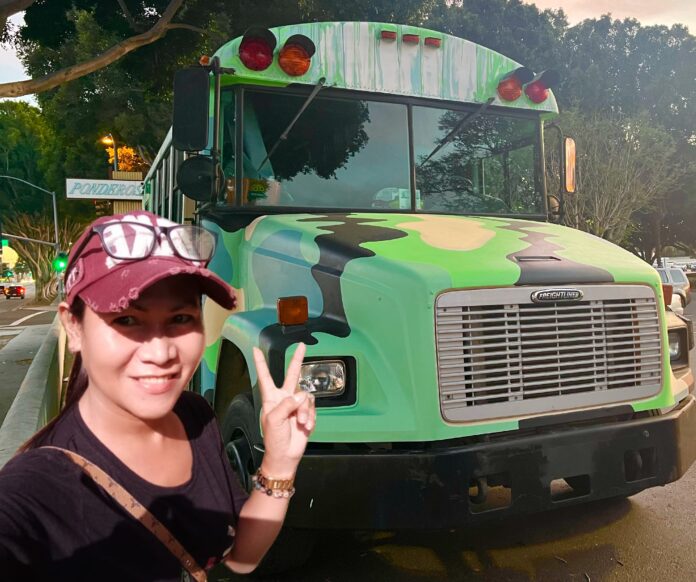
One of our readers, Theodore Zen, wrote in and told us about the school bus he and his partner are converting to an RV, better known in the school bus conversion world as a “skoolie.” They also finished an amazing spaceship-themed conversion of a GMC RV a few years ago.
For their skoolie, they set out to build an eco-friendly tiny home on a budget and with an “artsy flair.” Theodore said they took inspiration online, researching what other people were doing. Knowing a school bus conversion was possible—they were inspired!
He said, “We had a low budget but we also wanted comfort yet be eco-friendly. We planned on using repurposed materials and be solar-powered for lights, charging phones, etc.
“The first step was getting the bus. We found one on Facebook Marketplace that wasn’t running and traded a 2006 Dodge minivan for it. Since it wasn’t running there was towing involved. And towing is downright dangerous and expensive!
“But we were the proud owners of a 2001 Thomas Built school bus. She was a 25-foot beauty but we had to find a new or rebuilt Cummins diesel engine. Calling around to diesel mechanics in Southern California was eye-watering! We were quoted $20,000–$30,000!
“These people didn’t seem to understand that we were on a low-budget tour. We decided to research this challenge ourselves. We found an engine with only 40,000 miles on it, which is probably just broken in. It was located on the East Coast, but we bought it, shipped it, and found an installer.”
Inspiration from hippies and Ken Kesey bus
They began painting the skoolie while they waiting for the engine and installation. Their inspiration came from the hippies of the ’70s and the Ken Kesey “Furthur” bus, and they decided on a camo theme. He said, “These original hipsters are our ancestors! If they could do it, so could we!”
“We sourced wood from homes being remodeled as we decided on a country-themed design for the living area. We bought bundles of tongue-and-grooved pine from returns at Lowe’s or Home Depot. Also, we sourced some amazing redwood flooring from a remodel. We even asked for pallets behind furniture stores!”
They have lithium batteries powered by solar panels, a compost toilet, and fresh and gray water tanks. They estimate that they have put about $20,000 into the skoolie now.
“All in all, things came together through hard work, creative use of sourced materials and going through trials and tribulations. We are now taking her on the road for parts unknown… What an adventure! To quote Dr. Suess, ‘Oh, the places we’ll go!'” writes Theodore.
The next step for their RVs is to take them to the Desert Rose Collective, where they are helping to build a wellness center. The plan is to rent out or sell the skoolie with its own land there. Theodore notes that the hardest part of having a skoolie is finding places to park it.

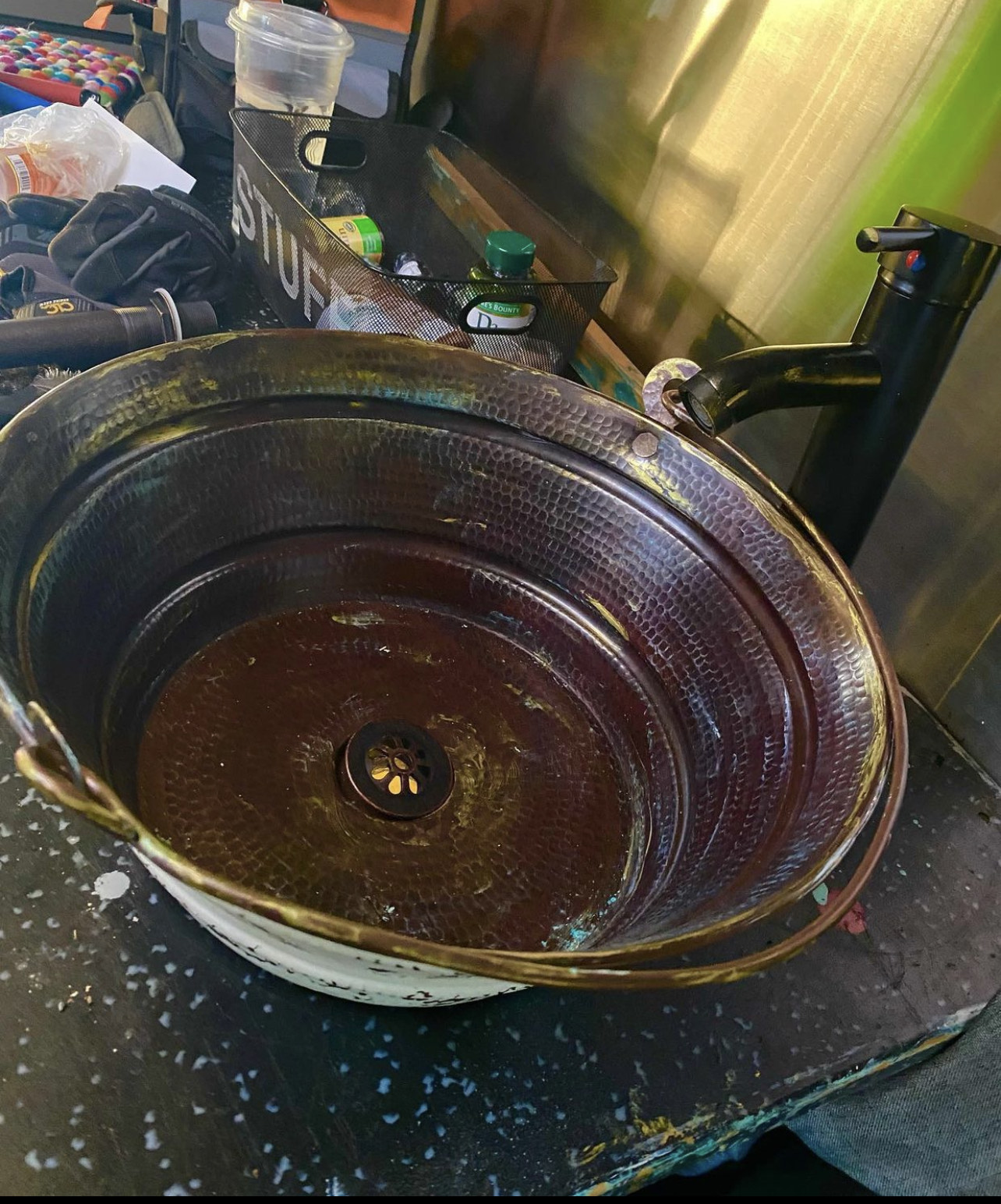
Here’s the bathroom:

Pull-out bed in the back bedroom:

Kitchen
There is an upscale kitchen with puck LEDs, stainless backsplash from a bathroom door sourced from a remodel, a hidden flatscreen TV on a lift in the living room, and the pull-out table is a skimboard some kid left on Zuma Beach. Now that’s cool!


As well as being creative builders, they are also writers and artists. You can find all their books on Amazon.
 And before you go, make sure you check out their spaceship-themed GMC motorhome they converted a few years ago.
Sign up for a weekly digest of my articles here.
##RVT1127

Thank you, Nanci. Nice to see stuff getting used rather than rotting or rusting away. Schoolies are cool. I admire the work and effort required to turn them into RVs. Not quite my cup of tea, but still admirable. We host a Boondockers Welcome site and have hosted one couple in a schoolie. It was quite amazing to see how livable they’d made it. 🙂
Many campgrounds refuse access to school conversions probably due their less than luxurious look found in most Class A motor homes.