


If you enjoy winding down at your campsite with a glass of wine, you’re not alone. Many RVers love bringing along a few favorite bottles to share under the stars.
Traveling with wine in an RV isn’t as simple as tossing bottles into a cabinet and hitting the road. Between vibration, temperature swings, and limited storage, there are a few challenges that can affect both the safety of your bottles and the taste of what’s inside.
Cause and effect
One of the biggest issues RVers run into is something wine experts call bottle shock. During travel, constant vibration and motion can temporarily disrupt a wine’s chemical balance. According to sources like Wine Spectator magazine, this motion can dull flavors and aromas, making a wine taste flat or “off” right after a trip. The good news is that it’s not permanent. Letting your wine rest after travel helps it recover. A common rule of thumb is to allow about one week of rest for every day the wine was in transit before opening it.
Where you store wine inside your RV also makes a big difference. Unlike a house, RV interiors can heat up quickly. This is particularly true near exterior walls or in cabinets near a heat source like an RV oven or cooktop. Heat is one of wine’s biggest enemies, accelerating aging and potentially spoiling it. Experts from Wine Enthusiast recommend keeping wine in a cool, stable environment, ideally between 45 and 65 degrees Fahrenheit. In an RV, that usually means interior cabinets away from outer walls, or even better, a temperature-controlled cooler, if you have one.
For many RVers, especially full-timers or those covering long distances, traditional bottles may not always be the best option. Boxed wine has come a long way in quality and offers several advantages. It’s lighter, less fragile, and less affected by oxygen exposure once opened. Another practical solution is shipping wine to your destination instead of hauling it across the country. Many wineries and retailers offer direct shipping, which can save space and reduce the risk of damage.
Safe transport
When it comes to transporting wine and other liquor bottles safely, a little creativity goes a long way. Protective sleeves designed specifically for travel are widely available and help cushion bottles from bumps and vibration. These sleeves often include padded layers and leak-proof linings in case of breakage. Some RVers also swear by simple DIY solutions like wrapping bottles in towels, bubble wrap, or even thick socks for added protection.
Organization plays a big role, too. One clever idea shared online by Isabella Amelia shows how she uses drawer organizers to safely store wine and liquor bottles for travel.

Other RVers use tension rods inside cabinets to create compartments that hold bottles securely in place. Keeping bottles snug and upright helps minimize movement and reduces the chance of breakage.
Campsite solutions
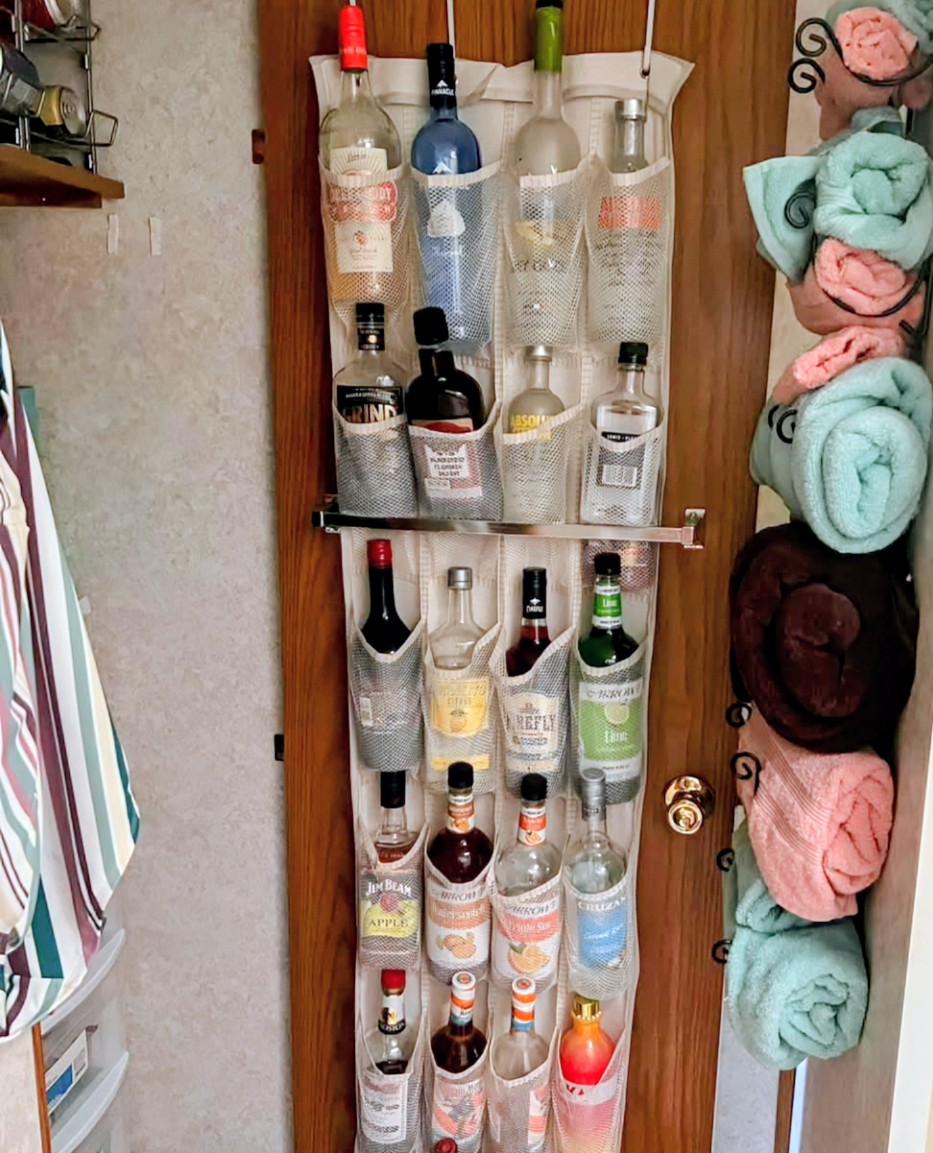
Social media groups are full of creative storage hacks that RVers have tested in real-world conditions. Anyia Archer recently posted her idea. She repurposed a hanging shoe organizer to hold wine and liquor bottles, turning unused vertical space into a functional storage solution.
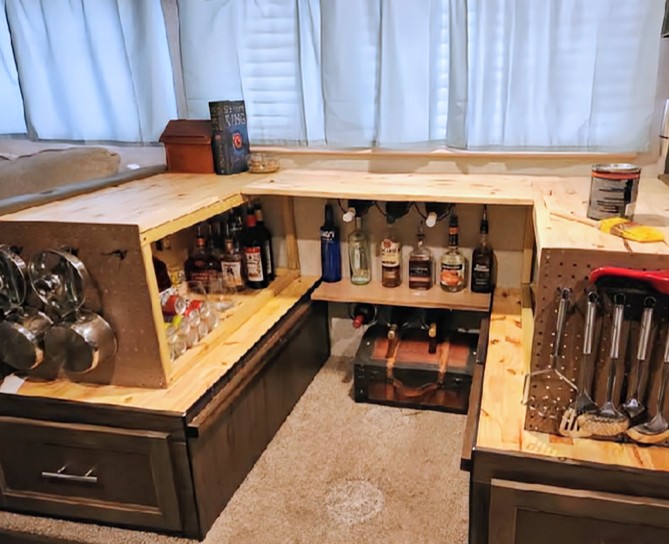
Some RVers go even further by redesigning parts of their rig. Joshua Hopkins built a custom bar where his dinette used to be. Now the area is complete with shelving for bottles, glasses, and accessories.
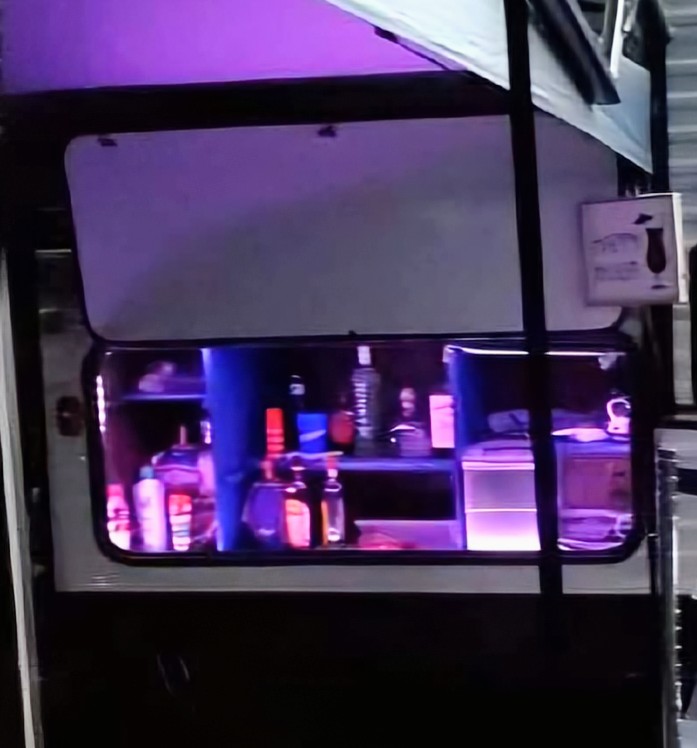
Phil Cantwell transformed an exterior storage compartment into a fully lit outdoor bar, making it perfect for entertaining at the campsite.
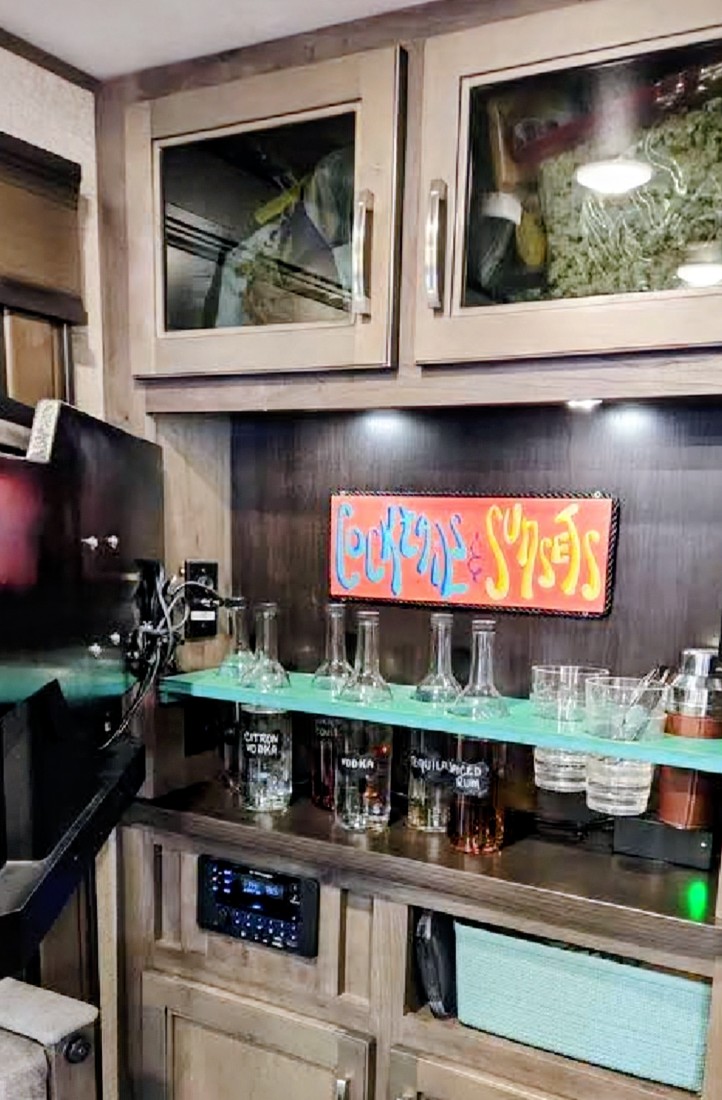
Missy Sumski DeMauro found hidden potential behind her RV’s entertainment center. She converted the concealed storage behind the TV into a discrete wine bar.
How about you?
These creative solutions highlight an important point: Traveling with wine in an RV requires a mix of protection, temperature awareness, and smart storage. With a little planning, you can enjoy your favorite wines on the road without sacrificing quality or risking a mess.
Do you take your favorite wine along on RV trips? Share your tips and tricks in the comments below.
RELATED
- Napa Valley for RVers: It’s more than wine
- Tips and tricks to reusing wine corks
- Escondido’s special gem: Deer Park Winery and Auto Museum
- California Gold Country wines and wine tasting with Harvest Hosts
RVT1259


I take wine with us and I keep a crocheted tube around each bottle I take and keep them
Protected that way so they don’t bang together. I also use my crocheted tubes for any glass container in the fridge. I just make one to fit a new bottle when I need another tube.
Boxed wine works well for us. We’ve settled in on a favorite brand. Can’t break like a bottle, is the equivalent of 4 bottles, yet doesn’t take up much more room than one bottle.
Trader Joe’s typically has empty wine boxes available when purchasing their wine. I look for the ones with the corrugated sides & dividers to use for travel wine storage. I keep the box in the corner of our travel trailer bedroom. It’s out of the way and the wine stays cooler in that corner.
Good article, Gail! And, some nice suggestions. For us my wife uses a box that wine comes in with the cardboard dividers. It’ll hold up to 12 bottles of wine, or move the dividers around, and you can fit all of your adult beverages in the box. Cheap, no rattles or breakage.
For our stemmed glass wine glasses my wife took old tube socks of mine, cut off the toes, and pulls the socks over the glasses. They store nicely in our kitchen cupboard that way.
I’m just going to add, during warm weather, bring a clean small glass bottle that can be sealed tightly. If you only have a glass or two remaining in a bottle of wine, pour the remainder in the small bottle so it can be tucked in your RV fridge (mine is not large enough for tall wine bottles). And forget that ‘keep red at room temperature’, they mean ‘cellar temperature in the 50s or 60s’, not 90s as you travel in summer. How do I know? Just had to dump some wine that went bad. Enough to make a grown RVer cry.