

Having set up camp alongside the Colorado River near Parker, Arizona, my adventurous wife, Barbara, decided to take our trusty “toad” compact car to see a real ghost town.
It was a pleasant and warm day, barely a cloud in the sky. But we did not take our 2019 Ford Fiesta to the Tombstone “ghost town,” where the Shootout at the O.K. Corral made Wyatt Earp famous in 1881, and where tourists today can see a tamer, bloodless reenactment of the same while sipping on a cold craft brew.
No, not Tombstone. We also passed on a slew of other deserted Old West settlements in Arizona. We chose the remote La Paz County ghost town mining community of Swansea, AZ, our surrender to serendipity becoming a bumpy, dusty, and rough 65-mile round trip odyssey.
Exiting State Highway 95 south of Parker onto eastbound Shea Road, the first 12 miles or so were relatively well-graded, two-lane gravel. Then came that right turn onto Swansea Mine Road, which soon became basically a rutted, washed-out primitive road barely wide as our compact car.
As an occasional ATV zipped by in a hail of desert debris, we crawled on, slipping onto the banks to avoid boulders and foot-deep troughs. Barbara was soon sputtering desperate prayers—all right, perhaps more quietly, me too—that drifted through the scattered clumps of Saguaro, Prickly Pear, Organ Pipe, and Barrel cacti to echo off the horizon’s jagged, volcanic ridges.
Google Maps? Hey, the app insisted it would take a bit over an hour to cover the 32.2-mile route to where small-scale copper prospecting began in 1862. It took us twice as long to reach the site, thankfully not as its newest “ghosts.”
But finally, there it was—Swansea. Reading onsite markers and signs, we learned Swansea had blossomed into a community of 400 by 1910 after rail and water lines reached the site and new furnace and smelting equipment had five mine shafts operating full-tilt… for a while.
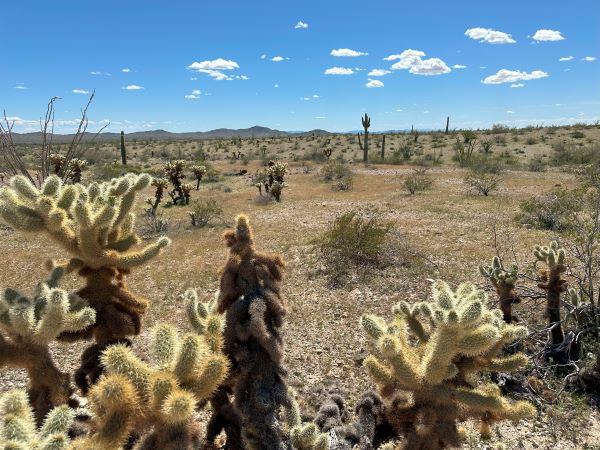
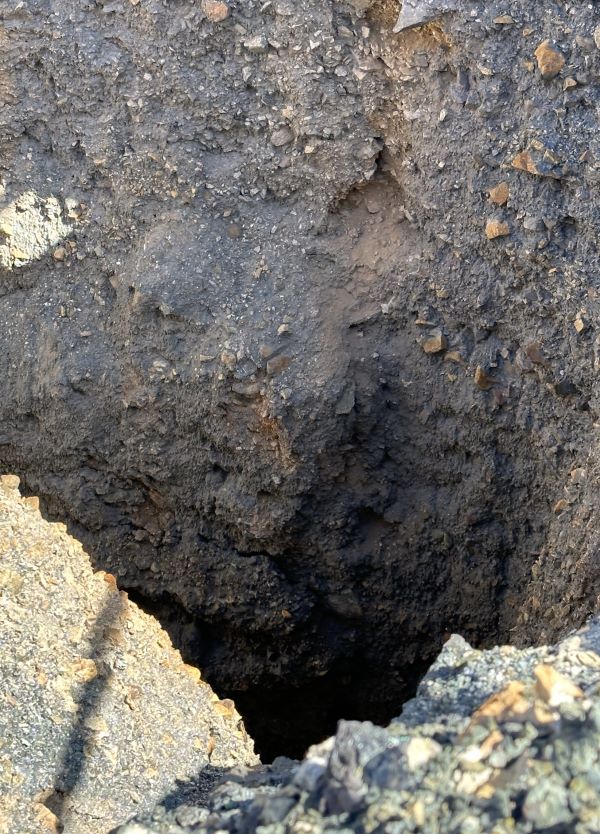
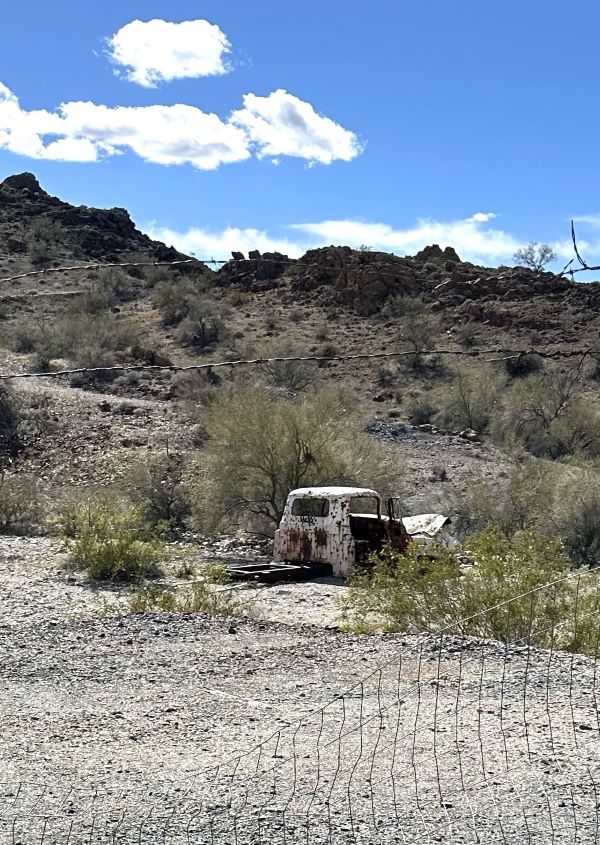
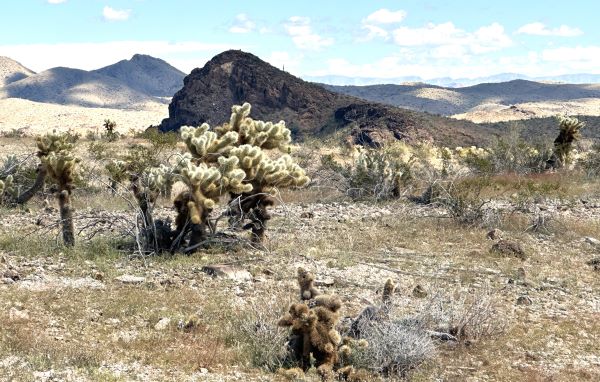
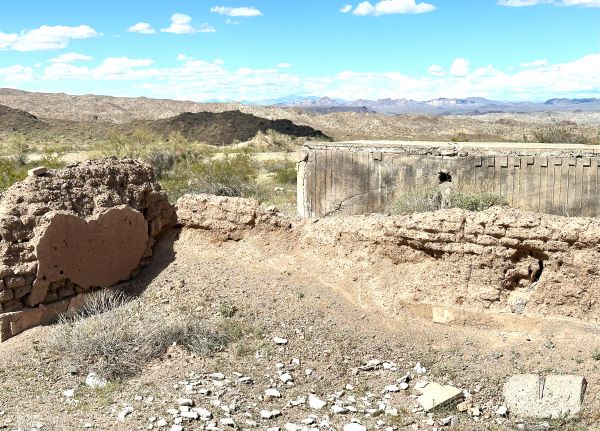
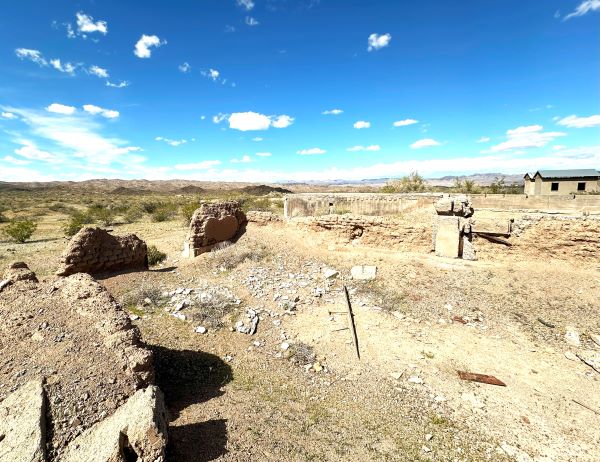
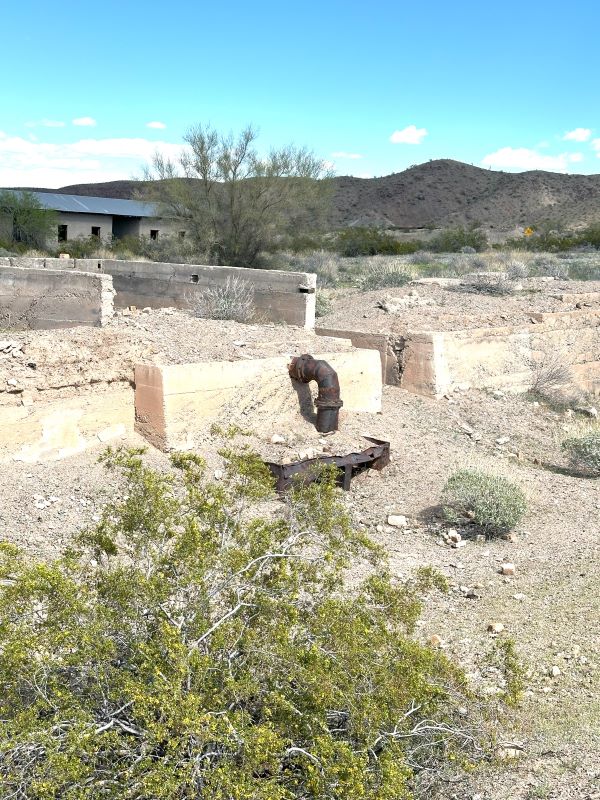
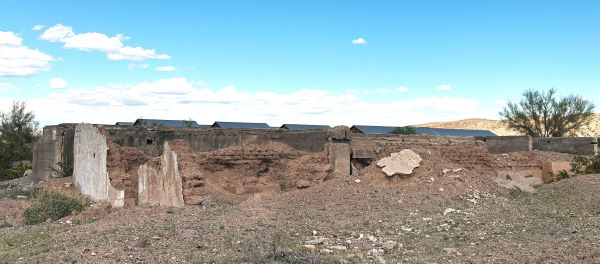
As a community, Swansea’s fortunes ebbed and flowed with the highs and lows of copper prices. The mines briefly closed in 1912, but two years later they reopened as demand rose, and it wasn’t until 1919, after World War I ended, that copper prices plummeted. By 1937, the town’s post office had closed, Swansea’s population had disappeared, and its mines, buildings, and rusting equipment became the slowly disintegrating monuments to today’s Bureau of Land Management protected ghost town.
Since my heritage includes a healthy bit of Welsh DNA, I wondered about how this isolated mining hamlet was named. Today, Swansea, Wales, is a city of 250,000, proud of its tourist-friendly coastal beaches and marinas, the castle ruins of 1,000-year-old history, and a thriving arts, culinary, and literary culture.
But in the 19th and early 20th centuries, in addition to being home to renowned poet Dylan Thomas, Swansea was the coal-mining and copper-smelting giant for the United Kingdom.
So, as it happens, Welsh investor George Mitchell parlayed buying up mining claims around the Arizona desert—and naming the site after his birthplace, an ocean and most of a continent away.
No beaches in this ghost town. It once had a barber shop, diner, even a short-lived car dealership, historians say. Today? You can find the remains of a cemetery, rusted shells of old cars or trucks, crumbled adobe miners’ quarters, and, of course, the abandoned mine shafts and the skeleton of the town’s blast furnace and smelting complex.
So, having sipped water and caught our breath from the jolting journey itself, Barbara and I snapped photos, meandered along the BLM’s “self-guided tour” markers, and then stood for a time in the desolation of mining dreams—and the immortality of the triumphant desert landscape around us.
“What do you think of this? People spent their lives out here, dug up rock in the dust and heat, died, or faded away when it all ended,” I asked Barbara.
She nodded. She sighed. “Well, yes, it IS a ghost town,” Barbara said.
I couldn’t see it but she was rolling her eyes, too. Her cap was down tight, and a gust of grit enveloped us at the time.
Then she set her jaw and proclaimed, “Now, we have to drive back! On that same road. Lord help us!”
And, of course, He did.
##RVT1157

Beautifully written story Bob. Enjoyed the read.
We spend the winter on the Parker strip and have ridden our RZR from the rv park to Shae Rd, but didn’t know there was a ghost town out there. This winter we will definitely be taking our utv out there. Thanks for the interesting story.
Tbank you, Bob! 🙂 I enjoyed your account of the trip to the ghost town as well as your description of Swansee. 🙂 Thank you for sharing and safe travels! 🙂
When we visited Swansea in 2018 (driving our 1990 Dihatsu Rocky toad) we were amazed to see big SUVs on the road. There are also 5 primitive campsites in the little town. I’m not sure who would want to camp in that deserted waterless spot. We took a different road back to Shea which was wider and less bumpy and allowed us to drive 35 mph. Some of those back roads include a segment of the 750 mile “Peace Trail” for off road vehicles.