

By Cheri Sicard
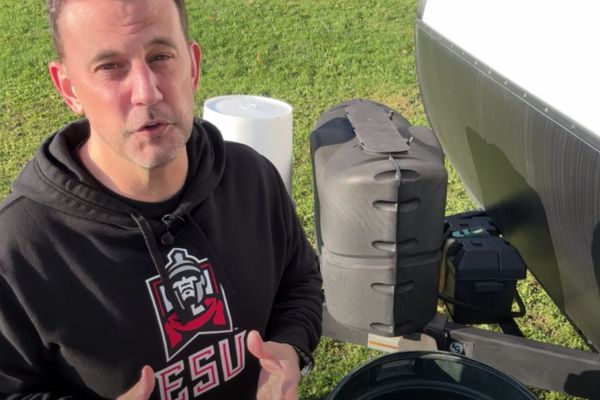
Did you know there is a lot more to RV winterizing beyond blowing out your pipes and putting in antifreeze? In the video below, the team from RV Tips & Travels talks about 10 RV winterizing steps beyond the plumbing. According to your host, doing these things will save you a lot of headaches come springtime.
One disclaimer: This list is for a towable RV. If you have a drivable RV, you will want to do all of these things plus more to winterize your engine.
10 RV winterizing steps beyond plumbing
#1 Stabilizer jacks: If nobody is in the RV for the winter, you do not need your stabilizer jacks down. In fact, you could actually harm your RV by leaving them down. If one of your tires has a slow leak, it will lower the RV, which can put undue pressure on the jack or even bend or damage it. Leave the jacks up. It’s a good idea to lubricate the jacks, too, and once a month or so raise and lower them to keep everything moving.
#2 Propane: Propane doesn’t freeze, so you are OK to keep your tanks on in winter, provide it stays above -40 degrees, which should not be an issue for most people. (If it is, move propane tanks inside.) Just turn the tanks off and make sure they are covered to keep water, ice, and snow off of them. The cover also protects against the sun in other seasons.
#3 Washing: Washing the RV before you store it for the winter prevents things like bird poop and road salt from staining surfaces. While washing, keep an eye out for areas that need resealing or recaulking in order to keep water out over the winter.
#4 Batteries, Part 1: For this tip, he is not talking about your house batteries but rather all of the batteries that might be in the coach: AAs, AAAs, 9 volts, etc. Remove them and store them for the winter. Don’t forget all the devices that might be battery-powered, too.
#5 Batteries, Part 2: Turning attention to the house batteries, always remove the negative terminal first. Store batteries in a cool, dry place where they will not freeze. A trickle charger will keep them charged but not overcharged. It is also a good time to check their water levels. (If you have lithium batteries, check your owner’s manuals as care will be different.)
#6 Moisture and mold: Temperature changes can lead to moisture, which in turn can lead to mold growth. Therefore, it is a good idea to leave your refrigerator and freezer doors open during the winter to prevent mold growth. Cracking cabinet doors and drawers open will also keep air circulating in these enclosed spaces.
#7 Remove valuables: This tip is especially important if you are storing your RV in a lot somewhere away from your home. Aside from theft, weather damage can occur, so it’s always a good idea to protect your valuables.
#8 Remove all liquids: Unless you want to research the temperatures at which all the bottles of liquid in your RV freeze, it’s a smart idea to remove them from the rig for the winter.
#9 Cover tires: Covering your RV’s tires protects them from UV rays and can extend their lives by preventing dry rot and premature aging.
#10 Interior: Close all of the windows and draw all of the shades before putting the RV in storage, as it will keep damaging UV light out of the RV. Leave the stovetop vent open so a little bit of air circulation remains.
Do you have additional winterizing tips beyond the plumbing? Please share them in the comments below.
##RVDT2271
I would like to know his opinion on a full cover for the RV.
Me too!
Remove all potential mouse bedding: towels, toilet paper, etc. We always leave a few baited traps & check periodically to remove any little frozen corpses!
#5 Batteries, Part 2 – If your RV has a “smart” multistage converter and you keep your RV plugged in, skip the time and effort required to remove and reinstall your coach batteries. Leave them installed. Just make sure you check the water levels about once a month. A fully charged lead/acid battery will not freeze.
You can’t plug in at a storage lot, and leaving batteries at a storage lot almost guarantees your batteries will go missing. Remove them, always. It takes 4 minutes lmao! Even lead acid batteries get stolen.
We leave a TT in south-central Texas year-round to use as a winter residence. For us, ‘winterizing’ also includes ‘summerizing’. The TT has been subject to freezes before we arrive for the season, but just as importantly, it is subject to blazing summers. Be sure anything you leave inside the RV or its bays can handle both freezing and high temps. [we discovered that objects with a ‘rubberized’ coating for either protection or better grip, can become ‘sticky’ at higher temps]
We also switched from flooded house batteries to AGM. They are far less subject to drying out than flooded batteries when no one is around to check the water levels.
Propane may not boil below -40 (F or C) but it will not damage the tanks to be colder than that.
That’s correct and you certainly don’t want to store the tanks inside as a leak will create an explosion/fire hazard. As for batteries, store them in a freezer as it stops all chemical reaction in them. Just be sure to warm them to room temperature before you use them. If you’re still into cameras that use a film, you can also freeze your unexposed films which stops the chemical reaction and extends the life/best before date.
#6 Moisture and mold – Hang a few Damp Rid moisture absorbers around the trailer. You will be amazed at the moisture collected by the end of winter. Mold isn’t the only problem with moisture – think electronics such as TVs and radios.
Thank you, Cheri! Yes, he taught me a thing or two. We do not winterize our RV. Instead, we use it at least monthly for 4 or 5 nights. But, it still might sit for as much as 6 weeks between trips. Thanks again and safe travels!
If you store your motorhome outside in freezing temps, don’t forget to ensure your windshield wiper fluid is rated for the temps expected.
I have vent covers that allow me to keep roof vents open to allow moisture to escape.