

By Cheri Sicard
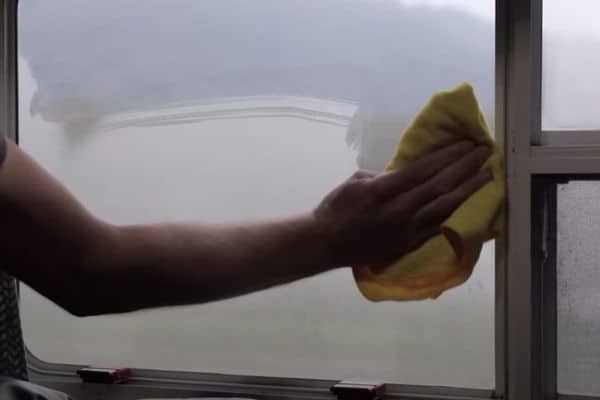
Last year, I deliberately sought out this video because I was struggling with RV condensation.
Wintering on a beach in Mexico had introduced RV challenges I hadn’t encountered during the summer. The air was always moist, but the cold outdoor temperatures mixed with the warmer air inside my RV, causing condensation to build up on the windows.
Jared Gillis from All About RVs offers a handful of practical solutions, and minimizing condensation is definitely something you’ll want to address because:
- Too much moisture can damage sidewalls.
- Water can drip from indoor vents.
- Mold and mildew can grow. Eeewww!
Jared begins with the cause of condensation, which is mainly a difference between interior and exterior temperatures, especially if the air is moist.
Be sure to watch the video for additional tips and more details, but here are Jared’s tips for reducing RV condensation:
#1: Choose your heat source wisely. Some heat sources actually add moisture to the air; others have no effect. Jared covers the options in Step 1.
#2: Use an active dehumidifier. A small dehumidifier or two, depending on the size of your RV, will pull water out of the air that you can then dump down the drain.
#3: Find ways to remove water and humidity from your RV. These can include mopping up condensation with a rag, opening shower vents and turning on fans, and cooking outdoors when possible.
#4: Air out the RV when you can. Pick the right time when the temps are warm enough and air everything out.
Using these simple tips will go a long way toward removing moisture from your RV and keeping RV condensation from forming in the first place.
RELATED
- RV nightmare: How to prevent mold on a memory foam mattress
- Hibernate smart: 5 steps to stop RV mold growth before it starts
- What condensation damage can do to RVs and how to avoid it