


Dear Dave,
It is below freezing outside. We live in our RV and we woke up with no water. My husband put heating tape around the well pipe to thaw the water. A couple hours later we had water. However, it only works in toilet, outside shower, and sink. Our kitchen sink, inside shower and bathroom sink still have no water. We are unsure what to do.
We took all the panels off to check pipes and they are intact and have no leaks. We can see where we hook to city/well water and all the pipes to the working systems. However, we have no idea how the other systems are hooked to the main line. Most of the pipes are inside behind panels, under beds and such, but we have no clue where the other systems get water. It makes sense that they hook to the line that gets city water, but if that’s true then why do only some areas get water.
We also have a heated hose going from the well to the RV, and so that’s not the issue either. Please help. —Carissa, 2017 Heartland Mallard M32
Dear Carissa,
Since you have water now flowing to some of the fixtures in your trailer, the heat tape your husband installed on the incoming hose to the city water connection is keeping the water from freezing to the city water connection and the ambient heat from that water is going into some of the pipes. I doubt you will be able to get a plumbing diagram from Heartland or any dealer. However, let’s take a look at how the water comes in and goes to various fixtures.
RV water pipes
The city water connection has a pipe, most likely a 1/2” PEX line, going into the rig and then has a “T” in several locations that divert water in different directions. You most likely have a fresh water tank valve which diverts water from the city water to the fresh tank so you can fill it without needing to disconnect and use the gravity fill.
If your kitchen, shower, and bathroom sink do not have water, the supply line going to them most likely is frozen and I would suspect in runs underneath the floor and is covered by the corrugated underbelly panel. I do find it interesting that you state “no water,” which I assume means neither hot or cold. I would suggest trying to use the onboard water pump to see if you get any cold or hot water using that. My guess would be you have frozen lines on the main trunk that is going to that side of the rig and both the hot and cold are frozen. Since they are 1/2” pipe, it doesn’t take much to freeze a small section and stop flow to the rest of the line.
You should be able to access the kitchen faucet lines underneath. You might need to pull out drawers since designers like to hide things behind them.
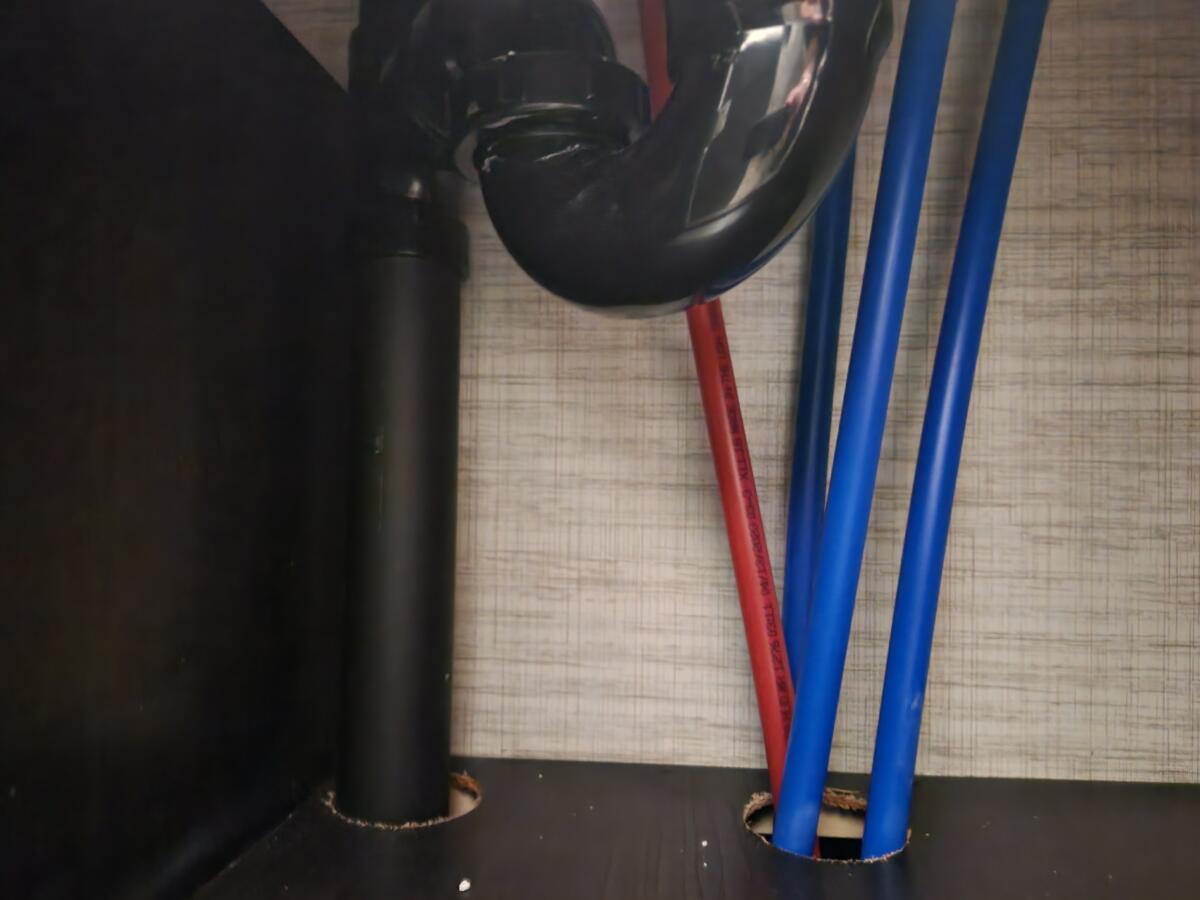
Cold pockets in RVs
Even if the lines are above the floor, there are several “pockets” in RVs that have no air circulation. They can get very cold since little heat gets to that area. I would start by placing a small portable heater under the kitchen sink or in the bathroom cabinet to warm up the pipes and let it run overnight. As it warms the pipe, it will warm the water and should work back through the pipe and eventually thaw the area that is frozen. If you have more heat tape, wrap it around any of the pipe you can find going to the kitchen sink or in the bathroom.
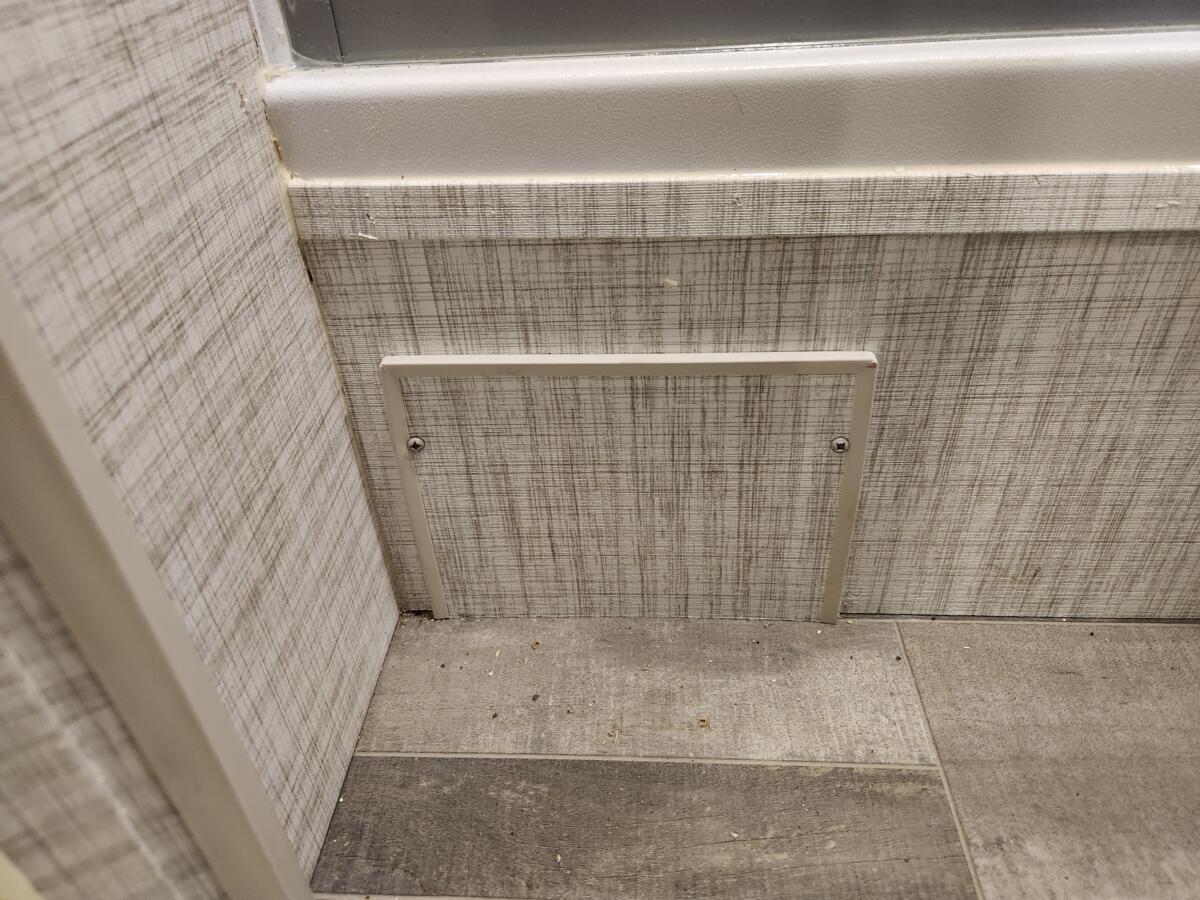
You should be able to access pipes for the shower by an access panel at the base.
You might also enjoy this from Dave
How should I winterize the RV to use it part-time in the winter?
Dear Dave,
We live in Long Island and want to use our motorhome part-time during the winter months. Is there an alternative to going through the winterizing process? —Walt
Dave Solberg is a leading expert in the RV industry and the author of the “RV Handbook.”
Read more from Dave here.
HAVE A QUESTION FOR DAVE?
Send your inquiries to him using the form below.
##RVDT2301

The way to keep lines from freezing is let the faucet drip, and keep cabinet doors open so warm air circulates into the cabinets. I always filled my fresh water tank and disconnected the outside hose during freezing temps.
But when the drain line freezes Bob, the water backs up into the sink, then onto the floor. Don’t ask how I know!
Might be good if using a small portable heater under the kitchen sink for thawing lines to shut off water supply just in case the line has ruptured! Better safe than waking up in a swimming pool!
Snoopy
Having just gone through a nearly 70-hour freeze down here in Texas… We have a 4-season (NOT) TT. The water lines furthest from the input can lightly freeze – light means no damage, but no water either. Been through this before and here is what I have done to substantially reduce the possibility- <continued via reply>
Our #1 issue was the low-point drains. They dangled uninsulated below the belly pan. Ice starts there and crawls up into the tee in the water line. Our water lines after the tee are those ice blocked. I snipped the PEX a lot shorter, installed ball valves, and then installed foam water pipe insulation from the belly to a few inches past the valves to restore length. I cut the foam at the valve handle just enough to go tightly around the shaft with the handle exposed. I zip tied the insulation so it stayed put. side note: I found pink and blue pool noodles at a $1 store that were in fact just colored 1/2″ pipe insulation. So I still know hot from cold lines.
Our #2 issue wasn’t spotted until this year’s freeze. The low-point drains are under the shower. I opened the access panel on the shower base and saw a tiny pinprick of light next to the hot water line at the drain tee. Yep, that tiny air gap was why the hot froze first. Also there was NO insulation above the plastic belly pan. I couldn’t easily reach down, but I could get a can of aerosol spray expanding foam insulation into the opening. I emptied the can toward the tees and surrounding area. My next step will be to put a couple soffit vents through the access panel to allow more cabin air to get down to that area.
Thank you, Dave! Safe travels! 🙂
While they have everything apart it would be a good time for them to add heat tape and insulation. I did that with our first MH and also our second one. Over the last 13-14 years we have wintered in Florida or the south west, we have gotten caught in below freezing temps both places for a couple or days or more. We did survive the Texas freeze out of 2021 without issues.