


Sometimes owners will see a bulge in the tire sidewall and assume the tire had a manufacturing “defect” because they do not remember any incident that could have caused the bulge. Here are a few examples—some are more obvious than others (click any image to enlarge):
 This example shows a large bulge in the sidewall. This occurs when the interior of the tire is broken, which allows the air to penetrate into the body of the tire under the sidewall rubber.

This shows a small bulge, also due to an impact with a road hazard.

This example shows external damage, if the tire is inspected closely. In this case, the break extended outward from the air chamber and allowed the tire to go flat.

This picture shows the damage to the tire sidewall when the flange of the wheel marked and cut the sidewall because of the severe deflection of the impact.
Tire failure studies
In 2018, Rubber and Plastic News published the results of a study by V. Price, of Michelin, and G. Follen a consulting engineer. They tested 24 new and used tires from seven different tire companies. They all failed after being subjected to a controlled impact to the tread by a special test machine.
In addition, a study of 14,200 scrap tires revealed that 25% had road hazard damage and 17% had been repaired. This chart outlines the tires and miles run before the tire failed at the location of the impact:

While there were no ST-type tires tested, there is no technical reason to think that type tire would not suffer the same fate given the construction of ST-type tires is essentially the same as P- and LT-type tires. If your tire suffered impact damage failure, I doubt that you would remember that pothole you hit 2,000 miles earlier.
Tire industry publications regarding tire failures
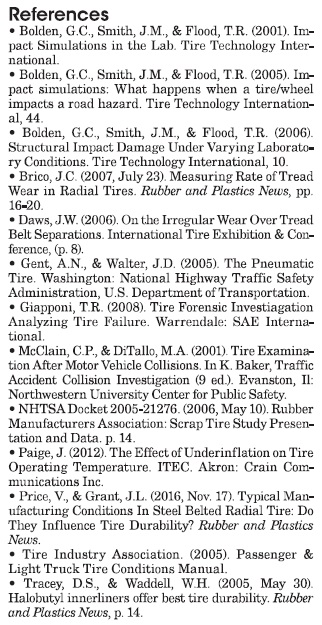
For those who still want to object to the conclusion, I suggest you first consult Tire Industry publications on the topic. Here is a list you can start with:
Roger Marble
*****
If you have tire questions, check out Roger’s Blog as well as his posts on RVtravel.com. There are hundreds of posts covering everything to do with tires.
If you still have a question for Roger after searching the above posts, send your inquiries to him using the form below.
##RVT1180

Quite a variation of mileage even between new tires.Thanks.
Thank you, Roger, for another demonstration that road hazards are more likely than tire manufacturing defects. Have a great day and safe travels!