


Dear Dave,
When my RV isn’t plugged into shoreline power, the lights only work when I’m running the engine or generator. If those are off, the house lights only last a few minutes. Why? Thank you. —Daphne, 2000 Thor Infinity
Dear Daphne,
The short answer is that your house battery or batteries are sulfated and will not hold a charge. Since your unit is almost 14 years old, I am sure the house battery or batteries are not original and most likely the third or fourth set.
I am not sure what Thor used originally in your Class A gas model or what are in there now. They could be two 6-volt batteries connected in series, which is positive to negative, and give you one 12-volt bank. Or there could be one or even two 12-volt batteries connected parallel, which gives you a 12-volt bank, as well.
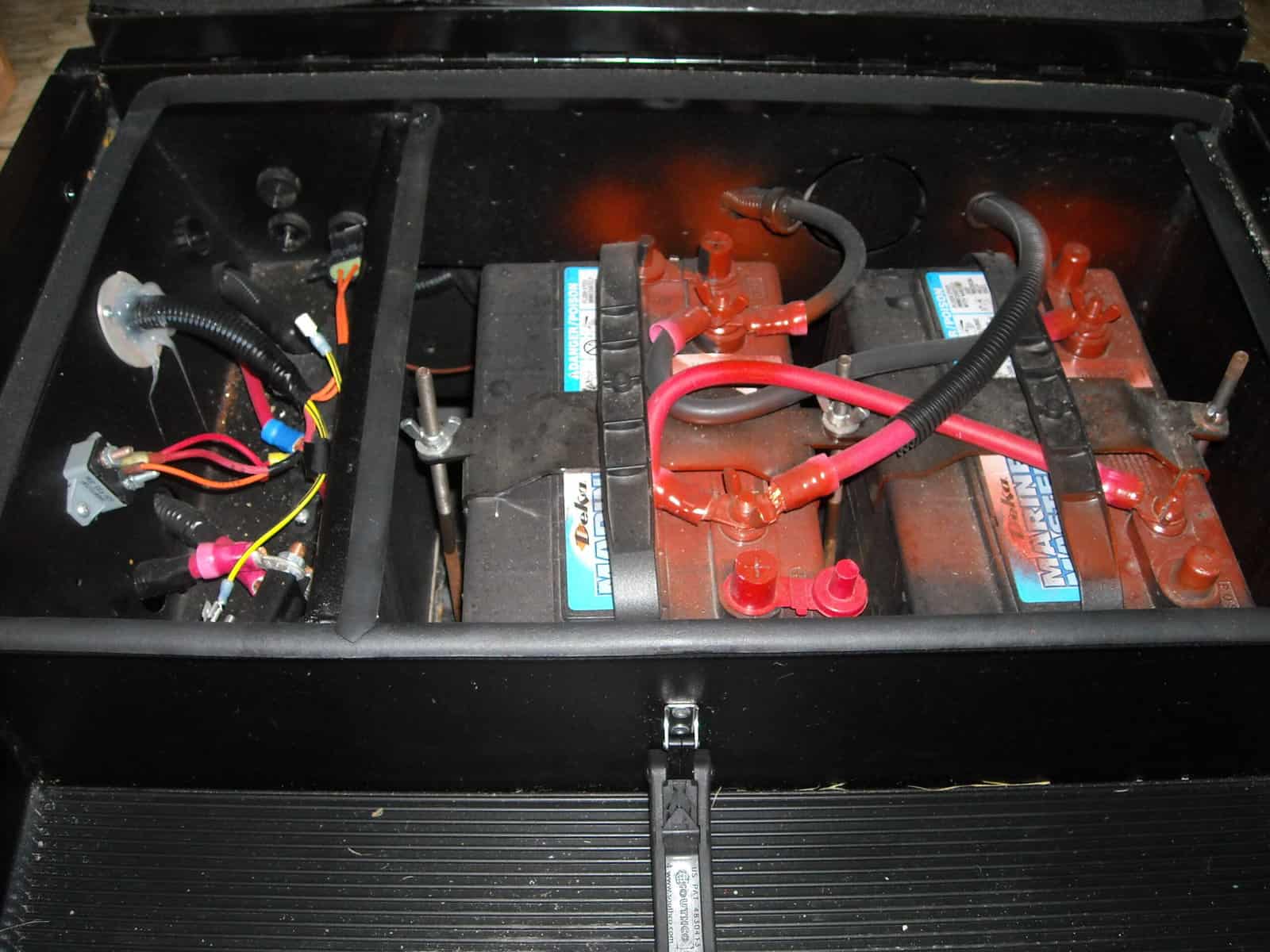
Power supplied to distribution center
When your RV is plugged into shoreline power or the generator is running, 120-volt power is supplied to the distribution center. That has the circuit breakers for all the 120-volt appliances and typically automotive fuses for the 12-volt components.
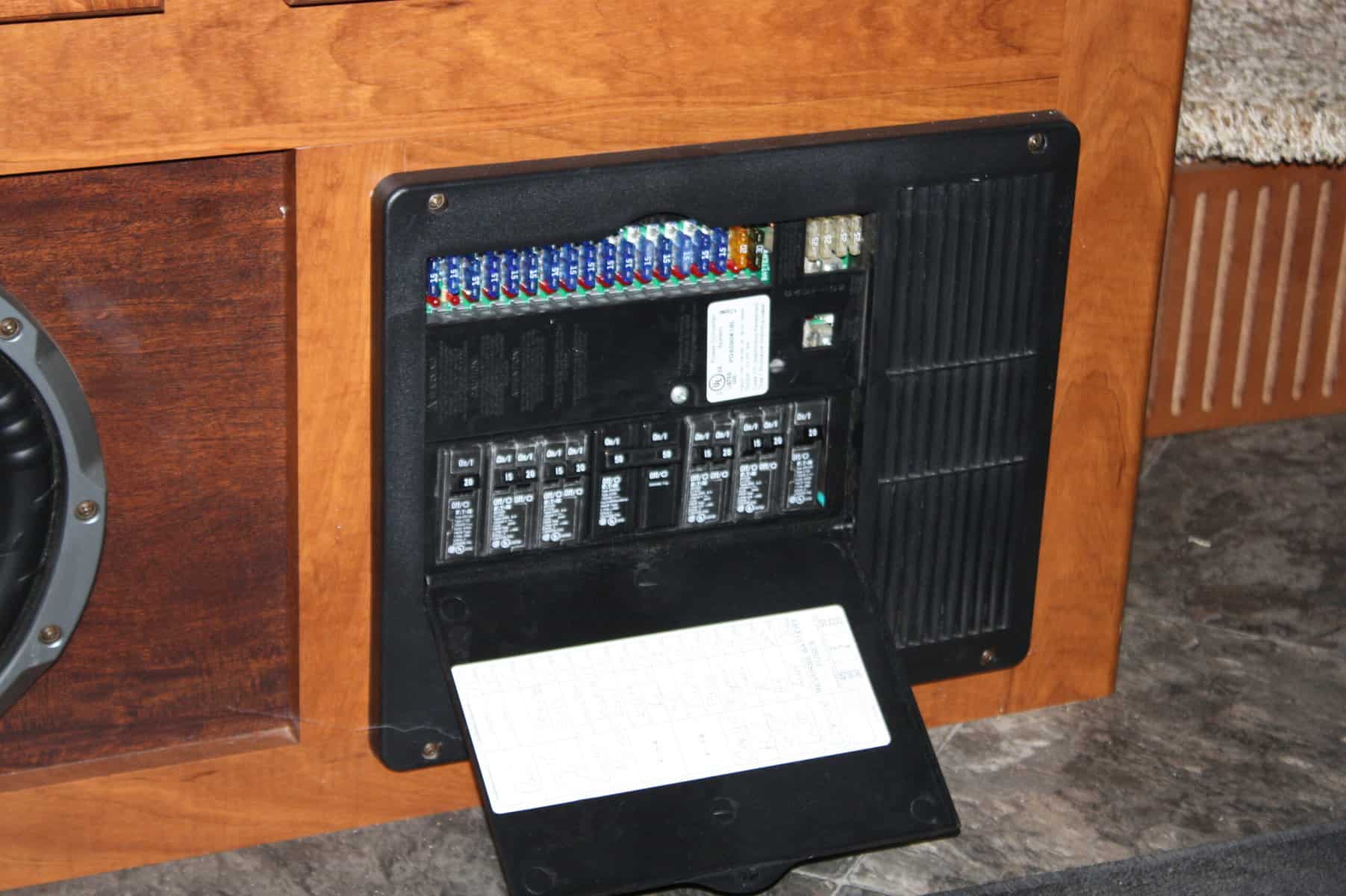
This is a typical all-in-one distribution center as it has the converter or battery charger incorporated. It is located on the right side behind the vents. Some RV manufacturers use a stand-alone converter that is hidden inside cabinetry or under the bed, as the converter usually has a loud fan and gives off heat. This is one from a 2015 Thor that was hidden under the bed.

These converters provide a charge to the house battery system, typically at 13.6 volts until the battery reaches 12.6 volts, and then it drops down to 13.2 volts for maintenance.
If your batteries are no good or have a shorted cell, the lights will work when you are connected to shoreline power or have the generator running. That is because 120-volt power is going to the converter, and it is providing at least 13.2 volts, and most likely 13.6 volts, since I believe your batteries are shot.
Test the RV’s house battery
Here is how you can tell. With the unit not plugged into shoreline power and the generator off, use a multimeter and test the voltage on your house batteries. I would believe the reading to be less than 10 volts, which is a dead battery.
Next, plug the shoreline power in or start the generator and test batteries again and you will most likely find a reading of 13.6 volts. If not, then your converter is not providing a charge and could be it is no good, or the fuses have blown. The stand-alone model has two automotive fuses on the back of the unit, while the all-in-one has glass fuses on the monitor board.
Battery disconnect switch
Your unit should have come with a battery disconnect switch, typically located just inside the step well, which shuts off the batteries and would prevent a charge. You should check that to make sure it is not engaged. However, if your lights work for a short amount of time then go dead, the switch is not on disconnect mode as you would have no lights.
Verify other 12-volt components
Have you tested any of the other 12-volt components when not connected to shoreline or running the generator? Those would be items like the power roof vents, water pump, and any LP appliance such as the water heater or stove. If the lights quit working after a few minutes, the other 12-volt components should not work either.
You might also enjoy this from Dave
When RV is plugged in to shore power, why isn’t house battery charging?
Dear Dave,
When my RV is plugged in to shore power it doesn’t charge the battery. Is there a fuse inside the charger? When I turn on power I hear the cooling fan turn on briefly. There’s power going in but nothing out. —Claire, 2017 Winnebago Minnie Winnie 25B
Dave Solberg is a leading expert in the RV industry and the author of the “RV Handbook.”
Read more from Dave here.
HAVE A QUESTION FOR DAVE?
We have a popular forum for Ask Dave. Please be as brief as possible. Attach a photo or two if it might help Dave with his response. Click to visit Dave’s forum. Or send your inquiries to him using the form below.
##RVDT2172

I’m glad you used the word ‘typical’ describing the distribution center. Now I know I’m not the only one that has to lay on the floor with a flashlight to see it. More thoughtful designs from a truly slack industry.
Another additional info when testing light sockets with a 12V tester, be very careful the probe of the tester doesn’t touch the socket wall as that will definitely give you a blown fuse. I always wrap electrical tape around the metal probe to prevent accidentally touching the grounded socket.
Good luck tracing electrical wiring on Fleetwood, my ‘99 Bounder had an electrical problem and when I called customer service I was told they don’t have wiring diagrams as there are 6 teams that wire units and it’s their digression as to how they do it, but it is wired as per the schematic. They don’t even use the same colors of wire from unit to unit.
In both my 1987 and 2000 Bounders, little by little, rain water would seep into one or both tail light lenses until the bulb and socket were submerged. This caused oxidation of contacts and tail and/or stop lights would go dim or out. After cleaning the socket and bulb contact surfaces it worked again. In a couple of cases the rectangular lens was installed upside down with the weep hole at the top. Also found bottom weep hole plugged with accumulated dust. This became another point of inspection.