


Dear Dave,
I have a Suburban SF30 furnace in my 2007 Allegro Bus. When I turn it on in the morning, the fan starts but it will not ignite. I turn it off. On the second attempt, it does ignite and produces heat as it should. It shuts off when it reaches the set temperature and restarts as the room cools. I have already replaced the sail switch and the limit switch, those being the easiest and cheapest. Now what? Control board? Igniter? Gas valve? That’s about everything, isn’t it? Thanks. —Mark, 2007 Allegro Bus
Dear Mark,
There could be a number of issues, and you have replaced the easiest components already. As with all troubleshooting of LP components, I start with making sure there is sufficient 12-volt power by testing it with the shoreline power plugged in. This means the converter will be putting out a constant 13.2 volts, at least, and takes the batteries out of the equation.
It may seem odd that batteries could be an issue with this, as it does start on the second attempt. However, it could be possible that something else was “cycling” at the same time such as the refrigerator or water heater, and the batteries did a deep dive only to rejuvenate. Plugging into shoreline power will isolate that. If it still happens, then we move to step two.
Make sure all other LP appliances are off to verify nothing else is trying to start or run while the furnace is trying to start. A weak LP regulator, dirty burner assembly, or even oil in the LP supply line (which can be cleaned) to the furnace could be an issue.
How the furnace operates
Let’s take a look at how the furnace is designed to operate. When the temperature falls below the thermostat setting, it creates a closed circuit and sends 12-volt power to the module board. The fan motor starts to purge anything inside the burner assembly and draws interior air in through the cold air return, which is blown over the outside of the burner assembly past the sail switch to the vents.
The airflow needs to be great enough to lift the sail switch, which also creates a closed circuit and sends 12-volt power to the module board. That opens the gas valve and starts the spark attempt.
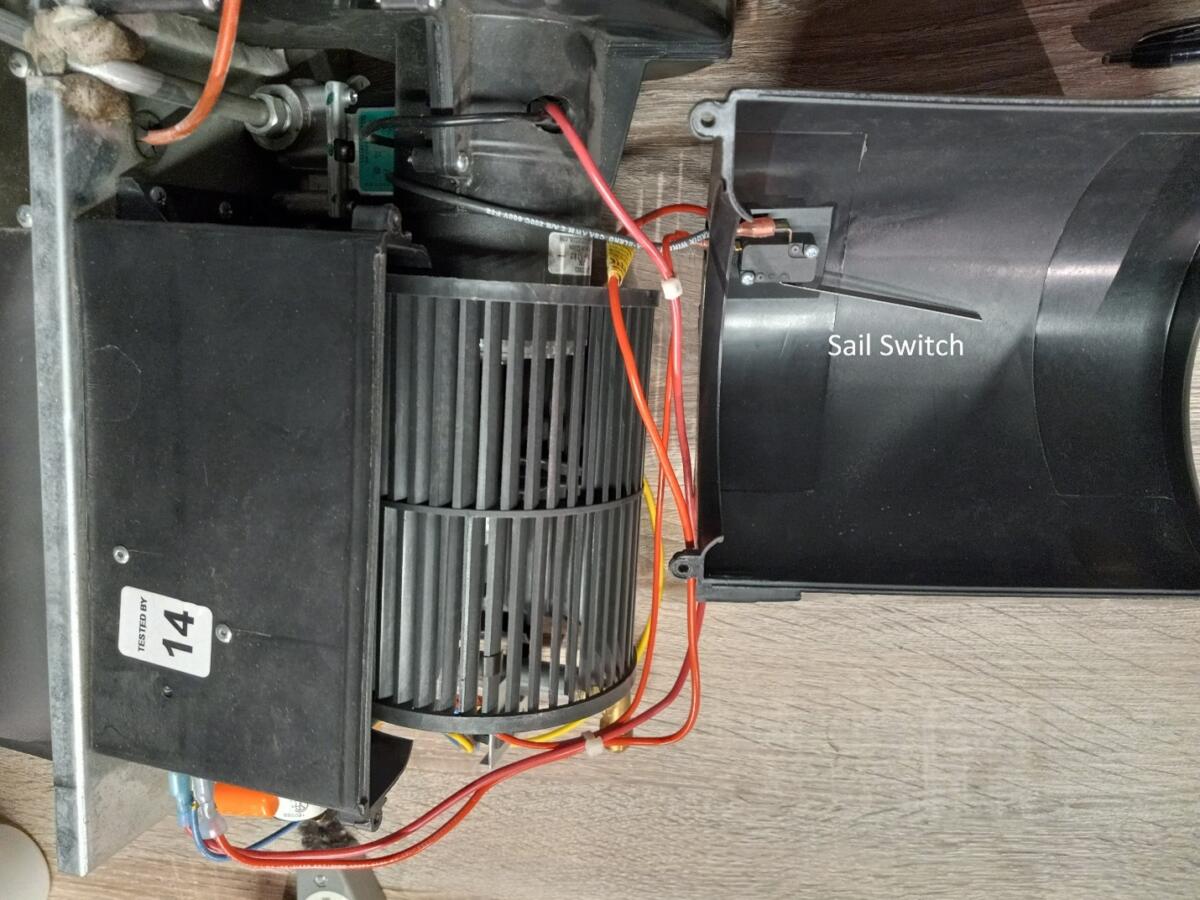
My first question would be, do you hear the gas valve click open and a spark attempt? If no, then I would readjust the sail switch. Sometimes it needs to be bent slightly. If you replaced it, just a tweak might help. It could be so minor of an adjustment that the second attempt gets it high enough. Stranger things have happened. If there is no gas valve click or spark attempt, it is either the sail switch or the module board.
Hairline crack in solder point of module board
One of the worst “gremlins” I have found is a hairline crack in solder points of the module board. A slight temperature change such as voltage being sent through heats the solder and it closes enough to work as designed. This is a VERY frustrating troubleshooting journey! I am not a big fan of swapping out parts as a module board can be diagnosed by an authorized furnace service provider. However, the test is usually more expensive than a new board!
If you are hearing the gas valve click open but no spark, check the ignitor for a cracked ceramic insulator, which would send the spark down the crack to ground. Once again, a temperature change could make a difference and the spark goes to the burner location.
If you hear the gas valve open and spark attempt, it could be low LP pressure, which could just be a dirty burner assembly or the LP regulator. If you are not experiencing any issues with other LP appliances, I doubt it is the regulator and I would suggest cleaning the burner assembly.
Are you sure it’s not lighting on first attempt?
One last question. Have you verified it does not actually light on the first attempt? If it starts to light but does not stay lit, it could be the thermocouple not sensing flame. That would shut down the operation. On the second attempt, a change in temperature would affect that, as well.
Make sure all other appliances are off, the unit is plugged in, and you have unrestricted airflow in the interior vents as well as the exterior vents. These outside vents draw air in, purge the interior burner assembly, and exhaust out.

You might also enjoy this from Dave
Why does my RV’s furnace only ignite when I lift the sail switch?
Dear Dave,
I have determined that my RV’s furnace blower airflow is not sufficient to activate the sail switch. The batteries are new and charged, but it will only ignite when the sail switch is depressed manually. There appears to be sufficient air blowing out of vents. I can’t see any blockages in lines or hoses, and there does not appear to be much dust on impeller blades. I am stuck and would appreciate any guidance. Thanks in advance. —Anthony, 2016 Bigfoot 25FB
Dave Solberg is a leading expert in the RV industry and the author of the “RV Handbook.”
Read more from Dave here.
HAVE A QUESTION FOR DAVE?
Send your inquiries to him using the form below.
RVDT2839
