

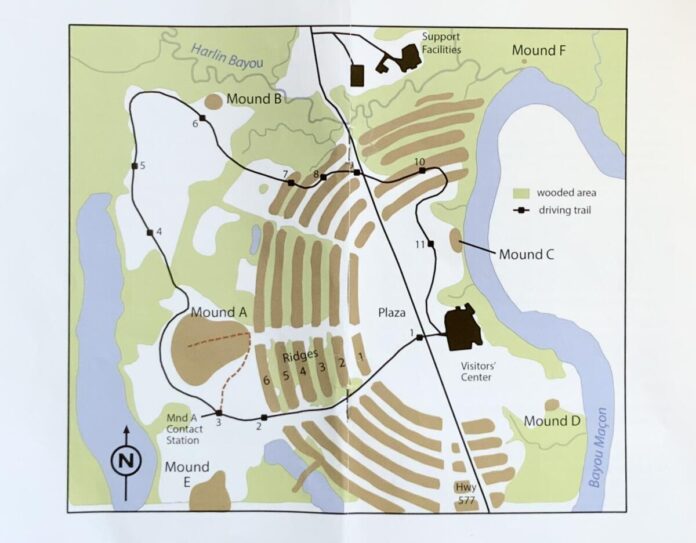
Just a short drive from our campsite at Poverty Point State Park in Delhi, Louisiana, is the Poverty Point World Heritage Site native mounds and National Monument. The huge mounds at Poverty Point predate Stonehenge and the pyramids in Mexico and Egypt. Construction on them began almost 1700 years BCE [Before the Common Era], and the earthen works are the oldest in the U.S.
There is a museum with numerous displays of artifacts found at the site and an informative movie. Most of the artifacts found are of stone, as wood and fabric would long have disintegrated. Because the area is devoid of much stone, the number of stone implements, spearheads, and beads indicate that this area was a major trade center. Goods found came from Appalachia to the east, the south, west, and as far north as Michigan.
The people were hunter/gatherers and lived off the land rather than farm. Many of the skins would have been used for trade.
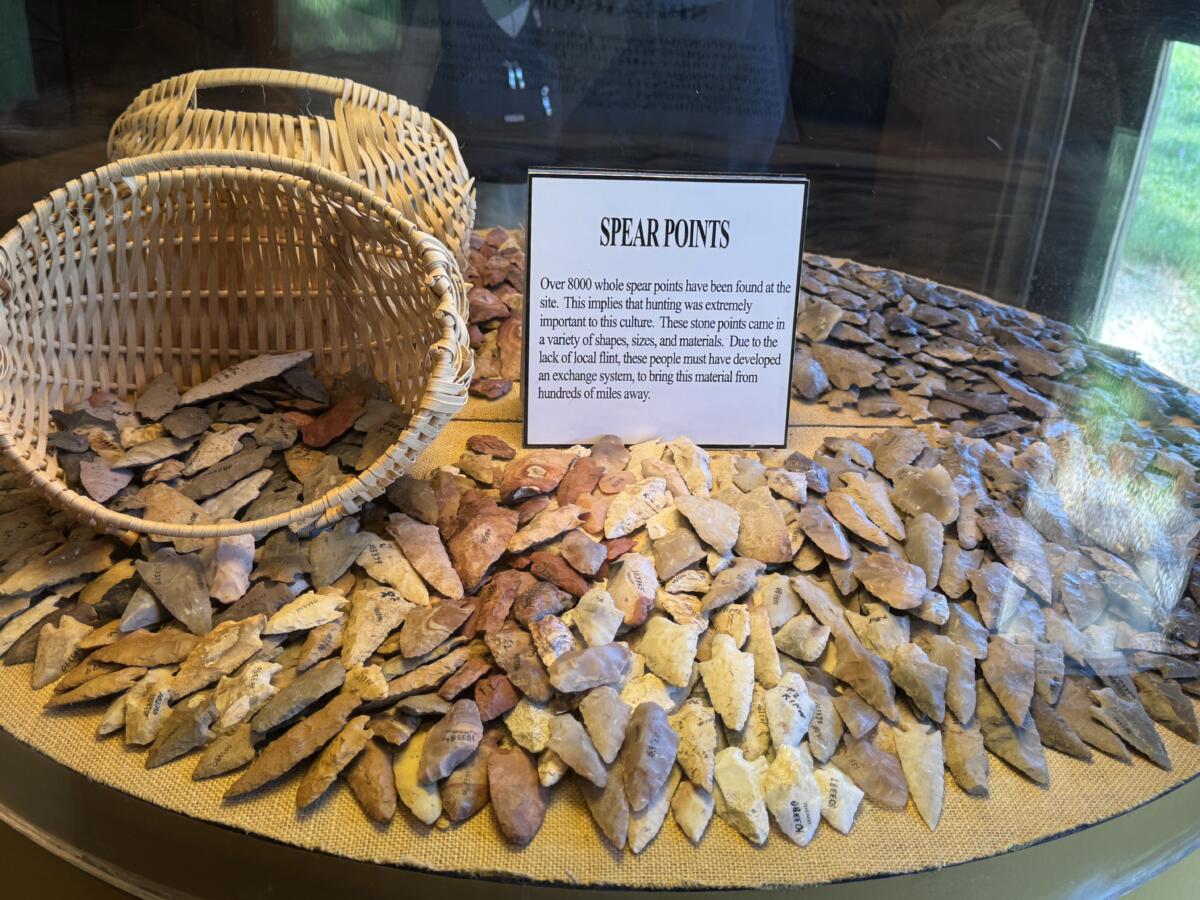
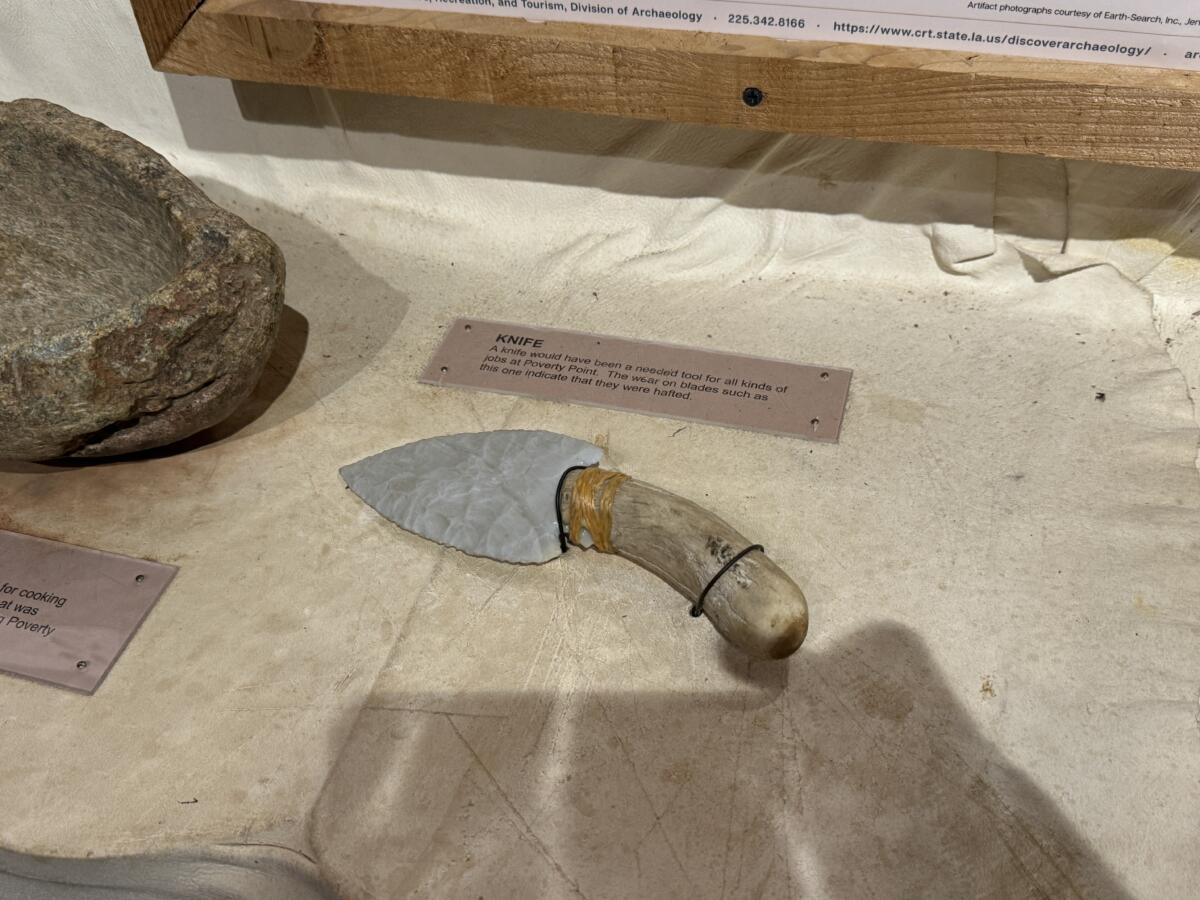
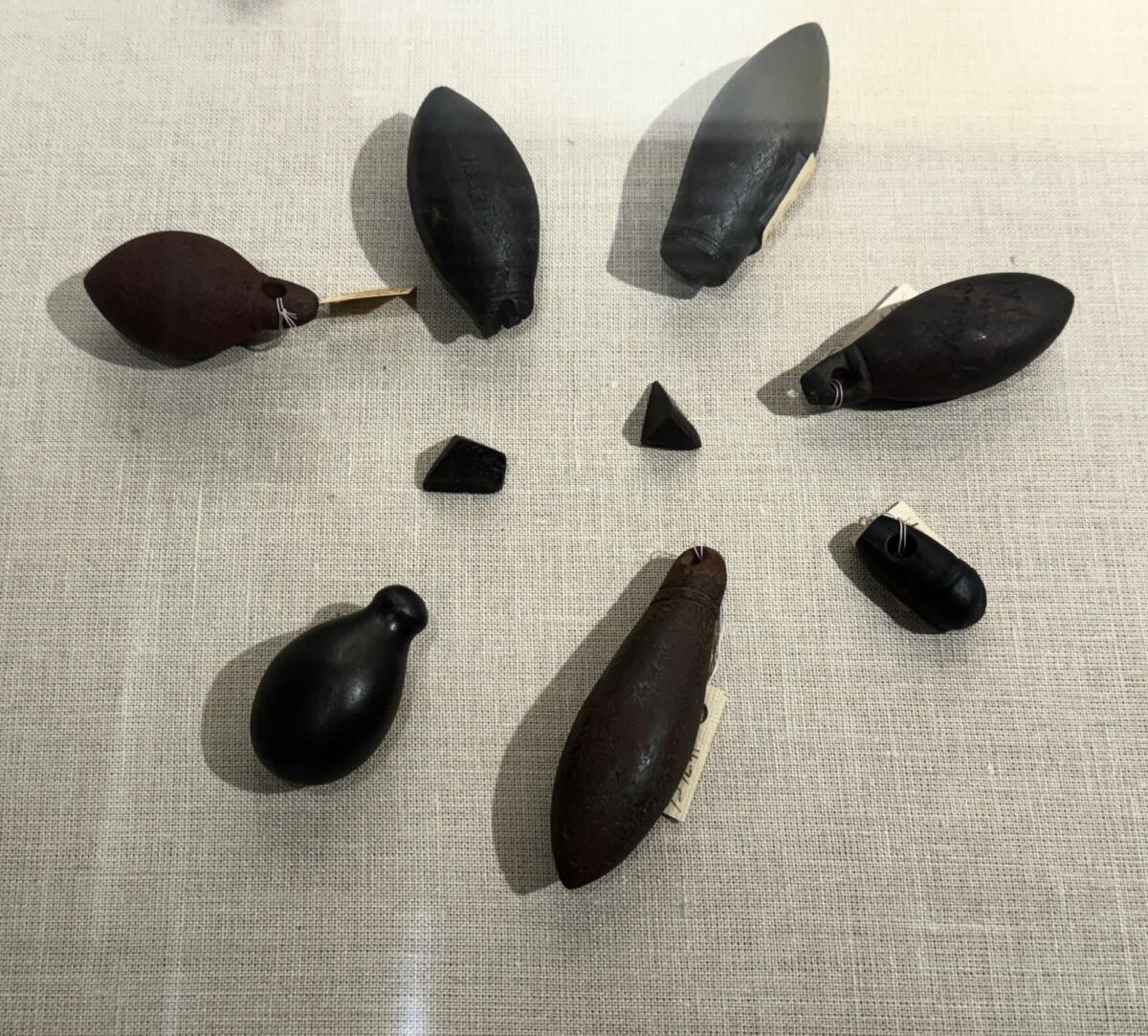
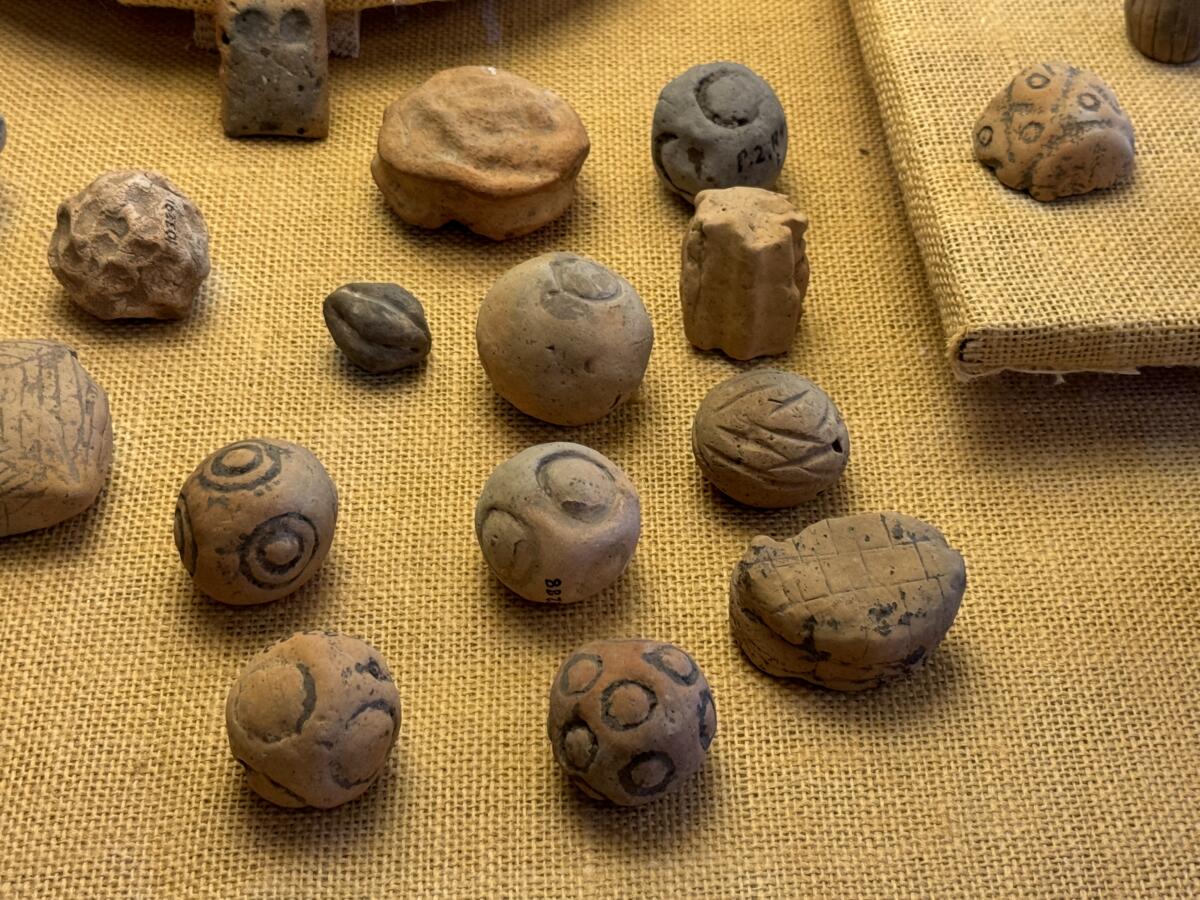
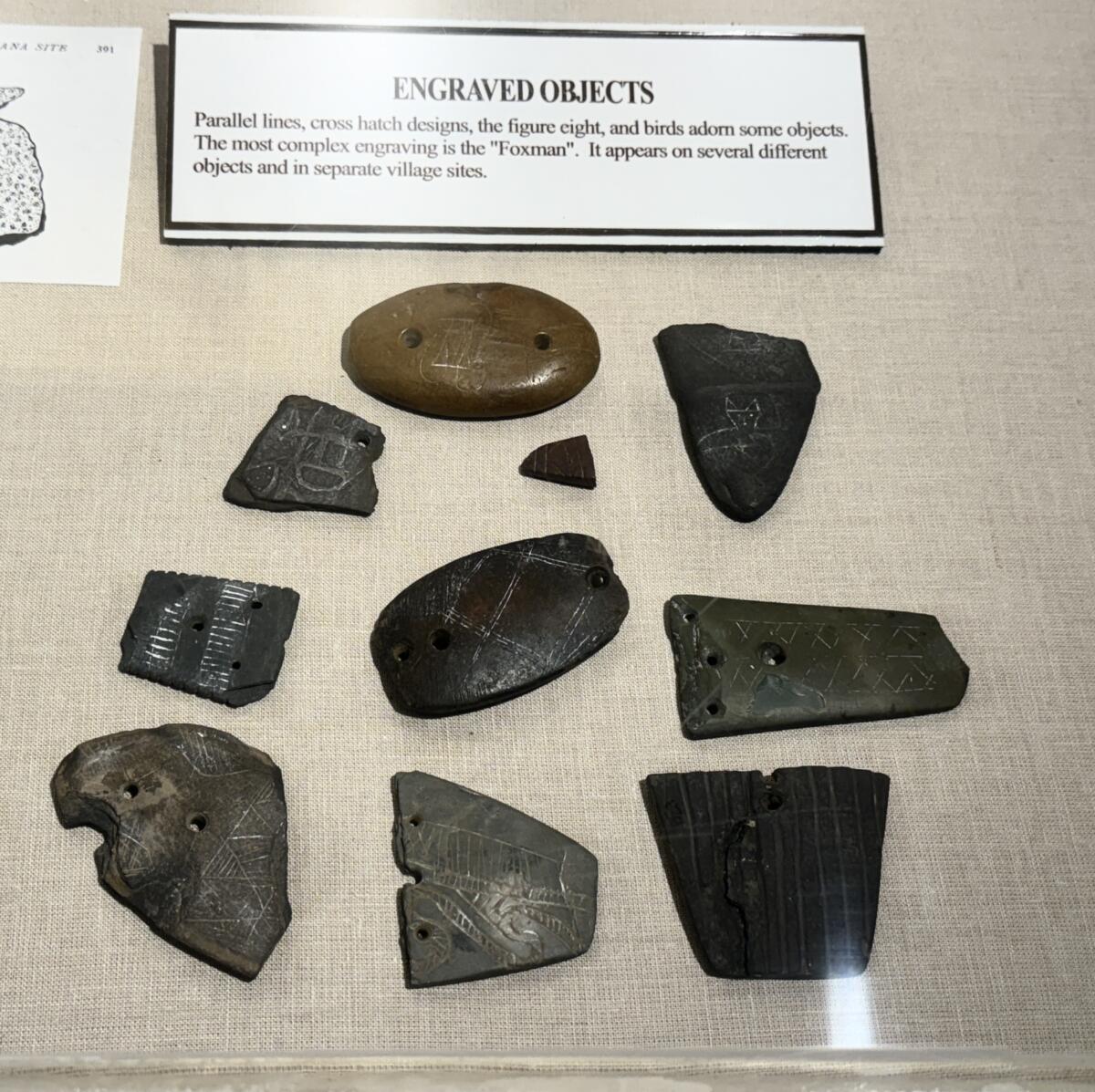
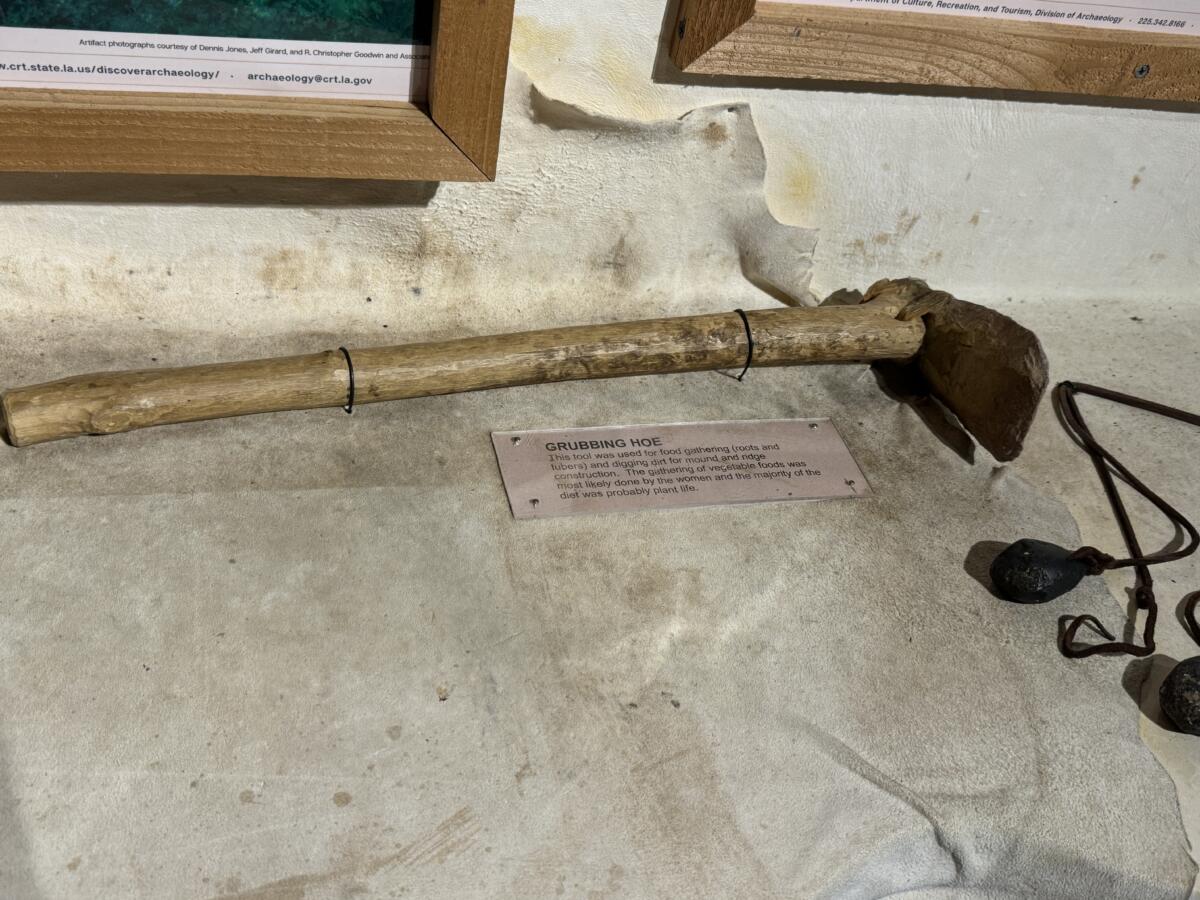
Surrounding the major mound in a semi-circle were a series of ridges that could have housed up to 4,000 people. The ridges were not discovered until an aerial photo was taken.
There is a two-and-a-half-mile hiking tour or a much easier driving tour of the mounds. The driving tour is on a one-way road around the mounds. A pamphlet from the museum explains each stop along the way.
Mound A is the largest of the mounds at 72-feet tall and 660-feet wide. It was built by piling basketful after basketful of dirt—estimated to have taken 15.5 million 50-pound baskets. This earthen work contains about 390,000 tons of dirt. We climbed the stairway to the top and had an excellent view of the other mounds and fields nearby.
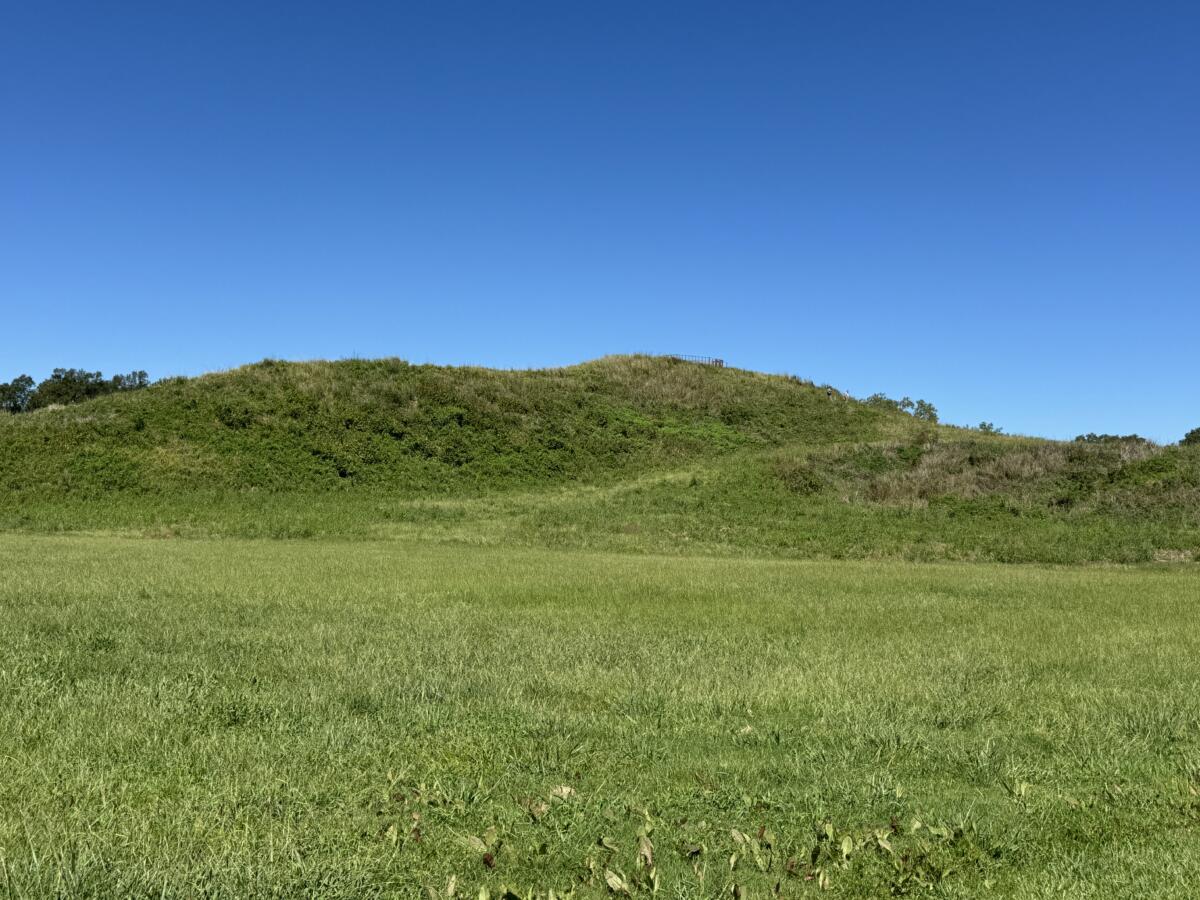
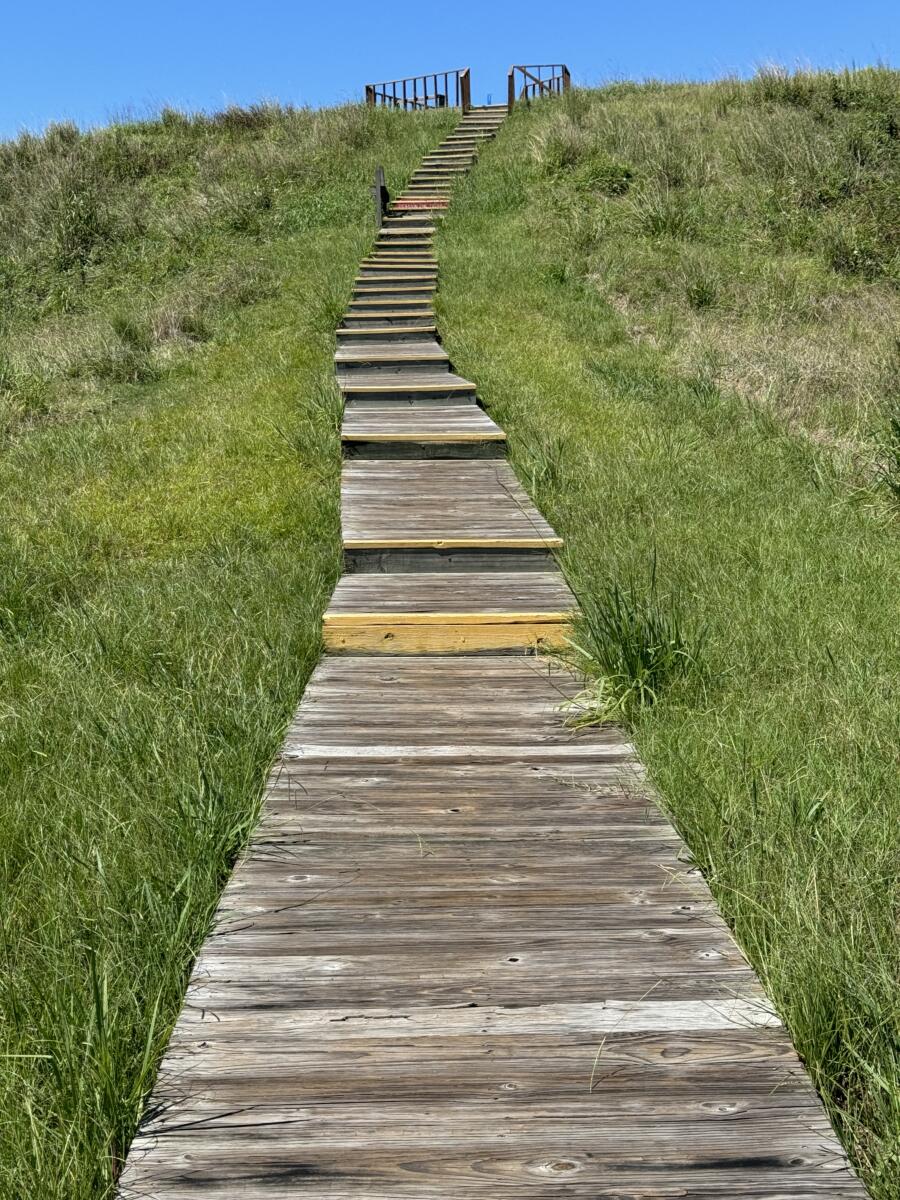

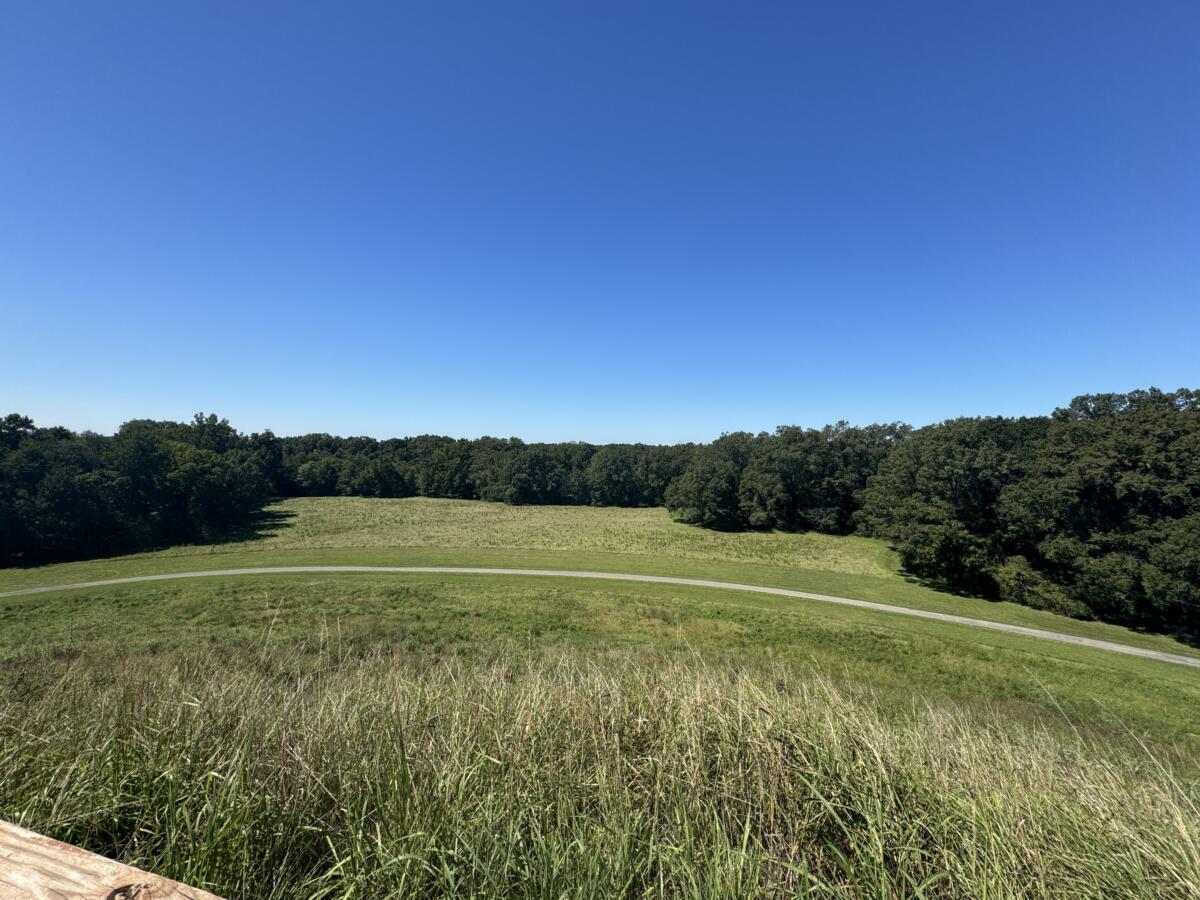
Numerous ridges, a central plaza, and other mounds are on the tour. Even after years of agricultural use, the ridges where the people lived remain. The people left in around 1100 BCE. While experts are not sure exactly why they left, it is assumed that climate change and flooding of the Mississippi Valley could have been the reason. Other mounds exist in the area that were built about 3,000 years earlier and others that were built about 300 years later.
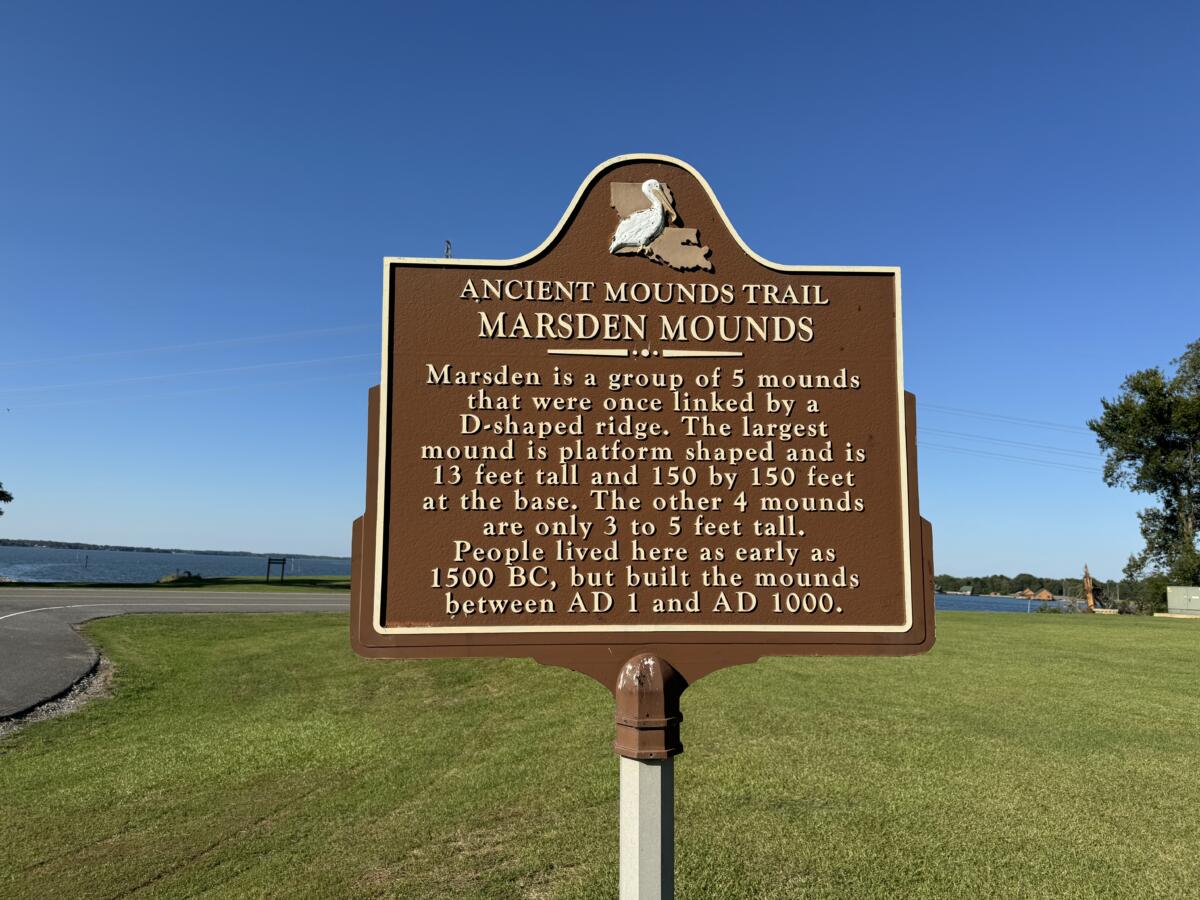
Poverty Point was named for the plantation that farmed these lands. No large plantation houses or courtly landscaping here. The names Hard Times, Poverty Point and Hard Bargain reflected the lives of the early settlers and planters on these lands.
##RVT1174

Thank you for sharing this. I am born and raised in Louisiana but knew nothing about this site. Ain’t it amazing that we can miss some of the most incredible things in our own backyards!
Nice article. Poverty Point State Park is a campground we always book between Texas and Alabama. Day trips to Vicksburg National Cemetery and the Beidenharn Mansion in Monroe are easy from this campground. And we visit the World Heritage Site every time, always learning something new.
Thank you, Nanci! 😉 This sounds interesting. 🤔 I will ask our Louisiana friends if they’ve ever been there. Maybe we can see this during a visit to our friends. Thanks again, have a great werk, safe travels, and safe stays! 🙂
Poverty Point was a surprise find to us, too! Here’s a post I wrote about our visit to this amazing place: https://chambersontheroad.com/2023/10/27/postcards-to-liz-6-of-12-shreveport-la-to-delhi-la/
P.S. The first part of the post is a literary device I used – I sent a “I Love Lucy” postcard to a friend at each stop.