

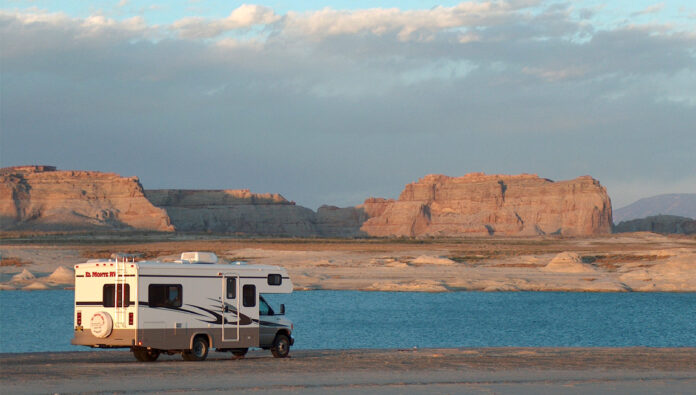
If you’ve been wincing at campground rates lately, you’re probably not alone. Private campgrounds continue adding amenities that would have sounded almost unbelievable a generation ago. Pickleball courts. Resort-style pools. Clubhouses. Organized activities. Dog parks. In at least a few cases, even on-site bars. At the same time, many RVers have noticed something else: The bill keeps getting bigger.
That’s one reason a newly released list from camping app The Dyrt caught our attention. The company recently announced its 2026 roundup of America’s best free campgrounds, and the locations aren’t luxury RV resorts. They’re places where campers often bring their own water, make their own entertainment, and trade amenities for scenery, solitude, and elbow room. The campground that took the top spot this year was the Dragoon Mountains area in Arizona, a location many Southwest RVers know well. That got us wondering: As campground prices continue to rise, are more RVers starting to take a second look at free camping?
What many RVers are really paying for
The timing of the list is interesting because it comes just as campgrounds seem to be competing to offer more and more amenities. There’s nothing wrong with that. Plenty of RVers enjoy pools, activities, upgraded bathhouses, laundry facilities, dog runs, and all the other conveniences modern parks can provide. Families traveling with children or grandchildren may consider those features worth every penny.
But many RVers aren’t looking for a mini-resort. They’re looking for a quiet place to park, a nice view, and enough distance between campsites that they don’t know exactly what their neighbor cooked for dinner. For those campers, every new amenity raises a simple question: Am I actually using this stuff? If the answer is no, it’s easy to understand why free camping continues to hold such appeal.
The tradeoff many RVers willingly make
Nobody is pretending free camping is perfect. Most free campsites don’t come with hookups. There may be no dump station, no potable water, no reservations, and sometimes no guarantee you’ll find an open spot when you arrive. Some access roads can be rough enough to make owners of larger rigs think twice. In other words, there are tradeoffs.
But experienced boondockers usually view those tradeoffs differently than resort campers do. Instead of paying for amenities, they’re getting something else in return: privacy, open space, dark skies, quiet mornings, and room to spread out. A campsite where the nearest neighbor might be hundreds of feet away instead of separated by a picnic table and a strip of gravel. For many RVers, that’s not settling for less. It’s the whole point.
Why public lands still matter
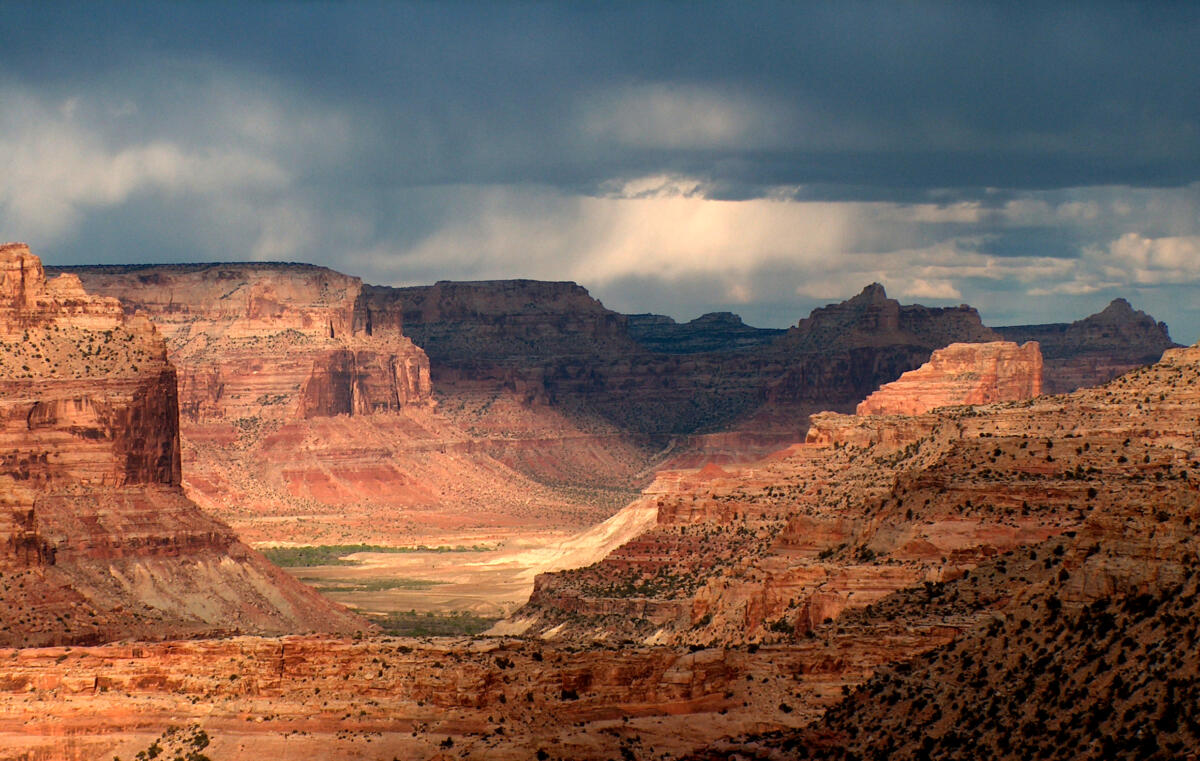
One reason free camping remains possible is the enormous amount of public land available across the West. Much of it is managed by the Bureau of Land Management and the U.S. Forest Service, which continue to provide dispersed camping opportunities in many areas.
Anyone who has spent time around Quartzsite already understands the attraction. Every winter, thousands of RVers choose public lands over traditional campgrounds, often staying for weeks or months at a time. Across Arizona, Nevada, Utah, New Mexico, Idaho, Montana, and many other Western states, public lands continue to offer camping opportunities that would be impossible to duplicate in a commercial campground setting.
Of course, “free” isn’t entirely free. Campers still buy fuel. They still need water, propane, groceries, batteries, solar systems, dump stations, and sometimes internet equipment. But compared with paying nightly campground fees month after month, the math can still work out in favor of boondocking.
A reminder that not everyone wants a resort
What makes The Dyrt’s rankings interesting isn’t necessarily which campground landed at No. 1. It’s what the list says about campers.
For all the attention given to campground upgrades, luxury amenities, and resort-style experiences, there remains a large group of RVers who are perfectly happy with a legal place to park, a good view, and enough room to enjoy both. The campground industry is betting that more amenities will attract more customers. They may be right. But this latest ranking suggests plenty of campers still believe one of the best things about camping is the part that costs nothing.
RELATED
- Top 10 states for free camping and boondocking
- What BLM reversal of major public lands policy could mean for RVers
- Forest Service plans to cancel free camping or raise rates at 33 Idaho campgrounds
- Best places for free camping in California
- Three free RV apps for easy navigation, big rigs, free camping, more
- BLM camping: Good news now, but massive fee hike looms
- BLM identifies 6 million acres that could be sold—map shows where
RVT1262b

We stay at many USFS cg’s. They are usually about $10 to $20 a night, or free. The best part is that they are usually right beside a river or lake. The views and water access at the freebie or very low rates and usually much larger sites is a big draw for us. With plenty of water, battery capacity and waste water tanks, we don’t need hookups…or pickleball courts or pools.
I’m with you, peace, quiet and a swell view is sweet for me. Can’t do anything about the weather, but oh well.
No resorts for me, and I especially don’t want to be near anyone with a generator
My husband and I don’t need cg amenities. We prefer the quiet and elbow room. We do like a level spot and a picnic table. We, unlike so many, spend our time outside our trailer, enjoying the views, fresh air and company of our dogs. That’s hard to do when your neighbor is RIGHT THERE. When we bought our first RV in 2007 this kind of camping on the west coast was easy to find. Post COVID it’s become more difficult to find. And we’re weekend campers which makes it even more difficult to find. Thank you for taking the time to write about this important topic. Camping styles are very diverse!
Interesting how advertised “free” sites can still be uncrowded. I’m leery about such publicity. Fortunately, I’m not a scenery or serene bunny, and can berth anywhere. Sometimes I end up at outrageously scenic spots, but that’s not the norm in my world. As a solo traveler there’s no pressure to secure a supreme site to pander to anybody. I usually take what is available, and often stay in RV or trailer trash parks. Nothing to write home about.
A new venture I am pondering is caravan gatherings by nomad vanlifers who find and secure a place on public lands, then let others on the list know where it’s at. An upcoming one appears to be in a popular area that I wouldn’t do on my own.
There’s a great little campground (with full hook-ups) in the Smokies that we absolutely love and it has zero amenities unless you consider that it sits serenely on a lovely river, has a relatively small number of sites (less crowding), and the staff in the office are wonderful. There are no bath houses, no laundry, no dog park, no picnic tables, no fire pits, no playground, no pool, etc., but we will go back again and again, It isn’t the most expensive place around but it isn’t what I would call cheap, either. We are happy to pay for the location and lack of amenities.
Less is more.